

We may earn a commission when you buy through links on this page, at no extra cost to you. Learn more.
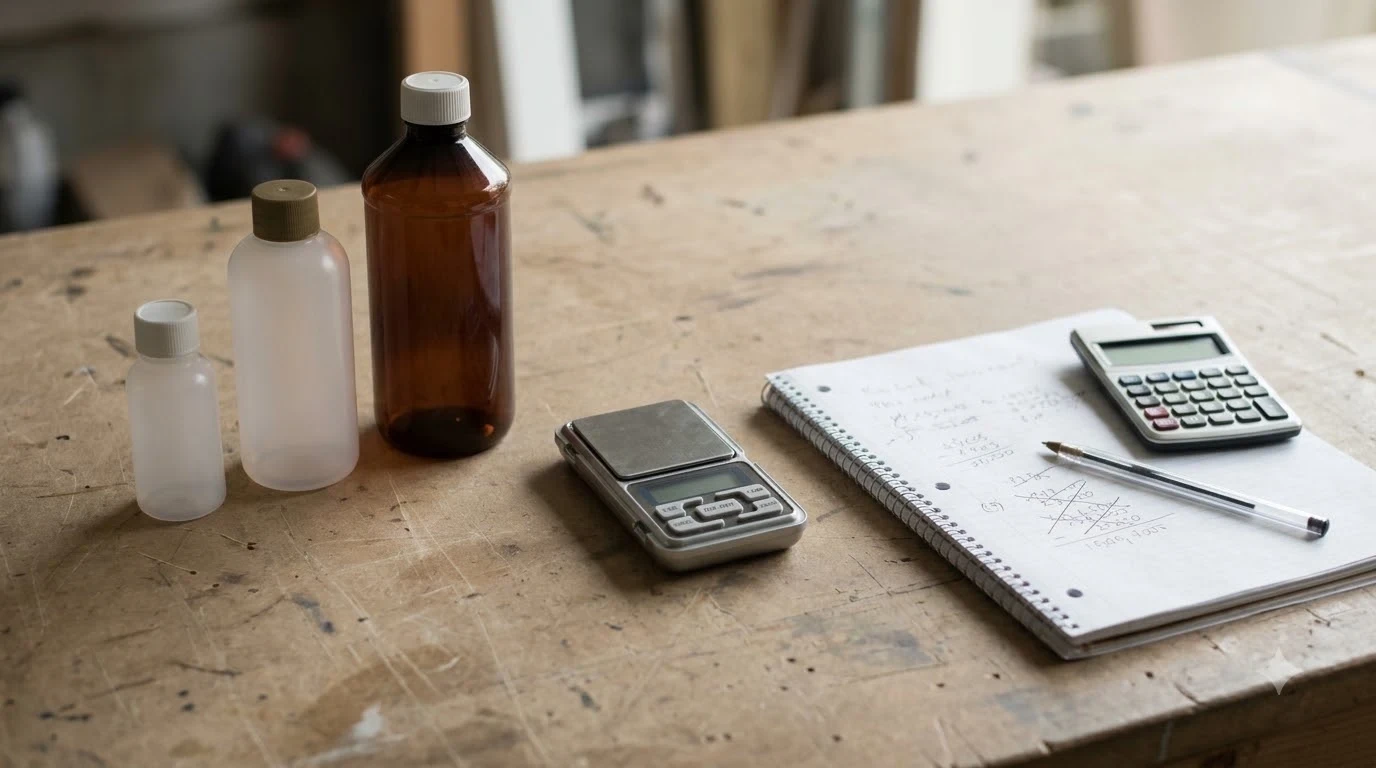
How much does a river table cost depends mostly on the slab, the amount of epoxy and the finish you choose. Epoxy volume is simple to estimate: multiply length, width and depth in cubic inches, divide by 231 for gallons, then add about 10 percent extra. A 48 by 2 by 1 inch river needs 96 cubic inches, which is under half a gallon before the extra allowance. Pricing also shifts with wood species, slab size and whether you build the table yourself or hire a shop.
Shoppers searching this question usually want a realistic range, not a single number. This guide breaks the total into line items so you can see which choices move the price most. It also separates a hobbyist build from a custom piece made by a professional shop.
What a River Table Costs on Average
Most river tables cost more than a standard wood table because they combine two live edge slabs with a large volume of epoxy. KC Custom Hardwoods says totals can range from a few thousand to well over the mid five figures, depending on size and options. The spread is wide because each piece is built to a different length, river width and finish.
Size is the biggest driver. KC Custom Hardwoods uses a standard 8 by 42-inch table as an example and notes that larger or custom sizes need more wood and more resin. Expect your total to rise with each added inch of length and width.
Lancaster Live Edge says a river table’s cost depends on the wood type and the amount of epoxy you need. That makes two numbers worth tracking from the start: the slab cost and the gallons of resin. Once you know both, you can build a rough budget before you buy anything.
Slab Prices: Live Edge Wood Options
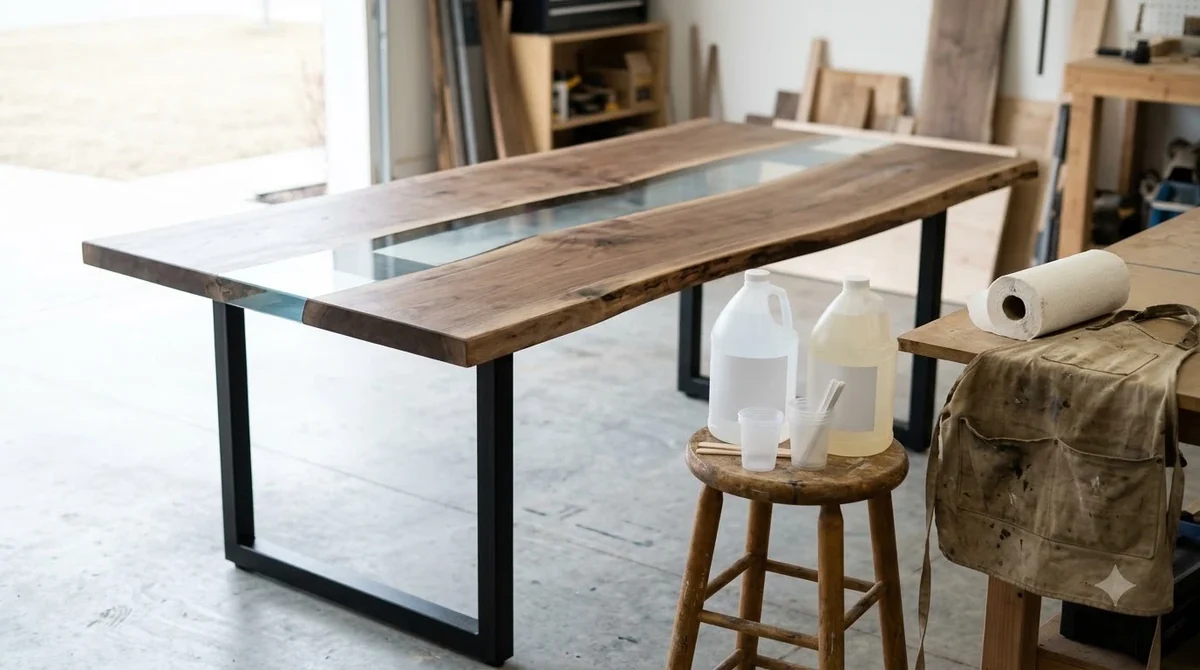
The slab is often the largest single purchase in a river table budget. Species, width, thickness and drying quality all change what you pay. Black walnut and maple are popular choices, while ash, sycamore and white oak are also used.
Dryness matters as much as species. Lancaster Live Edge recommends kiln-dried hardwood with a moisture content of 6 to 10 percent and advises avoiding slabs at 12 percent or higher. A slab that is too wet can warp or trap moisture under the resin, which can cost you more later. A moisture meter is a small tool that helps you check several spots on each slab before you commit.
| Wood option | Cost pattern | What to check |
|---|---|---|
| Black walnut | Often at the higher end of slab pricing | Moisture of 6 to 10 percent, clean live edges |
| Maple | Usually a moderate slab cost | Dry stock, no soft rot or large end cracks |
| Ash, sycamore, white oak | Alternatives that can lower the slab line | Same moisture check and flat surfaces |
Ask sellers for the moisture reading and the slab dimensions in writing. Compare price per board foot or per slab, not just the listed total. Also remember that a wider slab can mean a bigger river and more epoxy to pay for.
Epoxy Resin Quantity and Cost
Epoxy is the second major line item, and its cost follows volume. Lancaster Live Edge says its epoxy runs at roughly eighty dollars a gallon on a typical dining table, so every extra gallon adds up quickly. Check current supplier listings for your own quote rather than relying on any older figure.
Use the same formula Lancaster Live Edge describes. Multiply the river length by its width and depth in inches, divide by 231, then add roughly 10 percent for loss and overflow. The table below shows how the gallons change with size.
| River size (L x W x D, inches) | Cubic inches | Gallons before extra | Gallons with about 10% extra |
|---|---|---|---|
| 48 x 2 x 1 | 96 | About 0.42 | About 0.46 |
| 60 x 3 x 1.5 | 270 | About 1.17 | About 1.29 |
| 72 x 4 x 2 | 576 | About 2.49 | About 2.74 |
Deeper pours use more resin, so the depth number matters as much as the width. Lancaster Live Edge notes that builds with several layers take longer, which can affect labor costs for a shop. Buy the epoxy for your mold size, then add the extra allowance before you order.
Pigments, Metal Dust, and Finishing Extras
Color choices add cost in small amounts, but they can change the look of the table a lot. KC Custom Hardwoods explains that mica-based pigment powder adds texture and swirl effects. Liquid dye can turn clear epoxy a smoky gray, which gives a more subtle river.
Fr. Dan Groody, a Notre Dame woodworker, colored his resin with Notre Dame blue and streaks of gold mica powder for a conference table. That example shows how a few specialty powders can shape the final look. Lancaster Live Edge advises staying within the recommended limits for mica or dye so the resin still cures properly.
Finishing extras are easy to forget. Lancaster Live Edge suggests topping the table with a clear epoxy finish, oil or polyurethane, then adding legs or a base with bolts. Felt pads protect the floor from the feet. Each of these adds a line item, so list them in your budget before you buy the slab.
Tools and Supplies You Might Forget
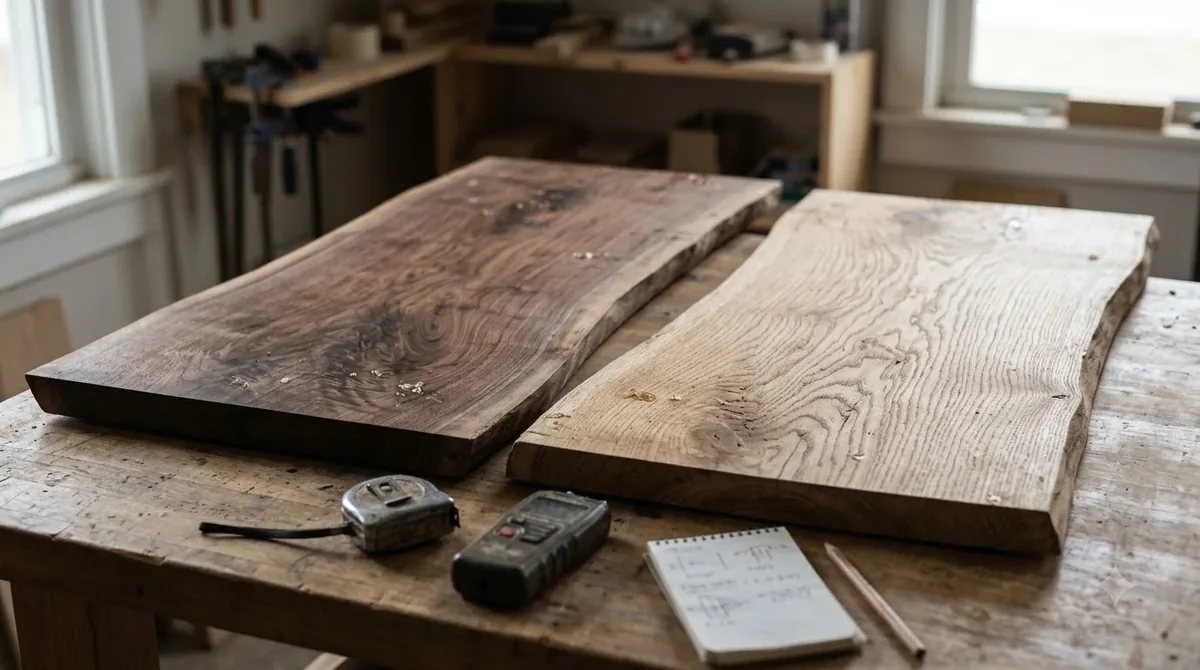
Tools can push a DIY budget higher than the wood and resin alone. Many home shops already own a few of these items, but a river table needs a specific set. Plan for a track saw or a slab flattener, sanders, a heat gun and a mold setup.
Lancaster Live Edge recommends a full high-density polyethylene sheet for the mold floor because epoxy will not stick to it. It also calls for sheathing tape on the mold boards and a thin bead of caulk to seal the joints. Painters tape, a vacuum and isopropyl alcohol round out the list for cleaning and protection.
Tip: Make a checklist of mold materials before you cut the slab. Forgotten sheet stock or tape can delay the pour and waste resin that has already been mixed.
Safety: Wear nitrile gloves and eye protection, and work in a ventilated space. Read the product safety data sheet for your specific epoxy and follow its respirator guidance.
Budget vs. Custom Build Price Tiers
Price tiers help you match your goals to a realistic total. A hobbyist build usually uses lower-cost slabs, a standard color and home tools. A custom build from a shop adds design work, delivery and labor, so the total moves up quickly.
Lancaster Live Edge reports that its average river table costs around two thousand before labor. Green Mountain Tableworx builds custom pieces in New England and offers an online estimator for species, slab size, river width, depth, epoxy color and base. Use these sources as reference points, not as fixed quotes.
| Tier | Typical choices | Main cost drivers |
|---|---|---|
| DIY hobbyist | Kiln-dried slab, standard clear or tinted epoxy, home tools | Slab selection, epoxy gallons, sandpaper and tape |
| Semi-custom | Premium species, mica or metallic pigments, shop-finished top | Higher slab grade and finish labor |
| Custom shop build | Multi-layer pours, custom size, full base and design work | Labor hours, shop overhead, delivery |
DIY work still takes time. Lancaster Live Edge says a hand build will likely take at least 6 hours, not counting epoxy cure time. Its own multi-layer builds typically take a few days, so time is part of the budget.
How to Lower Your River Table Cost
You can reduce the total without cutting quality if you control the slab, the resin and the extras. Start with the wood and the river size, since those two choices drive most of the bill.
- Pick a moderate river size. A narrower or shallower river uses fewer gallons of epoxy.
- Check slab moisture first. Buy kiln-dried stock within the 6 to 10 percent range to avoid rework.
- Calculate epoxy before ordering. Use the length, width and depth formula and add about 10 percent.
- Limit specialty pigments. Use mica or dye sparingly and keep within the recommended amounts.
- Reuse mold materials. Keep the HDPE sheet and boards clean for future projects.
- Compare custom estimates. Get at least two quotes and ask what is included.
If you want to see the full build process before you spend, read this step-by-step river table guide. It shows where each cost appears in the workflow. Lancaster Live Edge also explains that wood preparation and cure time affect the final result, so plan for both.
Frequently Asked Questions
How much does a river table cost in total?
The total depends on slab size, species, epoxy gallons and finish. KC Custom Hardwoods says totals range from a few thousand to well over the mid five figures. Use the line items in this guide to build your own estimate.
How much epoxy do I need for a river table?
Multiply the river length, width and depth in inches, then divide by 231 for gallons. Add about 10 percent for loss and overflow. A 60 by 3 by 1.5 inch river needs about 1.29 gallons with that allowance.
Does wood species affect river table price?
Yes. Highly figured or exotic woods often cost more, and availability changes the price. Black walnut and maple are popular choices, while ash, sycamore and white oak are also used. Always confirm moisture is within 6 to 10 percent.
Is a DIY river table cheaper than a custom one?
Usually, yes, because you skip design fees and shop labor. You still pay for slabs, epoxy, tools and mold materials. Lancaster Live Edge says a hand build takes at least 6 hours plus cure time, so your time is part of the cost.
Start by sizing the river and buying the epoxy, since those numbers anchor the rest of the budget. For a wider look at pricing options, visit the river table cost overview or browse more Wood, Tables & Countertops projects before you order. For the mold and pour specifics, the Lancaster Live Edge epoxy river table guide lists the heat gun timing and the 70 to 80 degree resin range.
More in Wood, Tables & Countertops
 How to Fill Knots with Epoxy for a Smooth, Durable Wood SurfaceUpdated Nov 26, 2026
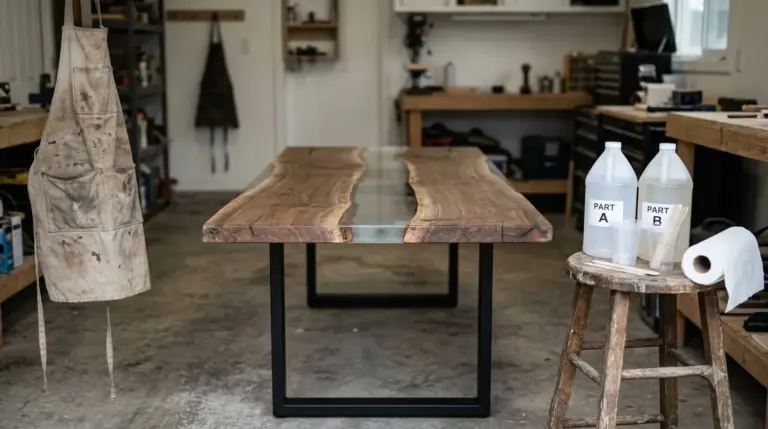 How to Epoxy Live Edge Wood: A Step-by-Step Guide to a Flat, Durable TabletopUpdated Nov 26, 2026
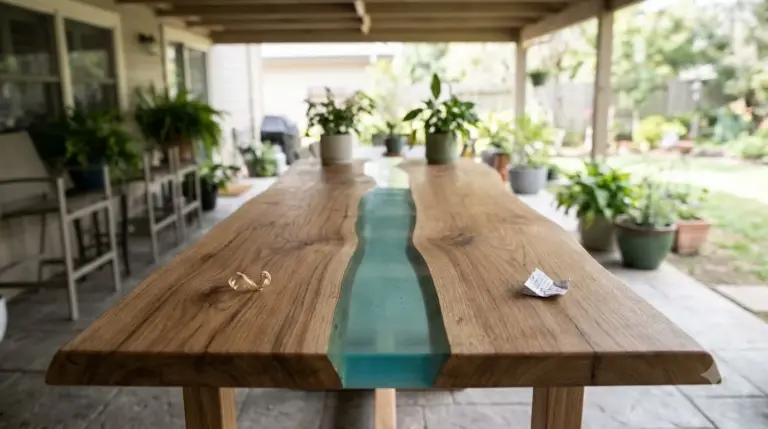 Outdoor Bar Top Epoxy: How to Pick a UV-Resistant Resin and Cure It RightUpdated Nov 26, 2026
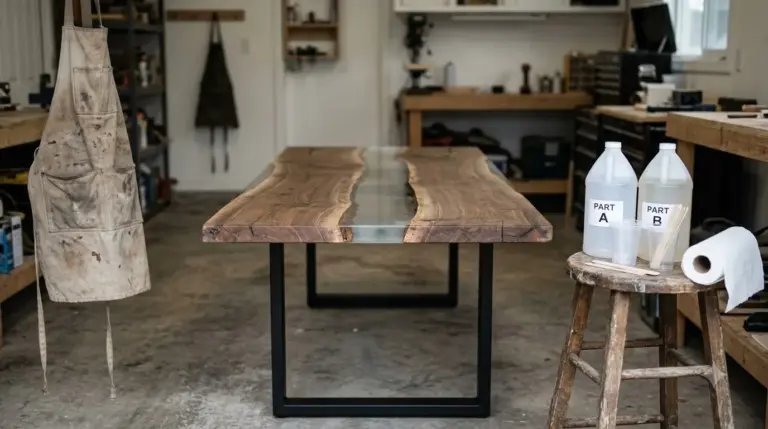 How to Make an Epoxy River Table: Step-by-Step Build for BeginnersUpdated Nov 26, 2026
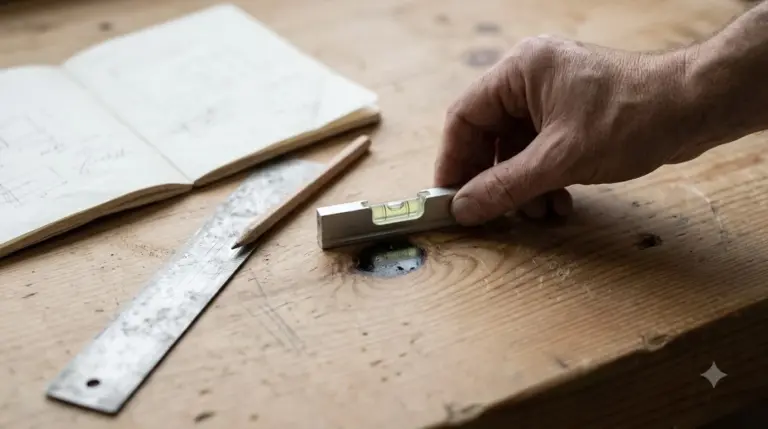 Pine Epoxy Table Guide: How to Prep Softwood for a Clean River PourUpdated Nov 26, 2026
 Spalted Maple Epoxy Table: How to Stabilize, Pour, and Care for OneUpdated Nov 26, 2026