

We may earn a commission when you buy through links on this page, at no extra cost to you. Learn more.
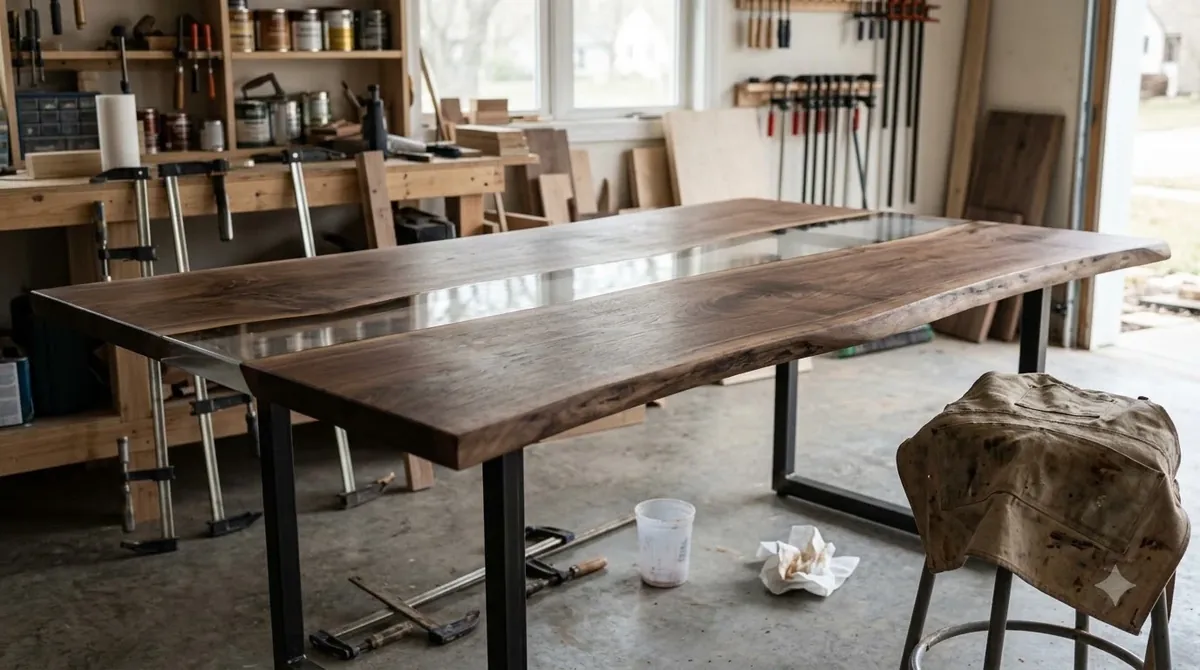
River table cost depends mostly on how much deep pour epoxy you need, the size and species of the live-edge slab, and the legs or base you choose. One worked example from a resin calculator uses a 180cm x 15cm x 5cm channel, which needs about 13.5 liters of resin before a 15% buffer, or 15.5 liters (4.1 gallons) in total. Resin is usually the largest single line item for a DIY build. Slabs, hardware, pigments and safety supplies make up most of the rest.
This guide breaks a river table budget into its parts so you can estimate your own project before you buy anything. It covers epoxy volume, the difference between deep pour and table-top products, slab and hardware costs, tools and safety gear, and how DIY compares with a custom-built piece. Prices change often, so use the ratios and volumes here with current retail listings.
What a River Table Costs on Average
Most of the cost of a DIY river table comes from materials, and resin is the biggest share. Material totals depend on the table size, the wood you pick and how much epoxy the channel holds. Sources that model these builds show a wide range, so plan for the high end of your local retail prices.
Start with the channel volume, because that sets the resin quantity. A 180cm x 15cm x 5cm channel needs about 13.5 liters before waste, according to a deep pour calculator’s worked example. Adding the 15% buffer brings that to 15.5 liters, or about 4.1 gallons.
Slab size and species move the budget too. A larger or rarer slab can cost more than the resin it holds. Legs, hardware and finishing supplies add more on top. Budget for each category separately, then add a contingency for a wasted pour or a second batch.
Epoxy Volume and How Much You Need
Resin cost starts with volume, so calculate it before you shop. For a rectangular channel, multiply length by width by depth. For a round mold, multiply pi by the radius squared, then by the height. Convert the result to gallons using 231 cubic inches per US gallon.
Add a waste buffer before you order. The Miniwebtool epoxy calculator uses a 10% waste default, and its coverage chart lists about 3 square feet per gallon at 1/2 inch. A 48 x 24 inch table poured 1 inch deep holds about 1,152 cubic inches, or roughly 5 gallons before waste. A 2-inch pour doubles that amount.
Split the total by your kit’s mix ratio. A 2:1 ratio means three total parts, so two-thirds of the volume is resin and one-third is hardener. Some products are mixed by weight, and the two ratios are not interchangeable.
| Project size | Total epoxy with buffer | Approximate gallons |
|---|---|---|
| 120cm x 10cm x 5cm river | 6.9 liters | 1.8 |
| 180cm x 15cm x 5cm river | 15.5 liters | 4.1 |
| 240cm x 20cm x 6cm river | 33.1 liters | 8.7 |
Tip: Buy a little more than the total, then check the leftover after the first pour. Partial pours leave visible seams, so it is better to order one extra kit than to run short mid-pour.
Deep Pour Versus Table-Top Epoxy
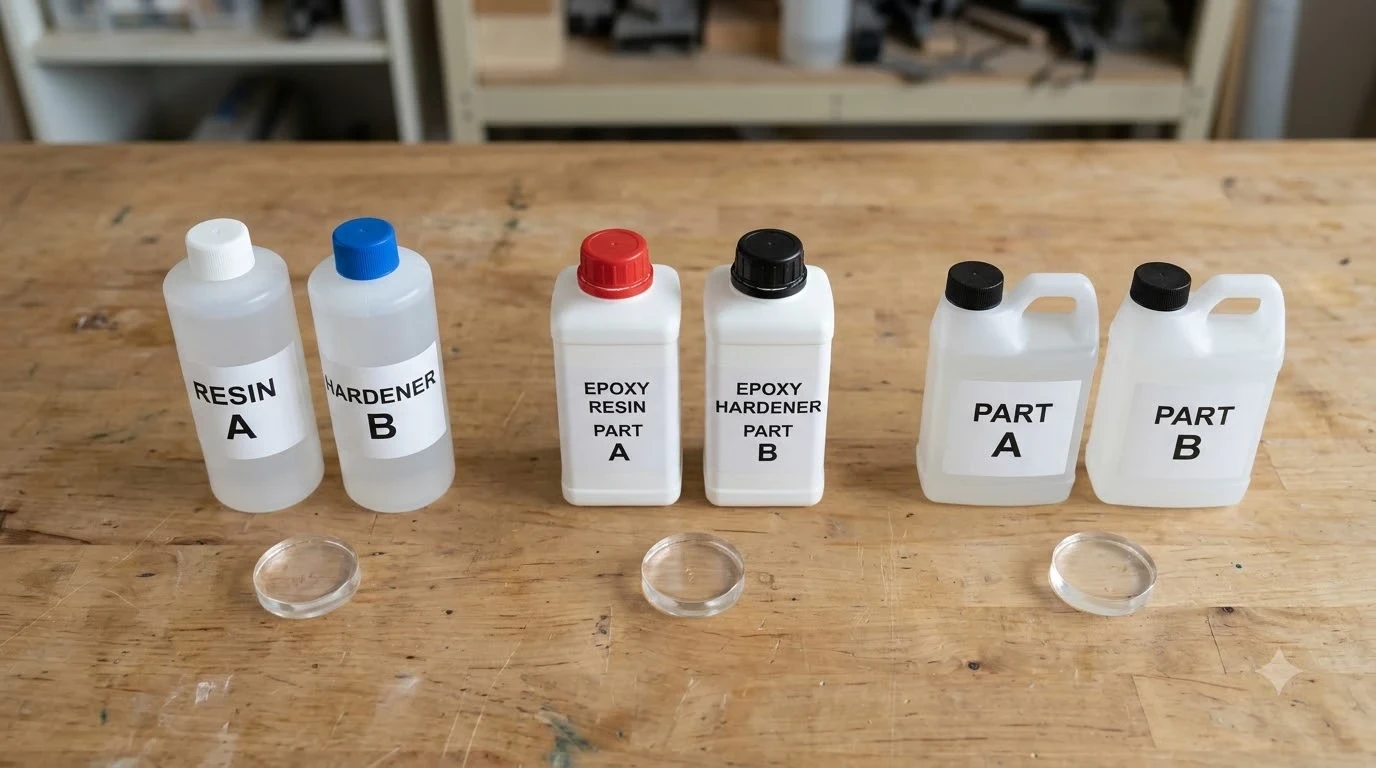
Deep pour epoxy is the product type a river table needs, and it usually costs more per gallon than table-top epoxy. Table-top coatings are made for thin layers, while deep pour casting resins are made for thick pours. Choosing the wrong type can ruin the piece and waste the whole batch.
Pour depth limits differ sharply by product type. One reference lists table or art epoxy at 1 to 6 mm per coat, while deep-pour casting epoxy runs 25 to 50 mm per layer. Always check the maximum pour depth on the manufacturer’s technical data sheet for your exact product.
Deep pour resin also takes longer to cure. One calculator notes that a full cure can take 10 to 14 days, so plan your schedule around that. Bulk buying helps. Sources say 5-gallon kits often lower the unit cost by 20 to 40 percent compared with 1-gallon kits.
| Epoxy type | Typical pour depth | Cost pattern | Best use |
|---|---|---|---|
| Table or art epoxy | 1 to 6 mm per coat | Lower per gallon | Flood coats on tops and art |
| Deep pour casting epoxy | 25 to 50 mm per layer | Higher per gallon | River channels and thick castings |
| UV resin | 1 to 5 mm | Highest per gallon | Small crafts and thin fills |
Live-Edge Slabs, Legs and Hardware
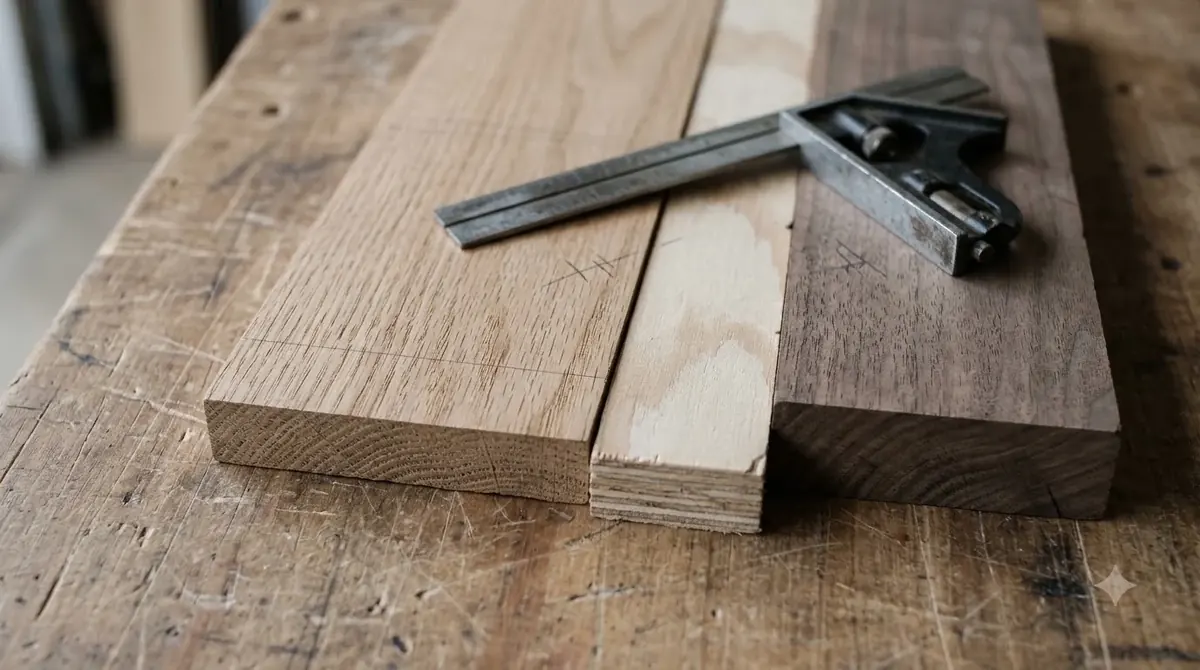
The slab is often the second-largest cost after resin. Walnut, oak and maple slabs vary by species, thickness, length and the amount of defects or bark. Ask the seller about moisture content and whether the slab is kiln dried, since those factors affect how it behaves under epoxy.
Legs and hardware are a separate line item. Metal hairpin legs and wood bases are common choices, and the base style can shift the total noticeably. If you plan to build your own base, the step-by-step river table build walks through the order of work from slab prep to assembly.
Do not forget the smaller items. Pigments, sandpaper in a range of grits, polishing compound and a seal coat of thin epoxy all add to the budget. For an unsealed slab, one calculator advises budgeting 20 to 30 percent extra epoxy for the first coat, because raw wood soaks up resin.
Tools, Safety Gear and Hidden Costs
Tools cost little compared with resin, but a few items are essential. A digital scale, mixing buckets, stir sticks, a heat gun or torch for bubbles, and a drill mixer for large batches are the usual list. Check each product’s technical data sheet for the exact mixing method.
Work within the temperature range on the label. One calculator recommends 70 to 80 degrees Fahrenheit, and cold resin is thick and bubbly. Mix for 3 to 5 minutes, scrape the sides and bottom, then mix about 2 more minutes. Working time is commonly 20 to 45 minutes after mixing.
Safety: Wear nitrile gloves, work in a ventilated area and keep the product’s safety data sheet nearby. Follow the manufacturer’s instructions for respirators and disposal of leftover resin.
Hidden costs add up quickly. Spills, failed pours, replacement dams and extra sandpaper are common. Plan for a small contingency so one mistake does not stop the project.
DIY Versus Custom-Built River Table Pricing
A DIY build mostly costs you materials and time. A custom-built piece adds labor, design work and a retail markup. Sources that model pricing estimate skilled labor for a river table at 15 to 25 hours, covering prep, sealing, pouring, curing, sanding and assembly.
The gap between material cost and retail price is wide. One estimator describes custom pieces as several times the materials cost, and premium designs with exotic wood or lighting cost far more. For a budget-minded build, the savings come from doing the labor yourself and choosing a common species.
Compare DIY with a finished piece from a woodworker before you commit. Browse the wood furniture projects on this site to see how other builds are scoped.
Frequently Asked Questions
How many gallons of epoxy for a 48×24 table?
A 48 x 24 inch surface poured 1 inch deep holds about 1,152 cubic inches, or roughly 5 gallons before waste. At 1/2 inch, the amount is about half that. Add your buffer, then split the total by your kit’s mix ratio.
How much does a gallon of deep pour epoxy cost?
Deep pour casting epoxy usually costs more per gallon than table-top epoxy. Buying 5-gallon kits can lower the unit price by 20 to 40 percent, according to one calculator. Check current retail listings for your region before you order.
How do I calculate epoxy volume for a round mold?
Multiply pi by the radius squared, then by the height, in cubic inches. For example, a 12-inch diameter mold filled 2 inches deep holds about 226 cubic inches, or about 0.98 gallons. Divide by 231 to convert to gallons, then add waste.
Should I add extra epoxy for waste?
Yes. The Miniwebtool calculator defaults to a 10% waste buffer, and one resin guide advises mixing 10% extra for overflow. Porous wood can absorb more, so budget 20 to 30 percent extra for the first coat on unsealed wood.
Use these ratios and volumes to set a budget range before you buy. Once you have your resin total and slab quote, compare the full material list with the how much does a river table cost breakdown for a second check.
More in Wood, Tables & Countertops
 How to Fill Knots with Epoxy for a Smooth, Durable Wood SurfaceUpdated Nov 26, 2026
 How to Epoxy Live Edge Wood: A Step-by-Step Guide to a Flat, Durable TabletopUpdated Nov 26, 2026
 Outdoor Bar Top Epoxy: How to Pick a UV-Resistant Resin and Cure It RightUpdated Nov 26, 2026
 How to Make an Epoxy River Table: Step-by-Step Build for BeginnersUpdated Nov 26, 2026
 Pine Epoxy Table Guide: How to Prep Softwood for a Clean River PourUpdated Nov 26, 2026
 Spalted Maple Epoxy Table: How to Stabilize, Pour, and Care for OneUpdated Nov 26, 2026