

We may earn a commission when you buy through links on this page, at no extra cost to you. Learn more.
What solvent can remove epoxy depends on whether the epoxy is still uncured or has fully hardened. Acetone, isopropyl alcohol and denatured alcohol are the solvents most sources name for soft, uncured epoxy. Cured epoxy is much harder to dissolve, and Chemtronics says it has no product that will rapidly dissolve it. Entropy Resins notes that cured epoxy typically starts to soften once its temperature reaches above 180°F.
Epoxy spills happen during almost every project. This guide explains which solvents work on wet epoxy, which ones have limits on hardened epoxy, and when scraping or sanding makes more sense than any liquid.
Why Cured Epoxy Is So Hard to Remove
Cured epoxy is designed to stay bonded, so most liquids only soften it slowly. The harder the epoxy has set, the less a solvent can reach and break down the material.
Chemtronics explains that epoxies are meant to be permanent bonding compounds. They resist chemicals well, so a solvent that attacks the hardened resin may take hours or days, and it may not fully dissolve it.
Surface type also matters. Entropy Resins notes that smooth surfaces like glass or plastic make cleanup simpler, while textured or absorbent surfaces like wood can keep some residue even after careful wiping.
Solvents That Work on Uncured Epoxy
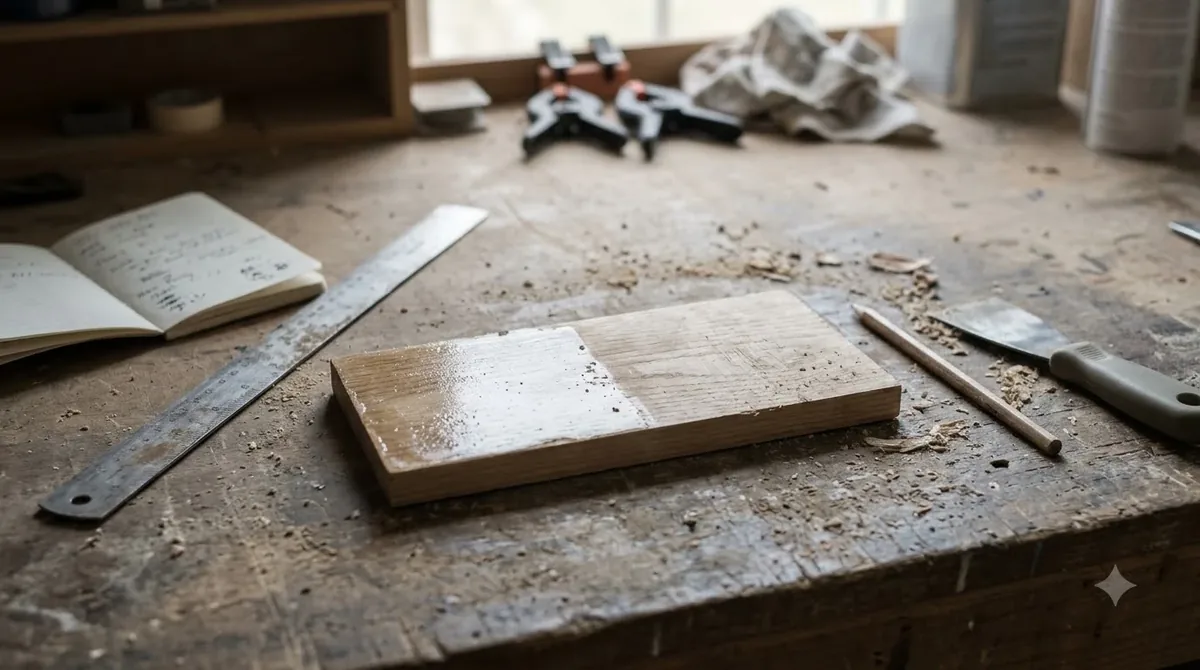
Uncured epoxy responds to solvents much faster than hardened resin. Several common liquids can lift wet epoxy off most surfaces with a few wipes.
LePage says isopropyl alcohol or acetone is the usual choice for uncured epoxy. Loctite gives the same guidance, and it adds that removing soft epoxy is much simpler than removing hardened epoxy.
Entropy Resins lists isopropyl alcohol, denatured alcohol, acetone and lacquer thinner as stronger solvents that remove uncured epoxy more quickly. Household vinegar is a very mild option. It works on small residue, but it takes more product than the stronger choices.
Chemtronics reports that straight solvents such as acetone, methyl ethyl ketone (MEK) and methylene chloride quickly dissolve uncured paste. Those same solvents are flammable or hazardous, so handle them with gloves, eye protection and good airflow.
A practical routine is to blot the wet epoxy with a plain white paper towel first. Then wipe the area with a towel dampened with your chosen solvent. Entropy Resins recommends pouring the solvent onto a clean paper towel instead of the surface itself, which helps control the spread.
Solvents for Cured Epoxy: What Really Works
Cured epoxy usually needs physical removal, with solvents playing a supporting role. The table below sorts the common approaches by what the sources say about them.
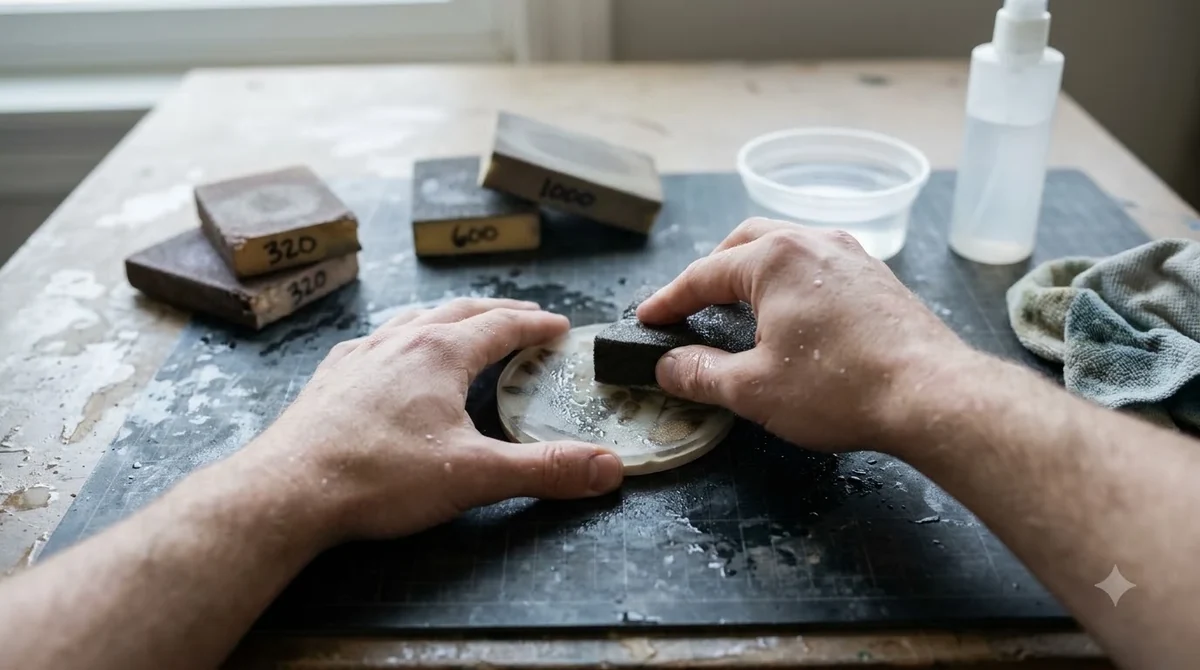
Entropy Resins calls sanding or grinding the best and most efficient way to remove cured epoxy. Dustless Blasting says solvents can soften cured resin with extended exposure and repeated applications, but results vary with thickness.
| Method | What the sources say | Practical note |
|---|---|---|
| Sanding or grinding | Entropy Resins calls it the best, most efficient method for cured epoxy. | Start with a coarse abrasive and finish smooth if the surface will be bonded again. |
| Acetone on wood or concrete | Loctite and LePage name acetone as the recommended solvent for porous materials. | Keep it in contact briefly, then scrape gently. Test a small spot first. |
| Adhesive remover on hard, non-porous surfaces | Loctite and LePage recommend a chemical adhesive remover or paint thinner for metal and similar surfaces. | Spray or apply with a rag, then scrape with a tool that does not face toward you. |
| Soaked cloth on 5-minute epoxy | Chemtronics says acetone, MEK or methylene chloride under plastic wrap can soften simple 5-minute epoxies. | Keep the cloth wet. The goal is softening, so scraping still follows. |
| Heat, then scrape | Entropy Resins notes softening above 180°F. Heat guns are often used at about 300°F to 500°F. | Never heat a surface that has acetone, paint thinner or denatured alcohol on it. |
| Commercial epoxy dissolvers | Chemtronics says many rely on very strong chemicals and often need heat, with long soak times. | Softening is common, full dissolving is not. Check the label and the SDS first. |
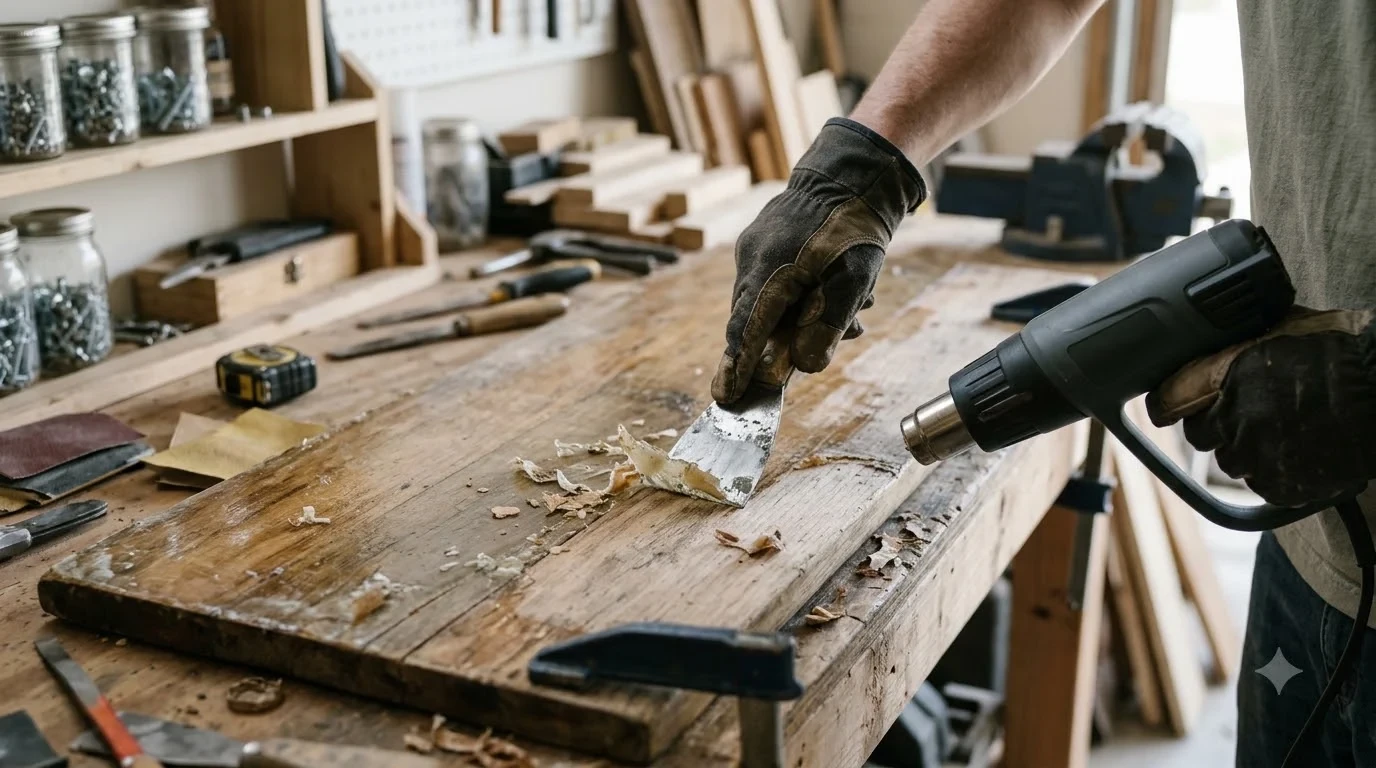
Heat is the method most people ask about. Dustless Blasting describes heat guns at about 300°F to 500°F to soften cured epoxy so it can be scraped with metal or plastic tools. Work in small sections and keep the heat even.
For metal or glass, Chemtronics describes heating residue with a soldering iron set to 500-600°F, after which the epoxy can be scraped off. Chemtronics also warns that high heat can melt most plastics and damage circuit boards, so this method is not for every surface. You can read the full Chemtronics guidance on removing mistakes before trying heat on electronics.
Tip: Scrape with a plastic or wood tool when you can. Metal tools can gouge soft surfaces like wood and painted finishes.
Solvents to Avoid on Plastics and Surfaces
Some solvents that remove epoxy can also damage the material under it. Check the surface before you commit to a strong liquid.
Loctite and LePage both warn that paint thinners and alcohol can damage wood finishes. For wood, they recommend acetone, and LePage advises testing a small spot first.
Dustless Blasting lists solvents in increasing aggressiveness as acetone, toluene, MEK, sulfuric acid and methylene chloride. It advises testing any stronger solvent on a hidden area before soaking a part, since some chemicals can harm plastic, wood or painted surfaces.
Circuit boards need extra caution. Chemtronics explains that boards are made from phenolic paper or fiberglass resin layers, and strong solvents that attack cured epoxy can also cause those layers to separate. Chemtronics adds that some strong solvents also attack metals such as aluminum.
Tip: Rub a hidden corner with a little solvent on a cloth and wait a few minutes. Look for clouding, softening or color change before you treat the visible area. If you want to go deeper, Can You Epoxy Over Wallpaper covers a connected topic.
Safety Gear and Ventilation When Using Solvents
Every solvent in this guide needs gloves, eye protection and fresh air. Read the product label and the safety data sheet before you start.
Loctite advises wearing a mask, safety glasses and gloves, and working in a well-ventilated area when using a chemical solvent. Chemtronics adds that acetone, MEK and methylene chloride are flammable or carcinogenic, so they need proper protective gear and ventilation.
Keep solvents away from open flames, hot tools and heat guns. Dustless Blasting warns that a heat gun should never be used near acetone, paint thinner or denatured alcohol because of fire risk. Store used rags in a metal container with a lid, and dispose of them according to the product label.
If epoxy or solvent touches your skin, do not use solvents to clean it off. Entropy Resins says to avoid solvents on skin entirely. LePage suggests leather or rubber gloves, and the step-by-step guide on skin removal covers safer options. You can read more in how to remove epoxy from skin.
Safety: Ventilate well, wear gloves and eye protection, and review the SDS for the exact solvent you plan to use. If you feel unwell after exposure, stop and get fresh air. This is general safety guidance, not medical advice.
Mechanical Methods When Solvents Fail
When a solvent only softens the epoxy, mechanical removal finishes the job. Sanding, scraping and chipping are the methods most sources return to for hardened resin.
Entropy Resins describes sanding or grinding as the most efficient way to remove cured epoxy. It also notes that prying or chipping may leave damage on the surface, so test in an inconspicuous area first.
Dustless Blasting says shot blasting is typically used on hardened epoxy but may be less effective on soft or pliable material. Its guide also describes wet blasting as a dust-reducing option for larger jobs. For smaller spots, a sharp scraper and patience usually give better control.
Loctite recommends scraping with a tool and keeping your hands clear of the blade path. It advises against scraping toward yourself. For a fuller walkthrough of removal steps, see how to remove epoxy, and for common problems check Troubleshooting & Fixes.
Frequently Asked Questions
Does acetone remove cured epoxy?
Acetone softens some cured epoxy, especially on porous wood or concrete, according to Loctite and LePage. It usually needs repeated applications and a scraper afterward. Chemtronics notes that it may not dissolve cured resin completely.
Is denatured alcohol effective for removing epoxy?
Entropy Resins lists denatured alcohol among stronger solvents that remove uncured epoxy more quickly. It is not the usual pick for cured epoxy on wood, since LePage and Loctite warn that alcohol can damage wood finishes. Keep it away from heat sources.
Is methylene chloride safe to use for removing epoxy?
Chemtronics describes methylene chloride as a cancer-causing agent and a hazard that needs proper ventilation and protective gear. Dustless Blasting says it is for industrial use only. For most home projects, acetone or a chemical adhesive remover is the easier starting point.
Does heat soften epoxy so it can be scraped off?
Yes. Entropy Resins says epoxy typically starts to soften above 180°F, and Dustless Blasting describes heat guns at about 300°F to 500°F for scraping. Heat can transfer to the surface below, so check what the epoxy is bonded to first.
Acetone and other fast solvents work best on uncured epoxy, while cured epoxy usually needs heat, sanding or scraping after a softening step. Test any solvent on a hidden spot, wear gloves and keep the area ventilated. Use the troubleshooting hub for related fixes.
More in Troubleshooting & Fixes
 How to Fix Scratches in Epoxy Tables Without Redoing the Whole TopUpdated Nov 26, 2026
 How to Remove Amine Blush From Epoxy Without Starting OverUpdated Nov 26, 2026
 What Will Remove Epoxy from Wood, Metal, Skin and Hair SafelyUpdated Nov 26, 2026
 Paint and Epoxy Remover: Which Type Strips Cured Epoxy and Paint SafelyUpdated Nov 26, 2026
 Resin Sticking to Mold? Causes, Release Fixes and Safe RemovalUpdated Nov 26, 2026
 Why Is My Epoxy Bumpy? Causes and Fixes for a Smooth FinishUpdated Nov 26, 2026