

We may earn a commission when you buy through links on this page, at no extra cost to you. Learn more.
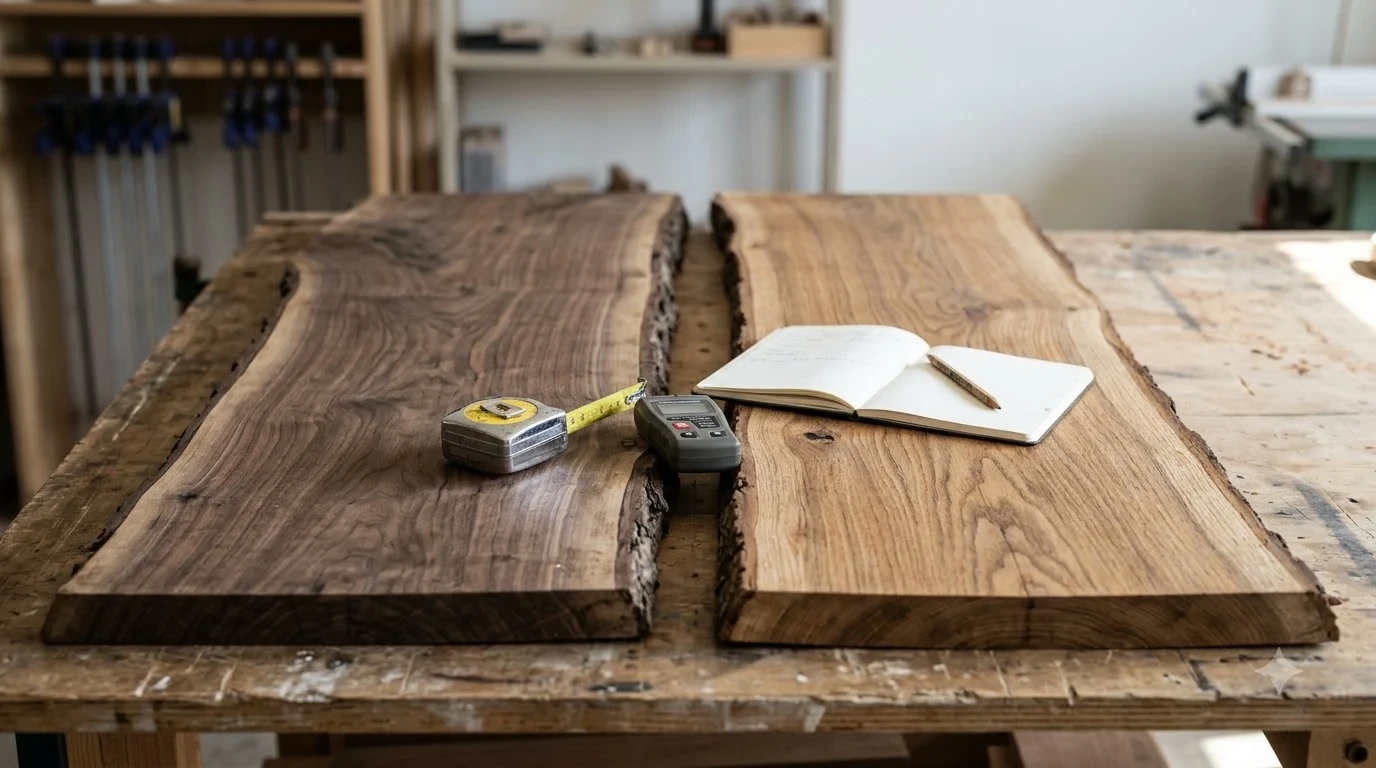
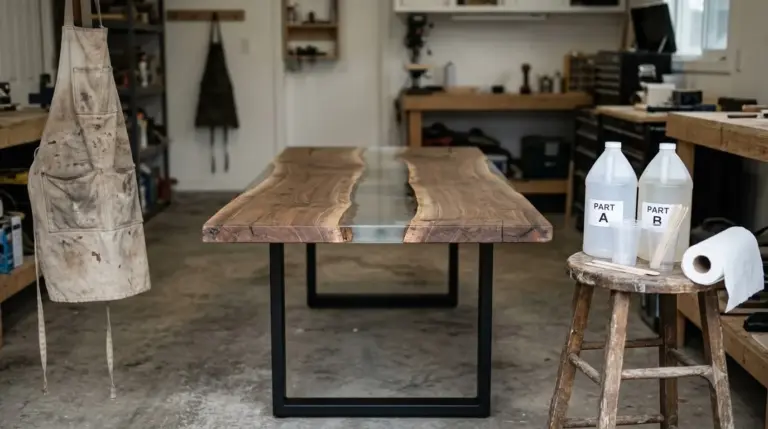
What is a live edge slab? It is a piece of wood that still has the natural edge of the tree, which commonly includes the bark. According to a definition quoted in North Carolina State University’s Friday Footnote, the width of the tree trunk determines how wide a live edge slab can be. The edge is left in place, so the slab keeps the tree’s natural contours instead of square corners. Makers often use these slabs as the base for epoxy river tables.
If you have seen a wood table with a bark-covered edge and a glossy blue stripe through the middle, you have probably seen a live edge slab with epoxy. This page explains what the term means, how these slabs are made, how they differ from standard lumber, and what to check before you finish one.
What Is a Live Edge Slab?
A live edge slab keeps the outer edge of the tree in the finished piece. The edge is usually rounded, uneven, and sometimes still covered with bark. That natural edge is the reason the wood is called live edge.
The term is most often used for furniture and countertops, but the same idea applies to small items too. The NCSU Friday Footnote describes a shelf and a cutting board made from live edge pieces, which shows the wood is not limited to large tables.
The shape of the slab begins with the log. A cant is a log that has been slabbed on one or more sides, according to the U.S. Occupational Safety and Health Administration’s sawmill definitions. In a live edge operation, the crooked outer section of the log is removed so the log becomes square enough to cut into boards. The edge that remains is the part that was closest to the bark.
Because the edge follows the tree, no two slabs look the same. You will often find slabs that vary in width from one end to the other. The tree trunk sets the upper limit on how wide a slab can be, so a narrow tree gives you a narrower piece.
Live edge wood also keeps features that square lumber removes. Knots and irregular grain can remain, which some buyers prefer for character. Sam French, a woodworker in Gill, Massachusetts, is making live edge furniture from an elm tree for Smith College’s Neilson Library. The library notes that rather than cutting away knots and creating square edges, only the bark is removed.
Live Edge vs. Straight-Edge Slabs
Live edge and straight-edge slabs both come from logs, but the finished edge is the main difference. A straight-edge slab has been trimmed to clean, parallel sides. A live edge slab keeps the tree’s own outline.
That difference affects how you plan the project. Straight-edge boards are easier to join in a uniform line and easier to size for a standard cabinet. Live edge slabs need more layout time because each piece has its own shape.
| Feature | Live edge slab | Straight-edge slab or board |
|---|---|---|
| Edge | Keeps the tree’s natural edge, sometimes with bark | Trimmed to square, parallel sides |
| Size and shape | Usually not set; varies along the slab | Usually milled to standard widths and lengths |
| Layout | Designed around each piece’s outline | Laid out in regular, repeatable sections |
| Typical use | Tables, benches, river-style designs, small accents | Cabinets, flooring, framing, general building |
Lumber suppliers describe live edge slabs as very different from typical dimensional lumber, because they rarely come in set shapes. If you need exact dimensions for a built-in, straight-edge stock is usually the simpler choice. If the outline is the point of the project, live edge gives you a finished edge you cannot easily copy with a saw.
Common Wood Species for Live Edge Slabs
Most wood species can be used for live edge projects. The choice depends mainly on how the piece will be used, not on a single best species.
For a dining table or countertop, a hardwood or a more solid softwood is usually the better choice. A dining surface gets heavy daily use, so durability matters more than appearance alone. A shelf or wall accent can use a wider range of species because it sees less wear.
Figure and character also affect the choice. Wood with strong grain or unusual patterns is often valued more highly, while common straight-grained wood is more widely available. Less common species can be more sought after, which can make them costlier.
Ask your supplier which species the slab is and how it was dried. Some slabs will have cracks, checks, or sap pockets, and the supplier should be able to describe them. If you are unsure about a species, check the label or the seller’s description before you commit to a large top.
Why Makers Use Live Edge Slabs with Epoxy
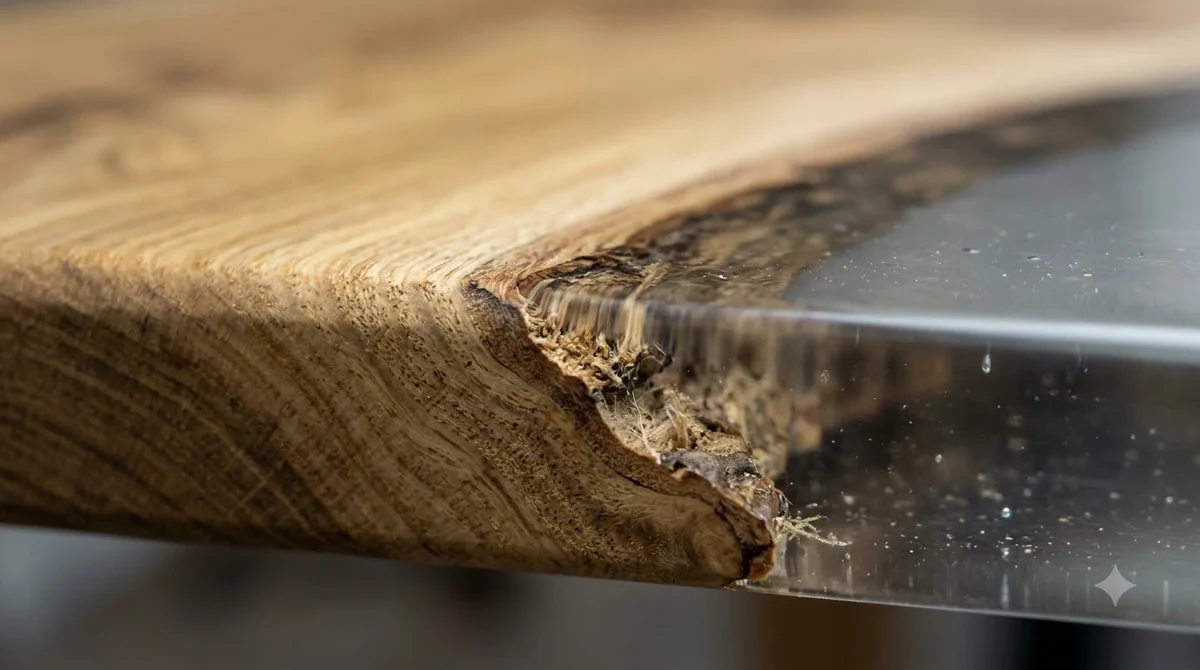
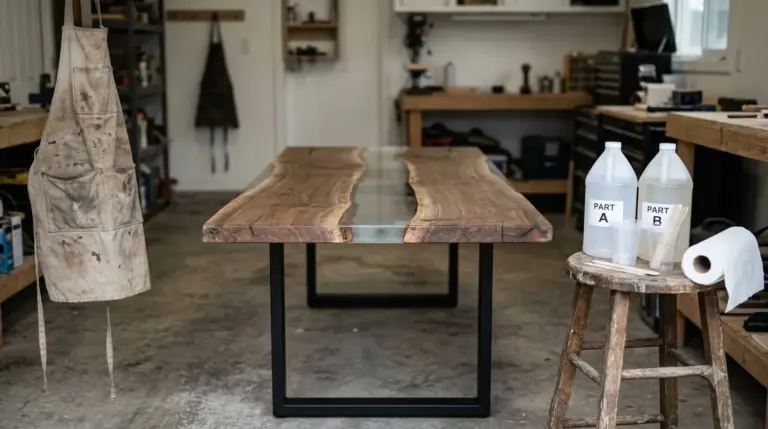
Epoxy works well with live edge slabs because the slab’s natural gaps and voids can be filled instead of cut away. This is the basis of the popular river table style, where a clear or colored resin fills a channel down the middle of the slab.
The NCSU Friday Footnote describes an Amish family in Ohio who used colored epoxy to join live edge pieces together, fill in holes, and create designs. The same article notes that they made benches, tables, serving trays, shelves, and bookcases from live edge wood. That range shows epoxy is used on both large and small projects.
For a step-by-step look at applying epoxy to a live edge piece, read how to epoxy live edge. It covers layout, containment, and pouring, which are the steps most beginners get wrong.
Epoxy does not hide every flaw, and it does not replace careful surface prep. Loose bark, dust, and moisture can cause bubbles or poor adhesion. Makers usually stabilize the wood and remove loose material before the first pour.
Preparing a Live Edge Slab for Finishing
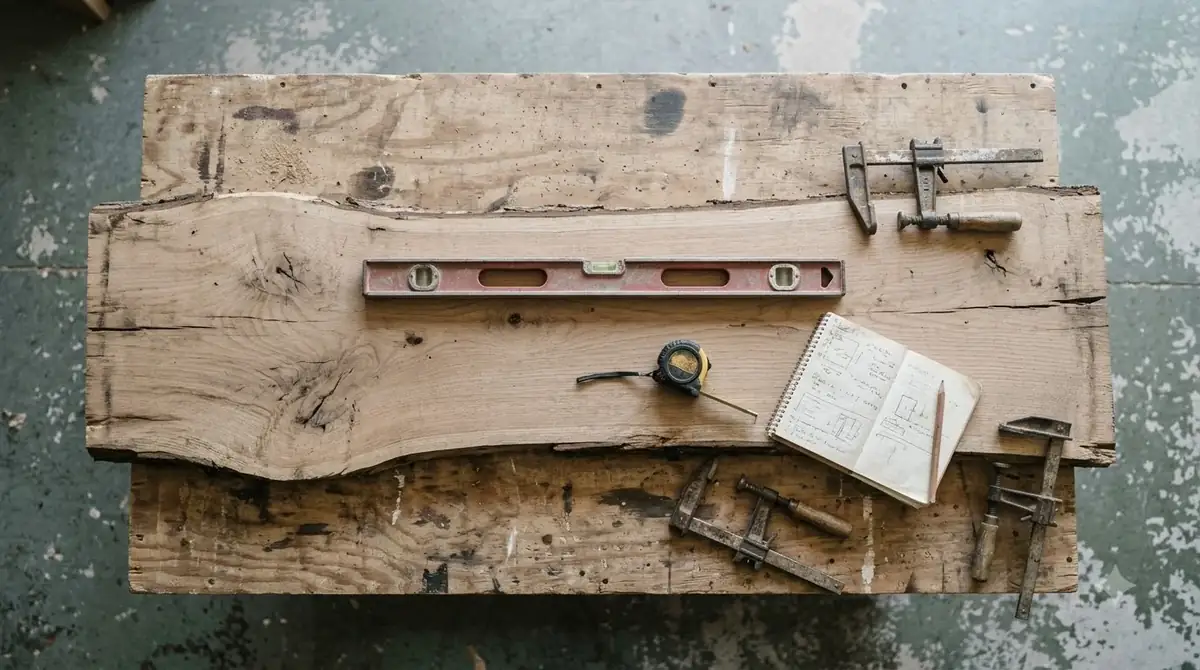
Preparation decides how the finished slab looks. Start by deciding whether the bark stays on, because that choice changes the sanding, cleaning, and sealing steps.
During drying, bark often falls off a live edge slab, but it may stay on. Owners can leave the bark or remove it to expose the natural edge underneath. A rustic look usually keeps the bark, while a cleaner, modern look usually removes it.
Check the slab for loose bark, dust, and cracks before you finish it. The cambium is a layer one cell thick just below the bark near the edge, and it drives the tree’s diameter growth. Removing bark can expose this area, so take care not to scrape more than you need.
Once the slab is clean and dry, sealing protects the surface from moisture and wear. The steps for choosing and applying a sealer are covered in how to seal live edge slab, which is a good next read before you buy a finish. For background on the Neilson Library furniture, the Smith College live edge furniture announcement describes how only the bark was removed from the elm wood.
Tip: Mark the top side of the slab before you start cutting or sanding. Live edge pieces can look similar on both faces, and a mark prevents you from flipping the wrong side up.
Safety: Wear nitrile gloves and work with good ventilation when using epoxy or finishes. Read the product’s safety data sheet for protective gear and mixing guidance before you start.
Buying Tips and Common Mistakes
Buying a live edge slab is different from buying a board at a home center. Each piece has its own outline, grain, and defects, so you should inspect the slab carefully before you pay.
- Measure the whole slab. Width can change along the length, so measure at both ends and in the middle.
- Check for cracks and voids. Some are fine for epoxy fill, but deep splits can weaken a table top.
- Ask about the wood type. The species should match the use, especially for a dining surface.
- Ask how the slab was dried. Moisture content affects movement after the piece is finished.
- Plan the layout first. Trace the outline on paper before you cut legs or hardware.
Pricing depends on factors such as figure, size, and how uncommon the species is. Do not assume two slabs of the same length cost the same. Ask the seller to explain what drives the price.
A common mistake is buying a slab for its edge and then forgetting the base. A heavy top needs a support that can carry its weight and stay level. For furniture ideas and project planning, the Wood, Tables & Countertops section gathers related projects.
Frequently Asked Questions
Should I leave the bark on a live edge slab?
That choice is up to you. Bark often falls off during drying, but some slabs keep it firmly attached. Leaving it on suits a rustic style, while removing it suits a cleaner look. Decide before you sand, because the two paths need different prep.
Can I use epoxy with live edge slabs?
Yes, epoxy is commonly used with live edge slabs to fill cracks, voids, and channels. Makers often use it for river-style tables. Remove loose bark and dust first, and make sure the wood is dry. Follow the manufacturer’s instructions for mixing and pour depth.
Is live edge wood environmentally friendly?
Live edge wood is often sourced from residential takedowns or urban clearings, which means trees that might otherwise go to waste get a new use. Milling live edge slabs also produces less waste than milling standard dimensional lumber. Ask your supplier where the wood came from if sourcing matters to you.
How much does live edge wood cost?
There is no single price, because cost depends on figure, size, and how uncommon the species is. Slabs with strong grain or unusual character usually cost more. Ask the seller for the dimensions and species before comparing offers. Prices change, so check current listings directly.
A live edge slab is simply wood that keeps the tree’s natural edge, and that edge is what makes it useful for epoxy river tables and other furniture. Choose the species and edge treatment that match your use. Then read the sealing guide before you buy your finish.
More in Wood, Tables & Countertops
 How to Epoxy Live Edge Wood: A Step-by-Step Guide to a Flat, Durable TabletopUpdated Nov 26, 2026
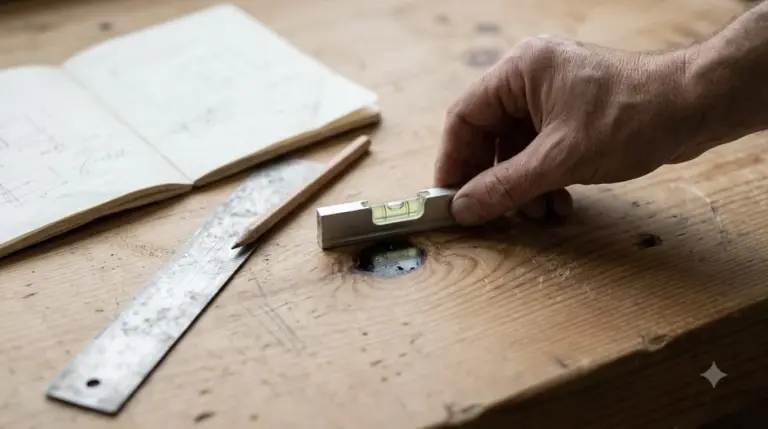 How to Fill Knots with Epoxy for a Smooth, Durable Wood SurfaceUpdated Nov 26, 2026
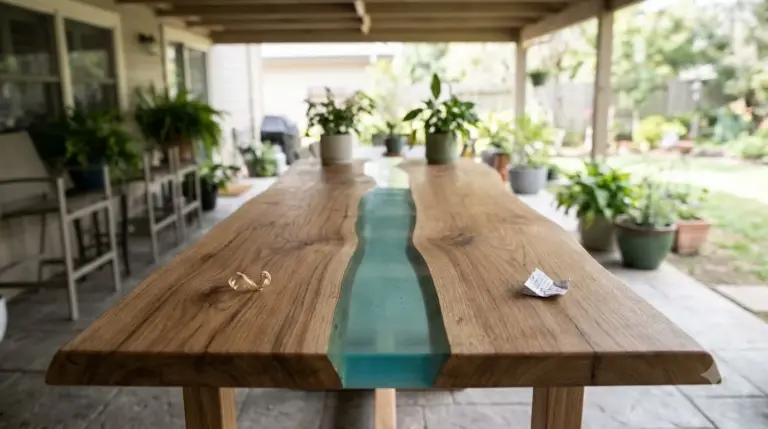 Outdoor Bar Top Epoxy: How to Pick a UV-Resistant Resin and Cure It RightUpdated Nov 26, 2026
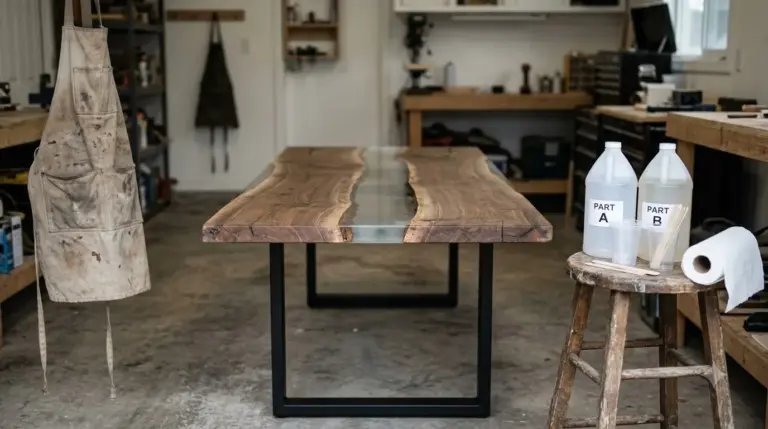 How to Make an Epoxy River Table: Step-by-Step Build for BeginnersUpdated Nov 26, 2026
 Pine Epoxy Table Guide: How to Prep Softwood for a Clean River PourUpdated Nov 26, 2026
 Spalted Maple Epoxy Table: How to Stabilize, Pour, and Care for OneUpdated Nov 26, 2026