

We may earn a commission when you buy through links on this page, at no extra cost to you. Learn more.
Is resin art dangerous? Uncured resin and its fumes can be harmful, while fully cured resin is generally considered safe to handle. According to Union Fab’s overview of resin toxicity, the liquid form carries most of the risk because it contains volatile chemicals that irritate the skin, eyes, and lungs. With basic protective gear, good airflow, and careful handling, a home studio can keep that risk low. Sanding cured resin can still create an irritating dust, so that step needs its own precautions.
This guide separates real hazards from common myths. You will learn which chemicals matter, how exposure actually happens, and which gear and habits protect you at a kitchen table or garage bench.
What Makes Resin Art Potentially Dangerous
The danger depends on the resin type and the stage it is in. Most of the risk sits in liquid resin before it hardens, not in the finished piece on your shelf.
Resin art usually relies on epoxy, UV resin, or occasionally polyester resin. Each one carries different concerns. Epoxy contains BPA and amine hardeners that can irritate skin and cause long-term allergies. Polyester releases styrene, a strong-smelling vapor that can affect the lungs and brain. UV resin contains acrylate monomers that irritate the skin, eyes, and lungs before curing.
Polyurethane resin is another type to know. It releases isocyanates, which are highly toxic to the lungs and may cause asthma. Hobbyists rarely use it for pour art, but the label should still be read.
| Resin type | Main concern while uncured | Caution level in one safety guide |
|---|---|---|
| Epoxy | Skin irritation and sensitization from BPA and amine hardeners | Moderate |
| UV resin | Acrylate monomers irritating skin, eyes, and lungs | High caution |
| Polyester | Styrene vapor affecting the lungs and brain | Very high caution |
| Polyurethane | Isocyanates that irritate the lungs and may cause asthma | Not rated in that guide |
Uncured Resin Health Risks: Skin, Eyes, and Sensitization
Uncured resin is the main hazard for hobbyists. Union Fab describes it as very toxic in its liquid form, and the risk drops once the material has fully cured.
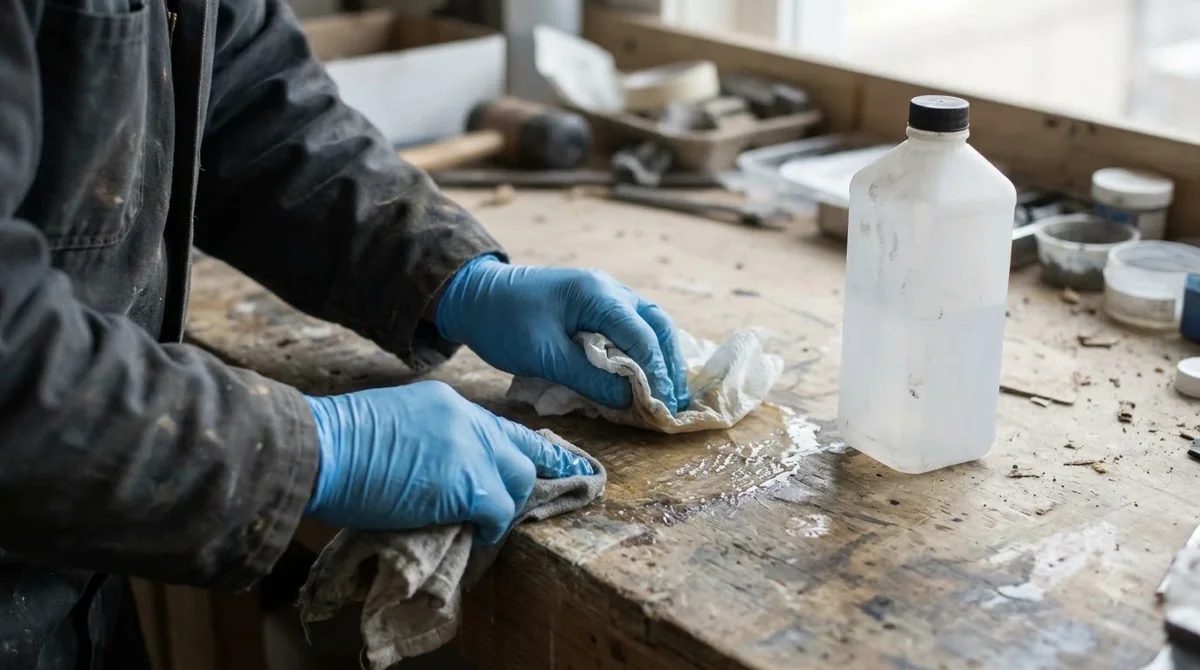
Skin contact is the most common route of exposure during mixing and pouring. Repeated contact can cause irritation, rashes, and allergic reactions. Some people become sensitized over time, which means a small exposure can trigger a reaction that did not occur before.
Eye contact is a separate concern. Splashes can cause serious irritation, so eye protection is not optional. Swallowing resin is dangerous, and the safety data sheet should be your first reference for first aid steps.
Research on BADGE, the main component in many epoxy systems, adds another layer. EHN’s report on health risks in woodworking and art supplies found that only nine of 16 epoxy resin kit brands it reviewed provided safety data sheets. Those that did reported BADGE concentrations as high as 70% to 100%. The International Agency for Research on Cancer found limited evidence for BADGE’s carcinogenicity in 1989 and noted that its metabolite glycidaldehyde is possibly carcinogenic to humans. Regulators have not set workplace exposure limits for BADGE, so the safest habit is to limit skin contact and inhalation every time.
Fumes, Ventilation, and Safe Gear for a Home Studio
Fumes and skin contact are the two exposures you can control most easily. The right gear and airflow remove most of the everyday risk from resin art.
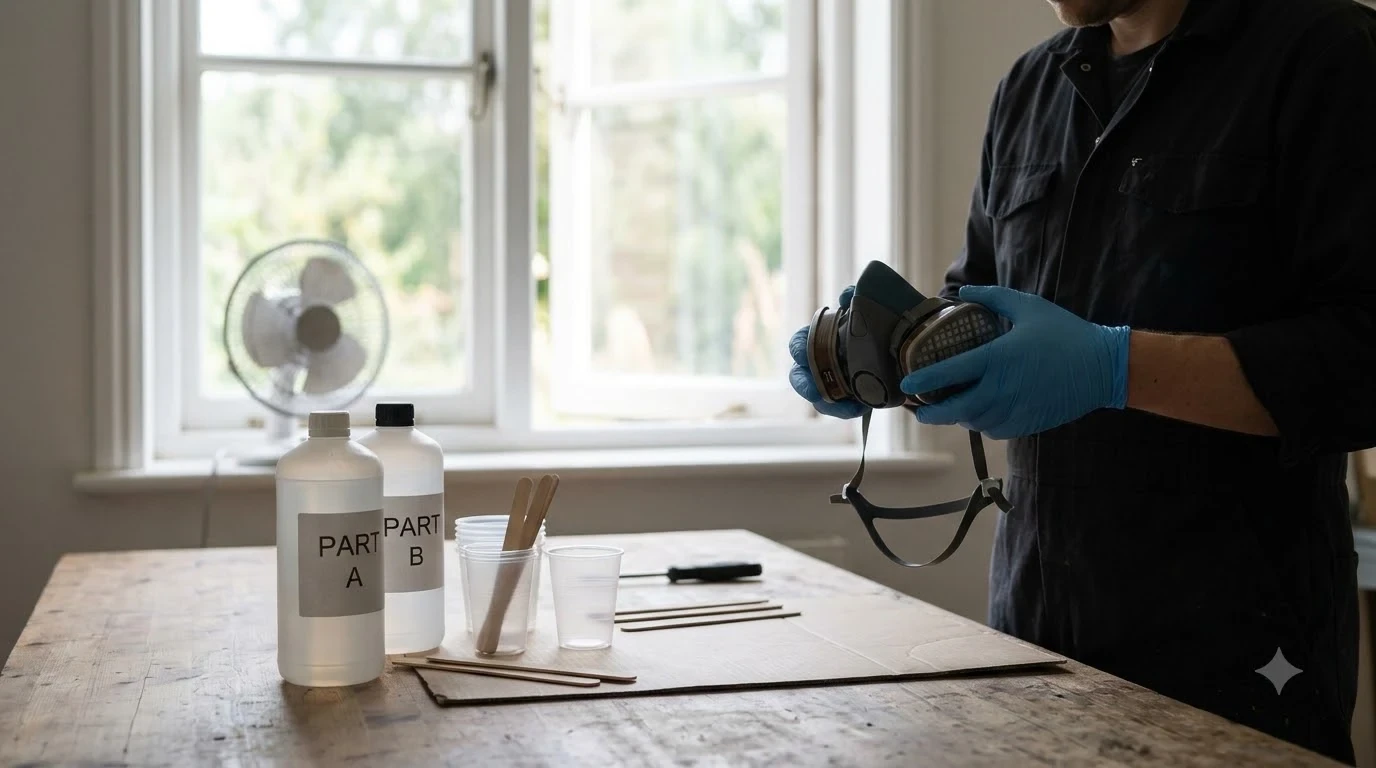
Gloves should be chemical-resistant nitrile, not latex. Eye protection should be safety goggles or a face shield. Wear long sleeves and an apron so resin does not reach your skin. For fumes, a NIOSH-certified respirator with organic vapor cartridges is recommended when ventilation is not enough. Replace cartridges regularly, because they lose effectiveness over time. A standard dust mask does not filter organic vapors.
Ventilation matters as much as the respirator. Work in an open or well-ventilated space, use an exhaust fan or fume extractor for indoor projects, and position your table near an open window when you can. Avoid small, closed rooms. If you are just starting, the step-by-step setup in resin art for beginners shows how to arrange a workspace that stays clear of fumes.
- Nitrile gloves, changed if they tear or resin touches them
- Safety goggles or a face shield for every pour and mix
- NIOSH-certified respirator with organic vapor cartridges when airflow is limited
- Long sleeves, an apron, and closed-toe shoes
Safety: Check the product’s safety data sheet before you start. It lists the required gloves, respirator type, and first aid steps for that exact product.
Safe Handling, Mixing, and Disposal Practices
Careful habits during mixing and curing prevent most accidents. Set up your area, mix slowly, and clean as you go so resin does not spread to surfaces you touch later.
Plan your session so each step is done in order. Keep the work area clear of food, drinks, and cigarettes. Ideas for small projects that need only a few steps are listed in resin art ideas, which can help you plan a manageable first pour.
- Read the label and safety data sheet. Confirm the resin type, the hardener, and the first aid guidance.
- Set up ventilation and cover the table. Use a disposable or silicone mat to catch drips.
- Put on gloves and eye protection before opening containers.
- Measure and mix exactly as the manufacturer directs. Mixing errors can leave soft or sticky resin.
- Pour in a controlled way and keep tools in one zone.
- Let the piece cure in a cool, dry, ventilated spot, away from children and pets.
Disposal needs the same care. Uncured or leftover resin and hardeners should go to a hazardous waste disposal facility. Never pour them down the drain or into regular trash. Cured resin is usually inert and may go with regular household waste, but check your local rules first.
Spills should be absorbed with inert materials such as sand or cat litter. Place the absorbed material in a sealed container and take it to a hazardous waste site. Wipe the surface with a cloth, and wash your hands afterward even if you wore gloves.
Safety: Heat tools such as blowtorches can ignite some materials. Wear protective gear, keep flammable items away, and keep a Class B fire extinguisher nearby, as Pourfect advises for flammable liquids.
Is Cured Resin Art Safe to Display and Sand?
Fully cured resin is generally considered safe to touch and display in a home. The main caution is dust created during sanding or finishing.
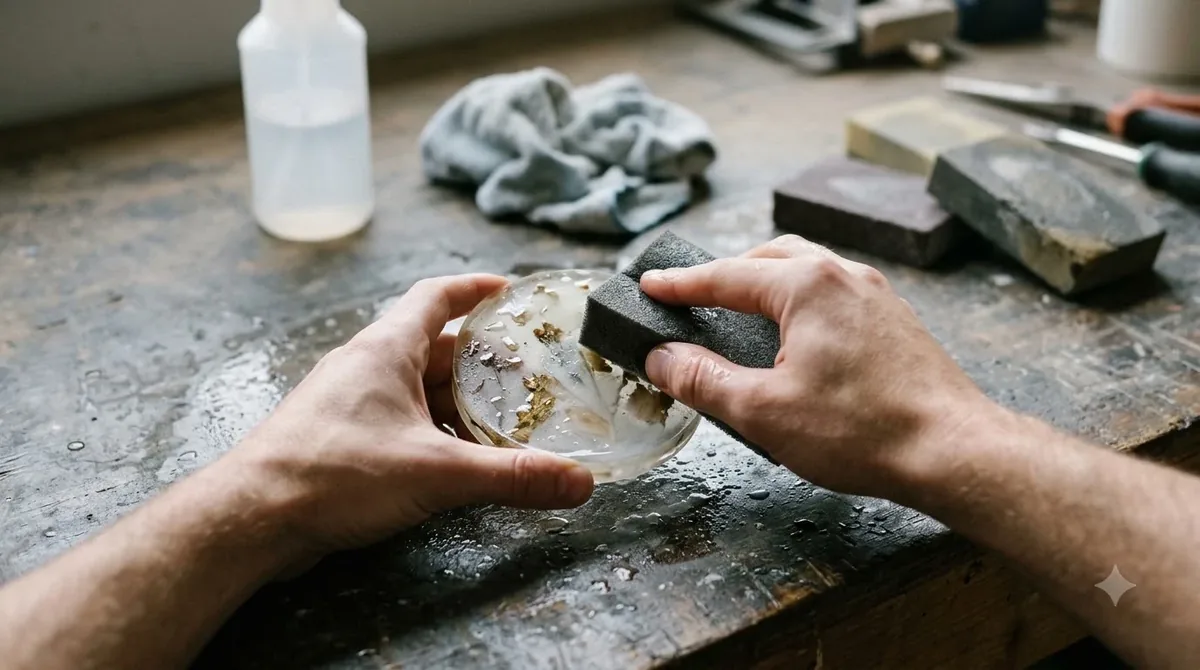
Cured resin is chemically stable, so a finished coaster or tray is not releasing fumes. Sanding changes that picture. Fine particles can irritate the eyes, nose, and throat, and a respirator rated for particulates or organic vapors is a sensible choice while sanding. Sand in a ventilated area, and use wet sanding or a dust extractor when you can.
EHN’s reporting adds a note of caution. Its experts said very few chemical reactions are 100 percent complete, so small amounts of residual BADGE could become airborne on dust during finishing. Keep sanding dust out of kitchens and off food-contact surfaces, and clean up with a damp cloth rather than sweeping.
Display pieces are a different matter from heavy use. If you are planning larger décor such as river tables or resin-wood art, browse Resin Art & Decor projects to see how finishing and sanding fit into each build.
Common Resin Safety Myths, Debunked
Many myths about resin come from mixing real risks with exaggerated claims. A few clear facts can help you focus on the hazards that actually matter.
- Myth: Cured resin is always toxic. Fact: Fully cured resin is generally considered safe, though sanding dust can irritate.
- Myth: A regular dust mask protects against fumes. Fact: Organic vapors need a respirator with the right cartridges.
- Myth: Latex gloves are fine. Fact: Nitrile is the recommended glove for resin work.
- Myth: UV resin is harmless because it is cured by light. Fact: Its acrylate monomers irritate skin, eyes, and lungs before curing.
- Myth: A small room is fine if you open the door. Fact: Small, enclosed spaces are a poor choice for fumes.
Frequently Asked Questions
Is cured epoxy resin safe to touch and use?
Fully cured epoxy is generally considered safe to touch and handle, according to Union Fab’s resin safety overview. Uncured material is the risk, so wait until the piece has hardened completely before handling it. If resin was not fully mixed or cured, it may still release harmful substances.
Does sanding cured resin release harmful dust?
Sanding can produce dust that irritates the eyes, nose, and throat. Wear eye protection and a respirator suited to fine particles, and sand in a ventilated space. Wet sanding reduces airborne dust, and a dust extractor helps further.
Do I need a respirator when working with epoxy resin indoors?
A respirator is recommended when ventilation is not sufficient, according to the resin safety guidance cited in this article. Use a NIOSH-certified model with organic vapor cartridges, and replace the cartridges regularly. Good airflow from an exhaust fan or open window reduces how often you need it.
How should I dispose of leftover uncured resin in the US?
Uncured resin and hardeners should go to a hazardous waste disposal facility. Do not pour them down the drain or throw them in household trash. Contact your local waste authority to find a drop-off site, since rules vary by area.
Resin art can be done safely at home when you respect the uncured stage. Choose the right gloves, eye protection, and ventilation, and follow the manufacturer’s safety data sheet. With those habits in place, most of the danger is easy to control.
More in Resin Art & Decor
 What Is a Resin Art Kit? What It Includes and How to StartUpdated Nov 26, 2026
 Resin Lamp Ideas and How to Build a Glowing Piece at HomeUpdated Nov 26, 2026
 Resin Coasters for Beginners: Mix, Pour, and Cure a Glossy First SetUpdated Nov 26, 2026
 Resin Over Watercolor Without Bleeding: How to Seal and Pour SafelyUpdated Nov 26, 2026
 How Much Epoxy for a Tumbler? Measure by Ounces and Avoid WasteUpdated Nov 26, 2026
 Ocean Resin Art Tutorial: Make Realistic Waves on Canvas or WoodUpdated Nov 26, 2026