

We may earn a commission when you buy through links on this page, at no extra cost to you. Learn more.
What is mica powder used for in resin? It adds color, shimmer, and pearl or metallic effects that plain pigment powder cannot provide. For small projects, one gram per 1 to 5 ounces of epoxy is a common starting guideline, and one gram is roughly a quarter teaspoon. For pours over half a gallon, the Love Acrylic Painting guide suggests about 1 to 3 percent mica by weight. Start with less and add more only as needed.
If you have admired a shimmering river table or a pearly resin coaster, mica powder is often the reason. This guide explains what it is, how it creates its effects, how much to add, and how to avoid the clumps, uneven color, and overly opaque pours that frustrate many beginners.
What Is Mica Powder and Why It Shimmers
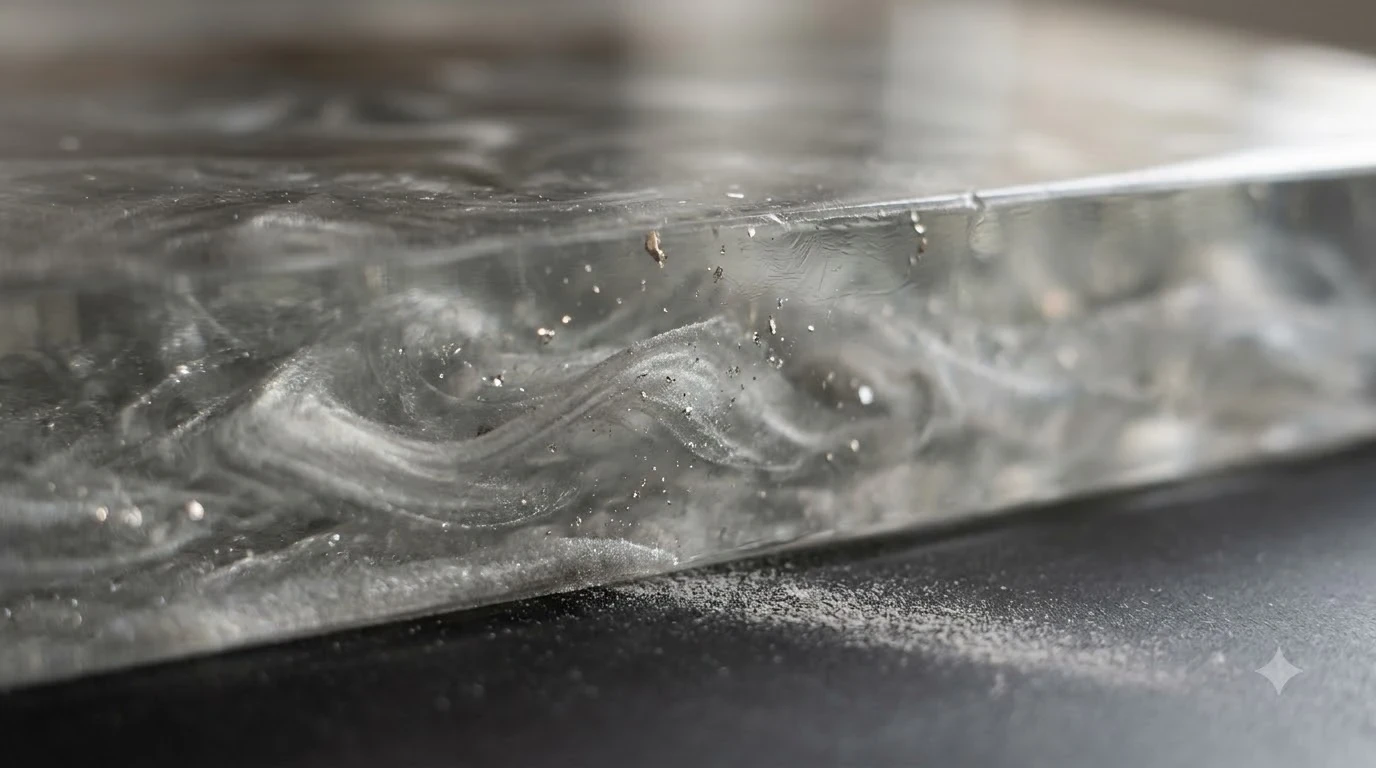
Mica powder is a fine shimmer pigment that colors resin and adds reflective sparkle in the same step. It is made from a naturally occurring mineral that is processed into a very fine powder. Because the particles reflect light, the color appears to move as you change your viewing angle.
According to Love Acrylic Painting, mica is mined, dehydrated, and combined with substances such as iron and tin oxide before it becomes powder. Resiners notes that mica powder is mostly made from muscovite and is heat resistant. Some powders are made in a lab instead, and Amber Oliver describes synthetic mica as usually more affordable with a wider color range.
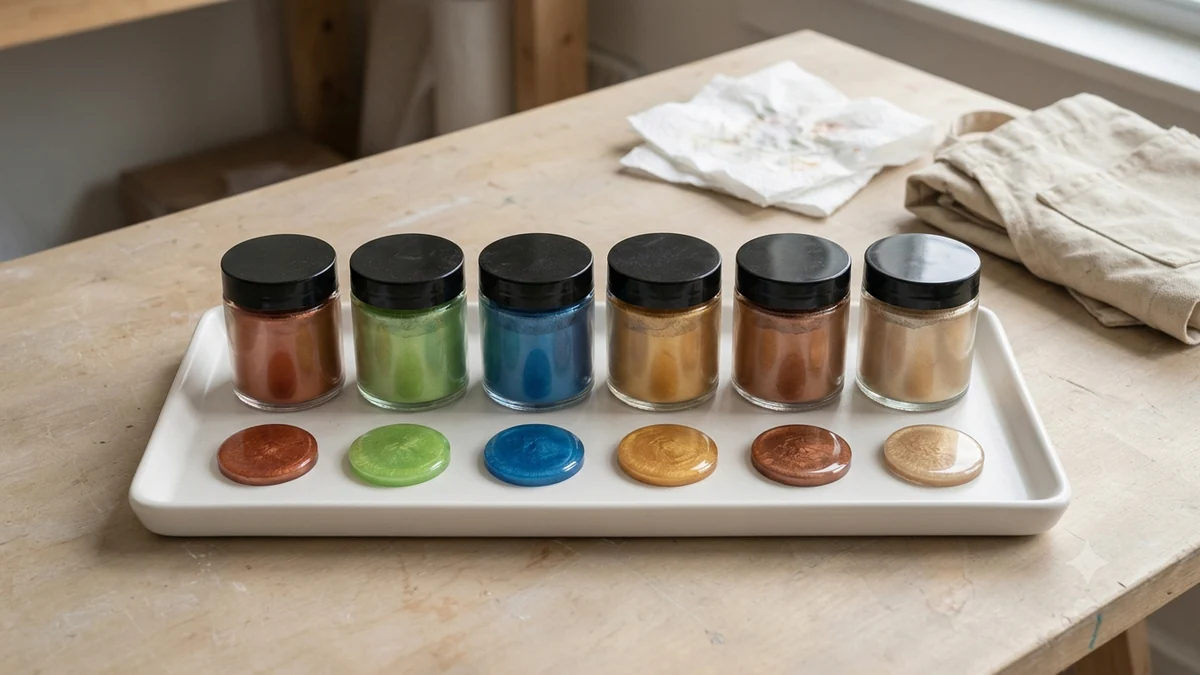
Natural ground mica is the option most often chosen for pearlescent and metallic looks, according to Amber Oliver. Synthetic versions are popular when you want a broad palette of bright colors. Neither type is automatically better, so choose based on the finish you want and the instructions from the maker of your resin.
The main difference from ordinary pigment is the finish. Regular epoxy pigment powder produces a matte look, while mica adds sparkle and shine. If your goal is a flat, solid color, a standard pigment may be the better tool. If you want depth and glimmer, mica is the more suitable choice.
Common Uses of Mica Powder in Resin Projects
Mica powder is most often used for river tables, resin art, coasters, trays, and jewelry. Makers also add it to acrylic paint and polymer clay for the same shimmer. The best project type depends on how much resin you pour and how much movement you want to see.
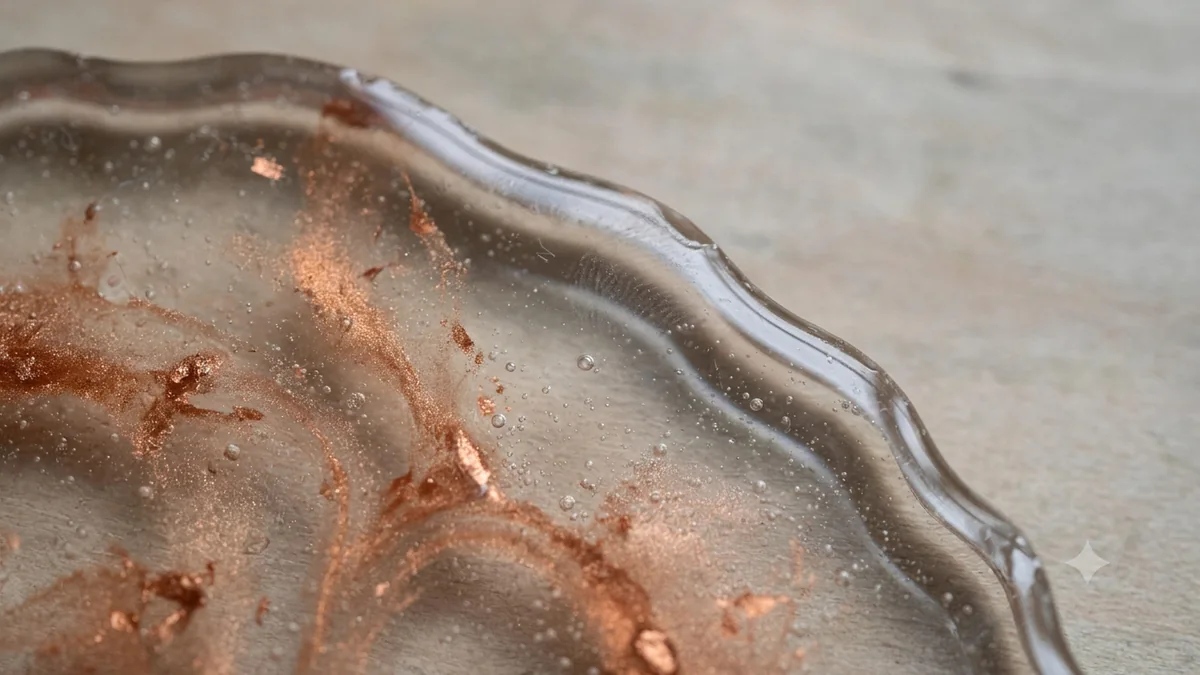
Jeff Mack Supply lists epoxy river tables, resin art, coasters, trays, candles, soap, polymer clay, and paint among common uses. The same source says blue, green, black, gold, and colour-shift powders are popular for river tables. Blue and green suggest water, while black, gold, and bronze create a bolder, more modern look.
Eye Candy Pigments recommends mixing mica into resin for jewelry, coasters, artwork, and tabletops and countertops for a glass-like shimmer. Amber Oliver says mica powder can be added to epoxy river tables for color and a metallic effect. Both sources point to the same idea: mica works well when the piece will be viewed in good light.
Swirl effects are another common use. Love Acrylic Painting describes dividing the mixed resin into separate cups, coloring each one, pouring the base color first, and then swirling the colors with a toothpick or skewer before the epoxy cures. This approach gives marbled or galaxy-style patterns without extra tools.
Mica can also go into acrylic paint for a shimmering finish on wall art or decor. Amber Oliver suggests this for clay pots and similar pieces. If you plan to mix mica with paint as well as resin, read more about using acrylic paint in resin before you start.
How Much Mica Powder to Add to Resin
A common starting point is 1 gram of mica per 1 to 5 ounces of epoxy for small pieces. For larger pours, about 1 to 3 percent by weight is suggested. Amber Oliver uses a different rule of thumb, so compare the methods and check your resin maker’s instructions before you mix.
| Project size | Starting amount from the sources | What changes the look |
|---|---|---|
| Small jewelry or coaster batch | 1 gram per 1 to 5 ounces of epoxy, about a quarter teaspoon per gram | More mica gives a darker, more opaque color; less gives a clearer finish |
| Large pour over half a gallon | About 1 to 3 percent mica by weight of the total mixture | Use less for a transparent finish and more for a stronger color |
| Opaque color in a full gallon | About 3 to 4 ounces of mica per gallon, per Love Acrylic Painting | One gallon of epoxy weighs about 9 pounds, so a scale helps |
| Rule-of-thumb method | 1 teaspoon per ounce of resin, per Amber Oliver | This is a much heavier dose than the gram guideline; start small and add gradually |
Weighing your mica is more accurate than measuring by spoon. Powders vary in density, so a teaspoon of one color may weigh more or less than a teaspoon of another. If you only have spoons, use the rule as a rough guide and stop when you reach the color you want.
Remember that too much mica can make the pour look opaque instead of clear, according to Amber Oliver. Too little can leave the piece translucent. Adding powder in small increments lets you see the change before you commit the full batch.
Tip: Keep a small notebook with the gram weight, the resin volume, and the color used for each batch. That record makes it easier to repeat a shade you like.
How to Mix Mica Powder Into Epoxy Without Clumps
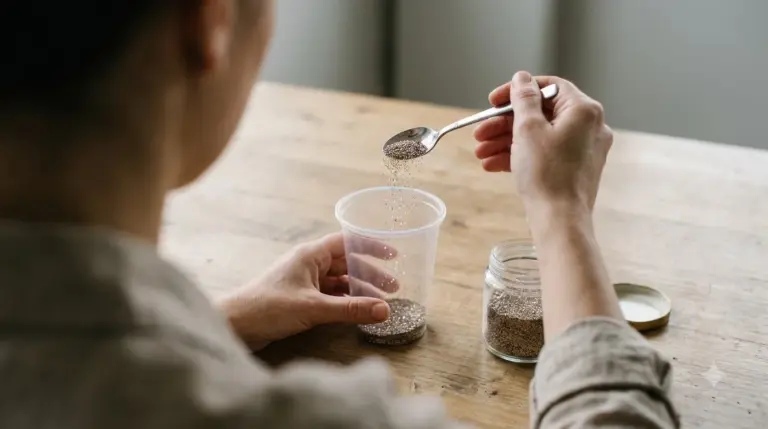
Mix the resin and hardener first, then blend the mica in slowly. Clumps usually come from powder that was not fully integrated, and moisture in the container can also cause problems. Work slowly and check the edges of the cup before you pour.
- Mix resin and hardener first. Love Acrylic Painting says to mix for about 5 to 8 minutes, following the package directions.
- Measure your mica. Use the gram or ounce guideline from the section above, and weigh it on a scale if you can.
- Choose your mixing method. A mixing stick works for small batches. For larger projects, the same guide suggests a paint-mixing drill bit.
- Pre-mix if needed. Blend the powder into a small amount of resin or a little alcohol until it dissolves, then add that mix to the main batch.
- Stir slowly. Eye Candy Pigments advises slow stirring to avoid bubbles.
- Check for unmixed pockets. Scrape the sides and bottom of the cup so no dry powder is left behind.
- Divide for swirls if you want them. Color each cup separately, pour the base color first, then swirl with a toothpick or skewer.
- Allow full cure time. Eye Candy Pigments says resin generally takes 24 to 72 hours to cure fully, so keep the piece undisturbed until then.
For a detailed walkthrough of cleaning, pouring, and curing, the Eye Candy Pigments guide to mica in epoxy covers the full process. Its advice on bubbles matches the slow-stir method above.
If bubbles rise to the surface after pouring, Eye Candy Pigments recommends a heat gun or torch to pop them. Move the heat source steadily and do not hold it in one spot. Amber Oliver also advises a heat gun for deep pours that need a smooth finish.
Mica Powder vs. Resin Dye and Other Inclusions
Mica powder adds shimmer, while resin dye and standard pigment add flat color. Inclusions such as rocks or objects are physical items placed inside the resin. Each material does a different job, so the right choice depends on the look you want.
| Material | Main effect | Finish | Typical use |
|---|---|---|---|
| Mica powder | Color plus sparkle, pearl, or metallic shine | Glossy and reflective | River tables, coasters, jewelry, swirls |
| Regular epoxy pigment or resin dye | Plain color | Matte finish, per Love Acrylic Painting | Solid color without sparkle |
| Embedded objects | Physical items you can see through the resin | Depends on the object | Rocks, shells, and similar items |
Love Acrylic Painting explains that regular resin dye gives an opaque look without sparkle, while mica produces a shiny, glossy finish with shimmering effects. You can adjust the transparency of dye by changing the amount, but that does not add reflection. If you want both color and shine, mica is the better match.
If your plan is to set objects into the pour, read about rocks in resin to see how embedded items behave. Mica and inclusions can be used together, but the powder can settle around heavy objects if the mixture is not stirred well. For a broader view of embedding, the inclusions and embedding guide covers the basics.
Troubleshooting, Storage and Safety
Most mica problems come from clumps, uneven color, bubbles, or too much powder. Good storage and careful handling prevent many of them. Use the table below to match the symptom to the likely cause and fix.
| Symptom | Likely cause | Fix |
|---|---|---|
| Clumps in the resin | Insufficient mixing or moisture in the powder | Stir longer, pre-mix in resin or alcohol, and gently shake or sift the container |
| Uneven or streaky color | Powder not fully integrated | Scrape the cup and check for unmixed pockets before pouring |
| Bubbles on the surface | Fast stirring or air trapped while mixing | Stir slowly and use a heat gun or torch to pop bubbles |
| Opaque instead of clear | Too much mica for the project | Reduce the dose next time and add powder in small steps |
Eye Candy Pigments says mica is sensitive to moisture and light. Store it in airtight containers in a cool, dry place away from direct sunlight. Label each container with the color name, and use clean, dry tools each time. If powder does clump in storage, gently shake the container or sift it before use.
Safety matters when you handle any fine powder. Resiners advises wearing a mask to avoid breathing in dust and working in a well-ventilated room. Love Acrylic Painting says pure mica is safe on the skin but should not be inhaled or ingested, because large amounts can cause discomfort or internal scarring.
Safety: Wear gloves and a mask, work in a ventilated room, and read the resin and pigment safety data sheets before you start. Keep mica away from food preparation areas.
Frequently Asked Questions
Can mica powder be used in food?
Only food-safe mica should go in anything you eat. Resiners says non-food mica must not be used in food, and that FDA-approved or edible-labeled products are the ones to look for. Craft mica that has no edible label should stay out of baking and candy.
Is mica powder safe to use around skin?
Love Acrylic Painting says pure mica powder is safe to apply to skin and other extremities. It still should not be inhaled or swallowed. Resiners adds that cosmetic-grade labeling is the best sign a powder is intended for body use, so check the package before using it.
Can I use mica powder in epoxy river tables?
Yes, Amber Oliver says mica powder can be added to epoxy river tables for color and a metallic effect. Jeff Mack Supply lists blue, green, black, gold, and colour-shift as popular river table choices. Some pigment makers describe very fine particles designed to stay suspended while the epoxy cures, which can reduce settling.
How long should I wait before handling a mica resin piece?
Eye Candy Pigments says resin generally takes 24 to 72 hours to cure fully. During that time, avoid touching or moving the piece. The exact time depends on the resin brand and the temperature of your workspace, so follow the maker’s instructions for your product.
Start with a small test batch so you can see how your chosen mica behaves in your resin. Weigh the powder, mix slowly, and record what you used. With a few small trials, you will know the dose and technique that give you the shimmer you want.
More in Inclusions & Embedding
 How to Mix Glitter into Resin Without Clumping or SinkingUpdated Nov 26, 2026
 Resin Projects with Dried Flowers: How to Prep, Seal and Cure Them RightUpdated Nov 26, 2026
 Hair in Resin: Why It Floats, Bubbles or Yellows, and How to Prevent ItUpdated Nov 26, 2026
 Wood in Resin: Which Woods Work and How to Seal Them for Clear, Bubble-Free ResultsUpdated Nov 26, 2026
 Can You Put Fresh Flowers in Resin? Why They Brown and How to Dry Them RightUpdated Nov 26, 2026
 How to Preserve Dried Flowers in Resin So They Stay Bright and FlatUpdated Nov 26, 2026