

We may earn a commission when you buy through links on this page, at no extra cost to you. Learn more.
How long does art resin take to cure? For ArtResin, the manufacturer says the piece is dry to the touch in about 24 hours and fully cured in 72 hours. The product has about 45 minutes of working time after mixing, and the 1:1 mix is stirred for at least 3 minutes. Recommended conditions are 75-85°F (24-30°C) and 50-80% humidity. Thicker pours and cold or hot rooms change these times, so the exact timing depends on your project.
Cure time is the question most resin artists ask before they set a deadline for a show, a gift or a shipment. The answer is not one number. Resin moves through several stages, and each stage has a different use. This guide explains those stages, what changes the timing, and how to troubleshoot a piece that stays tacky.
What Cure Time Really Means for Art Resin
Cure time describes the chemical reaction that turns a liquid mix into a solid. Most people count it in three stages: working time, dry to the touch, and full cure. Each stage tells you what you can safely do with the piece.
Working time is the window when the mixed resin still flows and spreads. For ArtResin, the company describes about 45 minutes before the mix thickens and becomes hard to spread. Pour and spread the resin soon after the 3-minute stir.
Dry to the touch comes next. ArtResin states that a piece is hard to the touch after about 24 hours. At that point the company says the surface is roughly 95% solid, and a piece can be moved from its curing spot and hung on a wall.
Full cure is the final stage, which the company puts at 72 hours. The difference in hardness between day one and day three is small for coated paintings, drawings and sculptures. For coasters, bar tops and pieces you plan to pack and ship, the extra days matter more.
Typical Cure Times by Product Type and Thickness
Cure time depends on the product and the depth you pour. ArtResin publishes its own timeline, while other brands list different numbers on their labels. Always check the technical data sheet or label for the product you bought.
The table below uses the ArtResin figures from its own pages. It also shows how depth changes the work you can do between pours.
| Stage | ArtResin timing (per manufacturer) | What you can do |
|---|---|---|
| Working time | About 45 minutes after mixing | Pour and spread the resin |
| Gel stage for a new layer | 3-5 hours between layers | Add the next layer to a thick build |
| Dry to the touch | About 24 hours | Move the piece and hang it on a wall |
| Full cure | 72 hours | Pack and ship the piece |
Thickness is the biggest variable after temperature. ArtResin says it self-levels to about 1/8 inch (3 mm) per layer. A thicker depth needs several layers, and each layer needs its own cure time. If you pour too deep in one go, the bottom may stay soft far longer than the top.
When you build depth, pick one of two methods. You can add the next layer while the first is at the gel stage, which the company describes as 3-5 hours. You can also wait for a layer to fully cure, then sand it lightly with a dust mask before the next pour. The manufacturer’s ArtResin FAQ page lays out both methods step by step.
Tip: Keep a written log of pour time, layer depth and room temperature. A log makes it easy to see why one piece cured faster than another.
How Temperature and Humidity Change the Clock
Temperature has the strongest effect on cure time. ArtResin recommends 75-85°F (24-30°C) and says warmer rooms speed up both working time and curing. Cold rooms slow the reaction, so a piece in a chilly garage can stay tacky much longer than expected.
The company also warns about spaces above 85°F (25°C). In that range, both working and cure times shrink, which leaves less time to spread and level the surface. Warming the bottle in a water bath can shorten working time too. The company estimates about 10 minutes less when the resin is warmed this way.
Humidity matters as well. ArtResin lists 50-80% humidity as the target range. Keep the room dry and steady, especially during the first 24 hours, because temperature swings can cause dimples or an orange-peel texture on the surface.
Signs Your Resin Is Fully Cured
A timer tells you when the cure should be done, but your eyes and fingers confirm it. Check the piece in good light before you stack, wrap or ship it. A fully cured surface should look hard and glossy, with no soft spots.
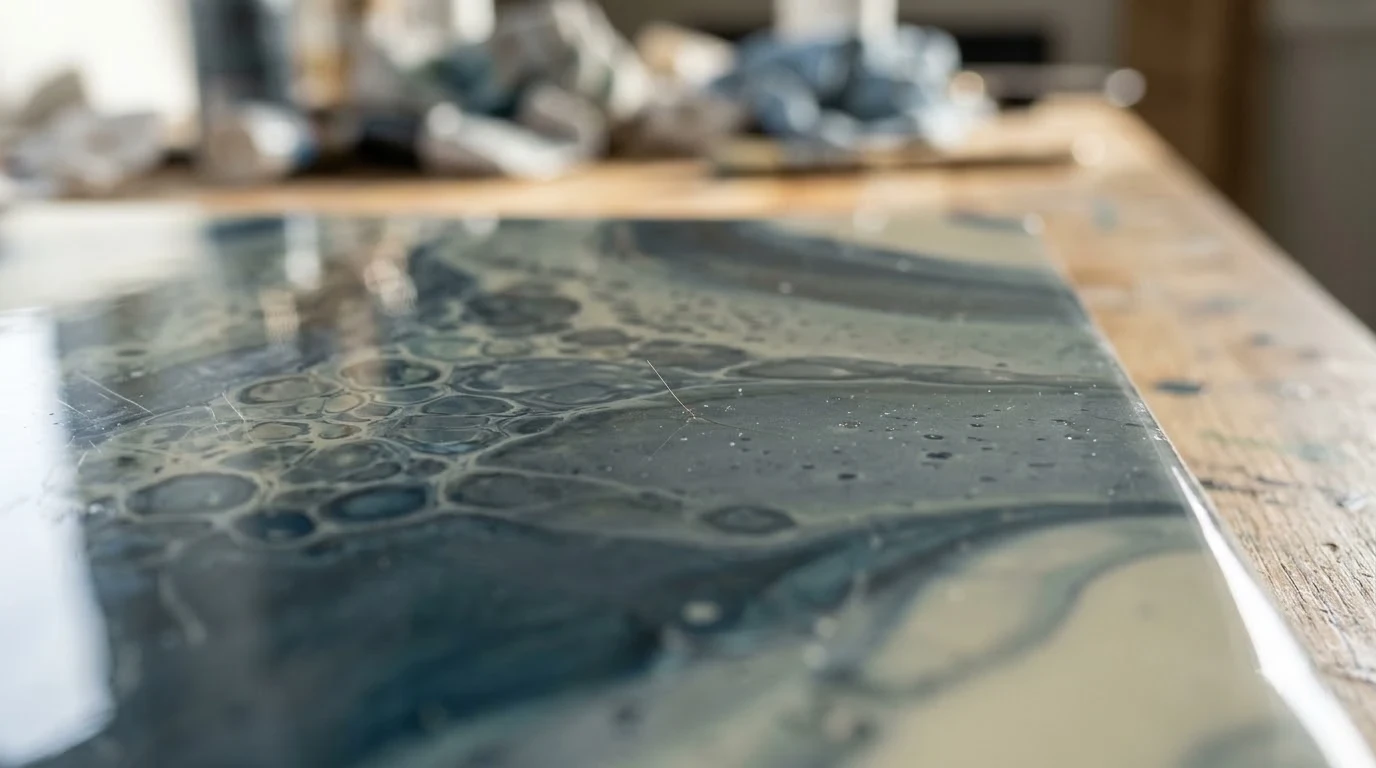
Start with a gentle touch test on an edge or an area hidden from view. Resin that is dry to the touch can still feel slightly soft under pressure. Wait until the whole piece feels hard and no print or fingerprint forms.
Watch for a smell as well. Most cured epoxy has little odor, while uncured resin can still smell faintly sweet or chemical. If a piece smells strong or stays tacky after several days, the mix may be off or the room may be too cold.
Do not rely on color alone. Resin can look clear and feel firm while the center is still curing, especially in a deep pour. Give the full 72 hours before you package a piece for shipping. What Is Resin Art Kit explains a closely connected part of this problem.
Common Curing Problems and How to Fix Them
Most cure problems come from the mix, the temperature or the depth. Sticky resin after 72 hours usually points to a measuring or mixing error. Cloudy or yellow results often trace back to heat or moisture during the cure.
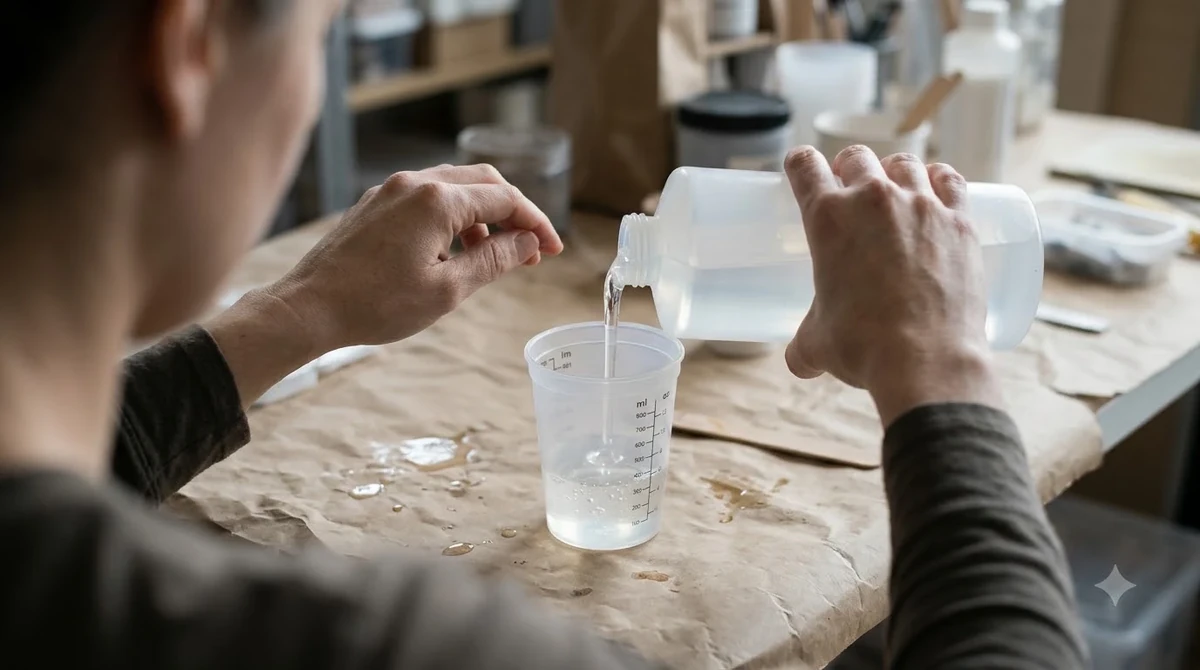
Measure equal parts by volume, not weight, and scrape the sides and bottom of the mixing cup while you stir for at least 3 minutes. Missed resin on the cup walls is a common cause of soft spots. Do not add extra hardener to speed things up, because ArtResin says that throws off the 1:1 ratio and can stop curing altogether.
Do not substitute another brand’s hardener or add solvents to try to speed the cure. ArtResin states that its kit parts work as a system. Mixing them with other products can leave the resin sticky indefinitely.
Yellowing can happen when resin cures too fast and generates heat. ArtResin says it lowered the accelerator to keep the product water-clear and resistant to yellowing. For that reason, a warm room is helpful, but a hot spot near a heater is not.
| Symptom | Likely cause | Practical fix |
|---|---|---|
| Still tacky after 72 hours | Uneven mix or unscraped cup walls | Check your measuring; the piece may need a careful sanding and recoat if it stays soft |
| Dimples or orange-peel texture | Temperature swings in the first 24 hours | Keep the room steady and away from drafts during the first day |
| Cloudy or hazy surface | Cold room or moisture during cure | Move the piece to a dry room in the 75-85°F range |
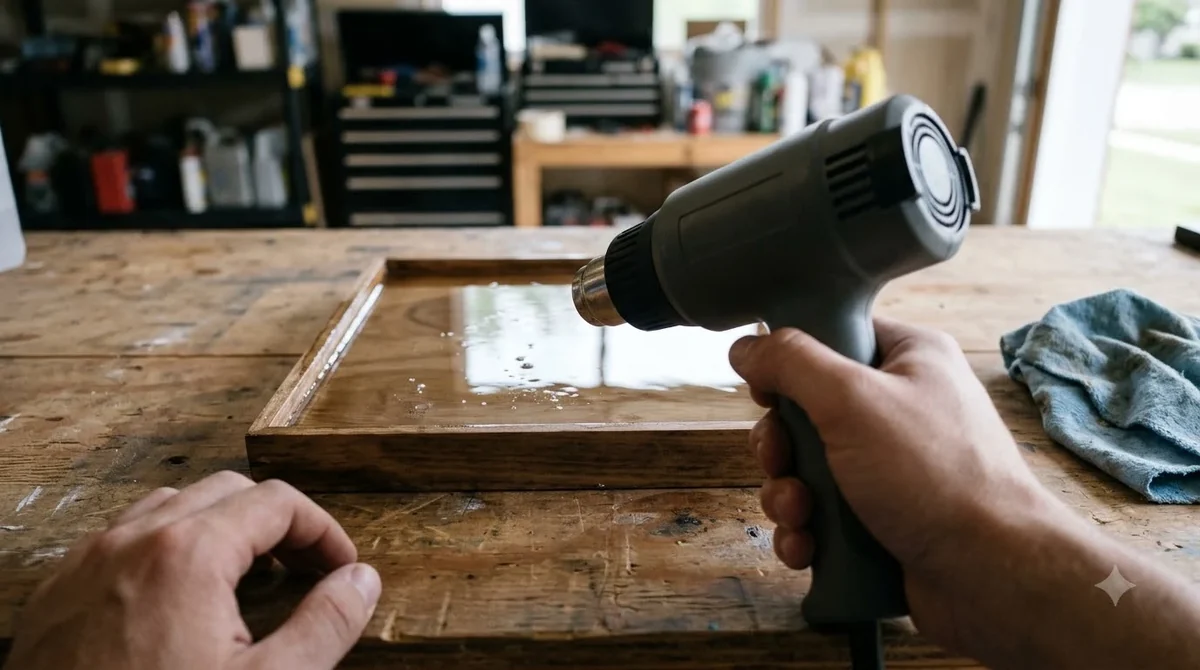
| Bubbles in the surface | Pour too fast or stirred too hard | Pass a butane or propane torch over the surface with a light, quick motion |
Safety Tips While Resin Cures
Resin is safest when you treat it as a chemical product with a clear routine. The manufacturer’s safety data sheet explains the hazards and first-aid steps for each product. Read it before you start, and keep it handy in the workspace.
Wear gloves while you mix, pour and clean up. ArtResin recommends working in a well-ventilated space, such as near an open window, door or fan. If ventilation is limited, the company recommends a respirator.
Keep leftover resin out of drains. Clean containers and reusable tools with isopropyl alcohol or acetone, or let uncured resin harden and peel it off the next day. Dispose of cured leftovers as your local rules allow.
Safety: Wear nitrile gloves, work with airflow, and read the product SDS before you start. If resin gets in your eyes or on your skin, follow the first-aid section of that SDS.
Frequently Asked Questions
How long does ArtResin take to cure completely?
ArtResin reaches full cure in 72 hours, according to the manufacturer. It is dry to the touch after about 24 hours. Keep the room between 75-85°F and 50-80% humidity for the best results.
What temperature should resin cure at for best results?
ArtResin recommends 75-85°F (24-30°C). Keep the temperature steady during the first 24 hours to avoid dimples. Above 85°F, the company says both working and cure times get shorter.
Can I speed up resin curing with a heat gun or space heater?
A space heater or heat lamp placed nearby can warm the room into the recommended range, according to ArtResin. Do not add extra hardener or solvents to speed the reaction. A heat gun is less precise and is better reserved for bubbles.
How long should I wait before hanging or shipping resin art?
ArtResin says a piece can be hung on a wall after about 24 hours. Wait the full 72 hours before you pack or ship it. Coasters and bar tops benefit from the full cure because they handle more wear.
Plan your timeline around the stage you need, not one headline number. Start by reading the product label and the manufacturer’s pages for cure details. For more project ideas, browse resin art ideas or the Resin Art & Decor collection, and if you are new to the process, the resin art for beginners guide walks through the first pour.
More in Resin Art & Decor
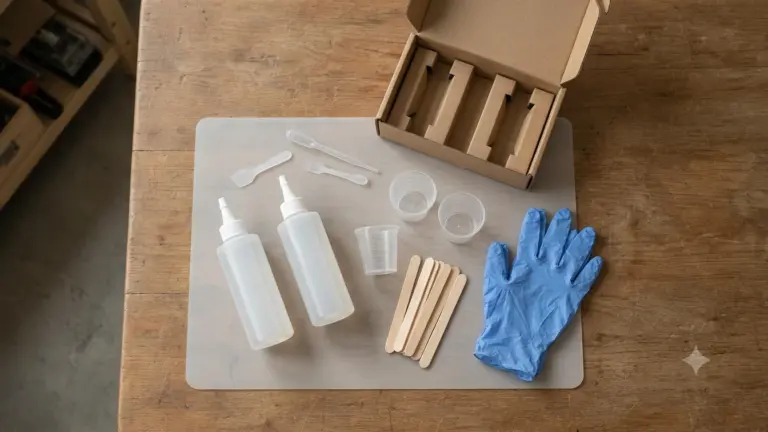 What Is a Resin Art Kit? What It Includes and How to StartUpdated Nov 26, 2026
 Resin Lamp Ideas and How to Build a Glowing Piece at HomeUpdated Nov 26, 2026
 Resin Coasters for Beginners: Mix, Pour, and Cure a Glossy First SetUpdated Nov 26, 2026
 Resin Over Watercolor Without Bleeding: How to Seal and Pour SafelyUpdated Nov 26, 2026
 How Much Epoxy for a Tumbler? Measure by Ounces and Avoid WasteUpdated Nov 26, 2026
 Ocean Resin Art Tutorial: Make Realistic Waves on Canvas or WoodUpdated Nov 26, 2026