

We may earn a commission when you buy through links on this page, at no extra cost to you. Learn more.
Can you use eyeshadow to color resin? Often yes, in small amounts, but none of the pigment sources reviewed for this page address eyeshadow directly, so treat it as an unverified pigment and run a small test batch first. Mica-based resin pigments have a stated ceiling of 3% of the combined resin and hardener weight, and too much pigment can interfere with curing. Starting amounts for mica range from 1/64 teaspoon per US fluid ounce for translucent color to 1/16 teaspoon for opaque color. Eyeshadow is a different product, so those numbers are a reference point, not a guarantee.
Many makers reach for eyeshadow because it is cheap, colorful and already on the shelf. It can look like a pearly mica pigment, but its formula is not the same. This guide explains what resin pigment makers say about mixing powders into epoxy, where eyeshadow is likely to cause trouble, and how to decide whether it belongs in your next piece.
What Eyeshadow Does in Epoxy Resin
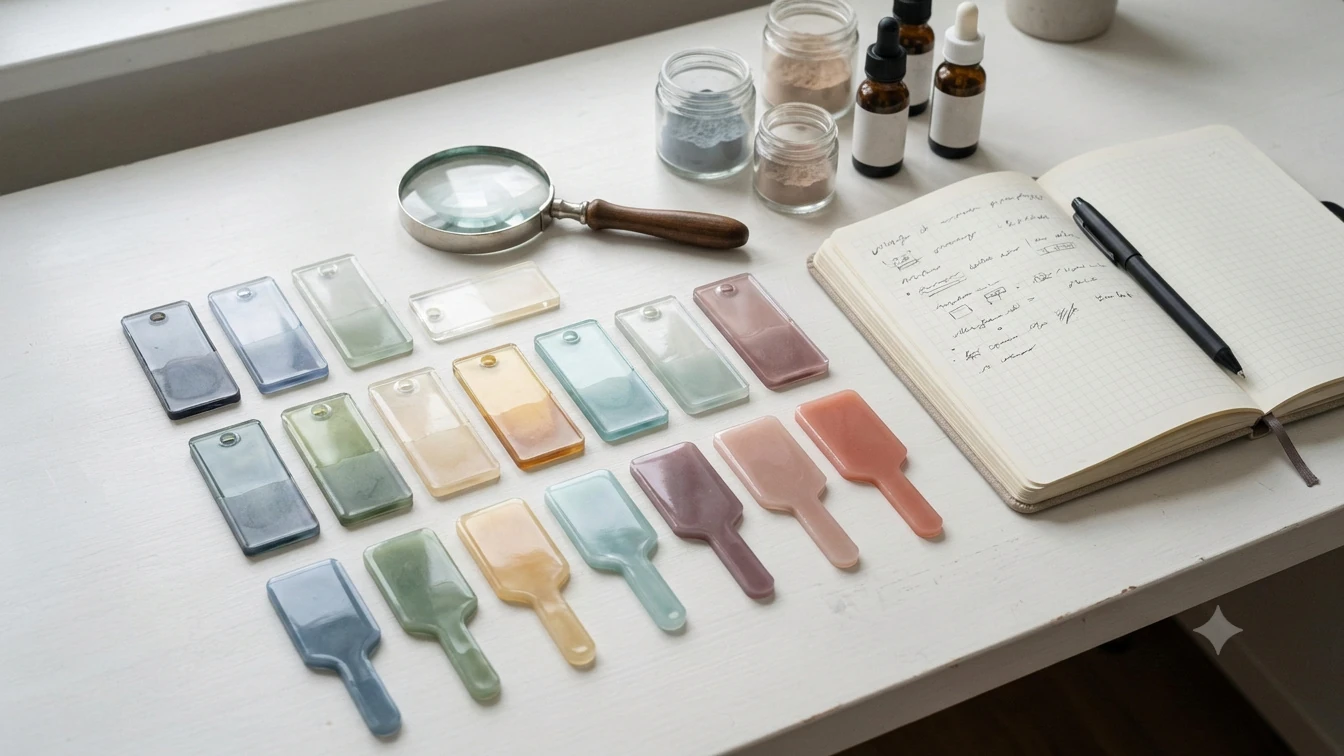
Eyeshadow adds color to resin by dispersing powder particles through the liquid, not by dissolving into it. Pigment makers describe this as the core behavior of their powders. The particles sit in the resin, and the final look depends on how evenly they spread and how much you add.
Eyeshadow is built for skin, not for a chemical mixture that cures. Cosmetic powders often contain binders and fillers alongside their color, and those ingredients are not designed to set inside a hardening resin. Because a product label may not list every component clearly, you should check the ingredient list and the manufacturer’s intended use before you commit.
Resin makers say that a pigment dispersing well does not guarantee it will behave well in your specific resin. That is why the mixing step matters as much as the color choice.
Eyeshadow in Resin: Does It Work?
Eyeshadow can work as a casual color accent in some projects, but no source reviewed here confirms it as a reliable resin pigment. Pigment suppliers talk about their own mica powders, pigment pastes and true metallic powders, not about drugstore or palette eyeshadow. Treat any eyeshadow result as an experiment until you see how your resin cures.
The biggest question is curing. Pigment makers warn that too much pigment can disrupt the resin-to-hardener reaction, which can leave a soft, tacky or poorly hardened finish. Eyeshadow may carry more filler than a dedicated mica, so it can add more solids per teaspoon than you expect. Start with much less than you would use of a named pigment.
Color is also hard to predict. Mica pigment makers note that the shade, base resin and layer thickness all change the final result. A pale eyeshadow in a thin coat may look nothing like the same shade in a deep pour. If you want a deeper understanding of how particles behave, the basics in our inclusions and embedding guide are a useful starting point.
Types of Eyeshadow That Mix Best
Matte powders and pearly powders behave differently in resin. Pigment sources describe pearlescent mica as light-reflecting and shimmery, which is why many eyeshadow shimmers appeal to resin makers. Matte shades have less reflective shine, and their color often depends more on the pigment load.
Loose, finely milled powders are easier to disperse than pressed compacts, which can be hard and chunky. If you do try eyeshadow, a loose powder with fine particles is the more reasonable choice. Avoid cream, liquid or glitter-heavy shadows, because their binders and larger particles are less predictable in a curing system.
Any shade you choose should be checked against its intended use. MEYSPRING notes that eye-area suitability does not automatically make a pigment suitable for other uses, and that its own shades carry specific restrictions. That same caution applies to eyeshadow. Being safe on the eyelid does not tell you whether a powder is appropriate for a finished resin piece you may handle often.
How to Mix Eyeshadow into Epoxy Resin
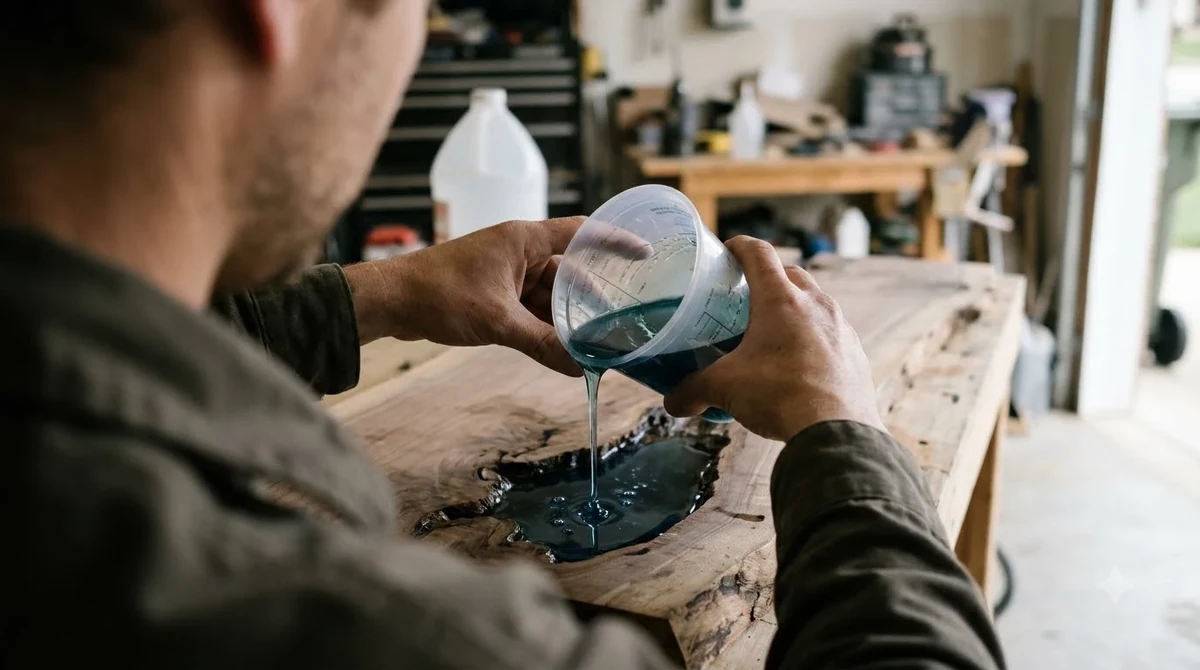
Mix your resin and hardener exactly as the resin maker directs before you add any color. Changing the resin-to-hardener ratio to fix color or thickness is a common mistake that can stop the piece from curing correctly. Keep the ratio fixed and adjust only the pigment.
Add a very small measure of eyeshadow to the mixed resin, then stir until the color is even. Pigment makers recommend adding pigment gradually and stirring until it disperses, unless the resin maker specifies another method. Pre-mixing the powder into a small amount of resin can help you avoid specks.
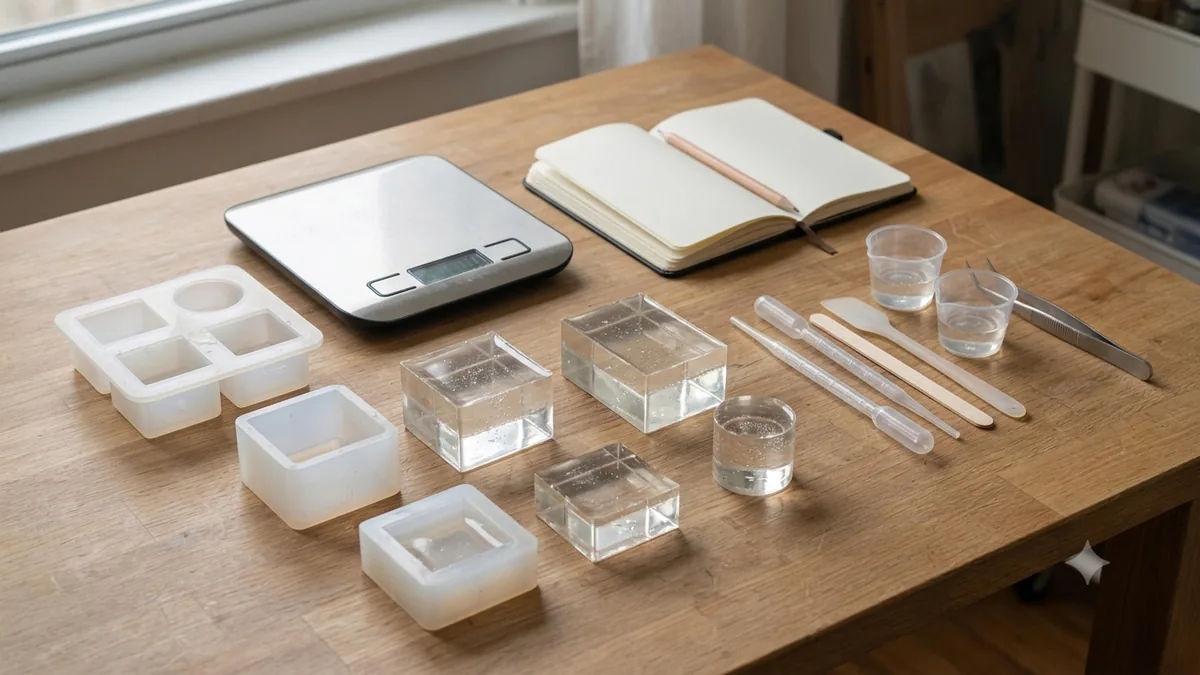
Use a scale if you can. The mica guidance gives a maximum of 3% of the combined resin and hardener weight, and a pigment paste guide suggests 1-3% by weight for typical use with a ceiling of 5%. These are limits for those products, so use them as a cautious upper bound for eyeshadow until your own test shows otherwise. Mica starting amounts, measured by volume, run from 1/64 teaspoon per US fluid ounce for translucent color up to 1/16 teaspoon for opaque color.
| Pigment type | Starting point from sources | Eyeshadow note |
|---|---|---|
| Mica powder, translucent | 1/64 tsp per US fl oz of mixed epoxy | Begin here for any eyeshadow test |
| Mica powder, semi-opaque | 1/32 tsp per US fl oz | Only after a clean test batch |
| Mica powder, opaque | 1/16 tsp per US fl oz | Use cautiously, watch for curing issues |
| Pigment paste | 1-3% by weight, not above 5% | Not a substitute, check the powder’s ingredients |
Tip: Mix a small cup of resin with a pinch of eyeshadow and let it cure fully before you decide. Check it for tackiness, color shift and clouding after several days.
Common Problems: Clumping, Cloudiness and Curing Issues
Clumping is the most visible problem. Pigment makers say unblended powder can create streaks or patches. If you see small lumps, keep stirring slowly, or pre-mix the powder into a little resin before adding the rest. Avoid whipping air into the mix, which adds bubbles.
Cloudiness is the second common issue. One pigment paste guide links cloudiness to overloading with pigment. Eyeshadow, with its binders and fillers, may cloud a clear resin even at small amounts. If your piece looks milky where you expected clear color, reduce the amount in your next test.
Curing problems are the most serious. Excess pigment can disrupt the reaction, leaving a tacky or improperly hardened finish. Resin may remain sticky or unsafe to handle until fully cured, which can take up to several days depending on the resin.
- Streaks or specks: the powder did not disperse; stir longer or pre-mix.
- Milky or cloudy finish: the pigment load is probably too high for a clear piece.
- Tacky surface after several days: reduce the pigment and check the cure at room temperature.
- Color shift: the cured shade may differ from the wet mixture, so judge only after cure.
Eyeshadow vs. Mica Powder and Alcohol Inks
Eyeshadow sits between two familiar options, dedicated resin mica and alcohol inks. Mica powders are sold for resin, and their makers publish starting amounts and limits. Alcohol inks are liquid colorants used in resin for swirling and reactive patterns. Eyeshadow is neither, so its results are less predictable than either.
| Option | Form | Guidance available | Main concern |
|---|---|---|---|
| Eyeshadow | Cosmetic powder with binders | Little to none for resin | Unknown curing effect |
| Mica powder for resin | Inert mineral particles with coatings | Starting amounts and a 3% limit | Overloading and clouding |
| Pigment paste | Concentrated liquid dispersion | 1-3% by weight, up to 5% | Tacky finish if overused |
| Alcohol inks | Liquid dye-based colorant | Used for swirls and patterns | Reactive blending, less opaque color |
If you want a predictable shimmer, a dedicated mica powder is the lower-risk choice. For a seaside or opaque look, pigment paste is designed for solid color, though it is not meant as a shimmer source. Alcohol inks suit swirl effects. Eyeshadow is best kept for a small, tested experiment unless you have a reason to prefer it. For a broader look at other inclusions, see our guide to rocks in resin and how they sit within clear casting.
Safety and Skin Contact Tips
Handle eyeshadow powder the same way you handle any pigment powder. Pigment sources recommend a dust mask to keep particles out of your lungs and eyes, and advise against breathing the dust or eating the product. Work in a ventilated space and keep children and pets away from the area.
Gloves are important because epoxy can irritate skin and is hard to remove from rings and bracelets. Pigment makers say cosmetic-grade powders can be washed off skin with hot water and soap, but resin should be washed off immediately with hot soapy water. Wear gloves during cleanup and when checking pieces that have not fully cured.
Resin fumes during mixing call for more than a dust mask. Regular dust masks and N95 masks do not filter the chemical vapors released when resin and hardener combine, and the MEYSPRING resin safety guide recommends a respirator. Check the resin’s safety data sheet and follow its instructions. If you get powder in your eyes, flush them with water. Eyeshadow and mica can also stain clothes, so wear an apron and test cleaners on a hidden area first.
Safety: Wear a respirator suited to resin vapors, nitrile gloves and eye protection, and read the safety data sheet for both the resin and any pigment before you mix. Do not eat or use pigment as food decoration. For broader resin handling, the MEYSPRING resin safety guidelines cover protective gear and cleanup in detail.
Frequently Asked Questions
Is eyeshadow safe to mix into epoxy resin?
Safety depends on the product and on how you handle it. Cosmetic labeling does not confirm that a shade is suitable for every use, and pigment makers say eye-area suitability does not automatically extend to other applications. Wear gloves and a respirator suited to resin vapors, and read the resin’s safety data sheet.
Will eyeshadow cure properly in epoxy resin?
It may, but no source reviewed here confirms it. Pigment makers warn that too much pigment can disrupt curing and leave a tacky finish. Mix a small test batch and check it after the full cure, which can take up to several days.
Is cosmetic mica the same as eyeshadow pigment for resin?
They are not the same. Mica is a mineral with coatings that give color, and resin mica powders come with starting amounts and limits from their makers. Eyeshadow is a cosmetic blend that may include binders and fillers the resin maker never tested, so its curing behavior is less predictable.
Does eyeshadow stain or affect resin once it has cured?
Pigment makers say cured pigments are sealed inside the resin and are considered safe to handle. Clouding or tackiness can still appear if the mix was overloaded or undercured. Stains are a separate concern for clothing and skin, so clean spills promptly and test cleaners first.
Eyeshadow can add shimmer to a small resin project, but it is not a proven pigment for resin. Start with a tiny test batch, stay under the pigment limits you see for mica, and judge the result only after a full cure. When you are ready for a bigger piece, compare the process with our guide to acrylic paint in resin before you choose your color method.
More in Inclusions & Embedding
 How to Mix Glitter into Resin Without Clumping or SinkingUpdated Nov 26, 2026
 Resin Projects with Dried Flowers: How to Prep, Seal and Cure Them RightUpdated Nov 26, 2026
 Hair in Resin: Why It Floats, Bubbles or Yellows, and How to Prevent ItUpdated Nov 26, 2026
 Wood in Resin: Which Woods Work and How to Seal Them for Clear, Bubble-Free ResultsUpdated Nov 26, 2026
 Can You Put Fresh Flowers in Resin? Why They Brown and How to Dry Them RightUpdated Nov 26, 2026
 How to Preserve Dried Flowers in Resin So They Stay Bright and FlatUpdated Nov 26, 2026