

We may earn a commission when you buy through links on this page, at no extra cost to you. Learn more.
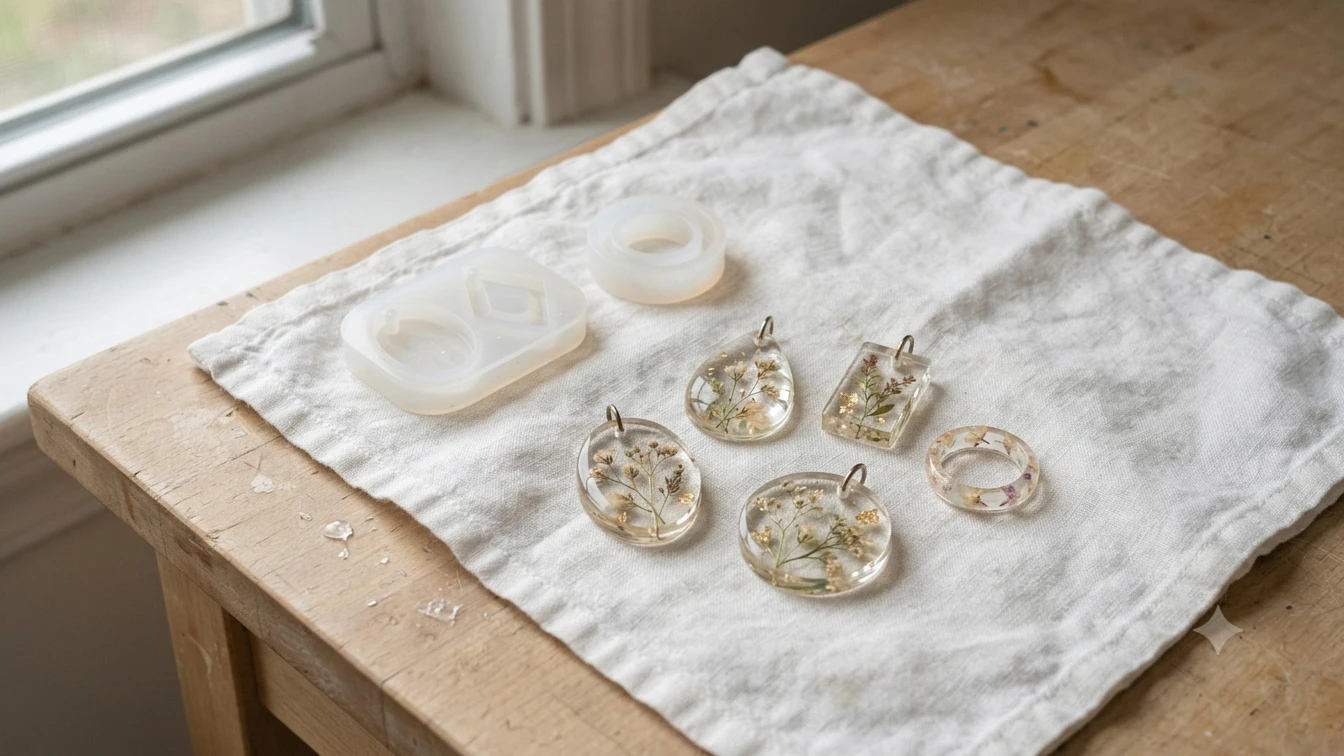
Good resin jewelry ideas for beginners include dipped earrings, glitter rings and small pressed-flower pendants. Bouquet Casting Co lists 25 homemade resin jewelry ideas, and its advice is to start with simple shapes before moving to keepsake pieces. Necklaces and earrings are usually safer choices for keepsake resin than rings, because rings take more wear. Choose your resin type, mold and botanicals to match the piece you want to make.
This guide sorts resin jewelry projects by piece type and explains which resin suits each one. You will also find notes on molds, pigments, drying flowers and safety, so you can pick a project that fits your skills and your tools.
UV Resin vs. Epoxy: Which Suits Jewelry Best?
Both UV resin and epoxy can make jewelry, but they behave differently. Choose the resin based on the size of the piece, how thick you pour it and how much wear it will take.
UV resin cures under UV light, so it suits thin layers and small pieces such as droplet necklaces. Crafty DIY Artistry describes its Wild Rose Dewdrop Necklace and its Liquid Legacy Necklace as UV resin pieces, with clear droplets that look suspended on the neck. Epoxy suits deeper casts and sturdier pieces. Resin Crafts Blog names EasyCast, EasyMold with FastCast and EnviroTex Jewelry Resin in its projects, which shows that makers use several epoxy-based casting products for jewelry.
Epoxy is also the common choice for pendants with dried flowers, since the flowers sit in a thicker casting. Check each product’s technical data sheet for its mixing ratio, pot life and cure time. The manufacturer’s instructions always override general rules.
Tip: Label each cup with the resin type and the date you mixed it. Small mistakes are easier to trace when every batch is marked.
Safety: Wear nitrile gloves, work in a ventilated room and read the product’s safety data sheet before you mix. Keep resin away from food preparation surfaces.
Pendant, Charm and Ring Ideas to Try
Pendants are the easiest place to start with resin jewelry. A pendant gives you one focal point, a clear backdrop and room for a small inclusion. Rings look appealing, but they need more care.
Popular pendant ideas include pressed flower pendants, gold leaf shapes, initial charms backed with petals and heart-shaped keepsakes. Bouquet Casting Co advises that one or two carefully placed petals often look more refined than filling the whole mold. Its list also includes a layered ombre necklace, where you pour tinted resin in two or three related shades in stages.
Rings need a stronger approach. Bouquet Casting Co states that resin rings take more wear than pendants and need a strong topcoat and careful curing. Glitter resin rings, described by Resin Crafts Blog as easy to make, are a good ring project for a first attempt. Keep the inclusions flat and the resin layer thin.
| Piece type | Good resin choice | Main consideration |
|---|---|---|
| Droplet necklace | UV resin | Thin layers and small, flat inclusions |
| Flower pendant | Epoxy casting resin | Fully dried, flat botanicals |
| Glitter ring | Epoxy with topcoat | Extra wear, so cure carefully |
| Layered ombre pendant | Tinted epoxy poured in stages | Let each layer set before the next |
If you want a pendant with a sentimental story, a pendant that is less than two inches long, as one Etsy-style design described in Crafty DIY Artistry, is a manageable size. Small pieces are easier to control and finish.
Resin Earring Designs for Beginners
Earrings are a practical first project because they are small, light and quick to finish. Many beginners start with dipped earrings, which Resin Crafts Blog describes as a good project for someone just starting out with resin.
Gold leaf stud earrings are another simple option. Bouquet Casting Co notes that small round or geometric studs with gold leaf cure quickly and hide minor imperfections better than fully clear designs. Geode-inspired and confetti hoops add color, but keep the hoops slim. Bouquet Casting Co warns that larger hoops can become uncomfortable when the resin layer is too thick.
For a first batch, make a matched pair of studs, then try a drop style once the finish looks even. Pearl and resin drop earrings, which hang a resin charm below a stud, build on the same skills.
Tip: Sand the edges of every piece before adding hardware. Sanding rough edges is the step that makes handmade earrings look finished.
Dried Flower and Botanical Resin Jewelry
Dried flowers are the most popular inclusion in resin jewelry, but they are also the most likely to cause clouding. Choose flowers that are fully dried and flat before you pour.
Skyryedesign.com advises that pressed flower pieces use flowers that are flat and vibrant, and it lists violets, daisies and lavender as common choices. Bouquet Casting Co advises that even a little moisture inside petals can affect clarity, color and long-term durability. Its test for readiness is simple: if a flower feels soft or cool, it probably is not ready.
Crafty DIY Artistry offers a range of botanical examples, including a Glitter Resin Hair Clip with 12 birth flowers. Its birth-month list includes carnations for January, roses for June, marigolds for October and narcissus for December. Each bloom is pressed by hand before it is placed in clear epoxy resin, which is the same drying discipline you should use at home.
Bouquet Casting Co recommends practicing with non-sentimental materials first. If the flowers came from a wedding or a memorial, keep them for a later project once your technique is steady.
Safety: Only pour resin into a sealed or well-prepared mold, and avoid heating resin to speed the cure unless the manufacturer’s instructions allow it.
Pigments, Metallic Finishes and Molds
Color and shimmer make resin jewelry stand out, and the choice of pigment changes the finished look. Start with one or two pigment types so you can see how each one behaves.
Fine mica powder creates a soft glow that catches light, and Bouquet Casting Co suggests it for resin bangles. Gold and silver flakes add shimmer to earrings and pendants, and Crafty DIY Artistry mentions gold flake finishes in several designs. Phosphorescent pigments absorb light and emit a soft glow in the dark, which makes them a fun option for a ring, according to skyryedesign.com.
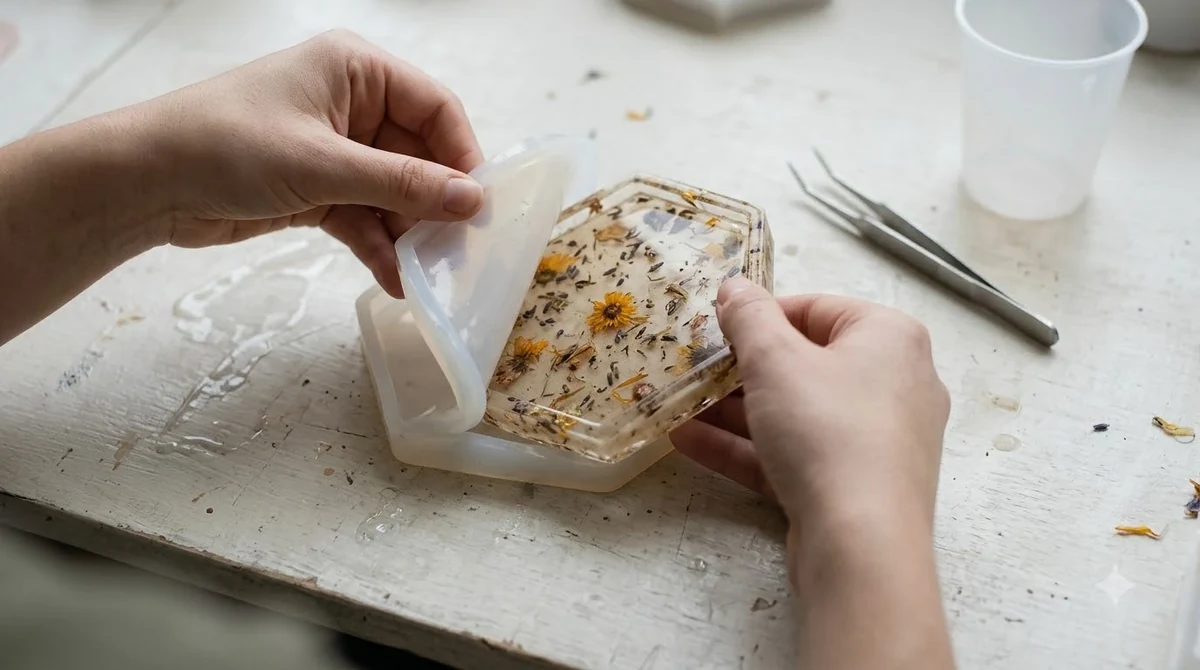
Silicone molds are the simplest way to shape small pieces. Skyryedesign.com describes the basic sequence: pour the mixed epoxy carefully to avoid air bubbles, place your botanicals, allow the resin to cure according to the manufacturer’s instructions, then demold and sand any rough edges. Hardware such as bails, jump rings and magnetic clasps finishes the piece. Crafty DIY Artistry notes that a magnetic clasp makes a choker simple to put on.
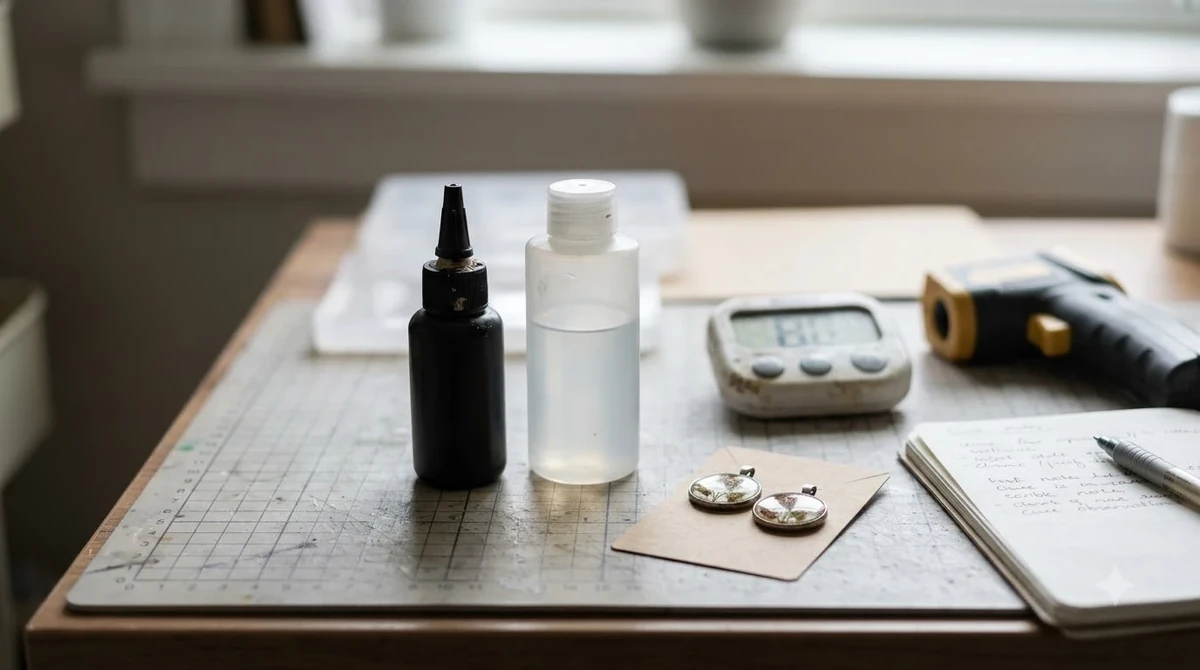
Gather basic tools before you start: a silicone mold, disposable mixing cups, stir sticks, a toothpick for bubbles and fine sandpaper. The OSHA Technical Manual explains that the resin holds materials together while the curing agent, or hardener, helps the resin cure to a hard plastic. Measure the two parts exactly as the product’s directions state. For the agency’s own description of these materials, see the OSHA Technical Manual chapter on advanced composites.
| Finish | Best piece | Watch for |
|---|---|---|
| Mica powder | Bangles and pendants | Pigment settling if left too long |
| Gold or silver flakes | Earrings and studs | Flakes floating to the surface |
| Phosphorescent pigment | Rings and charms | Glow depends on light exposure |
Safety, Curing and Troubleshooting Tips
Most resin problems come from three sources: wet materials, poor mixing and rushed curing. Address these before you pour, and most issues disappear.
Mix slowly to reduce air bubbles, and pop surface bubbles with a torch or heat gun only if the product guidance allows it. Use the manufacturer’s cure time before you demold or wear the piece. If the surface feels tacky after the stated time, the mix ratio or temperature may be off. Check the product label and data sheet before trying again.
Work in a ventilated space and wear nitrile gloves. The OSHA Technical Manual describes formulation as a stage where skin, eye and respiratory contact with ingredients is the main concern, so use the same care at home. Keep your workspace clean, and store uncured resin as the label directs.
For more detail on troubleshooting, read how to make resin jewelry before your first batch. If you want a smaller starter project, a resin keychain idea uses the same mold and finishing steps with less handling.
Frequently Asked Questions
What resin is best for making resin jewelry?
For small droplet pieces, UV resin is often used because it cures under UV light in thin layers. For pendants with dried flowers and deeper casts, many makers use a casting epoxy. Check the product’s technical data sheet for mix ratio and cure time.
Is UV resin or epoxy better for pendants and earrings?
It depends on thickness and wear. UV resin suits thin, small pieces, while epoxy suits thicker castings. Bouquet Casting Co says necklaces and earrings are usually safer for keepsake resin than rings or cuffs.
How do you keep flowers from clouding resin jewelry?
Use flowers that are fully dried and flat before you pour. Bouquet Casting Co advises that even a little moisture inside petals can affect clarity, and that soft or cool petals are probably not ready.
How do you get bubbles out of resin jewelry?
Mix slowly and pour carefully into the silicone mold, as skyryedesign.com recommends. Remove surface bubbles with a toothpick before the resin starts to set. Let the piece cure for the time the manufacturer lists before demolding.
Start with a simple earring or pendant, then move to rings once your curing routine is reliable. Keep practice pieces separate from any flowers you cannot replace, and you will learn faster with less risk.
More in Jewelry, Casting & Small Makes
 How to Make Resin Bookmarks: Materials, Steps and Cure TimesUpdated Nov 26, 2026
 How to Make Resin Knife Handles That Cure Clear and Polish WellUpdated Nov 26, 2026
 Resin Casting for Beginners: Pick the Right Resin and Pour Clean CastingsUpdated Nov 26, 2026
 How to Resin Jewelry Without Bubbles, Cloudy Spots, or Failed CuresUpdated Nov 26, 2026
 Popular Designer Keychains in Resin: Styles, Resins and Steps to Make Them at HomeUpdated Nov 26, 2026
 River Table Mold: How to Choose, Seal and Release Your Epoxy PourUpdated Nov 26, 2026