

We may earn a commission when you buy through links on this page, at no extra cost to you. Learn more.
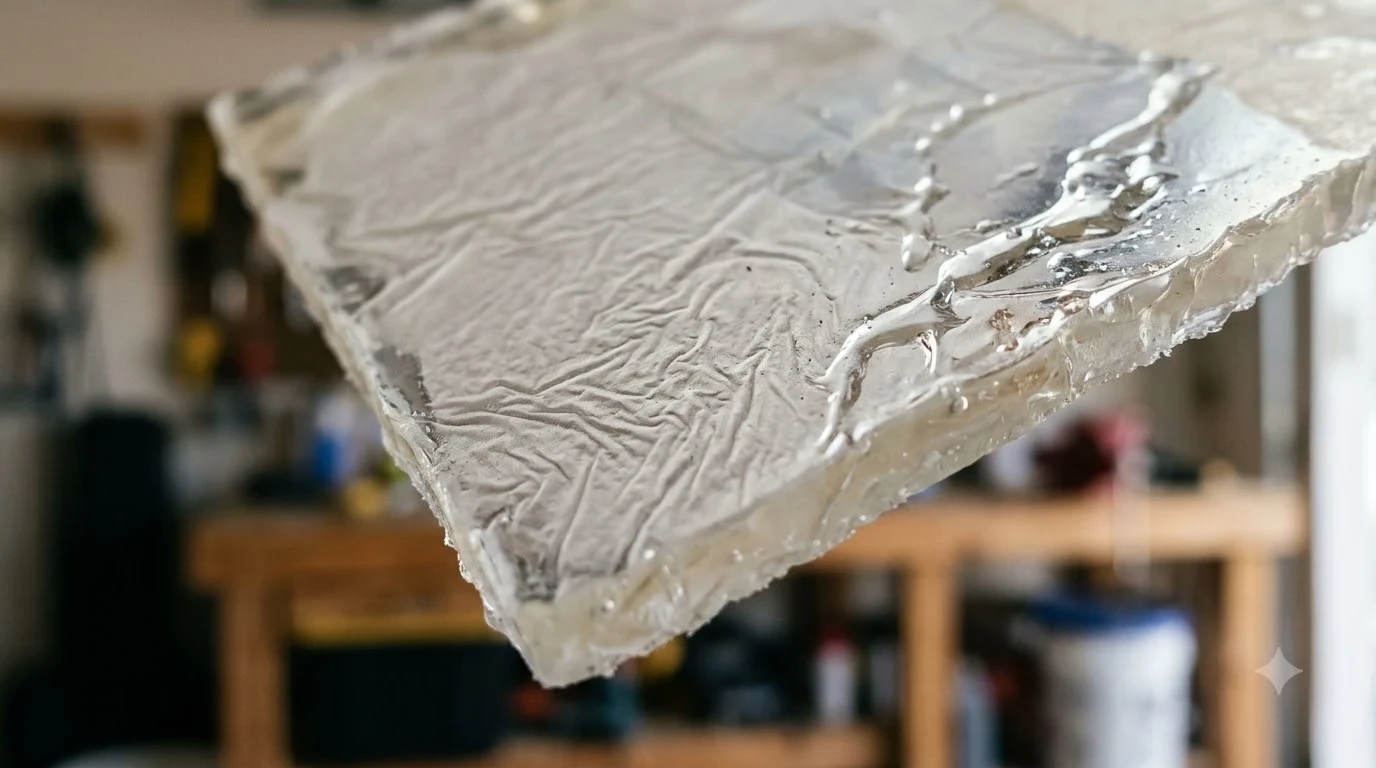
Does resin stick to parchment paper? Not permanently, which is why many DIY makers use it as a work-surface liner. According to Craft Klatch, resin will not permanently stick to parchment and it will not soak through. Parchment does leave a matte finish on the resin, and water can make the paper wrinkle. Before you pour, check the resin’s pour depth limits in the manufacturer’s instructions.
This guide explains why parchment paper releases most resins, where it fails, and how to test it before you commit a full pour. It also compares parchment with wax paper and covers release methods that hold up better for molds and embedded projects.
Why Parchment Paper Works as a Release Surface
Parchment paper works as a release surface because cured resin does not bond to it in a lasting way. Resin bonds strongly to porous or high-energy materials, but many low-energy surfaces let it bead up and peel away instead. Incure describes this difference as the main reason some materials repel resin.
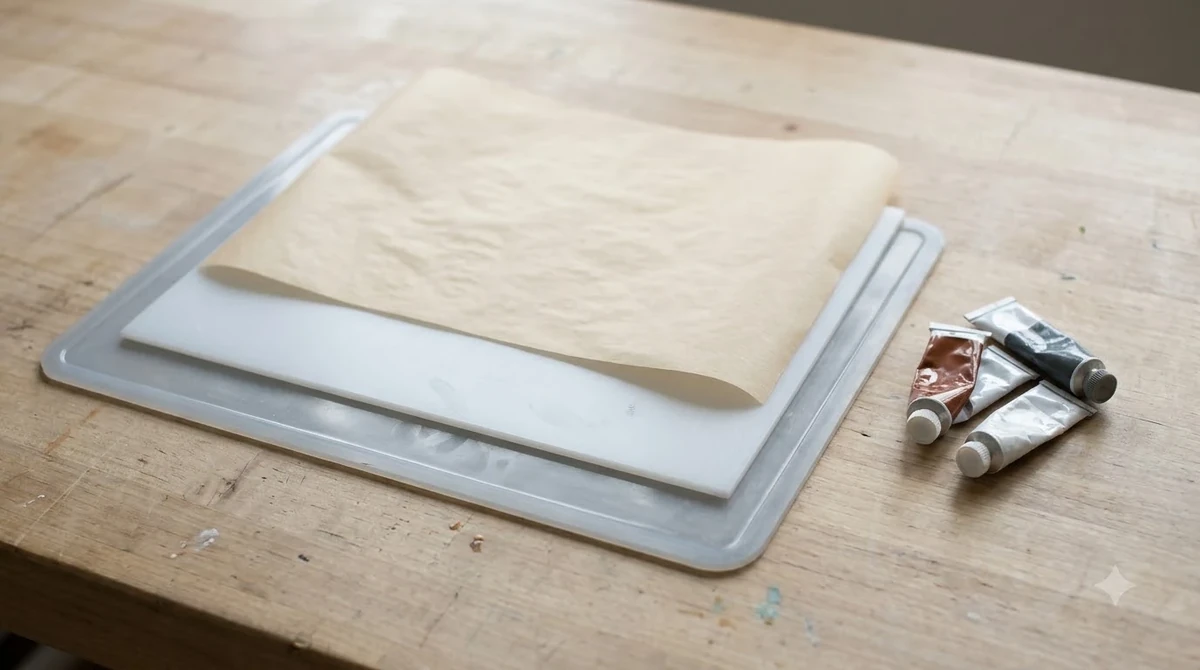
Parchment also acts as a physical barrier. Craft Klatch notes that it keeps resin from soaking through to the surface underneath, which protects a table or bench. Tape and glue also peel off parchment, so it is useful for holding small parts in place during a pour.
Will Resin Stick to Parchment Paper in Practice?
In practice, parchment paper releases most resin cleanly, but the results depend on the surface and the pour. Expect a matte finish on the bottom of the cured piece rather than the glossy look you get from a polished silicone mold. Resin Expert also notes that parchment can leave the finish less clear than other methods.
Moisture is the most common practical problem. Craft Klatch says water is parchment’s weak point because it makes the paper wrinkle, which ruins a smooth surface. Keep the paper dry, flat, and taped to a level work surface, since resin is a liquid that cures into a solid and any slope shows up in the final piece.
| Question | What the sources say | What it means for you |
|---|---|---|
| Does resin soak through? | Parchment prevents soaking through | It protects the surface below |
| Does it stick permanently? | Resin will not permanently stick | Cured pieces usually lift off |
| What finish does it leave? | A matte finish on the resin | Plan to polish or accept the texture |
| What breaks it down? | Water causes wrinkling | Keep the paper dry during the pour |
Tip: Tape the parchment flat at the edges before you mix. A flat sheet gives you a flatter cured surface than a sheet that curls under the cup.
Safety: Wear nitrile gloves and work in a ventilated space. Review the resin’s safety data sheet (SDS) before you start, since resin is not food safe.
Parchment Paper vs. Wax Paper for Resin Projects
Parchment and wax paper both keep resin from soaking through, and both let cured resin peel off. Craft Klatch says wax paper works much like parchment in this respect. The difference is in the side effects you may see on the finished piece, not in basic release.
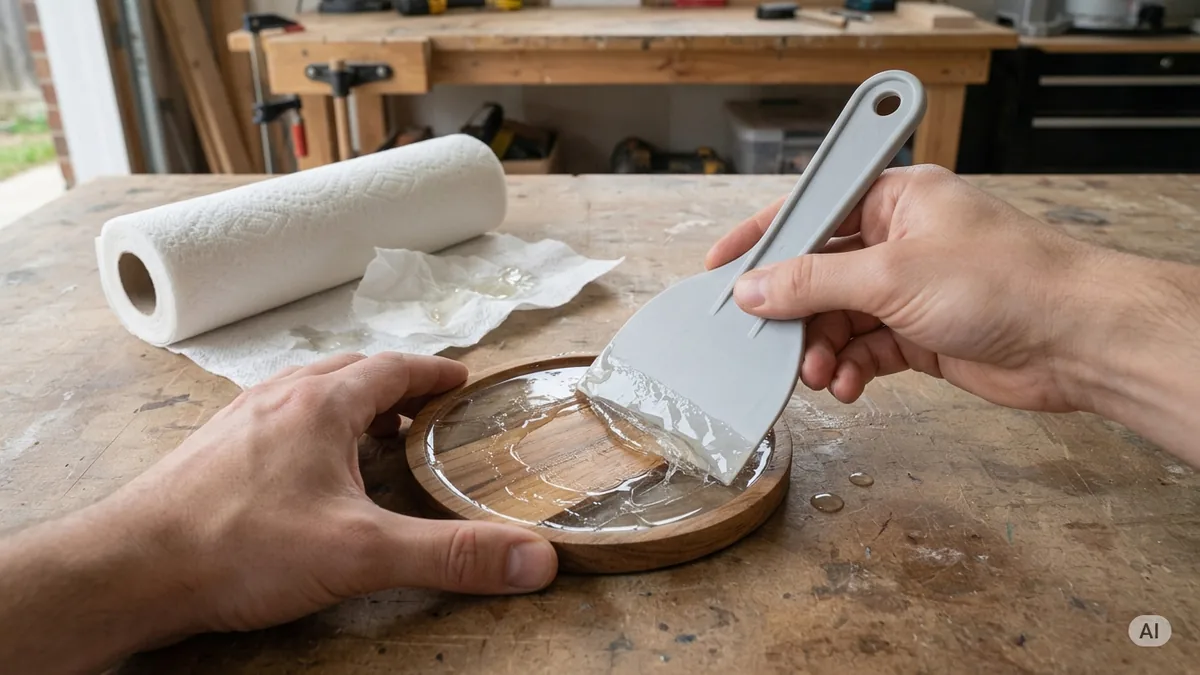
Wax paper carries its own risks. Resin Expert notes that wax can get into the epoxy and cause cloudiness, and that wax paper may shift while the epoxy is still curing. Parchment does not carry wax into the resin in the same way, so many makers prefer it for clear pours. If you want a closer look at wax paper specifically, read does epoxy stick to wax paper before you decide.
| Feature | Parchment paper | Wax paper |
|---|---|---|
| Resin soaks through? | No, according to Craft Klatch | No, according to Craft Klatch |
| Cured resin peels off? | Yes | Yes |
| Cloudiness risk | Not described in the sources | Possible if wax enters the epoxy |
| Shifting during cure | Not described in the sources | Can move while epoxy cures |
| Main weakness | Water and wrinkling | Wax transfer and movement |
Better Release Options for Molds and Embedded Projects
For molds and embedded projects, parchment is a liner, not a full mold system. Silicone is the standard mold material, and Incure says cured resin releases from it without extra release agents. Silicone can dry out and become brittle after repeated exposure to exothermic heat, so inspect it before each pour.
Polyethylene and polypropylene are other common options. Incure says HDPE is often used for no-seal mold boxes in river-table casting, and polypropylene marked with the number 5 recycling code lets cured resin pop off with little effort. For a broader list of materials resin will not grip, see Incure’s guide to materials resin does not stick to.
| Release method | Best use | Key detail from the sources |
|---|---|---|
| Silicone mold | Detailed or repeat pours | Can become brittle with repeated exotherm exposure |
| HDPE or polypropylene | No-seal mold boxes, flat forms | Cured resin pops off polypropylene with minimal effort |
| PTFE | Long-term reusable casting surface | One of the lowest friction coefficients of any solid |
| Release spray | Complex molds with small corners | Hold 20 to 30 cm away and apply a thin layer |
| Carnauba paste wax | Flat surfaces and large molds | Can transfer to cured resin, so clean before painting |
| PVA film | Polyester or vinyl ester resins | Water-soluble, so cleanup is easier |
Tip: Even non-stick materials benefit from a backup release agent. Check that your release product matches your resin chemistry before you pour.
Testing Parchment Paper Before a Full Pour
Testing a release layer on a small scrap costs little and shows you the finish before you commit a large piece. Incure advises testing any new mold or barrier material on a small scrap before a full run. Use the same resin, the same cure conditions, and the same surface you plan to use for the real project.
- Cut a scrap. Tape a piece of parchment flat to a level board, with no wrinkles.
- Mix a small batch. Use the mix ratio and pour depth from the resin’s instructions.
- Pour a thin test layer. Keep it within the manufacturer’s pour depth limit to limit exotherm heat.
- Let it cure fully. Follow the cure time on the product label before you move the piece.
- Lift the test piece. Check whether it peels off cleanly and whether any paper fibers stick to the bottom.
- Check the finish. Note the matte texture and decide whether you can sand or polish it.
If the test piece lifts cleanly, you can use the same setup for the full pour. If it grips or wrinkles, switch to silicone, PTFE, or a release agent before you mix the full batch. For embedded objects, the guide on paper in resin covers how paper behaves once it is inside the cured piece.
Common Mistakes and Troubleshooting Sticky Resin
Most parchment problems come from moisture, uneven surfaces, or the wrong pour depth. Craft Klatch notes that water makes parchment wrinkle and can ruin a smooth surface. Keep the work area dry, and do not let a damp sheet sit under a pour.
Heat can also cause trouble. Incure warns that excess exotherm heat can cause resin to heat-bond to plastics that would otherwise release cleanly. Stay within the manufacturer’s pour depth recommendation, and avoid thick pours on any liner you are not sure about. Also avoid using tools from resin work in food preparation, since resin is not food safe.
- Pouring on a wrinkled or damp sheet, which transfers texture to the cured surface.
- Pouring on an unlevel table, which makes the cured piece uneven.
- Skipping a small test when you switch to a new liner or resin.
- Using regular paper, which resin soaks through and can stick to the work surface.
Craft Klatch warns that regular paper lets resin soak through and bond to the surface underneath. Parchment and plastic are the safer choices for protecting a bench, but parchment will still give a matte finish.
Frequently Asked Questions
Does resin stick to parchment paper permanently?
No. According to Craft Klatch, resin will not permanently stick to parchment paper and it will not soak through. Cured pieces usually lift off once the resin has fully cured. Tape and glue also peel off parchment, which makes it useful for temporary holding.
Will epoxy peel off parchment paper after curing?
Usually yes, but the bottom surface will be matte rather than glossy. Resin Expert notes that wax paper can cause cloudiness, while parchment is not described that way. Test a small scrap first to see how cleanly your epoxy lifts.
Can I use parchment paper as a base for a resin coaster mold?
Parchment can serve as a base, and Craft Klatch describes using it for a homemade coaster mold. Keep the sheet dry and taped flat on a level surface, because water causes wrinkling. For repeat coasters, many makers prefer a silicone mold for a smoother result.
Do I need a release agent when pouring resin on parchment paper?
Parchment often releases resin without one, but Incure recommends a backup release agent even on non-stick materials. Spray-on silicone or fluoropolymer releases work well on detailed molds. Always check that the release product suits your resin chemistry.
Parchment paper is a reliable liner for most DIY resin work, as long as it stays dry and flat. Test each new setup on a small scrap, and read Inclusions & Embedding when you plan to place objects inside the resin.
More in Inclusions & Embedding
 How to Mix Glitter into Resin Without Clumping or SinkingUpdated Nov 26, 2026
 Resin Projects with Dried Flowers: How to Prep, Seal and Cure Them RightUpdated Nov 26, 2026
 Hair in Resin: Why It Floats, Bubbles or Yellows, and How to Prevent ItUpdated Nov 26, 2026
 Wood in Resin: Which Woods Work and How to Seal Them for Clear, Bubble-Free ResultsUpdated Nov 26, 2026
 Can You Put Fresh Flowers in Resin? Why They Brown and How to Dry Them RightUpdated Nov 26, 2026
 How to Preserve Dried Flowers in Resin So They Stay Bright and FlatUpdated Nov 26, 2026