

We may earn a commission when you buy through links on this page, at no extra cost to you. Learn more.
Are epoxy countertops heat resistant? Somewhat, but they are not heatproof, so a hot pan belongs on a trivet, not directly on the surface. Stone Coat says its countertop epoxy is designed to temporarily handle up to 450°F without permanent damage, yet the maker still recommends hot pads or trivets for hot pans. POURLA lists a 195°F (90°C) heat distortion temperature for its clear kit and states that this figure is not a safe direct-contact rating for cookware. Keep heat off a fresh pour for at least 72 hours.
Heat is one of the first questions people ask before choosing an epoxy finish, and the answer depends on what kind of heat you mean. A warm mug, a hot skillet, a slow cooker and a sunny window each stress the surface differently. This guide explains the published numbers, what changes the surface under heat, and how to protect a countertop you already have.
What Heat Resistance Means for Epoxy Countertops
Heat resistance on an epoxy countertop describes how the surface holds up under heat over time, not whether it survives one brief touch. Most epoxy finishes handle everyday warmth well, but intense heat concentrated in one spot can soften or discolor the surface. Think of the limit as a ceiling for direct contact, not a license to set anything hot on the counter.
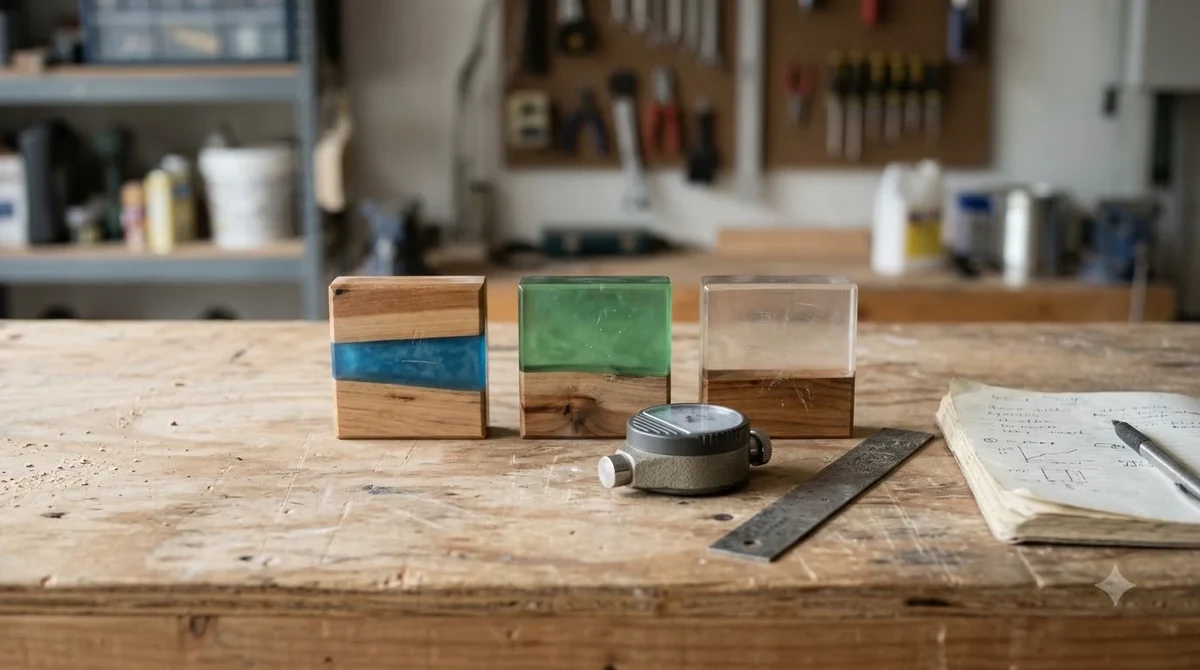
Epoxy is a plastic-like resin, and plastics respond to heat differently than stone. Granite and quartz have a clear edge in heat tolerance, according to the TotalBoat article on epoxy pros and cons. That same article describes epoxy as heat-resistant up to a point, but not heatproof. Prolonged high heat can cause discoloration, softening or warping. If you are still weighing cost and long-term upkeep, the guide on whether epoxy countertops are worth the money covers the wider tradeoffs.
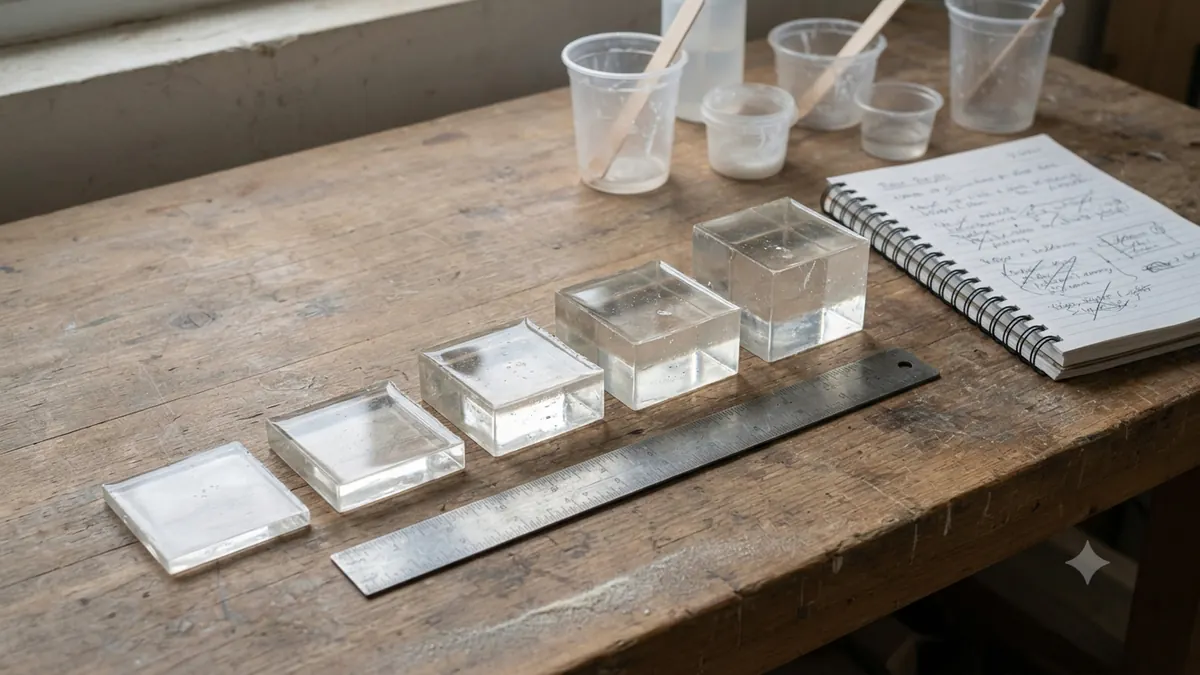
The type of epoxy matters as much as the heat itself. Thin coating epoxies are applied at about 1/8 inch or less over an existing surface. Cast or river-table epoxies pour 1 to 4 inches in one pour. Each has its own cure schedule and heat behavior, so check the product data sheet rather than assuming the two work the same way.
Typical Heat Limits of Epoxy Resin Surfaces
Published heat figures for epoxy vary widely because they measure different things. Some numbers describe a manufacturer’s claim for temporary contact, while others describe a lab deflection test. Read each figure with its definition in mind before you decide how to use the counter.
| Product or source | Heat figure given | What it means for your counter |
|---|---|---|
| Stone Coat Countertop Epoxy | Designed to temporarily handle up to 450°F without permanent damage | Temporary tolerance only; the maker still recommends hot pads or trivets |
| POURLA Clear Countertop Epoxy | 195°F (90°C) heat distortion temperature | A lab deflection value, not a safe direct-contact rating for hot cookware |
| Lab-grade cast epoxy countertop | 380°F heat distortion temperature (ASTM D648-07) | A monolithic cast slab tested in a lab; not a home coating spec |
The POURLA product page explains that heat distortion temperature measures how far a test sample deforms under a set load. It is a useful comparison number, but it does not tell you how a hot pan will behave when it sits on the surface for minutes. The company says to use a trivet or heat pad beneath hot pots, pans, baking trays and heated appliances. You can review the full technical details on the POURLA clear countertop epoxy product page.
Lab-grade epoxy countertops tell a different story. An OnePointe spec guide reports a 380°F heat distortion temperature for a cast epoxy slab, and it notes that this is above the 350°F service ceiling for phenolic resin. That slab is a thick, color-through cast product, not a thin coating on laminate. Do not treat a lab figure as permission to put hot cookware on a home countertop.
Hot Pans, Appliances and Direct Heat Exposure
Hot pans are the most common cause of heat damage. A pan straight off the burner can hold enough heat to soften the surface where it sits, especially if you leave it there. Appliances such as slow cookers, electric skillets and toaster ovens also add steady heat that can build up under a single spot over time.
Sustained heat is more dangerous than brief heat. A quick set-down of a warm dish is usually fine, while a heavy pot left for an hour is not. Stone Coat notes that for longer slow-cooker sessions, a wood or plastic cutting board with feet adds an extra layer of protection. The raised feet let air move beneath the board, which reduces how much heat reaches the finish. Heavy cookware also scratches epoxy, so the same protection helps with both problems.
Keep your heat sources away from edges and seams where the finish is thinnest and most exposed. Watch for appliance cords and steam that can drip down the backsplash. A calm habit of reaching for a trivet first prevents most surprises.
What You Need to Protect a Heat-Exposed Countertop
You do not need special equipment to protect an epoxy countertop from heat. A few basic items cover daily cooking and most cleanup. Keep them within reach of the stove so you use them every time.
| Item | Why it helps | Notes |
|---|---|---|
| Trivet or heat pad | Keeps hot pans off the finish | Use under every hot pot, pan, baking tray and heated appliance |
| Wood or plastic board with feet | Adds air space under slow cookers | Stone Coat recommends this for longer cooking sessions |
| Gentle dish soap or laminate cleaner | Removes residue without harsh solvents | Dilute with water and wipe with a damp cloth |
| 91% isopropyl alcohol | Lifts stubborn stains such as wine or mustard | Stone Coat advises using it instead of acetone |
| Nitrile gloves and fan or open window | Protect you during repairs and recoating | Follow the product SDS for ventilation details |
Stone Coat’s care guidance also says to clean up stains from wine, mustard, turmeric and powdered drink mixes promptly. Saturating the spot with 91% isopropyl alcohol and wiping gently with a microfiber towel is the approach the maker describes. Avoid harsh scrubbing pads, since abrasive pads can leave marks on the finish.
How to Protect the Surface from Hot Pans and Appliances
Protection works best as a routine rather than a reaction. The steps below follow the common guidance from manufacturers and reviewers. Adjust them to match your own product’s data sheet.
- Wait out the cure. Keep heat off the surface for at least 72 hours after pouring, according to SlabWise. Full chemical cure can take 72 hours to 7 days.
- Confirm the full cure window. POURLA gives about 36 to 48 hours at 75°F for full cure, while Stone Coat lists light use at 24 hours and full cure at 30 days. Use the longer timeline for heat exposure if your product lists it.
- Set a trivet before the pan. Place the trivet first, then set the hot item on it, so you never have to lift a hot pan across the bare surface.
- Use a board for slow cookers. A raised wood or plastic board keeps a steady heat source off the finish.
- Keep the counter clear near the range. Heat from a burner can reach nearby surfaces, so store heavy items and dish towels away from the hot zone.
- Wipe spills promptly. Clean grease, sauce and sugary spills before they bake onto the surface during cooking.
- Check the finish monthly. Look for soft spots, dull patches or early discoloration near the stove, and note any changes early.
If you notice a change near the stove, reduce heat exposure in that area first. Continued heat on a marked spot tends to make the damage worse. A small change caught early is usually easier to address than a large area that has softened.
Why Epoxy Yellows or Softens Under Heat
Two different processes can change the look of an epoxy countertop. Heat can soften or warp the surface, while long exposure to ultraviolet light causes yellowing. Keeping these separate helps you figure out the cause of a color shift.
Heat damage shows up as discoloration, softening or warping, according to the TotalBoat guide. High heat concentrated on one area can change the finish there, and the surface may feel different under your hand. Heat during curing can cause problems too. SlabWise notes that ambient temperature above the manufacturer’s range can cause surface wrinkling, amine blush (a waxy film) or heat distortion in a thick pour, because the exothermic reaction runs hotter.
Sunlight is a separate concern. SlabWise states that standard bisphenol A epoxies yellow noticeably under prolonged UV exposure. Products sold as UV-stable typically include additives meant to slow yellowing, and POURLA says its clear kit is UV-stabilized. No epoxy is fully UV-proof in direct sun for years, so a sunny kitchen may still show some color change. Stone Coat also states that its formula provides UV resistance.
Tip: Compare a small test board from your batch with a sample kept indoors. A visible difference after months of sun tells you what to expect from the counter near a window.
Repairing Heat Damage on Epoxy Countertops
Small heat marks and light surface wear can sometimes be improved, but deep softening or warping usually cannot be undone. Start by identifying what you are dealing with. Surface haze may respond to cleaning, while a soft or deformed area likely needs a fresh layer or professional attention.
For isolated surface marks, SlabWise describes wet sanding the cured surface with 400-grit wet/dry paper and applying a thin recoat to bring back the gloss. This works for spots, not for a surface damaged across its full area. Clean all dust before recoating, and use 91% isopropyl alcohol rather than acetone, since Stone Coat says acetone may interfere with adhesion.
For heavy-use counters, Stone Coat recommends abrading the existing surface and applying another layer of countertop epoxy every 6 to 8 years. Its prep steps call for sanding with 60-grit sandpaper, cleaning the surface and then priming before the color or clear coat. Follow your product’s data sheet for recoat intervals, mixing and cure times.
Safety: Wear nitrile gloves, work with good ventilation and read the product SDS before sanding, mixing or recoating. Sanding creates dust, so keep the work area clear and keep children and pets out of the room while you work.
If the surface is warped, bubbled or soft over a wide area, consider getting a professional opinion before you add more material. A fabricator or refinishing pro can look at the substrate and recommend whether a recoat or full replacement makes more sense for your kitchen.
Frequently Asked Questions
Can you put a hot pan directly on an epoxy countertop?
Manufacturers advise against it. POURLA says to use a trivet or heat pad beneath hot pots, pans and baking trays, and Stone Coat recommends hot pads or trivets even though its formula is designed to handle up to 450°F temporarily. A trivet costs little and prevents most heat marks.
Is a 195°F heat distortion temperature safe for cookware?
No. POURLA explains that heat distortion temperature measures deformation under a defined lab load and is not a safe direct-contact rating for hot cookware. Treat 195°F as a reference value for the material, and keep hot items on a trivet or heat pad.
Will epoxy countertops yellow from heat or sunlight?
Sunlight is the main cause of yellowing, according to SlabWise, because standard bisphenol A epoxies yellow under prolonged UV exposure. Heat can also discolor the surface if it is intense or prolonged. UV-stabilized formulas slow the change but do not stop it in direct sun over years.
Does heat resistance differ between coating and cast epoxy?
Yes. Coating epoxies are thin layers of about 1/8 inch or less over an existing surface, while cast epoxies pour 1 to 4 inches in one pour. The cast lab slab in the OnePointe guide shows a 380°F heat distortion temperature, but a thin home coating has its own limits, so check the product data sheet for your specific system.
Heat resistance is a practical question, not a pass-or-fail test. Use a trivet every time, protect the counter during slow cooking and keep it out of direct sun when you can. For more on what epoxy countertops can and cannot handle, read the guide on epoxy countertop safety basics, and browse more projects in Wood, Tables & Countertops.
More in Wood, Tables & Countertops
 How to Epoxy Live Edge Wood: A Step-by-Step Guide to a Flat, Durable TabletopUpdated Nov 26, 2026
 How to Fill Knots with Epoxy for a Smooth, Durable Wood SurfaceUpdated Nov 26, 2026
 Outdoor Bar Top Epoxy: How to Pick a UV-Resistant Resin and Cure It RightUpdated Nov 26, 2026
 How to Make an Epoxy River Table: Step-by-Step Build for BeginnersUpdated Nov 26, 2026
 Pine Epoxy Table Guide: How to Prep Softwood for a Clean River PourUpdated Nov 26, 2026
 Spalted Maple Epoxy Table: How to Stabilize, Pour, and Care for OneUpdated Nov 26, 2026