

We may earn a commission when you buy through links on this page, at no extra cost to you. Learn more.
Are resin coasters heat resistant? Most depend on the resin type, and standard epoxy can soften or mark under a hot mug. Some heat-resistant countertop epoxies are rated by the maker up to 425°F, while a low-melt epoxy is described as melting at only 250°F (121°C). Source 5 also says resin coasters can withstand temperatures up to 100 degrees Celsius, which is far below the boiling point of water. Check the product data sheet before you set a steaming cup on your coaster.
Coffee and tea are the most common hot items people set on coasters, so this page focuses on those drinks. Below you will find what heat resistance means, how resin type and cure time change the result, a simple way to test your own coaster, and steps to protect it.
What Heat Resistance Means for Resin Coasters
Heat resistance describes how much warmth a cured coaster can take before its surface softens, clouds, marks or warps. It is not the same as being waterproof, which is a separate property. A coaster can shed water well and still show a ring after a hot mug sits on it.
Resin is a thermoset plastic. According to Salvage Secrets, once cured it does not melt back into liquid the way a candle or wax would. That is useful, but it does not mean every cured resin handles heat well. Salvage Secrets also notes that some clear and iridescent resins are not heat resistant and can melt at high temperatures.
Why Most Epoxy Resins Soften Under Heat
Many standard craft epoxies are designed for appearance and gloss, not for hot contact. Resin-Pro explains that regular epoxy can become soft or even mark when exposed to something like a freshly brewed cup of tea or a hot pan. The surface may look fine at room temperature and still dent or cloud when heated.
The heat rating on the product matters more than the word “epoxy” on the label. Stone Coat countertop epoxy is described by its maker as heat resistant up to 425°F, while the PROMARINE ProArt kit in the Acrylgiessen resin coasters tutorial is described only as heat resistant to a “pretty good level.” Those are different claims, so read the technical data sheet for the exact figure rather than relying on a general phrase.
Heat Tolerance by Resin Type and Cure Time
Resin type and cure time together decide how a coaster performs on day one and after weeks of use. A fully cured heat-resistant resin usually performs better than one that is only firm to the touch. Resin-Pro says a heat-resistant coaster should be fully cured, and that this often takes about 72 hours for heat-resistant resins.
Other sources give shorter times for general use. Garden Therapy’s pressed-flower guide cures coasters for 24 hours before demolding, and the Hiro’s Art coaster tutorial notes that curing commonly takes 8 to 12 hours while manufacturer instructions may call for 24 to 48 hours. Use the longest time on your product’s label if it differs.
| Resin or situation | What the source says | What to do |
|---|---|---|
| Countertop epoxy marked heat resistant | Rated up to 425°F by the maker (Stone Coat) | Confirm the rating on the data sheet and allow full cure |
| Low-melt epoxy | Melts at 250°F (121°C) per Salvage Secrets | Treat as a low heat limit and keep hot drinks off it |
| Standard craft epoxy | Can soften or mark from hot tea or cookware (Resin-Pro) | Use coasters for cold drinks or choose a heat-resistant resin |
| Clear or iridescent resin | Some are not heat resistant and may melt (Salvage Secrets) | Check the label before buying |
| Heat-resistant resin, not yet fully cured | About 72 hours to full cure (Resin-Pro) | Wait before using with hot mugs |
Testing Your Own Resin Coaster Against Hot Mugs
You can run a simple check on a finished coaster before trusting it with daily coffee. Start with a coaster that has cured for the full time on the label, and keep a second cured piece as a control. Use a mug filled with water that has been heated but has cooled slightly, so you are not testing with boiling liquid.
- Confirm full cure. Press a small area with a fingertip. It should feel hard and not tacky, and the label’s full cure time should have passed.
- Set the mug down gently. Place it for a short period, then lift it straight up without sliding.
- Inspect the surface. Look for cloudiness, a dull ring, a dent, or a tacky feel under bright light.
- Repeat with a second cup, then wait. Check again after the coaster has cooled to room temperature, since some marks only show once the surface cools.
If the surface changes, stop using that coaster with hot drinks. Keep it for cold glasses or decorative use.
Tip: Test with a mug of moderately hot water first, not a full pot of brewed coffee. Record the result for each resin batch you make.
Safe Temperature Limits and Common Failure Signs
Safe limits depend on the specific resin, so the number on its data sheet should guide you. Source 5 says resin coasters can withstand temperatures up to 100 degrees Celsius, and Resin-Pro advises avoiding very hot cookware or mugs on standard resin surfaces. Keep hot pans, kettles and freshly poured drinks off any coaster that is not clearly rated for them.
Watch for these warning signs: a white or cloudy haze, a soft or sticky spot, a ring that will not fade, small warping at an edge, or a surface that dents under light pressure. Any of these means the coaster has reached its limit, and it should not be used for hot items again. For the full build process, see how to make resin coasters before you mix a new batch.
Protecting Coasters from Heat Damage
A cork or felt base helps with scratches and slippage, but it does not make the resin itself heat resistant. Salvage Secrets says poured-on coasters need sealing so they do not absorb moisture from drinks, and it notes that some sealants are labeled heat resistant. Apply any sealant in thin layers, and let the coaster dry completely before use.
Resin-Pro recommends a 3mm clear protective layer for best results with heat-resistant resins, and suggests a thick layer of heat-resistant resin as the first pour. Confirm any sealant’s heat rating on its own data sheet, because a sealant labeled for water may not be rated for heat. If you want more project ideas, browse Resin Art & Decor for finishes and designs.
Troubleshooting Cloudy, Tacky, or Melted Coasters
Most coaster problems come from one of three causes: a resin that is not heat rated, an incomplete cure, or a surface that was overheated during making. Identifying which one applies tells you whether the coaster can be saved. A tacky surface usually means the cure is not finished, while a soft or melted look points to the resin itself.
| Symptom | Likely cause | How to address it |
|---|---|---|
| Tacky surface | Cure not finished | Allow more time and check the label’s full cure window |
| Cloudy or white ring after a mug | Resin not heat rated or softened | Use for cold drinks only |
| Dent or soft spot | Heat above the resin’s limit | Retire the coaster from hot use |
| Bubbles or pits after torching | Torch held too close or too long | Keep the flame a fair distance away and move it steadily |
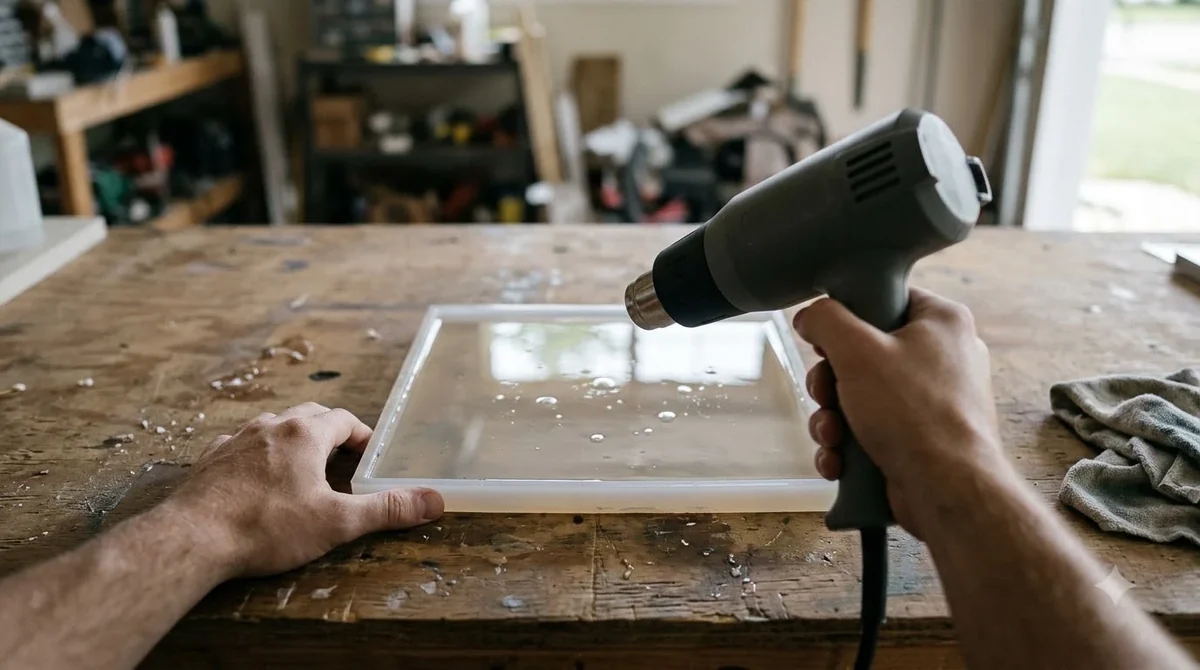
Garden Therapy advises keeping a butane torch at a fair distance so you do not burn anything near the surface. Hiro’s Art also says to avoid a flame torch on silicone molds and to use a heat gun instead, which helps avoid mold damage.
Frequently Asked Questions
Can resin coasters handle hot coffee or tea?
Some can, but it depends on the resin. Source 5 gives a limit of up to 100 degrees Celsius for resin coasters, while standard epoxy may soften under hot tea. Check the data sheet and run the test above before using one daily.
Does sealing a resin coaster improve heat resistance?
Sealing mainly helps with moisture. Salvage Secrets says poured-on coasters need sealing so they do not absorb drink moisture, and some sealants are labeled heat resistant. Confirm the sealant’s own heat rating before relying on it.
Can resin coasters crack or yellow with heat?
Heat can cause softening, marking or warping, and cracking is possible if the resin is stressed. Garden Therapy notes that some resin yellows with age, so choose a clear resin labeled as such.
Is it safe to put resin coasters in the dishwasher or microwave?
Sources here do not give dishwasher or microwave ratings, so do not assume they are safe. Wipe coasters by hand with a damp cloth, and keep them away from microwaves and ovens. Check the manufacturer’s instructions for any product you own.
Resin coasters can work well with hot drinks when you choose a heat-rated resin and let it cure fully. Test your own pieces, keep hot cookware off standard resin, and retire any coaster that clouds or softens. For more on this, read are resin coasters safe before you start a batch.
More in Resin Art & Decor
 What Is a Resin Art Kit? What It Includes and How to StartUpdated Nov 26, 2026
 Resin Lamp Ideas and How to Build a Glowing Piece at HomeUpdated Nov 26, 2026
 Resin Coasters for Beginners: Mix, Pour, and Cure a Glossy First SetUpdated Nov 26, 2026
 Resin Over Watercolor Without Bleeding: How to Seal and Pour SafelyUpdated Nov 26, 2026
 How Much Epoxy for a Tumbler? Measure by Ounces and Avoid WasteUpdated Nov 26, 2026
 Ocean Resin Art Tutorial: Make Realistic Waves on Canvas or WoodUpdated Nov 26, 2026