

We may earn a commission when you buy through links on this page, at no extra cost to you. Learn more.
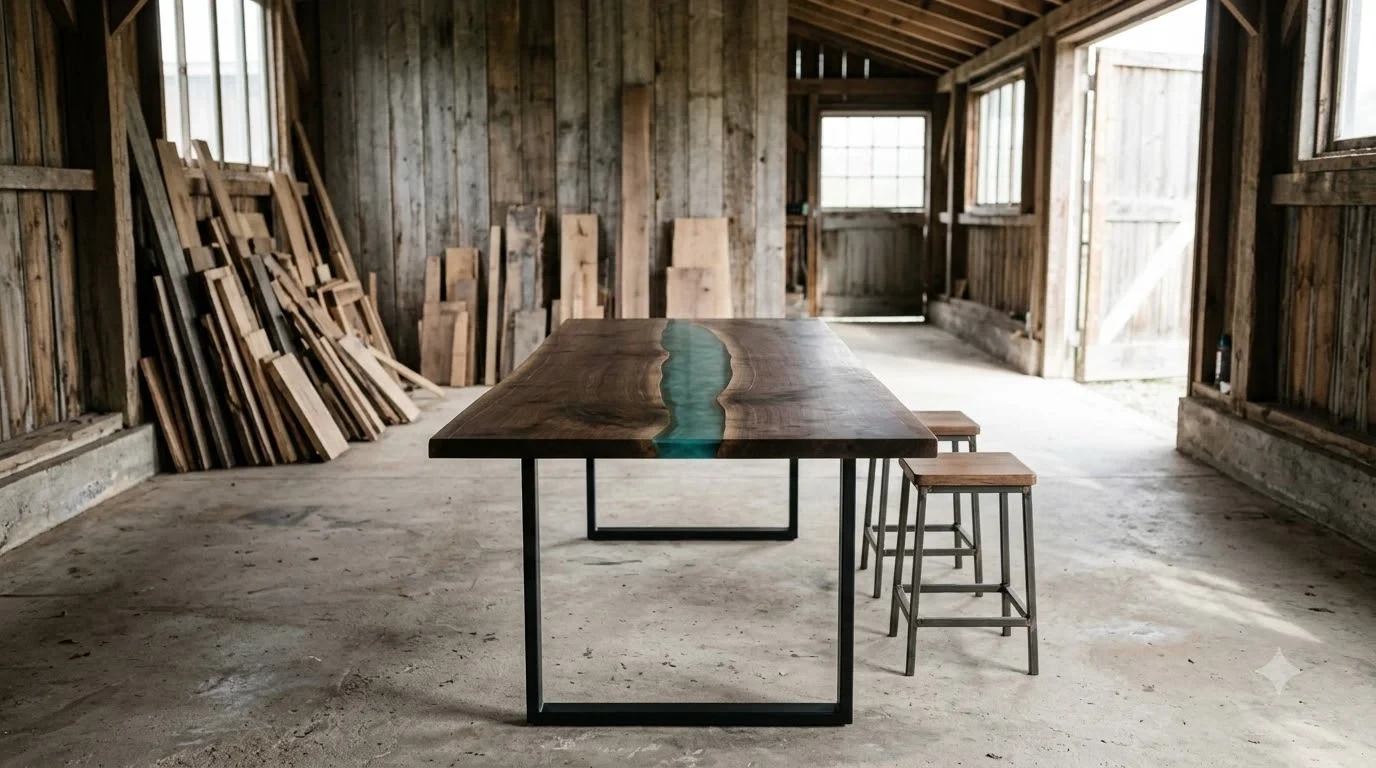
A black walnut epoxy table is a table made from black walnut slabs with clear or colored epoxy resin filling the space between them or the voids in the wood. Most versions use live edge slabs, and the resin often forms a river down the center. One maker lists tops 1.5 to 1.75 inches thick, and another lists custom lengths from 72 to 120 inches. Custom orders commonly take 8 to 10 weeks.
If you are shopping for one, or planning to build your own, the choices are wider than the product names suggest. Slab selection, resin type, table size, and shipping terms all change the final cost and the wait. This guide explains what the terms mean and what to check before you order or pour.
Black Walnut River Table: What Sets It Apart
A black walnut river table uses two walnut slabs with a band of resin between their edges. The resin reads as water, so the wood grain becomes the banks. Sellers in the sources describe the wood as chocolate-brown with strong grain patterns, which is why the contrast looks so bold.
Chicago Makers Studio says its tables are built from two black walnut slabs with epoxy poured between them, and that the wood is salvaged or reclaimed and kiln-dried to help prevent cracking or warping. Ask any seller how the slabs were dried, because that step affects how stable the top stays over years of use.
The river is also where most of the design choices happen. Sellers offer clear resin, black, blue, green, and other colors, along with matte or glossy surfaces. Check whether the river is a single pour or a layered design, since that changes how the top looks from the side.

Black Walnut Epoxy River Table Versus Live Edge Options
Both a river table and a plain live edge walnut table can be called epoxy tables, so read listings closely. A river table has resin as a visible feature. A live edge table may only have epoxy filling small voids or cracks in the wood. Each style suits a different room and budget.
Brick Mill Furniture describes its Allen epoxy walnut dining table as solid hardwood throughout, with no veneer on the top. The company says it installs an integrated steel c-channel on the underside to reduce wood movement and keep the top flatter. That is a useful question to ask any maker, whichever style you pick. You can compare the listed specs directly on the Allen Epoxy Walnut Dining Table product page.
| Feature | River table | Live edge table with filled voids |
|---|---|---|
| Resin role | Main visual feature | Fills gaps and voids |
| Typical slab setup | Two slabs with a channel between | One or more slabs with natural edges |
| Question to ask the maker | How wide is the river and how is it poured? | How are voids filled and sealed? |
Black Walnut Epoxy Coffee Table Sizing and Finish
A black walnut epoxy coffee table needs less length than a dining table but still needs careful planning. Sellers in the sources list round and rectangular coffee table options, often with the same slab and resin choices as their dining models. Measure your sofa and walkways before you pick a shape.
For dining tables, Brick Mill lists a leg inset and a distance between legs that rise with the table length. For a 60-inch top, its listed distance between legs is 40 inches, and the leg inset is 8 inches. Use those ratios as a guide when you compare a coffee table to a dining table of similar width.
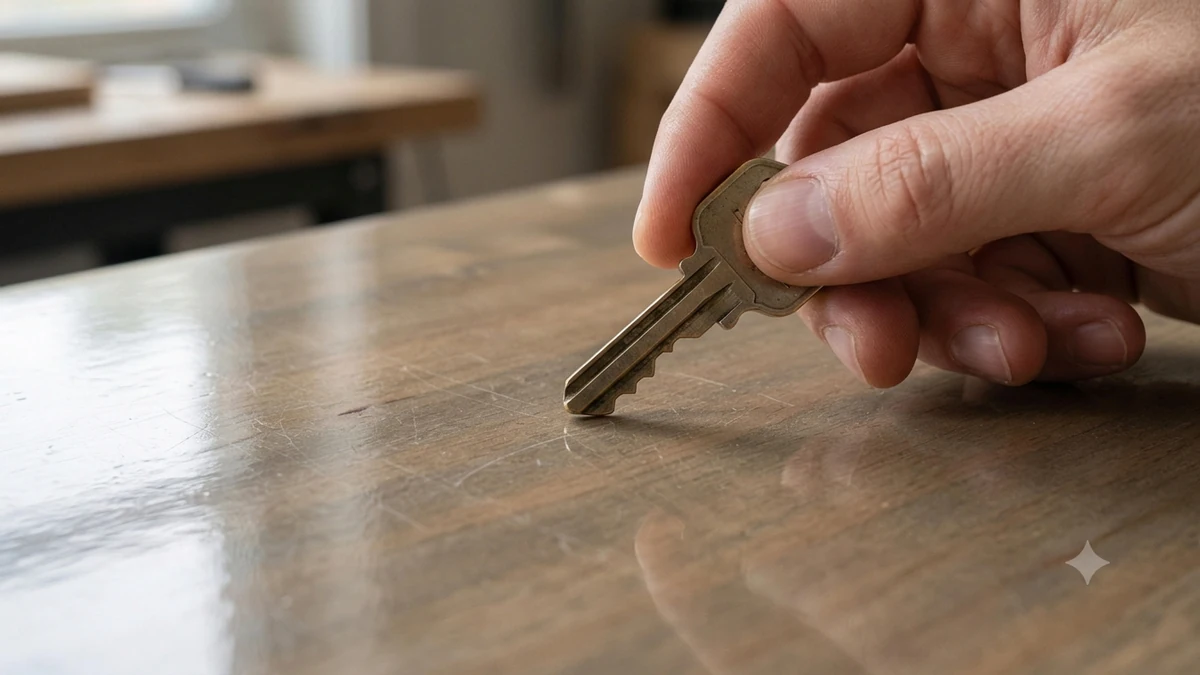
Finish also matters. Chicago Makers Studio describes a standard matte finish that leaves the walnut looking natural, and it mentions a food-grade oil for durability and easy cleaning. Brick Mill says its furniture uses a commercial-grade conversion varnish. Ask which finish is used on the top, since a coffee table gets daily contact with drinks and remotes.
Black Walnut Live Edge Epoxy Table Prep and Pour Basics
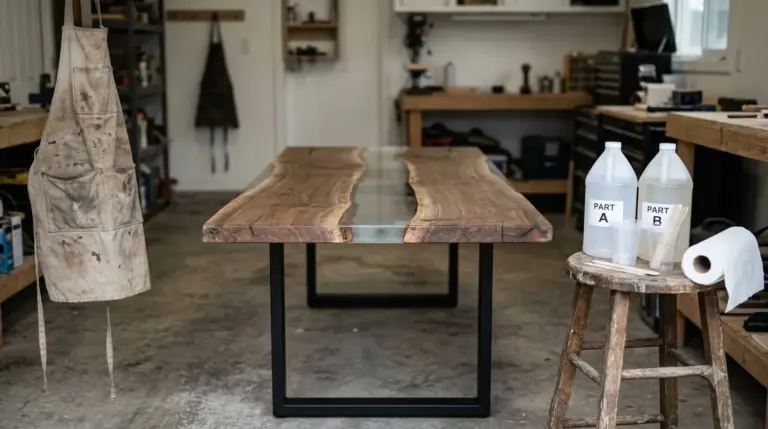
If you build your own live edge walnut epoxy table, prep is where most results are decided. Flatten the slab, sand it through the grits your epoxy maker recommends, and dust it fully before you seal the surface. Walnut is oily and dense, so wipe the wood with the solvent the resin maker specifies and test a small area first.
Dams and voids need attention. Seal the underside and edges so resin does not leak, and fill voids in steps if the product data sheet calls for it. Check the pot life and cure time on the resin’s technical data sheet, and keep the room within the temperature range the manufacturer lists. The maker’s instructions override any general rule you read here.
For step-by-step help with the top surface, read our guide on how to epoxy a table top. The same principles of leveling, bubble removal, and cure time apply to walnut, though the wood may need extra sealing before the first coat.
Choosing a Source and Planning Your Order
Sellers differ a lot in lead time, shipping, and warranty terms. Brick Mill says its tables are made to order and ship in about 10 weeks, plus 3 to 5 business days for shipping. Chicago Makers Studio lists a lead time of 8 to 10 weeks from the date the order is placed. Worldcustomtable states 8 to 10 weeks from the date of approved drawings.
Deposits and payment plans also vary. Worldcustomtable says a deposit is usually 30 percent of the order total to reserve an order, with the balance typically due before production or shipment. Read the payment terms before you pay anything, and save every order confirmation.
You can compare the broader range of walnut tables in our walnut epoxy table roundup, which covers more styles. For general furniture guides and related categories, visit the Wood, Tables & Countertops section.
Care, Safety and Finishing Habits
Routine care keeps both the wood and the resin looking good. Wipe spills promptly, use coasters, and avoid harsh cleaners unless the maker names them. Brick Mill notes that most minor damage can be touched up with a kit it sends, and it asks buyers to inspect pieces on arrival.
Safety matters during any DIY pour. Wear nitrile gloves, work in a ventilated area, and read the product’s safety data sheet before you mix. Keep resin away from children and pets, and do not sand cured resin without a dust mask rated for the material. These are matter-of-fact steps, not emergencies.
Safety: Check the resin’s safety data sheet for the right gloves and respirator, and keep the workspace ventilated while mixing and curing.
Tip: Ask the seller to show a photo of the slab before approval. Chicago Makers Studio says slab options are shown for approval before fabrication.
Frequently Asked Questions
How long does it take to get a custom black walnut epoxy table?
Lead times in the sources range from about 8 to 10 weeks for custom work. Brick Mill lists about 10 weeks plus 3 to 5 business days for shipping. Worldcustomtable counts its 8 to 10 weeks from approved drawings, so the start date can shift.
Do black walnut epoxy tables come with a warranty?
Some makers offer one. Chicago Makers Studio lists a lifetime warranty covering cracking, splitting, and finish-related issues, excluding normal wear and tear. Brick Mill says it stands behind every piece it builds. Read the written terms before you buy.
Is black walnut epoxy table shipping free?
It depends on the seller. Worldcustomtable says it offers free standard shipping with curbside delivery. Brick Mill offers free FedEx curbside delivery, with an optional White Glove upgrade. Chicago Makers Studio ties its shipping charges to the order total, so confirm the exact terms at checkout.
Can I get a black walnut epoxy table with built-in power outlets?
Yes, some sellers offer conference tables with outlets built in. Seawavetable lists models such as the CRT-287 and CRT-329 with built-in power outlets. Ask whether the outlet module is installed at the factory and whether the wiring meets local electrical codes.
Start with the size, slab, and lead time that fit your room and schedule. Ask each seller for written terms on warranty, shipping, and finish before you order. If you are building your own, check the resin data sheet first.
More in Wood, Tables & Countertops
 How to Epoxy Live Edge Wood: A Step-by-Step Guide to a Flat, Durable TabletopUpdated Nov 26, 2026
 How to Fill Knots with Epoxy for a Smooth, Durable Wood SurfaceUpdated Nov 26, 2026
 Outdoor Bar Top Epoxy: How to Pick a UV-Resistant Resin and Cure It RightUpdated Nov 26, 2026
 How to Make an Epoxy River Table: Step-by-Step Build for BeginnersUpdated Nov 26, 2026
 Pine Epoxy Table Guide: How to Prep Softwood for a Clean River PourUpdated Nov 26, 2026
 Spalted Maple Epoxy Table: How to Stabilize, Pour, and Care for OneUpdated Nov 26, 2026