

We may earn a commission when you buy through links on this page, at no extra cost to you. Learn more.
Epoxy countertop cost depends mostly on whether you pour it yourself or hire an installer. Stone Coat says DIY kits cost about 7 to 15 per square foot, while professionally installed epoxy typically runs 50 to 150 per square foot. SlabWise estimates DIY materials for a 40 square foot kitchen at roughly 205 to 385 in total. Hiring a pro for that same counter usually costs several thousand, so the gap is the main budget decision.
This guide breaks down what you pay for materials, labor, and extras, and where the money goes. It also explains when a homeowner doing the work makes sense and when a professional is the safer call for your kitchen.
Average Cost Per Square Foot
Most published figures fall into two bands: a DIY materials range and a professional installed range. The right number for you depends on which path you choose and how much prep your existing counter needs.
Angi puts professionally installed epoxy at 50 to 150 per square foot, or 1,500 to 6,000 for an average 30 to 40 square foot kitchen. Refinishing an existing counter is cheaper, with materials alone running 4 to 8 per square foot according to Angi. Fixr reports a national average of 300 to 500 for professional countertop refinishing, with about 400 typical for 60 square feet of quartz finished with epoxy coating.
Many sources also note that figures change with region and scope. The Angi article was updated in July 2026, while HomeGuide’s epoxy page is dated November 2023 despite a 2026 title. Treat older pages as rough guides and confirm current quotes before you budget.
| Path | Typical cost per sq ft | Typical 40 sq ft kitchen |
|---|---|---|
| DIY kit, materials only | 7 to 15 (Stone Coat); 3 to 10 (SlabWise) | Roughly 205 to 385 total with supplies (SlabWise) |
| Professional installation | 50 to 150 (Angi, SlabWise) | About 2,000 to 6,000 (Stone Coat estimate) |
| Refinish existing counter, materials | 4 to 8 (Angi) | Varies with scope |
Material Costs: Epoxy, Hardener, and Pigments
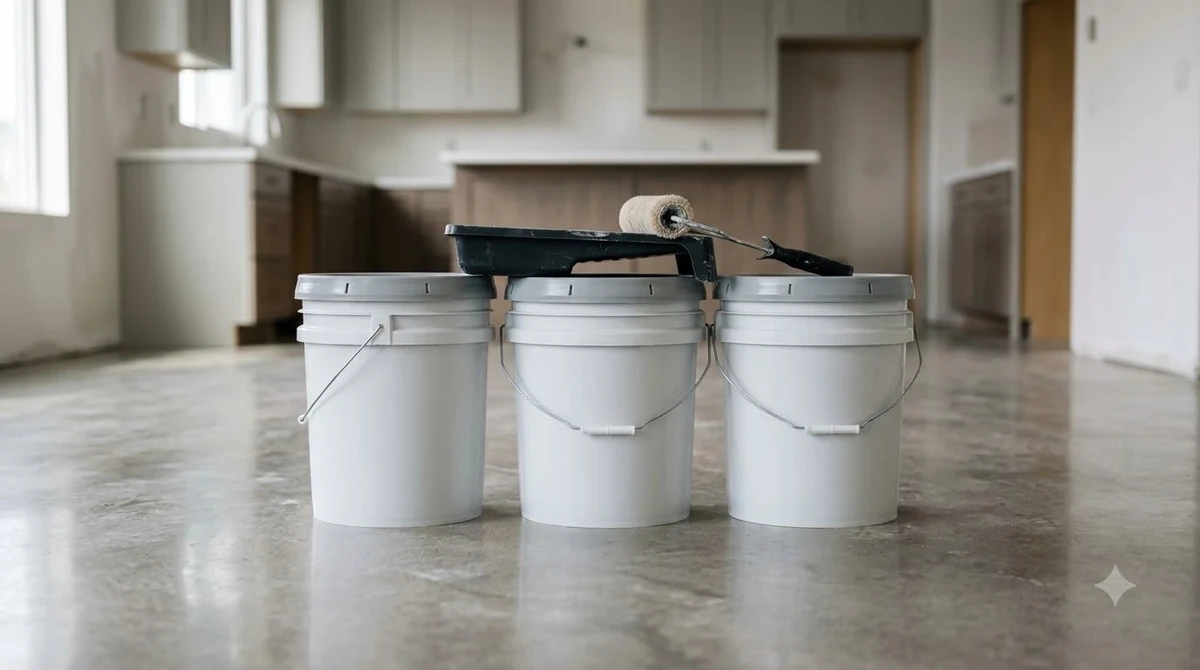
Materials are the cheapest piece of a professional job but the main cost of a DIY project. Stone Coat says its kits start at about 125, with pricing that varies by design, coverage, and included pigments. A kit’s sticker price alone does not tell you the full materials total.
Coverage drives how many kits you buy. Stone Coat’s calculator assumes about 3 ounces of mixed epoxy per square foot for a standard coating, and one gallon covering roughly 20 square feet when you apply both a color coat and a clear coat. Hand-melded designs may use 3 to 4 ounces per square foot, and dirty pours can require 6 to 8 ounces. Plan for extra material, since SlabWise suggests budgeting 20 to 30% more resin than your calculation shows.
Two-part epoxy is mixed by volume, usually at 1:1 or 2:1 depending on the product. Check the ratio on your kit’s technical data sheet and measure carefully. Pigments are a separate line item. SlabWise lists pigments and colorants at 15 to 40 for a DIY project, while primer or bonding coat adds 20 to 35 and polyurethane topcoat adds 25 to 45.
Tip: Buy a small practice board before the full pour. SlabWise lists a test board at 30 to 50 and calls it strongly recommended, which is cheaper than redoing a counter.
Labor Costs: DIY vs. Professional Installation
Labor is the biggest difference between the two paths. Angi and HomeGuide both price installation labor at 45 to 140 per square foot, and HomeGuide says most of the professional total comes from labor because epoxy is messy and hard to work with. A DIY kit removes that labor line, but you trade it for your own hours.
SlabWise’s SlabWise epoxy pricing guide breaks a professional job into prep, commercial-grade epoxy, pigments, two to three coats of labor, topcoat, cleanup, and overhead. It lists the all-in professional total at 45 to 100 per square foot, or 1,800 to 4,000 for a 40 square foot kitchen. Shop minimums of 500 to 800 can apply regardless of size, so a small vanity may cost close to a modest kitchen.
Doing the work yourself means your time is the main labor cost. Stone Coat’s guidance points to a full day of prep and application for a 30 square foot kitchen, plus curing time. SlabWise suggests three to five full days including prep, pour, cure, and topcoat for a first attempt. Angi also notes you can trim pro labor by handling cleaning, filling chips, removing hardware, and masking yourself.
Factors That Raise or Lower the Price
Size, design, and surface condition move your number more than anything else. Larger counters often lower the material cost per square foot, but labor and design choices can push the total up quickly.
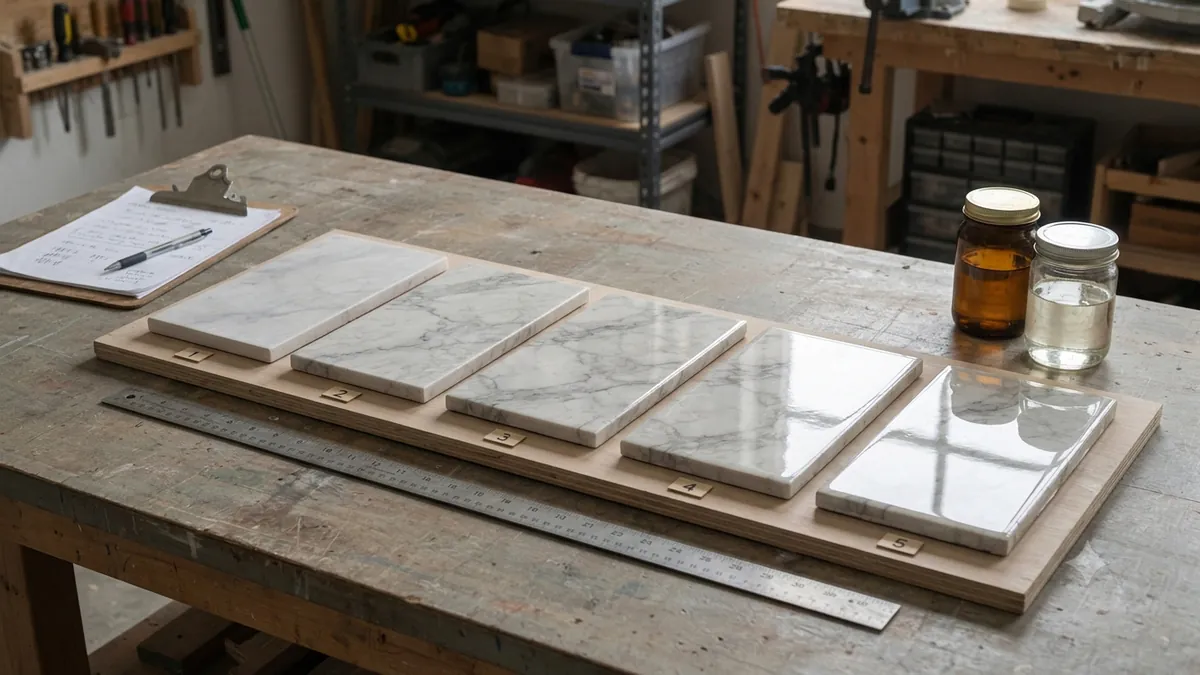
Design complexity is a major driver. Angi notes that a marble-like finish is poured by hand, so creating veins adds time and pushes labor toward the high end of its range. MeasureScout’s MeasureScout epoxy cost roundup also lists Angi’s money-saving advice: shrink the square footage, skip time-consuming details like veining, and bundle similar projects together. SlabWise lists metallic and specialty finishes at higher DIY and pro ranges than solid colors.
Surface condition is the other big factor. Resurfacing is most economical when the existing counter is structurally sound. Cracks, loose tile, damaged laminate, or uneven areas need repair before any epoxy goes down. If you want ideas for color and pattern before you commit, browse epoxy countertop ideas so you can estimate how much design work you want to pay for.
Some costs go down with planning. Choosing a solid color instead of a river or geode effect reduces both material and labor time. Keeping the existing counter in place avoids demolition and fabrication, which is where a large share of granite or quartz budgets goes.
Hidden Costs: Molds, Sealers, Safety Gear, and Prep
The advertised kit price rarely covers everything. Budget for sandpaper in the 80 to 220 grit range, mixing cups, rollers, drop cloths, painter’s tape, and a heat gun or propane torch for popping bubbles. SlabWise lists these supplies at a combined total that can add a meaningful amount to a small project.
Safety gear is not optional. SlabWise lists nitrile gloves and a respirator at 15 to 25, and it recommends eye protection. The EPA classifies certain epoxy components as potential sensitizers with repeated skin or respiratory exposure. Read the product’s safety data sheet, ventilate the room, and keep the space open while the epoxy off-gasses during cure.
Permits and cutouts can also add cost. Angi prices building permits for countertop work at 50 to 500 depending on scope and local rules. Confirm requirements with your local building department before work starts. Sink cutouts, edge treatments, and seams filled with color-matched epoxy add labor on a pro job.
Safety: Wear nitrile gloves and eye protection, work with good ventilation, and follow the safety data sheet for your specific kit. Keep the room clear of pets and children until the surface has cured.
Epoxy Countertop Cost vs. Other Surfaces
Epoxy is usually the lowest upfront cost among countertop choices, but it has a shorter expected life. Comparing only the first-day price can mislead you, so look at lifespan and heat tolerance too.
| Surface | Typical installed cost per sq ft | Expected lifespan (per source) |
|---|---|---|
| Epoxy, DIY kit | 3 to 15 in materials | 5 to 10 years (SlabWise); 10 to 15 years in low-traffic spots (SlabWise estimate) |
| Epoxy, professional | 45 to 150 | Same range as DIY, depending on use |
| Granite | 40 to 100 (NKBA data via SlabWise) | 25 or more years for quartz or granite (SlabWise) |
| Quartz | 50 to 200 (Stone Coat) | Often several decades with care (Stone Coat) |
Epoxy softens around 150 degrees F depending on formulation, and Angi says it withstands roughly 135 to 300 degrees F. A hot pan bottom can reach 400 to 500 degrees F, so trivets are essential. Granite and quartz handle heat far better, which matters if your kitchen sees daily cooking.
Epoxy also scratches more easily, with a Mohs hardness of about 3 to 4 compared with 6 to 7 for granite. Once scratched, it is hard to repair invisibly. If you plan to sell soon, a DIY epoxy top may suit a temporary refresh better than a full remodel. For a dining surface, compare the numbers in our epoxy dining table cost breakdown.
Frequently Asked Questions
What does a DIY epoxy countertop for a 40 square foot kitchen cost?
SlabWise estimates total DIY materials for a 40 square foot kitchen at roughly 205 to 385, which works out to about 5 to 10 per square foot. That range includes a resin kit, pigments, primer, sanding supplies, and a polyurethane topcoat. Budget extra for practice material and for a redo if the first pour goes wrong.
Is epoxy countertop cheaper than granite or quartz?
Yes, usually on upfront cost. Granite is listed at about 40 to 100 per square foot installed, and quartz at about 50 to 200 per square foot. Epoxy is cheaper because it resurfaces your existing counter, but granite and quartz generally last much longer and handle heat better.
Do you need a permit to install epoxy countertops?
It depends on your local building authority and the scope of the work. Angi lists permit costs at 50 to 500 depending on local rules. Contact your building department before you start, and ask whether a surface refinish needs a permit differently from a full replacement.
Can you put epoxy over existing laminate or tile?
Yes, epoxy can be applied over properly prepared laminate, tile, granite, marble, and quartz. Tile with grout lines usually needs a skim coat so the lines do not show through. Surfaces that are soft, flexible, or contaminated with wax or silicone need correction first.
Planning your budget is mostly about choosing a path and then adding the extras. If you want a surface beyond countertops, our Wood, Tables & Countertops section has related project guides. Get at least three itemized quotes, and ask each installer what is included before you sign.
More in Wood, Tables & Countertops
 How to Fill Knots with Epoxy for a Smooth, Durable Wood SurfaceUpdated Nov 26, 2026
 How to Epoxy Live Edge Wood: A Step-by-Step Guide to a Flat, Durable TabletopUpdated Nov 26, 2026
 Outdoor Bar Top Epoxy: How to Pick a UV-Resistant Resin and Cure It RightUpdated Nov 26, 2026
 How to Make an Epoxy River Table: Step-by-Step Build for BeginnersUpdated Nov 26, 2026
 Pine Epoxy Table Guide: How to Prep Softwood for a Clean River PourUpdated Nov 26, 2026
 Spalted Maple Epoxy Table: How to Stabilize, Pour, and Care for OneUpdated Nov 26, 2026