


We may earn a commission when you buy through links on this page, at no extra cost to you. Learn more.
Is epoxy safe for cutting boards? Generally no, even when the resin is fully cured and labeled food safe. Food-safe certifications cover indirect food contact, such as serving boards, trays and countertops, not cutting surfaces. Epoxyres-it notes that knife cuts can leave spots where resin particles may leach. A resin is only food safe after full cure, which ArtResin places at about 72 hours and Superclear places at about 30 days at 70°F to 84°F.
If you are planning a board for chopping vegetables or meat, the label on the resin is only part of the answer. This guide explains what food-safe epoxy means, how to read a product label, why cure time matters, and which safer approaches manufacturers describe for wood boards that will hold food.
Why Cutting Boards Need Food-Safe Finishes
A cutting board is a surface that gets scored, nicked and scratched every time you use it. Those marks matter when the finish on top is a plastic-like layer. The question is not only whether the cured resin is inert, but whether the surface stays intact under a knife.
Epoxyres-it advises against cutting boards made from epoxy for this reason. Its guidance says a knife cut may leave spots on the epoxy layer where bacteria or resin particles could leach. Superclear makes a similar distinction, saying its food-safe status does not extend to cutting surfaces or food storage containers.
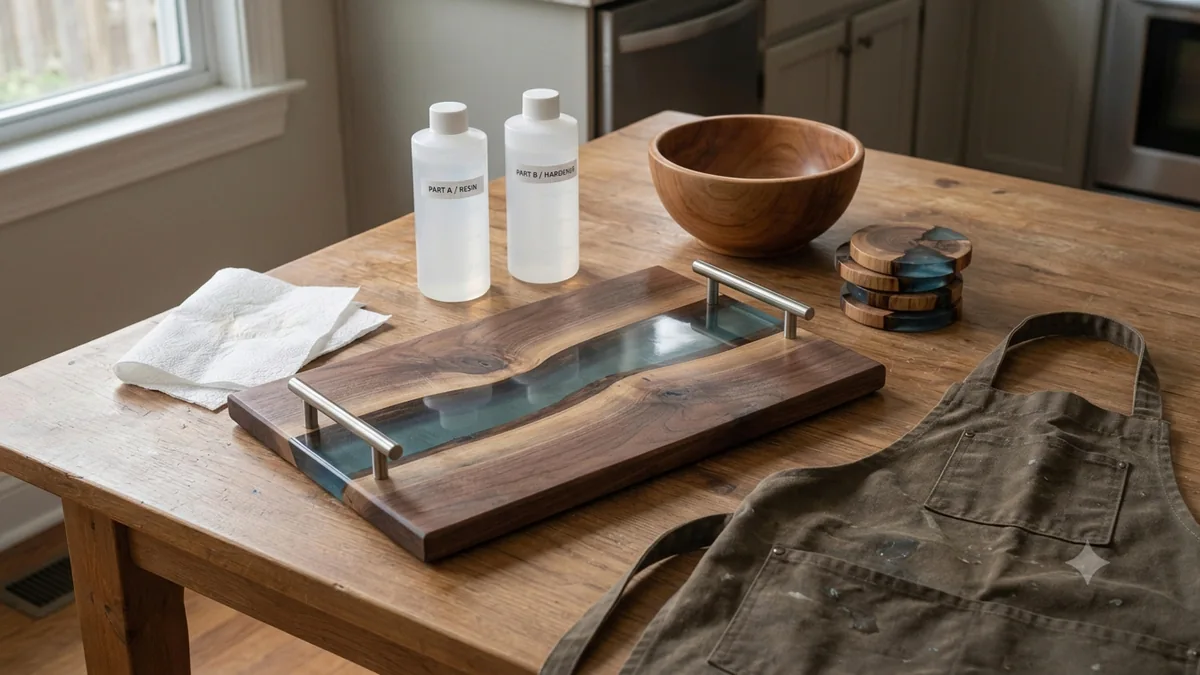
For a wood board, the goal is to keep liquids out of the grain and to serve food without cutting into a resin layer. That is a different job from building a chopping surface, and it is why the safer projects are serving boards and charcuterie boards rather than knife-facing work.
Food-Safe vs. Non-Food-Safe Epoxy: What to Check on the Label
Food-safe epoxy is a claim tied to a specific standard, not a general promise. The label or data sheet should name the standard and the condition of the resin. Look for the exact citation rather than a vague phrase like food grade.
The FDA citation most often named is 21 CFR 175.300, covering resinous and polymeric coatings. Epoxyres-it explains that the FDA does not approve consumer products; independent labs test resins to that standard before a manufacturer can claim compliance. Its guidance is that unless third-party testing confirms compliance, the product should not be assumed food safe for prolonged contact.
| Label or document to check | What it tells you | Red flag |
|---|---|---|
| FDA 21 CFR 175.300 statement | Names the US coatings standard the manufacturer claims to meet | Only says food grade with no standard named |
| Independent test reference | Shows a lab tested leaching or migration | No test reference anywhere on the product |
| Safety Data Sheet (SDS) | Lists hazards, components and protective measures | SDS is missing or hard to find |
| Use scope statement | Defines indirect or direct food contact | Claims cover cutting surfaces without qualification |
| Hazard symbols on the label | Flags toxicity or flammability warnings | Warnings like do not ingest, or flammability symbols |
Intoresin also says you should check component levels, including BPA, epichlorohydrin and carboxylic acid. It states that the FDA has found no potential health risk from BPA at low levels, but it advises avoiding resins with large amounts of the other toxic components. Ask the manufacturer for the SDS if the label does not answer these questions.
How Epoxy Cures and When It Becomes Inert
Epoxy is only inert once the chemical reaction between resin and hardener has finished. Before that, the liquid is a chemical you should handle with gloves and ventilation, and it should never touch food or drink. Cure is the step where most food-safety problems begin.
Cure times in the sources vary by manufacturer. ArtResin says a resin is considered safe for food contact only once fully cured, and typically cures in 72 hours. Epoxyres-it says most resins need 5 to 7 days to fully harden. Superclear says its resins are hard to the touch in about 24 hours, but full cure to maximum hardness takes about 30 days at 70°F to 84°F.
Use the longest cure time printed on your product as your minimum. A surface that feels hard at one or two days may still be curing underneath. Keep a board out of food contact until the full cure window has passed.
Cutting Surface Tips: Epoxy Inlays vs. Full Coats
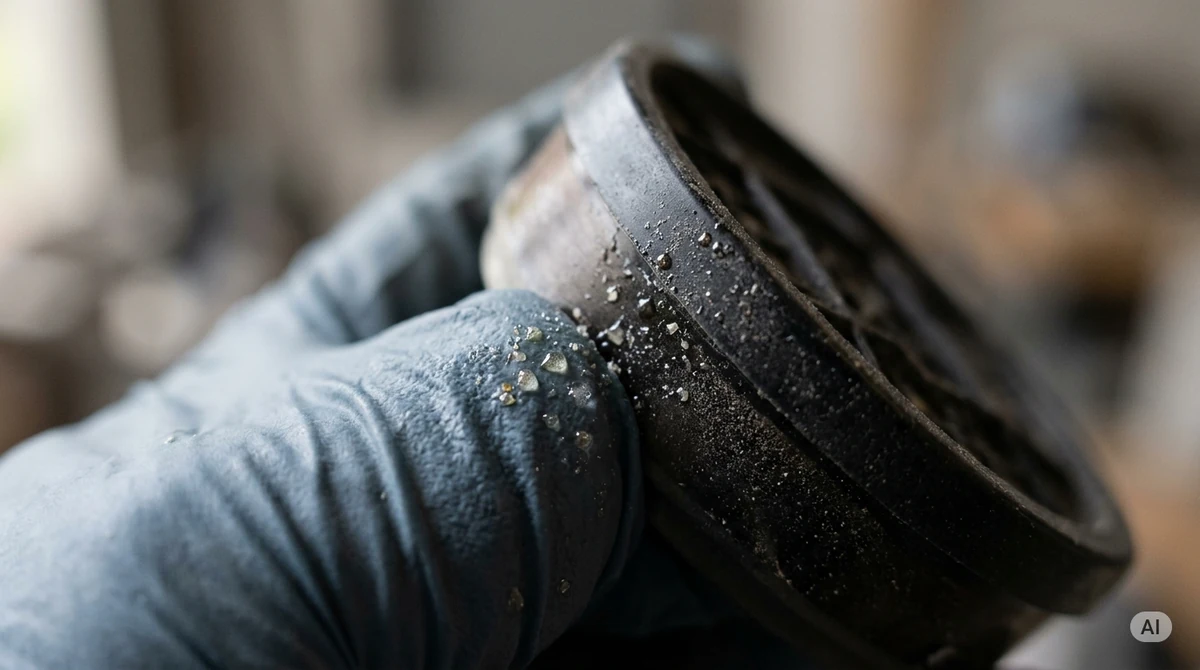
Some makers build a board with an epoxy river or inlay set into a wood base, while others pour a full coat over the top. Neither design makes a cutting board food safe for chopping, because the knife still reaches the resin in the areas you use most. The difference is mostly about how much resin is exposed and where.
Epoxyres-it recommends sealing wood with a thin epoxy coating before serving boards, to keep liquids out of the wood. That is a sealing step for a board that will hold food, not a chopping surface. For a board you plan to cut on, the sources point toward other finishes; Epoxyres-it mentions FDA-approved polyurethane or cutting board oils as outer coats for added durability.
If you are interested in a wood board with resin accents, read the project guide on epoxy cutting board DIY projects to see how makers typically keep the resin away from the knife.
Tip: Keep resin areas flush and clear of the spots where you slice most often. Mark the board as a serving surface so no one uses it for chopping.
Step-by-Step: Sealing a Wood Board for Serving Safely
If your goal is a wood serving board that is sealed well enough to hold cheese, crackers and fruit, follow the manufacturer’s steps and allow the full cure. The steps below combine guidance from Superclear and Epoxyres-it. Always confirm the mix ratio and times on your own product label.
- Choose a resin with a food-safe standard named. Confirm the FDA citation and the use scope on the label or data sheet.
- Read the SDS before you open the bottles. Note the hazards and the protective measures listed.
- Measure by weight or the exact volume ratio. Superclear’s Table Top 1:1 is mixed 100:83 by weight, while its 2:1 products need two parts resin to one part hardener.
- Mix for the time printed on the label. Superclear recommends hand mixing Table Top resin for 3 to 5 minutes, scraping the container during the first three minutes.
- Seal the wood with a thin coat. Epoxyres-it recommends a thin coating so liquids stay out of the grain.
- Respect the max pour depth. Superclear lists 1/4 inch per pour for Table Top 1:1 and 1/4 inch for Countertop Epoxy, so build thicker work in layers.
- Keep the board at a steady room temperature. Superclear recommends a range of 70°F to 84°F for curing.
- Let the board cure fully before any food contact. Use the full cure time from the label, which can be about 30 days for some Superclear products.
- Keep food off the board while it cures. Epoxyres-it notes that most resins need 5 to 7 days, and uncured resin cannot be used with food.
Safety: Wear nitrile gloves and work in a ventilated space. Follow the SDS for mixing, sanding and disposal, and keep uncured resin away from food and drink.
Mistakes That Make Epoxy Unsafe (and How to Avoid Them)
Most food-safety problems with epoxy come from the process, not the product name. Incorrect ratios leave unreacted chemicals, and insufficient mixing can leave soft spots that never fully cure. Both problems are controllable with careful measuring and a full cure.
Heat and alcohol are also common mistakes. Hiros Arts advises against heating cured epoxy beyond 165°F and against microwaving epoxy projects. It also warns that alcohol can weaken epoxy coatings. Epoxyres-it says most epoxies become soft at 50 to 60 degrees C, or 122 to 140 degrees F, and recommends keeping hot cookware off the resin.
Colorants can also change the answer. ArtResin says alcohol ink is a flammable solvent that makes the resin no longer considered non-toxic, so it should not be used for food pieces. Hiros Arts warns that titanium dioxide, copper phthalocyanine and chromium oxide green pigments may contain chemicals that could leach into food. If you add color, ArtResin suggests a clear topcoat of food-safe resin over tinted layers.
| Mistake | Why it matters | Better approach |
|---|---|---|
| Using the cutting surface as a serving surface | Knife cuts can expose resin edges | Keep one board for chopping and one sealed board for serving |
| Serving food before full cure | Uncured resin may not be inert | Wait for the full cure time on the label |
| Eyeballing the mix ratio | Wrong ratios leave unreacted chemicals | Weigh or measure every batch |
| Washing in a dishwasher | Heat and harsh detergents can spoil resin | Hand wash with light soap |
| Placing hot pans on the surface | Epoxy can soften and creep | Use trivets and keep hot cookware off the resin |
Heat and washing rules are also covered in more detail in our guide on whether epoxy countertops are safe, which shares many of the same cure and heat limits. For the manufacturer’s own cure and mixing details, see the Epoxyres-it food-safe epoxy guide.
Care, Cleaning, and When to Replace Your Board
Care for a sealed serving board is gentle. Epoxyres-it says epoxy is not dishwasher safe, because heat and harsh detergents can spoil the resin, and it recommends washing by hand with light soap. Dry the board and avoid soaking it.
Replace a board when the resin shows cracks, cloudiness, peeling, sticky spots or new soft areas. Epoxyres-it also notes that uncured resin may be greasy and cannot be used with food; in that case, the advice is to sand and recoat. If the wood underneath has soaked up liquids or shows mold, retire the board. For more on how wood furniture and countertop finishes are handled, browse the wood furniture and countertop projects section.
When in doubt, the SDS and the manufacturer’s contact channel are the best sources for your specific resin. A board used only for serving, kept dry and gently cleaned, is the safer use case the sources describe.
Frequently Asked Questions
Is epoxy food safe for cutting boards?
Most manufacturers and the guidance in the sources say no for cutting surfaces. Food-safe claims generally cover indirect contact such as serving boards, trays and countertops. Knife cuts can expose resin edges, so keep resin for serving work.
Can you cut on an epoxy resin cutting board?
Epoxyres-it advises against it because knife cuts may leave spots where resin particles could leach. Superclear also says its food-safe status does not cover cutting surfaces. Use a separate wood or other suitable board for chopping.
How long does epoxy need to cure before food can touch it?
Cure times differ by product. ArtResin says about 72 hours, Epoxyres-it says 5 to 7 days, and Superclear says about 30 days at 70°F to 84°F for maximum hardness. Follow the time on your label and wait for the full cure before serving.
Does alcohol or pigment make epoxy unsafe for food?
Alcohol ink is a flammable solvent, and ArtResin says it makes the resin no longer considered non-toxic. Hiros Arts also warns that some pigments may leach into food. Add only food-compatible colorants and seal tinted work with a clear food-safe topcoat.
Epoxy can be a useful finish for wood serving boards once it is fully cured and sealed, but it is not a cutting surface. Choose a resin with a named food-safe standard, follow the mix and cure times on the label, and keep the board for serving rather than chopping.
More in Wood, Tables & Countertops
 How to Fill Knots with Epoxy for a Smooth, Durable Wood SurfaceUpdated Nov 26, 2026
 How to Epoxy Live Edge Wood: A Step-by-Step Guide to a Flat, Durable TabletopUpdated Nov 26, 2026
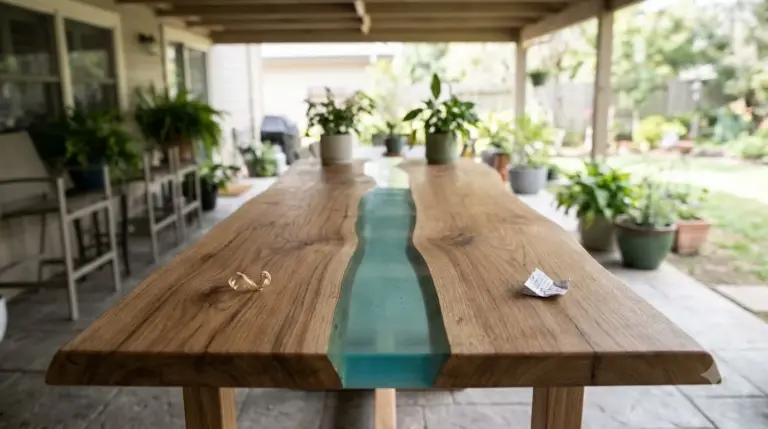 Outdoor Bar Top Epoxy: How to Pick a UV-Resistant Resin and Cure It RightUpdated Nov 26, 2026
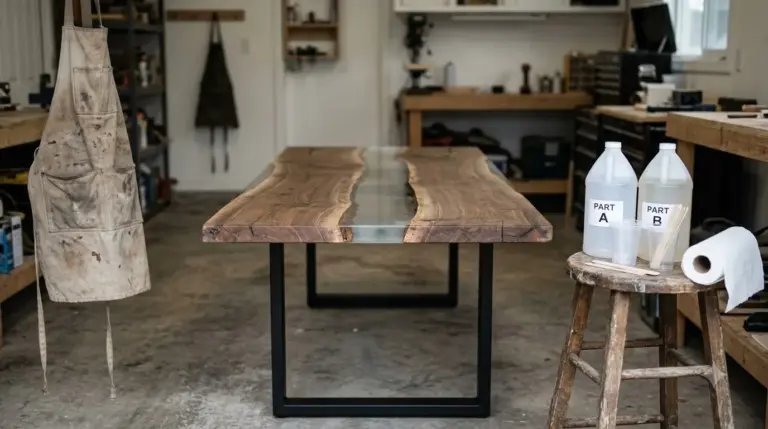 How to Make an Epoxy River Table: Step-by-Step Build for BeginnersUpdated Nov 26, 2026
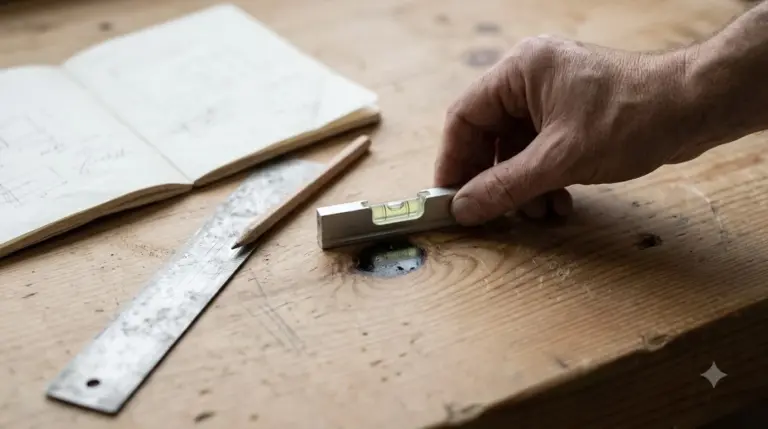 Pine Epoxy Table Guide: How to Prep Softwood for a Clean River PourUpdated Nov 26, 2026
 Spalted Maple Epoxy Table: How to Stabilize, Pour, and Care for OneUpdated Nov 26, 2026