

We may earn a commission when you buy through links on this page, at no extra cost to you. Learn more.
Are resin coasters safe for drinks? Yes, once the resin is fully cured and was made from a product rated for food contact. Sources note that most resins need 5 to 7 days to harden before food use, and one manufacturer cites about 30 days for full cure at 70°F to 84°F. Uncured, tacky, or poorly mixed resin is a different story and should not touch any beverage. Heat, alcohol and cutting also change the answer.
This guide explains what separates a safe coaster from a risky one. You will learn how to judge cure, what the food-contact guidance means for drinks, and which mistakes cause soft or sticky spots. It also covers the protective gear to wear while you work.
What Makes Resin Coasters Safe or Unsafe
A resin coaster is safe for drinks when the cured surface is chemically finished and the product was made to a food-contact standard. Uncured resin and hardener in liquid form are not safe for food or drink. The cured surface is the only part that matters for a beverage.
Food-safe claims are tied to specific rules. ArtResin links its food-safe claim to FDA 21 CFR 175.300 compliance once the resin has cured, according to the company’s own guide. Hirosarts lists related certifications from the US, EU, UK, Australia and Canada. A label that says “food safe” without a test reference tells you little on its own.
Unsafe coasters usually share a few traits. They may be soft, tacky, greasy, or still smell strongly after the expected cure time. They may also contain colorants or solvents the maker did not vet. Treat any of those signs as a reason to wait or remake the piece.
Epoxy vs UV Resin: Which Is Safer for Coasters
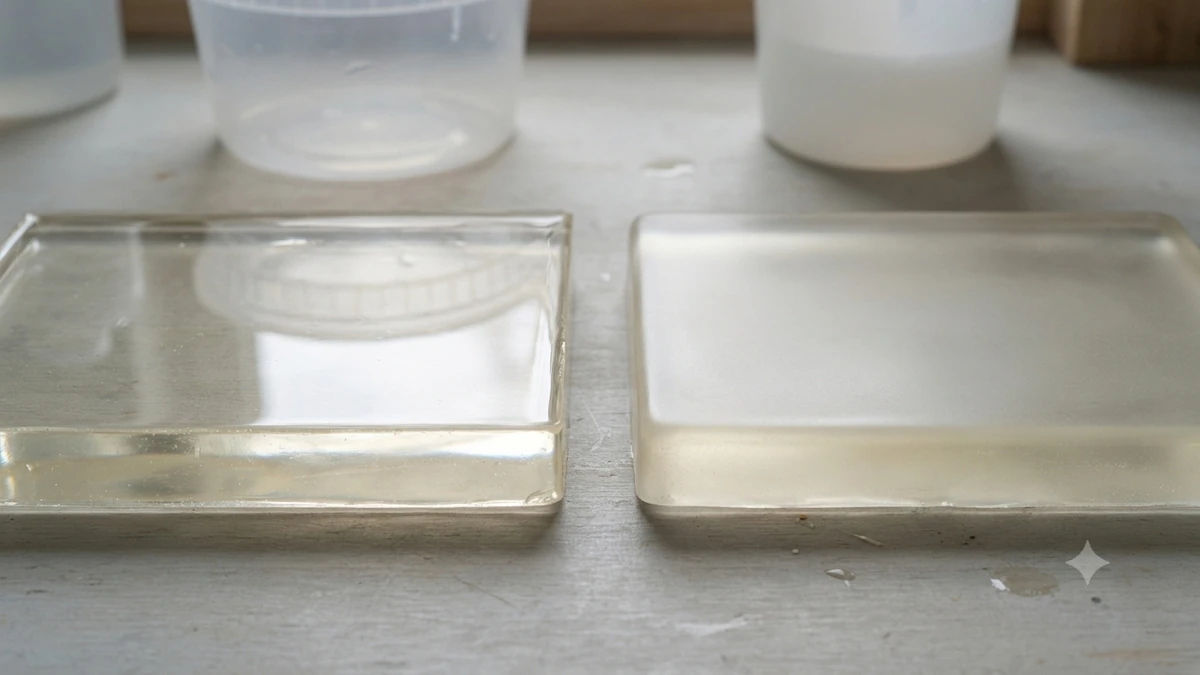
Most of the safety guidance in published sources is written for two-part epoxy. Epoxy is mixed from a resin and a hardener, usually at a set ratio. UV resin cures under ultraviolet light and is a different chemistry. The sources reviewed here do not give a safety comparison between the two.
That gap matters. Do not assume a UV product is food safe because it cures quickly. Check the manufacturer’s safety data sheet and any food-contact statement for that exact product. If the packaging does not mention food contact, treat the coaster as decorative only.
Whichever type you use, the same questions apply. Is there a published test reference? Does the manufacturer describe the cured surface as food contact? Does it give a cure time you can follow? A clear answer to those points is more useful than a general “non-toxic” claim.
How to Tell If Your Resin Is Fully Cured
Hard to the touch is not the same as fully cured. Superclear says its resins cure hard to the touch in about 24 hours, but full cure to maximum hardness takes about 30 days. Surface hardness can fool you because the material underneath may still be reacting.
Other sources give shorter windows for typical resins. Epoxyres-it recommends allowing most resins 5 to 7 days to harden fully before food use. ArtResin notes that full curing is typically around 72 hours. Read the exact cure time on your product’s label and follow the longer figure when you are unsure.
Use a simple checklist before a coaster goes into service:
- The surface has no tackiness when you touch it with a clean, dry finger.
- There is no greasy film, odor or residue left on the surface.
- The full cure time printed by the manufacturer has passed, not just the tack-free time.
- The room stayed within the recommended working temperature during the cure.
If a coaster fails any of these checks, do not use it for drinks. Give it more time, and if it stays soft, check the mix ratio and mixing steps. A soft spot is a sign the chemistry did not finish.
Food Contact and Drink Safety Limits
Food-safe epoxy is rated for incidental contact, not constant use. Epoxyres-it explains that most epoxies suit incidental contact, such as a coaster where a glass may rest briefly. Continuous direct contact is a different use and needs a product tested for it.
Coasters fall on the lighter end of the range. Epoxyres-it lists coasters and decorative dishes as fine for short-term contact. A glass sitting on a coaster for a drink or two fits that category. Do not treat a coaster as a plate, bowl or cutting surface.
Alcohol deserves extra care. Hirosarts warns that alcohol can weaken, crack or peel epoxy over time. Epoxyres-it also notes that solvents such as wine or spirits can affect some epoxies. A coaster that gets wine or spirits often may degrade faster, so check it regularly and retire any piece that softens or peels. For the mixing side of this, the Superclear food safe epoxy guide explains that food-safe status applies only to the fully cured product.
Heat Resistance and Hot Mug Risks
Heat is the most common reason a coaster that was safe to begin with becomes a problem. Hirosarts advises against heating cured epoxy above 165°F and against microwaving epoxy projects. Hot mugs and fresh coffee can approach that range, so the risk is real for everyday drinks.
Epoxyres-it reports that most epoxies begin to soften between 50 and 60°C, which is 122 to 140°F. A hot mug can reach that zone, especially with a heavy ceramic base holding heat. Softening can leave marks, dull the finish, or make the surface sticky again.
Use a barrier between hot cups and the resin. Many makers choose coasters for cold drinks and keep hot mugs on a heat-rated surface. For a fuller look at this question, see are resin coasters heat resistant, which covers how to judge heat limits for specific finishes.
Safety: Keep resin coasters away from microwaves, open flames and direct contact with a hot pan. Check the manufacturer’s safety data sheet for any heat limit on your specific product.
Mixing and Curing Mistakes That Create Sticky Coasters
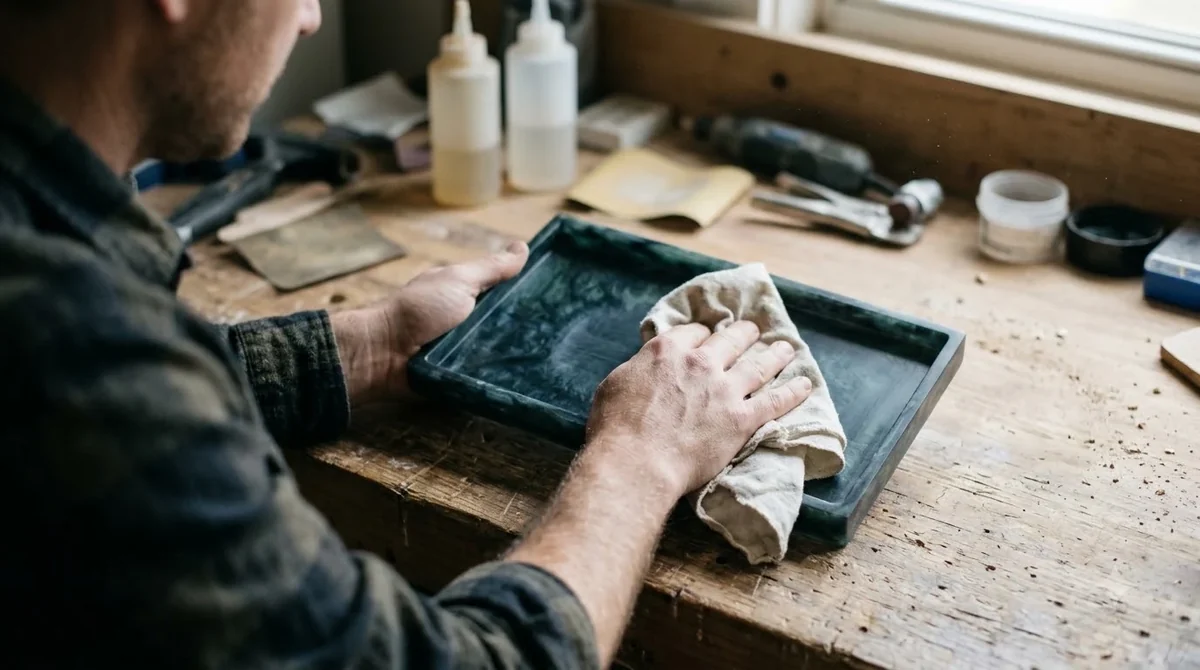
Most unsafe coasters trace back to the mix. Incorrect ratios can lead to incomplete curing, which leaves a sticky or soft finish. Insufficient mixing can leave patches of the surface unsealed. Both problems start before the resin ever sits on a coaster.
Superclear’s mixing guidance is specific. For 1:1 products such as Table Top and Designer Art Resin, the company recommends stirring by hand for 3 to 5 minutes and scraping the sides, bottom and corners during the first three minutes. For 2:1 products, it recommends at least five minutes with a drill mixer on low, then transferring to a clean container for three more minutes.
Temperature and humidity also count. Superclear recommends working between 70°F and 84°F in a clean, dry, low-humidity space. Cold or damp rooms can slow the cure and leave the surface tacky. If you want a step-by-step process for making the coasters themselves, see how to make resin coasters.
| Symptom | Likely cause | What to do |
|---|---|---|
| Tacky surface after the expected cure time | Wrong ratio or unmixed resin | Do not use for drinks; sand and recoat if the maker’s instructions allow it |
| Greasy film or streaks | Unmixed material from container walls | Use the two-container mix method and scrape only during mixing |
| Soft spot under a cup | Heat or alcohol exposure | Retire the coaster and use a heat-rated surface for hot drinks |
| Strong smell long after cure | Incomplete cure or excess solvents | Ventilate, wait longer, and check the product’s data sheet |
Protective Gear and Workshop Safety While Making Coasters
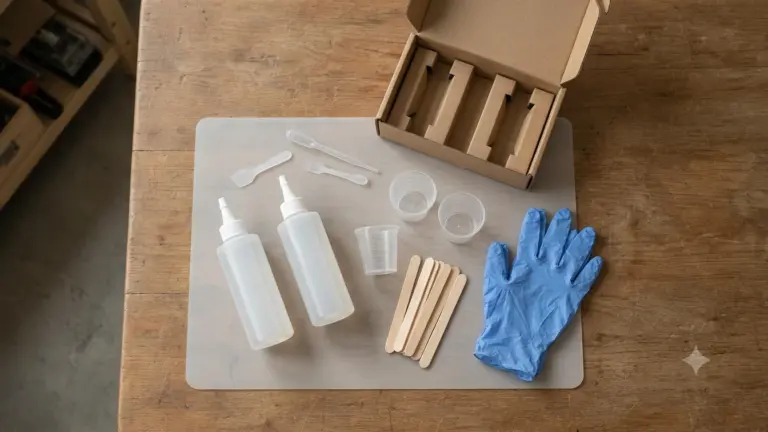
Protect your skin and lungs while the resin is liquid. Sensitizing hardeners can cause skin reactions that build up over time. Wear nitrile gloves rather than latex, because Sensible Digs notes that nitrile holds up better against these chemicals. Keep bare skin away from mixed resin.
For breathing protection, Sensible Digs recommends a NIOSH-approved respirator with organic-vapor cartridges rather than an N95 mask. Those cartridges wear out, so replace them on the schedule the manufacturer gives. Work with good airflow, and keep food and drinks out of the mixing area.
Eye protection matters too. Splashes happen during pouring, and a drop of hardener can injure the eye. Safety glasses or goggles are a simple step. Read the product’s safety data sheet before you start, because it lists the specific hazards and protective steps for that resin.
Troubleshooting Tacky, Cloudy, or Smelly Coasters
Tacky, cloudy and smelly coasters each point to a different problem. Tackiness usually means the chemistry did not finish. Cloudiness often comes from moisture, temperature swings or mixing air into the batch. A lingering smell suggests solvents or an incomplete cure.
Start with the basics. Confirm the ratio, mixing time and working temperature against the label. If the coaster is only tacky, give it more time before judging it, since the full cure can take 30 days for some products. If the surface stays soft after that, sand it back and recoat only if the manufacturer’s instructions allow it.
When in doubt, do not use the coaster for drinks. Contact the manufacturer through the contact details on the product or its safety data sheet. Keep your batch records, including product name, ratio and date, so you can compare the next batch against what worked.
Frequently Asked Questions
Is a resin coaster safe to put a drink on?
Yes, once the resin is fully cured and was made from a product rated for food contact. Epoxyres-it lists coasters among uses that are fine for short-term contact. Keep drinks off any coaster that is still tacky or has a strong odor.
How long does resin need to cure before using it as a coaster?
Many sources cite 5 to 7 days for most resins before food use. ArtResin notes that full curing is typically around 72 hours. Superclear says its products reach maximum hardness in about 30 days at 70°F to 84°F, so the longer window is the safer choice.
Can hot mugs or cups be placed on resin coasters without damage?
Not reliably. Hirosarts advises against heating cured epoxy beyond 165°F, and Epoxyres-it notes most epoxies soften between 122 and 140°F. Use hot-drink coasters made for heat, and check the product’s heat limit before relying on a resin piece.
Is epoxy resin toxic to touch once fully cured?
Sources describe fully cured food-contact epoxy as inert, but liquid resin and hardener are hazardous. Sensible Digs says the hardener can sensitize skin, so gloves matter during mixing. Once the coaster is fully cured, normal handling is a different situation from handling liquid resin.
Resin coasters can be a safe, practical project when the cure is complete and the product is rated for the use. Follow the exact cure time, keep hot and alcohol-heavy drinks in mind, and wear gloves while you mix. For more project ideas, browse Resin Art & Decor.
More in Resin Art & Decor
 What Is a Resin Art Kit? What It Includes and How to StartUpdated Nov 26, 2026
 Resin Lamp Ideas and How to Build a Glowing Piece at HomeUpdated Nov 26, 2026
 Resin Coasters for Beginners: Mix, Pour, and Cure a Glossy First SetUpdated Nov 26, 2026
 Resin Over Watercolor Without Bleeding: How to Seal and Pour SafelyUpdated Nov 26, 2026
 How Much Epoxy for a Tumbler? Measure by Ounces and Avoid WasteUpdated Nov 26, 2026
 Ocean Resin Art Tutorial: Make Realistic Waves on Canvas or WoodUpdated Nov 26, 2026