

We may earn a commission when you buy through links on this page, at no extra cost to you. Learn more.
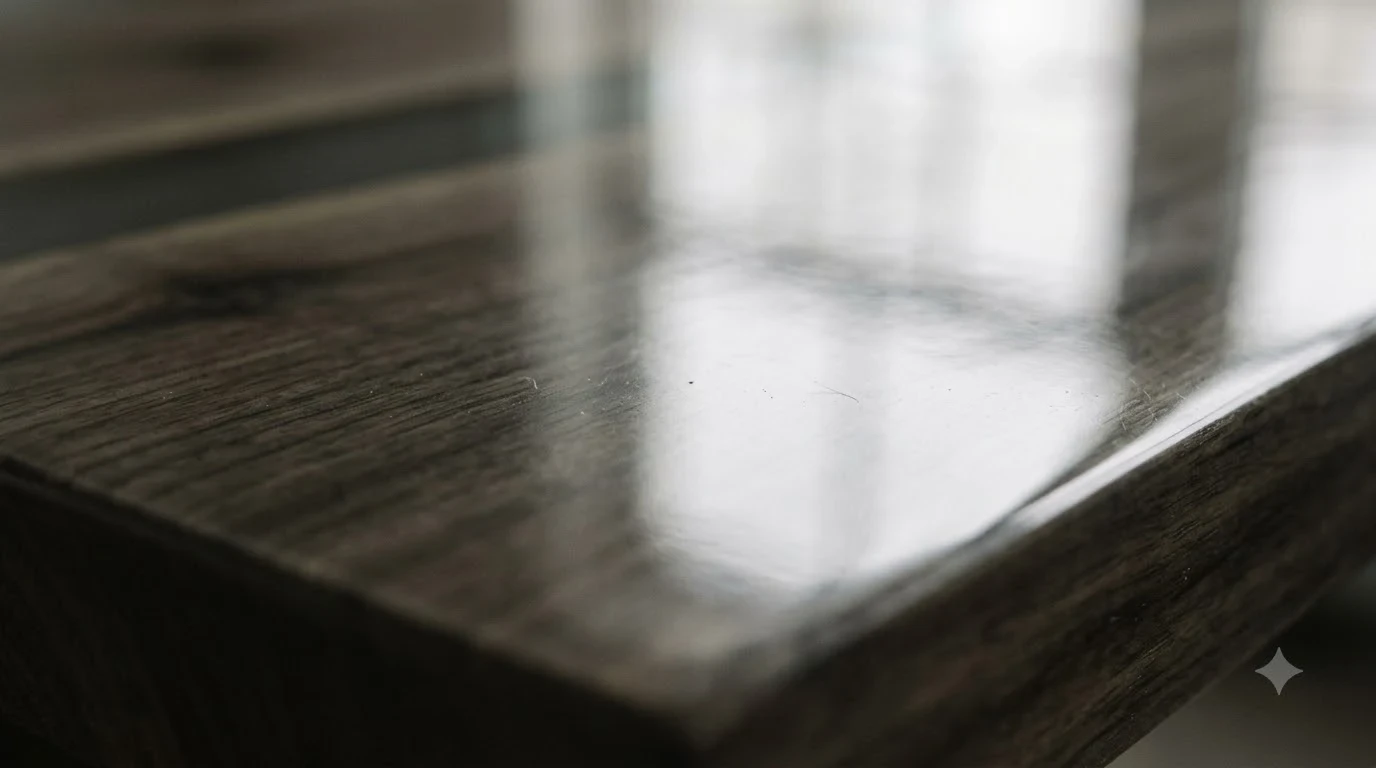
TotalBoat tabletop epoxy cure time runs about 5-7 days to full cure, with a minimum of 3-5 days before the surface can be used. That figure comes from a published cure-time chart, and it assumes the work stays in the recommended 65-80°F range. The product is mixed 1:1 by volume, and the workspace should stay between 0 and 60% relative humidity. A review reports about 16-20 hours at 70°F, but that describes an early stage, not full cure.
This guide explains each cure stage, how temperature and humidity change the schedule, and how to decide when to sand, recoat or set items on your finished surface. Check the product’s current technical data sheet before you commit to a schedule.
What Cure Time Means for TotalBoat Tabletop Epoxy
Cure time is not one number. It describes several milestones, from the point the resin stops feeling wet to the point it reaches its final hardness. Each milestone has its own timing.
The TotalBoat TableTop product page lists a working time of 40 minutes at 70°F and a gel time of 72 minutes at 77°F for a 150-gram mass. Those figures tell you how long you can spread the mix before it starts to set. They do not tell you when the table is ready for use.
Cure Stages: Tack-Free, Demold, and Full Cure
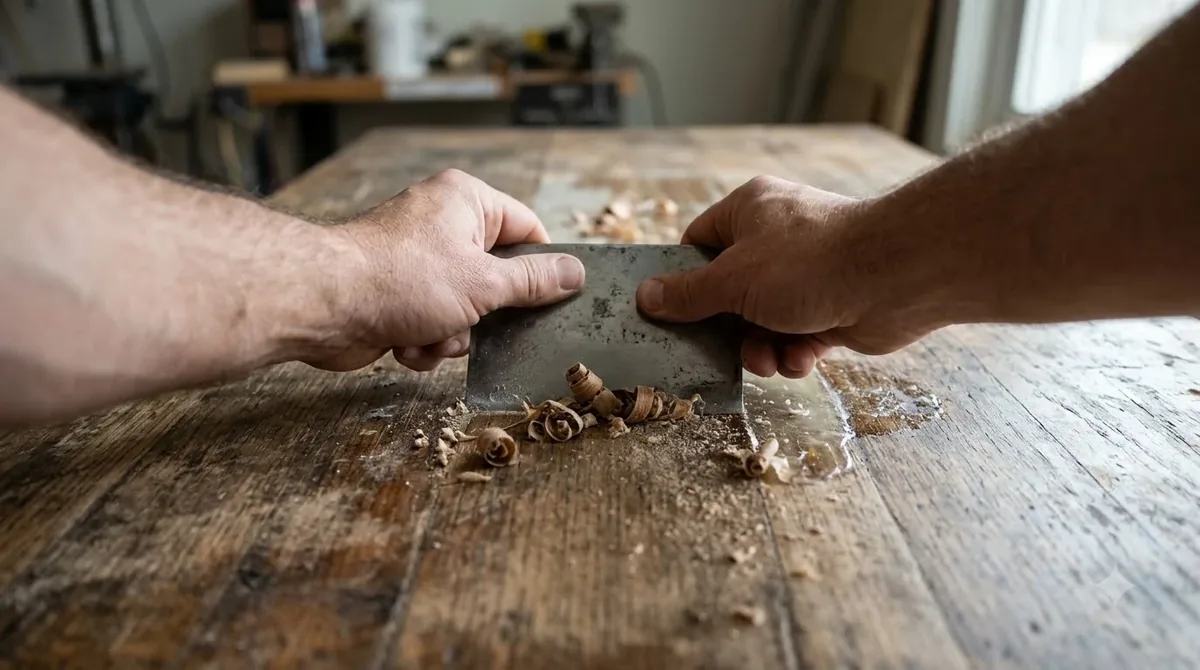
The main stages are tack-free, handling or demold, and full cure. Tack-free means the surface no longer feels sticky to a light touch. It does not mean the epoxy has reached full strength or chemical resistance.
Full cure is the point the manufacturer says the resin reaches its intended final properties. For TotalBoat TableTop, a published chart lists a minimum cure for use of 3-5 days and a full cure of 5-7 days. The same chart notes the reference condition is about 77°F.
Demold time and full cure are not the same. A piece can come out of a mold before the epoxy is fully cured, so treat early handling as a light-duty step only. A related explanation is in How Long for Deep Pour Epoxy to Cure.
Cure Time by Temperature and Humidity
Temperature changes the schedule more than any other single factor. The recommended working range is 65-80°F with 0-60% relative humidity, and the schedule below assumes you stay inside it.
| Milestone | Published figure | Where it comes from |
|---|---|---|
| Working time | 40 minutes at 70°F | Product page |
| Gel time (150 g mass) | 72 minutes at 77°F | Product page |
| Workable time (2-quart kit) | About 20 minutes at 70°F | Third-party review |
| Recoat wait | At least 3 hours at 70°F | Product page |
| Recoat window without sanding | 4-8 hours | Third-party review |
| Early cure (about 70°F) | About 16-20 hours | Third-party review |
| Minimum cure for use | 3-5 days | Published cure-time chart |
| Full cure | 5-7 days | Published cure-time chart |
The two sources do not agree on every number, and the gap matters. Use the product’s technical data sheet as the final authority for your batch, especially for recoat timing and full cure.
A rule of thumb from System Three says an 18°F (10°C) change roughly doubles or halves cure time. In its example, an epoxy that is tack-free in 3 hours at 70°F may take about 6 hours at 52°F. Cooler rooms slow the reaction, and warmer rooms speed it up, but only inside the stated range. A warm room does not justify going above 80°F.
Humidity is a limit to respect rather than a timer to adjust. Keep the shop within the 0-60% humidity range before you mix. Also keep the resin and hardener stored at 60-90°F, since the product’s shelf life is at least 1 year under proper storage.
Recoat Windows and Sanding Between Coats
Recoat timing depends on how long the previous layer has been curing. The product page says to wait at least 3 hours at 70°F between coats so the formula can level and set. A review reports that layers can be recoated after 4-8 hours without sanding.
Those two numbers describe different thresholds. The 3-hour figure is the minimum wait from the manufacturer. The 4-8 hour figure comes from a reviewer, so treat it as a guideline and confirm it on the data sheet. For cure-window context, the epoxy resin cure time chart notes that some systems allow recoating only within a bonding window.
If you go past the window, sanding is usually needed for a good bond. Scuff the surface, wipe off the dust, and make sure the surface is clean and free of oil or moisture before the next pour. Pour depth per coat matters too: the product page lists up to 1/4 inch per coat for coating. For a wider view of the same system, see How Long Does Art Resin Take to Cure.
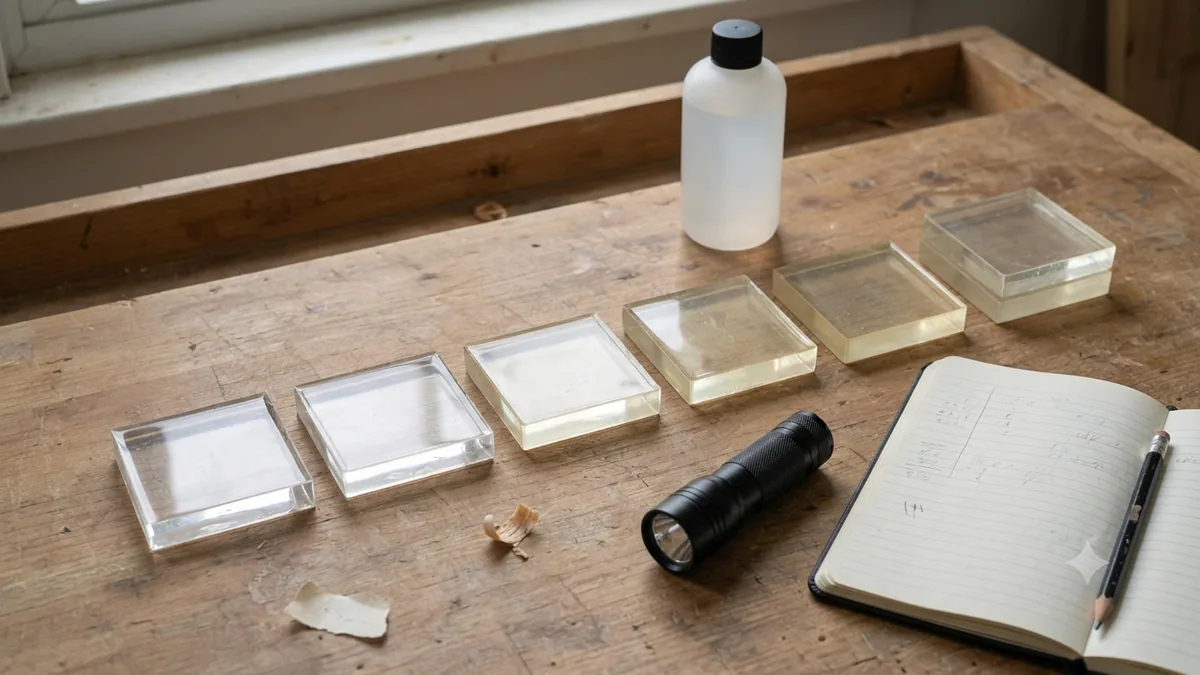
Tip: Mark the time of each pour on a card taped near the bench. Recoat decisions are easier when you have a written record.
Troubleshooting Tacky or Soft Epoxy
If the surface is still tacky after a day, the most common cause is that the cure has not reached the stage you expect. Early cure at about 70°F is measured in hours, while full cure takes days. Check the calendar before you assume something failed.
Other causes include a mix that was off-ratio, incomplete mixing, or a room that stayed cool overnight. The chart notes that cold slows the reaction and that a workshop that is warm by day but cold at night can extend cure a lot. Measure the actual curing area with a thermometer.
- Confirm the date. Compare the time since the pour with the 5-7 day full-cure figure before you troubleshoot.
- Check the temperature. Keep the room within 65-80°F through the early cure.
- Check the mix. The ratio is 1:1 by volume, or 1.2 parts resin to 1 part hardener by weight.
- Contact the manufacturer. If the surface stays soft after the full-cure period, follow the technical data sheet or contact TotalBoat for guidance.
Bubbles are a separate issue. A review notes that a heat gun or blow dryer can help release them, and that mixing only long enough to combine the parts reduces them. Those steps do not change cure time.
Safety and Ventilation During Cure
Wear nitrile gloves and keep the room ventilated while you mix and pour. The product page says the formula is low-VOC, but it still recommends a respirator in close quarters. Read the safety data sheet for your specific kit.
Thick masses can get hot during cure. WEST SYSTEM, a different brand, warns that a contained 100-gram mass of mixed epoxy can reach about 400°F under uncontrolled conditions. Keep pour depth within the manufacturer’s limit, and do not stack a large mixed batch in one container. For more on this topic, see How Long Does Epoxy Take to Cure Guide.
Safety: Keep kids and pets out of the curing area, and keep the room ventilated for the full cure period.
Frequently Asked Questions
How long does TotalBoat TableTop epoxy take to cure fully?
A published cure-time chart lists a full cure of 5-7 days for TotalBoat TableTop. Its minimum cure for use is 3-5 days. Keep the room within the recommended 65-80°F range during that time.
When can I use a TotalBoat TableTop epoxy countertop after pouring?
Light use may be possible after the minimum cure of 3-5 days, according to the same chart. Heavy use, cutting and placing hot or heavy items should wait for full cure. Check the data sheet for any product-specific limits.
How long until TotalBoat TableTop epoxy is dry to the touch?
TotalBoat does not publish a tack-free time in the sources used here. A reviewer reports about 16-20 hours at 70°F for an early stage. Tack-free does not mean full strength.
Does TotalBoat TableTop epoxy cure faster in a warm room?
Yes, warmer conditions generally speed up the reaction, and System Three says an 18°F (10°C) rise roughly halves cure time. Do not go above the recommended 80°F to speed things up. Stay inside the stated range.
Plan your schedule around the full-cure figure rather than the first sticky-free moment. For mixing steps, see total boat table top epoxy instructions. Surface prep for wood is covered in Boats, Repairs & Bonding.
More in Boats, Repairs & Bonding
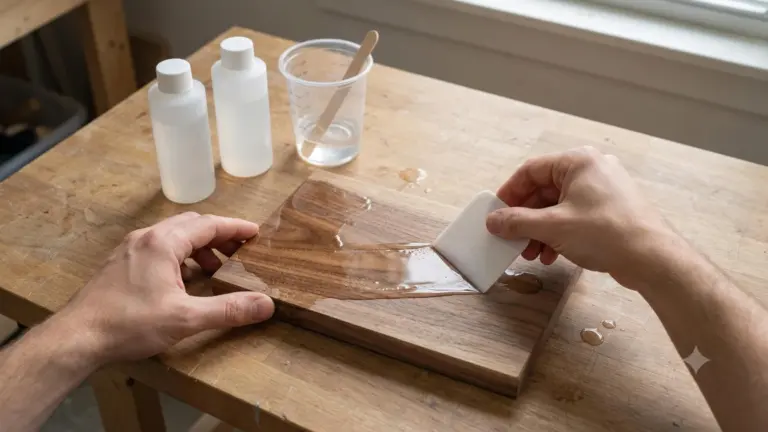 TotalBoat Tabletop Epoxy Instructions: Mix, Pour and Cure Your Table RightUpdated Nov 26, 2026
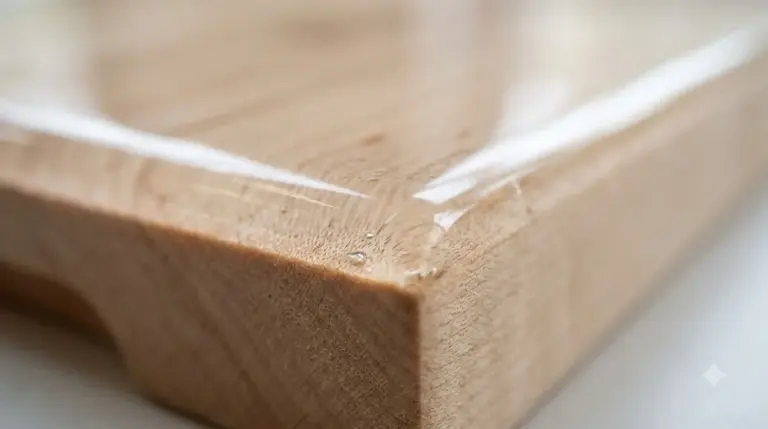 How to Fix Epoxy Countertop Ripples, Cracks and Dull Spots Without Starting OverUpdated Nov 26, 2026
 What Is Marine Epoxy? Uses, Types and Boat Repair BasicsUpdated Nov 26, 2026
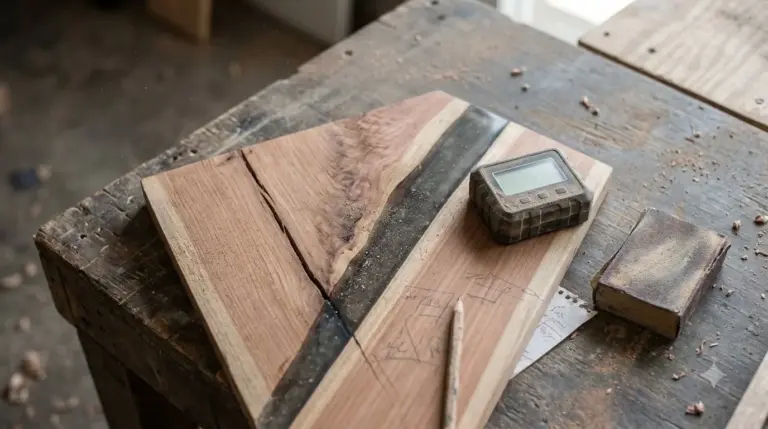 How to Fill Cracks in Wood with Epoxy Without Bubbles or SinkingUpdated Nov 26, 2026