

We may earn a commission when you buy through links on this page, at no extra cost to you. Learn more.
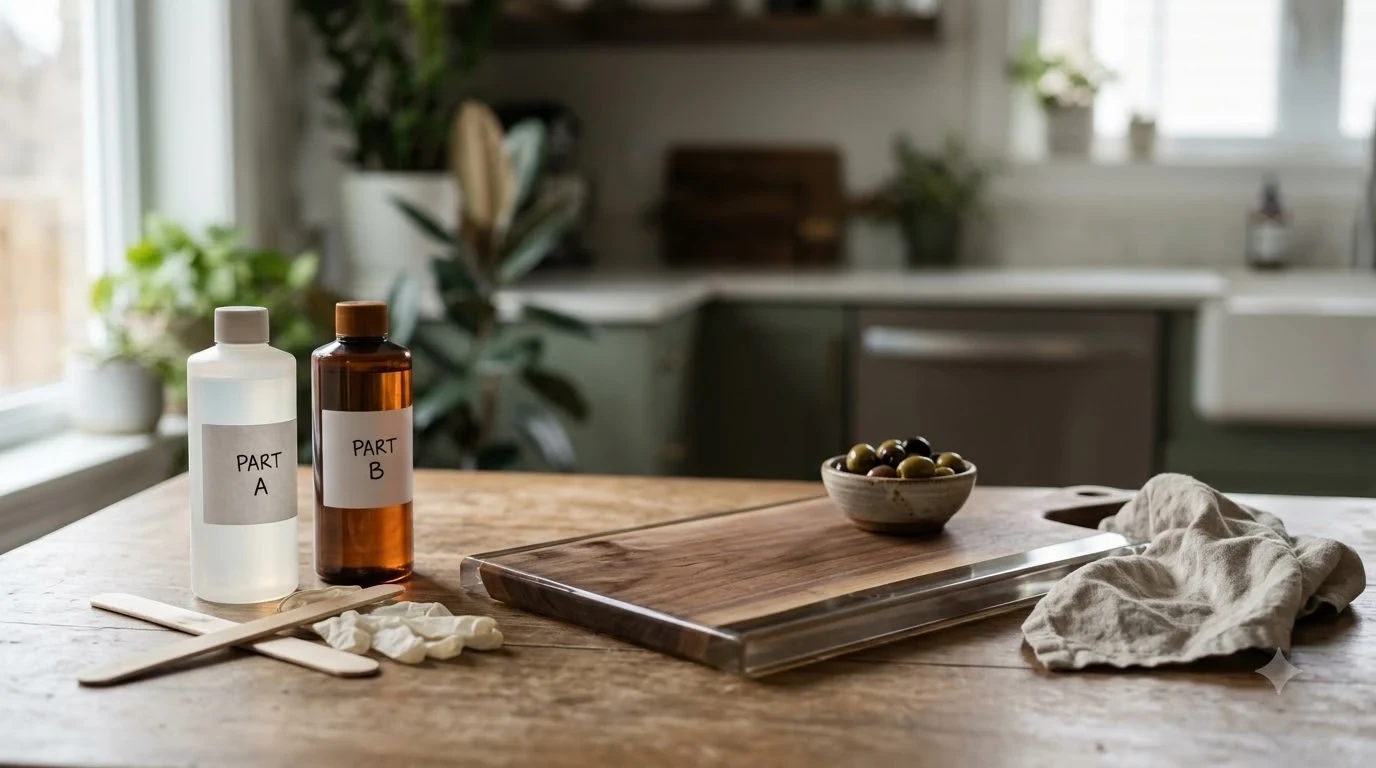
Are epoxy countertops safe? Yes, once the coating is fully cured and the product has documented food-contact testing, but only when you follow the mix and cure directions. According to ArtResin, a resin is considered safe for food contact only after it has fully cured, and the manufacturer cites a typical full cure of 72 hours. Checkthishouse says epoxy is generally properly cured after 48 hours. Uncured resin and hardener should never touch food.
If you are planning a DIY epoxy top, the safety question comes down to three things. You need to know whether the cured coating is inert, whether the product has real food-contact testing behind its label, and how to handle the material safely while you mix and pour. This page walks through each point using manufacturer notes and consumer guides, so you can judge the claim before you commit to a kitchen surface.
Is Epoxy Countertop Safe for Food Once It Is Cured?
A fully cured, food-safe epoxy is designed to be inert, meaning it should not leach chemicals into food. That promise only holds when the product is tested and used exactly as directed.
The term food-safe epoxy generally means that, when the product is used as directed and fully cured, it will not leach chemicals into food. ArtResin describes it this way, and the same guide notes that epoxy resin is not edible or potable in liquid or cured form. The food-safe claim applies to the finished surface, not to the raw ingredients sitting in the bucket.
Consumer guides take different positions. Checkthishouse says epoxy is safe and non-toxic after curing, but it also warns that not all epoxy countertops are food-safe. Maxiwoods describes high-quality cured epoxy as non-toxic and safe for food preparation surfaces, and it notes that epoxy is non-porous. Those are useful starting points, but they are general statements, not a test result for the specific product you buy.
Cured vs Uncured Epoxy: When It Becomes Inert
Uncured resin and hardener are not food-safe at any stage. Safety begins only after the chemical reaction finishes and the surface hardens completely.
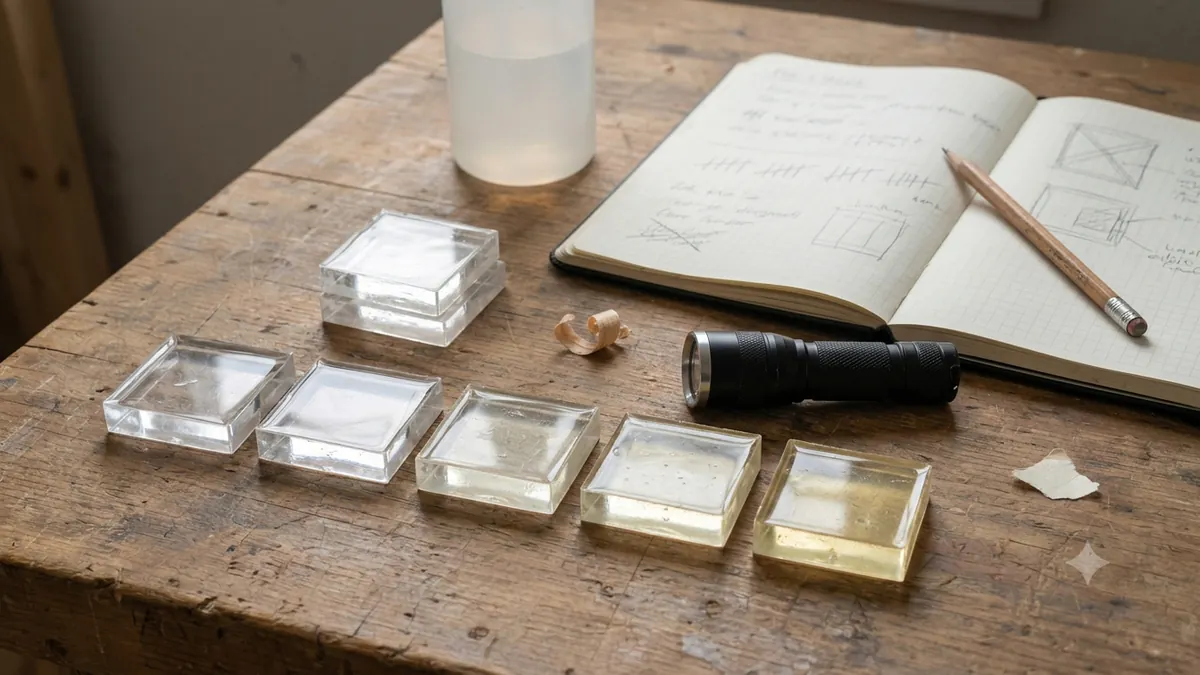
The ArtResin food-safe guide explains that the finished material comes from the reaction between resin and hardener. It also says that incorrect ratios or poor mixing can stop the two parts from bonding and curing properly. An under-cured surface may still hold components that can contaminate food, so the mix step matters as much as the waiting period.
Cure timing varies by source. ArtResin’s food-safe epoxy guide says epoxy is typically fully cured after 72 hours. Checkthishouse says the surface is generally properly cured after 48 hours and advises waiting between 4 and 20 hours before adding a second layer. Use the longer window listed on your product’s technical data sheet, and do not treat the first tack-free point as the finish line.
| Stage | What it means | Ready for food contact? |
|---|---|---|
| Freshly mixed resin and hardener | Still reacting and not inert | No |
| Flood coat that is soft or tacky | Partly cured, layers may not bond well | No |
| Hard enough for the next layer per the label | Ready for recoat, not yet finished | No |
| Fully cured per the data sheet | Designed to be inert | Only if the product is food-safe |
Food Safety, Cutting Boards and Colorants
Cutting food directly on a cured epoxy surface is a harder test than serving food on a board. Most food-safety guidance focuses on the coating itself, while colorants can change the result.
ArtResin lists charcuterie boards and drinkware as examples of surfaces suited to food-safe resin when the product is certified and fully cured. A countertop follows the same chemistry, but knife work is a different stress. Maxiwoods advises using cutting boards and avoiding heavy drops to protect the surface, and a scratched finish is harder to keep clean. Use a board for chopping, and reserve the counter for setting food down.
Colorants deserve the same scrutiny. ArtResin warns that alcohol ink, nail polish and solvent-based dyes can compromise the food safety of resin, and it says alcohol ink should not be used for pieces intended for food. The same guide suggests a clear, non-tinted food-safe topcoat over decorative layers when you are unsure about a colorant. That is the manufacturer’s advice, so confirm it against your own product documentation.
Tip: Before adding any pigment, ask the seller in writing whether the colorant is listed as compatible with the food-contact resin you chose. Keep the answer with your project notes.
Heat, Hot Pans and UV Exposure
Heat and sunlight do not make cured epoxy unsafe to eat from, but they can damage the finish. Keep trivets under hot cookware and limit direct sun on light-colored tops.
Resiners says epoxy resists heat better than many coatings, yet direct contact with very hot pans can still cause damage. Maxiwoods says epoxy countertops are sensitive to high heat and recommends trivets or heat-resistant mats. Treat a hot pan as a damage risk rather than a safety test, and set a trivet down before any pot comes off the stove. If you want a deeper comparison, read how epoxy holds up to heat in everyday kitchen use.
UV exposure is a separate issue. Resiners states that UV rays cause yellowing or fading, and that products labeled UV resistant only slow the process. Maxiwoods suggests UV-resistant formulations or a UV-resistant topcoat. Yellowing is a finish problem rather than a food-contact test, but it can noticeably change the look of a light-colored top near a window.
Fumes, Skin Contact and Safety Gear
Mixing and pouring are the higher-exposure steps in the project. Ventilation, gloves and eye protection matter more during the work than the cured surface does afterward.
Checkthishouse says VOCs are released during curing and links them to long-term health concerns, so it recommends VOC-free resin. Countertopepoxy.com describes its own product as zero VOC, but that is a manufacturer claim without cited test standards. Read the Safety Data Sheet for VOC information on the exact product you buy, and keep the room ventilated while the coating cures.
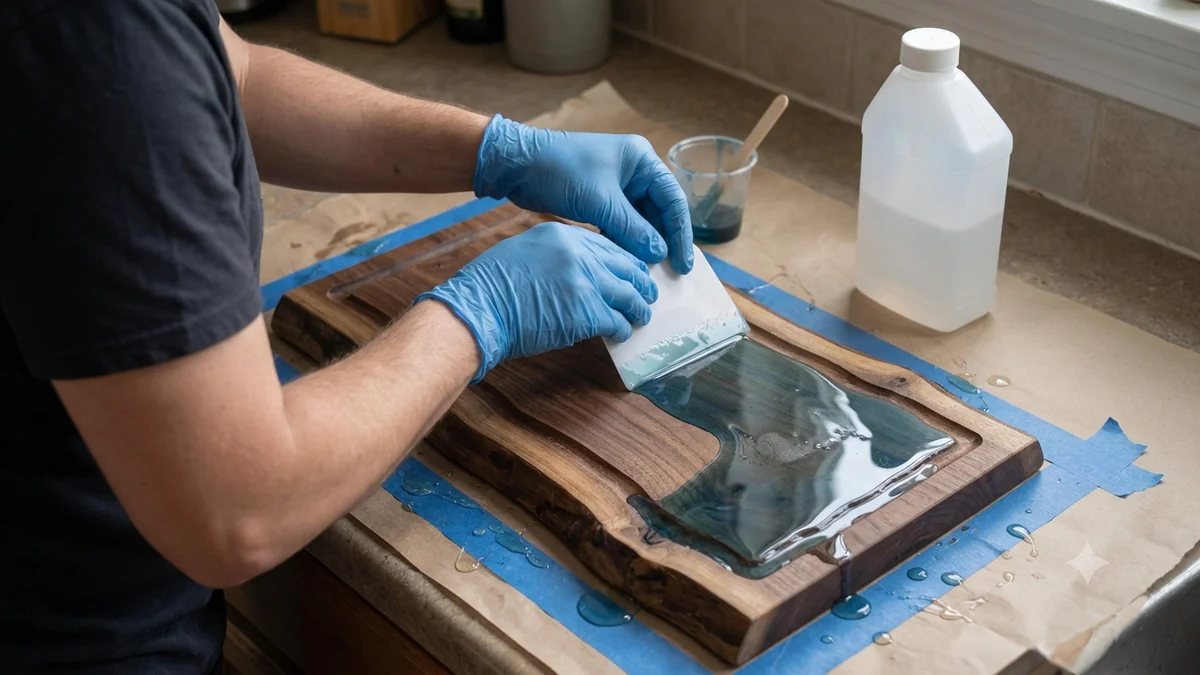
Uncured resin and hardener can irritate skin and eyes. Wear nitrile gloves and eye protection, and avoid touching your face while you work. Wipe up drips before they harden, and keep food and drinks out of the work area. The SDS lists protective measures for each component, so match your gear to that document rather than to a general rule.
Safety: Use nitrile gloves, ventilate the room, and follow any respirator recommendation in the product SDS. Keep children and pets out of the work area while you mix and pour.
How to Verify a Product’s Safety Data
A food-safe claim is only as good as the documents behind it. Look for named test standards, a current SDS and a clear cure schedule before you buy.
ArtResin lists FDA 21 CFR 175.300 for resinous and polymeric coatings as the US standard. It also names EU 10/2011, GB 4806.7-2016, AS 2070-1999 and Canada SOR 2018/83 as other certifications. Those names give you something specific to look up on the manufacturer’s website. ArtResin also says its product passed 13 food safety tests, which is a manufacturer claim you can ask to see in the lab summary.
Checkthishouse says food-safe status requires testing to food safety standards, not just a list of ingredients. It also advises choosing VOC-free resin that releases zero to little BPA. The CheckThisHouse food safety article on epoxy countertops covers the same testing logic. Compare what you find against the table below.
| Document | What to look for | Why it matters |
|---|---|---|
| Technical data sheet | Cure time, mix ratio and pot life | Sets the wait before food contact |
| Safety Data Sheet | Hazard statements and protective gear | Shows how to handle uncured product |
| Certification listing | A named standard such as FDA 21 CFR 175.300 | Gives you a standard to check |
| Lab test summary | Leaching test results from an independent lab | Turns a marketing claim into evidence |
| Written manufacturer reply | Answers on colorants and topcoats | Fills gaps the label leaves open |
Common Mistakes That Create Safety Risks
Most food-safety problems come from shortcuts rather than from the product itself. Skipping the cure window, guessing at ratios and adding unverified colorants cause the most trouble.
ArtResin lists adding too much hardener or resin, using foreign solvents, and serving food on a surface that has not fully cured as ways to compromise safety. Checkthishouse says the epoxy mixture starts to harden in about 20 minutes, so rushing the pour can lead to trapped bubbles and uneven curing. Measure carefully, mix thoroughly, and work in small batches if your pour is large.
Cleaning habits matter too. Checkthishouse recommends mild dish soap and water, avoids abrasive cleaners, scouring pads and wax, and suggests Murphy’s oil or mineral oil on a weekly or monthly schedule. Avoid stacking cleaning products, because the surface can turn hazy and dull. A gentle routine protects both the finish and the food-contact surface.
Frequently Asked Questions
Is epoxy countertop safe for cutting food directly on it?
Cutting directly on the surface can scratch the finish, and Maxiwoods recommends cutting boards for that reason. Scratches also make the surface harder to keep clean. Use a board for raw meat and produce, and keep the countertop for setting food down.
What FDA regulation covers food-safe epoxy resin?
ArtResin cites FDA 21 CFR 175.300, which covers resinous and polymeric coatings, as the US standard for food-contact use. Ask the manufacturer for documentation showing its product meets that standard. A label that says food-safe is not the same as a documented test result.
Does epoxy countertop leach BPA into food?
Manufacturers say a fully cured, food-safe product should not leach chemicals into food. ArtResin says BPA is fully reacted in its formula and that the FDA has declared BPA safe at very low levels. Check the SDS and test summary for the exact product rather than relying on a general label.
Do I need a clear topcoat to make epoxy food safe?
Not always, but a topcoat is a common precaution. ArtResin suggests a clear, non-tinted food-safe topcoat if you are unsure about a colorant. Whether you need one depends on the documentation for your specific product, so confirm with the manufacturer before you skip it.
A food-safe rating is a starting point, not a guarantee. Cure the surface fully, handle uncured material with care, and read the documents before you commit to a kitchen top. For a wider look at whether this project makes sense for your home, read whether epoxy countertops are worth it.
More in Wood, Tables & Countertops
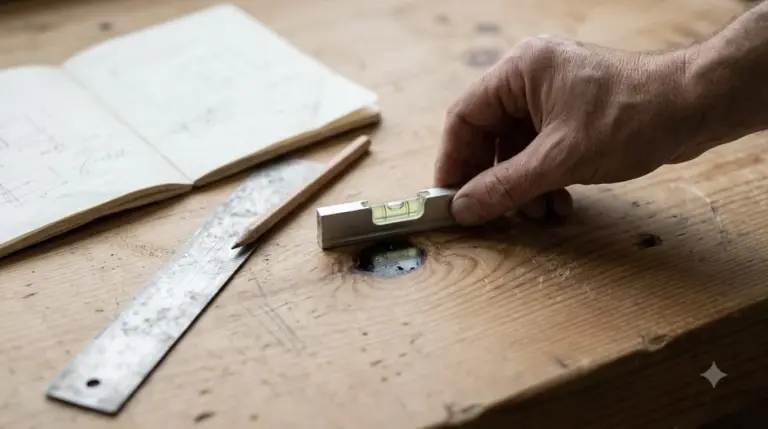 How to Fill Knots with Epoxy for a Smooth, Durable Wood SurfaceUpdated Nov 26, 2026
 How to Epoxy Live Edge Wood: A Step-by-Step Guide to a Flat, Durable TabletopUpdated Nov 26, 2026
 Outdoor Bar Top Epoxy: How to Pick a UV-Resistant Resin and Cure It RightUpdated Nov 26, 2026
 How to Make an Epoxy River Table: Step-by-Step Build for BeginnersUpdated Nov 26, 2026
 Pine Epoxy Table Guide: How to Prep Softwood for a Clean River PourUpdated Nov 26, 2026
 Spalted Maple Epoxy Table: How to Stabilize, Pour, and Care for OneUpdated Nov 26, 2026