

We may earn a commission when you buy through links on this page, at no extra cost to you. Learn more.
Why is my resin yellow? Most often the cause is UV light, heat, a sealant that yellows, paint that has not fully dried, or titanium white paint sitting under the resin. According to ArtResin, UV exposure is the most common cause of yellowing, with sunlight as the biggest culprit. Mixing errors and over-torching can also contribute. Once cured resin has yellowed, most fixes only lessen the color, so the cause matters more than the cure.
This guide sorts the usual causes into groups: what happens after you mix, what happens after the piece cures, and what happens over months of display or storage. It also explains which fixes work on finished pieces and which ones only help you avoid yellowing next time.
Why Is My Resin Yellow? The Main Causes
Most yellowing comes from a small set of causes, and UV light is the most common one. Heat, a yellowing sealant, and titanium white paint are the next most frequent culprits. Identifying which one applies to your piece is the first step.
ArtResin describes UV light as able to break down the polymers in cured resin, leading to gloss loss, cracking, surface chalking and yellowing. The brand says its formula includes a UV Light Stabilizer and a HALS additive, which is short for Hindered Amine Light Stabilizer, to slow this damage. ArtResin’s yellowing guide explains how these additives work together, though no stabilizer stops yellowing completely.
Heat is the second major factor. ArtResin notes that continuous high temperatures, a heat vent, a sunny window, or a lamp that produces heat can all discolor cured resin where the heat hits. Resin Studio adds that warm cars, radiators and conservatories can speed up aging.
Use the table below to match what you see with a likely cause.
| What you see | Likely cause | First check |
|---|---|---|
| Yellow across the whole piece, worse near a window | UV light and sunlight | Move the piece out of direct sun |
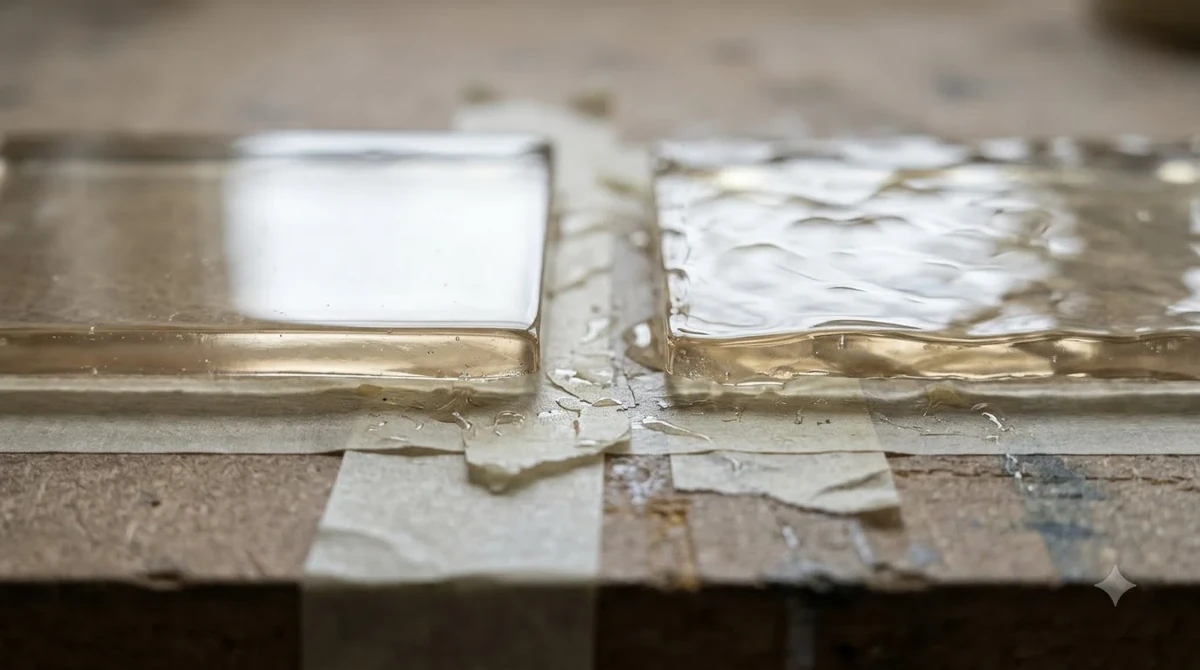
| Yellow only in certain spots, with rippled texture | Over-torching | Review how close the flame was held |
| Yellow tint under a white or pale area | White colorant or titanium white paint | Check whether a sealant barrier was used |
| Yellow or cloudy finish over a sealed item | Sealant that is not non-yellowing or UV resistant | Read the sealant label |
| Cloudy or uneven color soon after curing | Paint not fully dry, or a mix error | Check paint dryness and mix ratio |
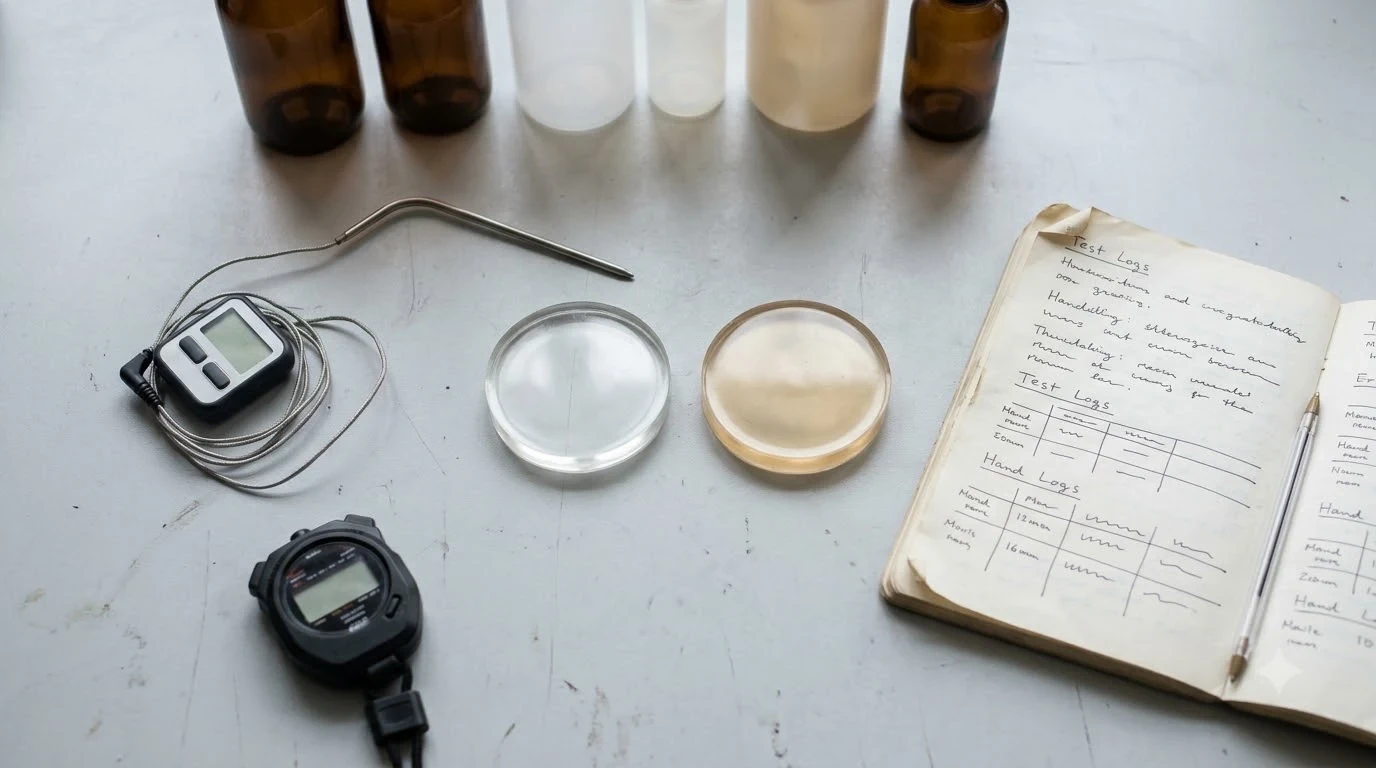
Tip: Keep a scrap piece made with the same resin, paint and sealant. Watching it in the same light for a few weeks can show you which combination is the problem.
Why Is My Resin Yellow After Mixing or Curing?
Some yellowing starts before the piece ever leaves your workbench. Mixing mistakes, pour depth and torch technique all affect how stable the cured resin will be. Resin Studio notes that these problems can make a piece look acceptable at first and then age poorly.
Resin Studio lists several preparation errors: an incorrect resin-to-hardener ratio, not scraping the sides and base of the mixing cup, and mixing for less time than the manufacturer recommends. Each one can leave some resin under-mixed, which can show up as color change later. Check the bottle or data sheet for the exact ratio and mixing time.
Pour depth matters too. Mill Lane Studio lists pouring resin too thick for the product as a common cause, and it names The Epoxy Store’s Clearcast 7050 as suited to artwork and shallow molds up to 6mm, or 1/4 inch, deep. Pouring deeper than the manufacturer’s limit, or mixing a large batch in one container, can create heat that affects clarity from the start.
Torch work is another source of trouble. ArtResin advises holding a torch a few inches from the surface so the flame just kisses the resin, then moving it back and forth. Over-torching can cause a rippled cure and later yellowing. Mill Lane Studio also warns against using a heat gun too close to the surface to pop bubbles.
Paint needs time too. ArtResin says that resin applied to paint that is not fully dry can cause a cloudy cure or yellowing. Paint can take weeks to dry completely, and oil paint can take years, depending on temperature, humidity and thickness.
Is Yellow Epoxy Different From Yellow Resin?
Yellow epoxy and yellow resin usually mean the same problem. Epoxy is one type of casting or coating resin, so a yellowed epoxy surface is still a resin surface. Resin Studio says epoxy can yellow over time, especially in fully transparent castings and coatings.
The speed differs by product and use. Resiners notes that higher grade resins with UV stabilizers take much longer to yellow, while cheaper craft resins may discolor in weeks. UV resin also yellows over time, because curing with UV light does not make the finished piece immune to sunlight later. Resin Studio makes the same point.
Hardener can yellow too. Hiros Art describes this as a reaction between amines in the hardener and oxygen, which can happen during bottling or through the plastic container. Keep the lid tight and the container sealed to slow this down.
How to Fix Yellow Resin and Yellow Epoxy
Fixes for cured resin are limited. ArtResin says that once resin has yellowed, there is little that can be done to reverse it. Sanding and recoating may lessen the discoloration, but badly yellowed areas may not fully recover. Resiners adds that the change is generally permanent, so the goal is to reduce or disguise it.
For mild yellowing on a finished surface, Hiros Art describes a gentle cleaning method using mild dish soap and warm water, then drying with a clean cloth. This removes surface residue and can make the surface look fresher, but it will not reverse deep yellowing.
- Mix mild soap with warm water. Use only a small amount of soap to avoid heavy suds.
- Wipe the surface gently. Use a soft cloth or sponge and light pressure.
- Rinse and pat dry. Use clean water, then dry with a clean cloth to prevent water spots.
- Check the result in daylight. If the color is still there, move on to sanding and recoating.
For sticky residue or marks, Hiros Art describes isopropyl alcohol. It is highly flammable, so work in good ventilation, away from open flames, and wear gloves. Avoid using it on painted or sensitive surfaces, since it can damage them. If alcohol or resin gets on your skin, see how to get resin off hands before you continue.
Sanding and recoating is the main option for a finished piece. Sand carefully so you do not damage the artwork, then apply a fresh coat. Resiners notes that disguising the yellow with pigment, glitter or opaque color is another route, especially for darker or tinted projects. Yellowed resin is often still usable for those projects.
Safety: Work with gloves and good airflow when you sand or use solvents. Check the product’s safety data sheet for specific handling and ventilation advice.
How to Prevent Yellowing in Future Projects
Prevention is more effective than repair. The steps below address the causes most sources agree on: light, heat, storage, sealants and paint.
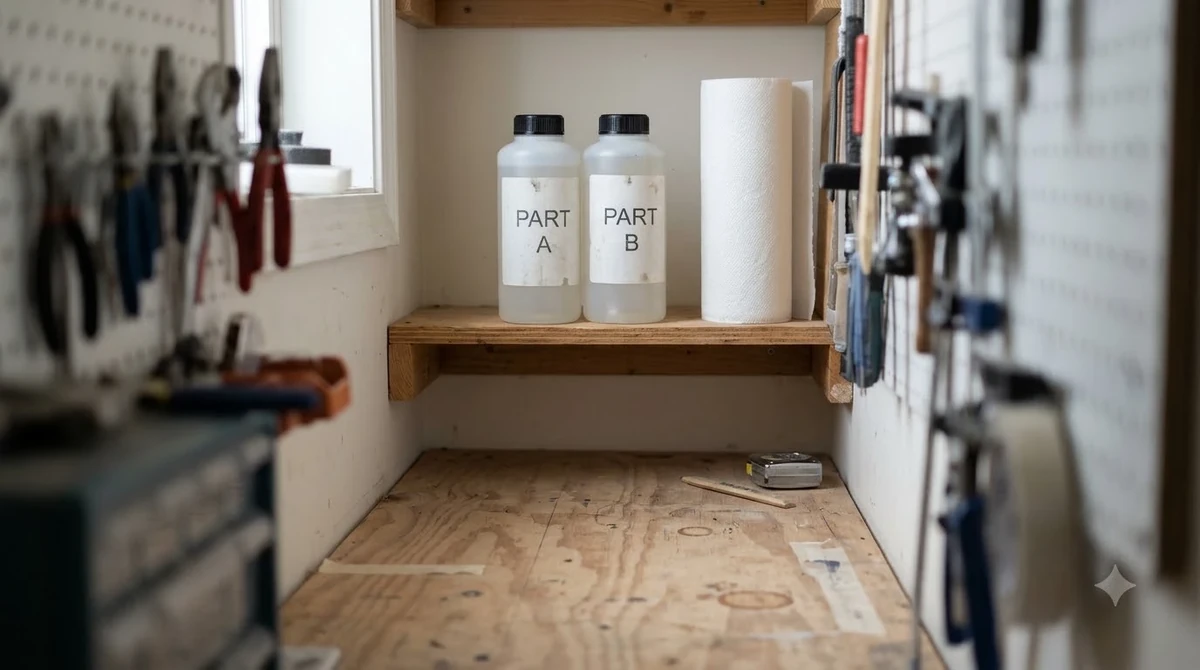
Start with the product. Resiners advises choosing resin labeled UV resistant or non-yellowing, and storing bottles in a cool, dark place with lids tightly sealed to slow oxidation and heat damage. Hiros Art says an expired ArtResin has a shelf life of 12 months unopened and 6 months once opened. It also says MAS epoxy resins last at least one year in sealed containers when stored dry between 60 and 90 degrees Fahrenheit. Check your product’s label for its own dates.
Next, control the finished piece’s environment. ArtResin recommends avoiding direct sunlight altogether, and keeping cured pieces away from heat vents, windows and hot storage spaces. Resin Studio notes that a clear piece displayed in sunlight will usually age faster than one kept indoors.
Seal and barrier carefully. ArtResin recommends testing a scrap piece to decide whether a sealant is needed, and choosing a sealant labeled non-yellowing. It lists Krylon Crystal Clear, Krylon Matte and Krylon UV Resistant sprays as non-yellowing options that gave its makers good results. When you use titanium white paint, ArtResin advises a sealant as a barrier between the paint and the resin, because titanium dioxide can act as a catalyst with any epoxy brand.
Finally, allow paint to dry fully before you pour. If the paint still feels tacky, soft or cool to the touch, wait longer.
When to Remove and Start Over
Some pieces are not worth repairing. Resin Studio says slight yellowing is often mainly a visual change, and the piece may remain hard and usable. If the resin is also soft, sticky, unevenly cured or distorted, the problem may be more than normal aging, and you should review your measuring, mixing, curing temperature and pour depth before trying again.
If the piece is still tacky, or the yellowing is deep and the design needs perfect clarity, removing the cured resin and starting over may be the most reliable route. For guidance on taking cured resin off a surface, read how to remove epoxy before you sand or scrape.
Frequently Asked Questions
Can yellowed resin be fixed or reversed?
Usually not fully. ArtResin says sanding and recoating may lessen discoloration, but badly yellowed areas may not recover. Resiners describes the change as generally permanent. Yellowed resin can still be used for darker or tinted pours where the color will not show.
Does UV resin turn yellow in sunlight?
It can. Resin Studio explains that curing UV resin with UV light does not make the finished piece immune to future UV damage. Clear jewelry and pale decorative pieces show the change most, so keep them out of direct sun when you can.
Does titanium white paint cause resin to yellow?
It can cause yellowing when the paint sits under resin without a barrier. ArtResin says titanium dioxide can act as a catalyst with any epoxy brand, so it recommends a sealant between the paint and the resin. Also allow the paint to dry completely before pouring.
Which resin brands resist yellowing best?
The sources do not rank brands, and no product is fully immune. Mill Lane Studio says epoxies with HALS or UV inhibitors resist yellowing for longer. Check the product label and data sheet for UV resistance or non-yellowing claims before you buy for a clear project.
Most yellowing is preventable or slowable with the right resin, storage and display habits. For more troubleshooting help on other resin problems, visit Troubleshooting & Fixes and choose the issue that matches your project.
More in Troubleshooting & Fixes
 How to Fix Scratches in Epoxy Tables Without Redoing the Whole TopUpdated Nov 26, 2026
 How to Remove Amine Blush From Epoxy Without Starting OverUpdated Nov 26, 2026
 What Will Remove Epoxy from Wood, Metal, Skin and Hair SafelyUpdated Nov 26, 2026
 Paint and Epoxy Remover: Which Type Strips Cured Epoxy and Paint SafelyUpdated Nov 26, 2026
 Resin Sticking to Mold? Causes, Release Fixes and Safe RemovalUpdated Nov 26, 2026
 Why Is My Epoxy Bumpy? Causes and Fixes for a Smooth FinishUpdated Nov 26, 2026