

We may earn a commission when you buy through links on this page, at no extra cost to you. Learn more.
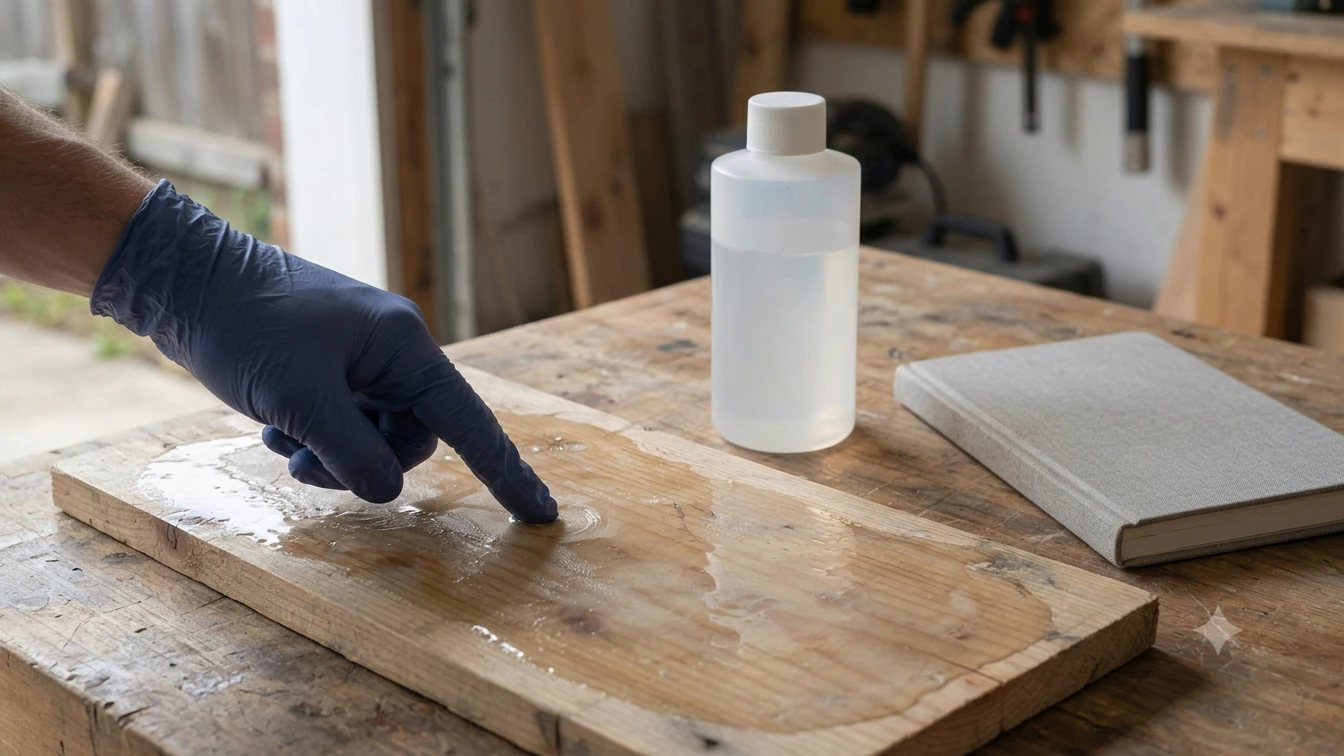
If your epoxy still tacky after a day, check the time, the room temperature and the mix before you do anything else. Many art and tabletop resins call for a 1:1 ratio by volume and a room of 75-85°F (24-30°C) for the first 24 hours, according to ArtResin. Superclear says its resins cure hard to the touch in about 24 hours at 70-84°F. A surface that is still sticky after 48 hours is usually a measuring or mixing problem, not a slow cure.
This guide shows you how to separate normal slow curing from a real failure. Use the 24-hour and 48-hour checkpoints to narrow down the cause, then match what you see to the correct fix.
Why Epoxy Stays Tacky
Tackiness almost always traces back to three things: the ratio, the mixing and the temperature. Each one leaves a slightly different pattern on the surface, so it helps to know what you are looking for.
Epoxy hardens through a chemical reaction between the resin and the hardener. ArtResin says sticky resin is typically caused by inaccurate measuring or under-mixing. If either part is off, some of the material has nothing to react with and stays soft.
Weighing is a common trap. Superclear notes that the two parts of a 1:1 volume product do not weigh the same. On a kitchen scale, its Table Top Epoxy is 100 parts resin to 83 parts curing agent, not 100 to 100. Check your product data sheet before you switch to weight.
Temperature is the third factor. KSRESIN recommends 75-80°F for its epoxy and says cooler temperatures can slow the cure, and in some cases stall it. Superclear adds that below about 65°F its epoxy can thicken and may not start curing at all.
Epoxy Still Tacky After 24 Hours
At 24 hours, a tacky surface is often just early. Many products are only hard to the touch at this point, and some need much longer before sanding, so check the cure time on your label or data sheet first.
Start with the room. ArtResin ties its best results to 75-85°F for the first 24 hours. If the room was cold overnight, the reaction may have run slowly rather than failed. CHILL EPOXY says epoxy typically takes 24-48 hours to cure completely.
Use this quick check to decide what to do next:
- Room temperature: was it inside your product’s range for the whole day?
- Surface pattern: is it evenly tacky, or are there soft or wet patches?
- Pour depth: a thin coat cures more slowly than a deeper, larger pour.
| What you see at 24 hours | Likely reason | Next step |
|---|---|---|
| Hard underneath, lightly tacky on top | Early cure or a cool room | Warm the room and wait another day |
| Evenly soft across the whole pour | Cold room or off ratio | Warm the room, then recheck at 48 hours |
| Wet or soft patches | Unmixed resin scraped in | Plan to remove the patches later |
Epoxy Still Tacky After 48 Hours
After 48 hours, sticky epoxy is less likely to be normal slow cure. UltraClear Epoxy says a surface that is soft, wet or sticky after 48 hours is usually under-mixed or inaccurately measured.
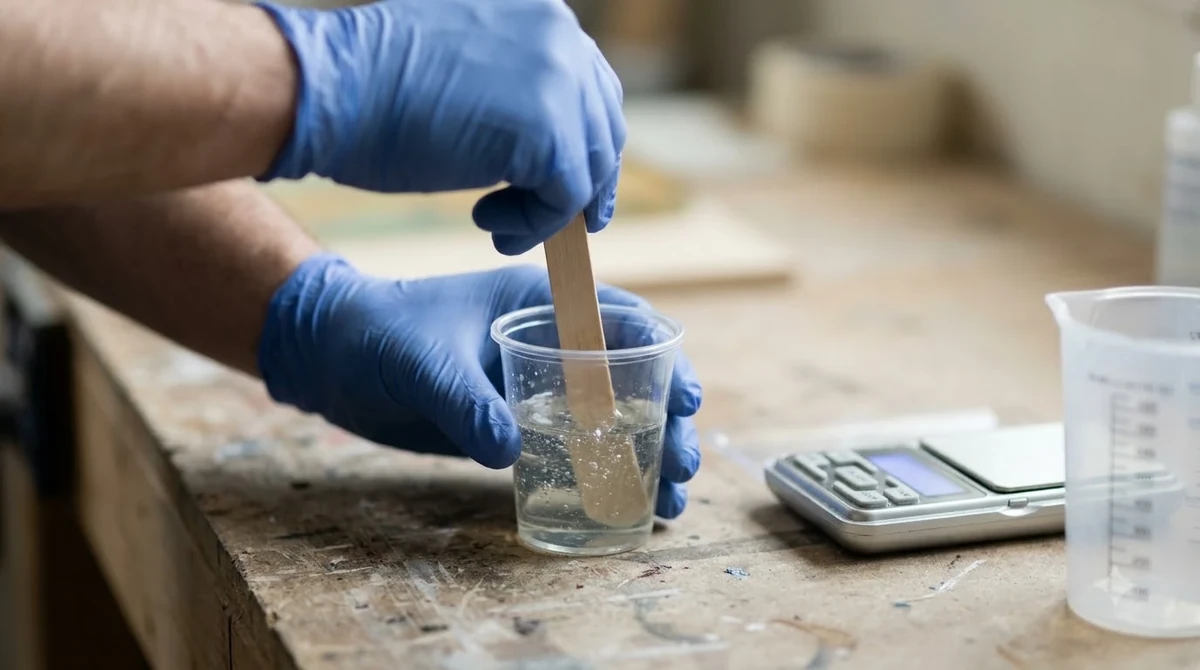
Under-mixing is the most common cause, according to UltraClear. The resin component tends to sit on top in the bucket. If it is not pushed down during stirring, some areas stay hard while others stay tacky. ArtResin recommends mixing for at least 3 minutes while scraping the sides and bottom of the container. You can compare its steps with the ArtResin sticky resin guide.
Measurement is the other suspect. UltraClear calls for a strict 1:1 ratio by volume for tabletop epoxy, measured in a graduated tub rather than poured from the original bottles. ArtResin says that adding too much resin or hardener changes the reaction, so the mix will not cure properly.
Remember that extra hardener does not speed things up. Superclear says it makes the pour softer, not harder. If the surface is still tacky after several warm days, waiting will not fix a ratio error.
Safety: Wear nitrile gloves, work with good ventilation and read the product SDS before you scrape, sand or use solvents on tacky epoxy.
How to Fix Tacky Epoxy and Tacky Resin
The fix depends on whether the surface is hard but tacky, or wet and soft. Lightly tacky areas can usually be recoated. Wet, soft material has to come off first.
- Warm the room. Bring it into the range your product lists, and keep it there for the rest of the cure.
- Give it a full day. If the surface was cold, a little more time may be all it needs.
- Test the surface. If it is hard but only slightly tacky, go to the next step. If it is wet, skip to the removal step.
- Sand lightly. Superclear suggests 220 to 320 grit for a hardened, slightly tacky surface.
- Clean the surface. Wipe with 90% or higher isopropyl alcohol and let it dry completely.
- Pour a fresh coat. ArtResin says a fresh, carefully measured and thoroughly mixed coat fixes tacky resin with no wet areas.
- Remove wet material. Scrape away as much soft epoxy as you can with a paint scraper or knife. UltraClear says denatured alcohol or acetone can help.
- Recoat. Fill any deep spots with a new batch, let it settle, then apply a full coat.
Strip and start over when the surface stays wet after scraping, or when the whole pour stays soft after several warm days. Adding new resin over a soft layer does not cure the old one. CHILL EPOXY also mentions a heat gun or hair dryer for sticky spots, but heat cannot correct a bad ratio.
Tip: If you are working with UV resin rather than epoxy, the steps differ. See how to fix tacky UV resin for that product.
Tacky Resin on Different Projects
Tacky resin looks different on a flat tabletop, an art piece and a small tumbler. The surface area, the pour depth and the colorant all change the likely cause and the best fix.
Flood coats on tabletops often fail from a measuring or mixing error, so a full recoat is usually the answer. Art pieces add colorant to the chemistry. ArtResin says never to add more than 6% colorant to the total combined volume. Superclear says Designer Art Resin should not use acrylic-based colorants.
| Project | Common cause | Fix |
|---|---|---|
| Tabletop flood coat | Under-mixing or eyeballed measuring | Scrape wet areas, then pour a new flood coat |
| Art piece with color | Too much colorant or an acrylic colorant | Remove wet areas, then recoat without the extra colorant |
| Thin coat or small tumbler | Cold garage or thin pour | Warm the space and allow more time |
| Soft spots in a hard pour | Unmixed resin scraped from the cup | Sand the cured areas with 80 grit, wipe, then recoat |
If sticky resin gets on your skin while you work, see how to get resin off hands before you touch the project again.
Frequently Asked Questions
Can I fix sticky epoxy without repouring?
Sometimes. If the surface is hard but only slightly tacky, UltraClear Epoxy says a new flood coat can be applied over the whole surface. Wet or soft areas must be removed first. CHILL EPOXY also lists a resin accelerator as an option, but check that it is compatible with your product.
Does humidity make epoxy stay sticky?
It can. KSRESIN recommends working under 50% relative humidity and says high humidity is a common cause of tackiness. If your space is damp, a dehumidifier may help. Check your product’s instructions for its humidity limit.
What is the difference between tacky and fully cured epoxy?
Hard to the touch is not the same as fully cured. Superclear says its resins reach full cure and maximum hardness at 30 days. A pour can feel hard and still be gaining strength, but stickiness that lasts in a warm room is a sign to check the mix.
How long should I mix epoxy to prevent sticky spots?
ArtResin recommends at least 3 minutes, scraping the sides and bottom. Superclear gives different times for each product: 3 to 5 minutes for Table Top Epoxy and Designer Art Resin, and at least 5 minutes for Liquid Glass Deep Pour, followed by 3 more minutes in a second clean bucket.
If the problem continues after these steps, the Troubleshooting & Fixes hub covers other common resin problems. Start by checking the room, then the ratio, then the mix.
More in Troubleshooting & Fixes
 How to Fix Scratches in Epoxy Tables Without Redoing the Whole TopUpdated Nov 26, 2026
 How to Remove Amine Blush From Epoxy Without Starting OverUpdated Nov 26, 2026
 What Will Remove Epoxy from Wood, Metal, Skin and Hair SafelyUpdated Nov 26, 2026
 Paint and Epoxy Remover: Which Type Strips Cured Epoxy and Paint SafelyUpdated Nov 26, 2026
 Resin Sticking to Mold? Causes, Release Fixes and Safe RemovalUpdated Nov 26, 2026
 Why Is My Epoxy Bumpy? Causes and Fixes for a Smooth FinishUpdated Nov 26, 2026