

We may earn a commission when you buy through links on this page, at no extra cost to you. Learn more.
Epoxy full cure time is usually 3 to 7 days, and the exact window depends on the product type, the temperature and the humidity in your workspace. Tabletop and craft epoxy is generally listed as fully cured in about 72 hours, while deep pour casting resin can take 5 to 7 days. Flowyline’s cure figures assume a workspace between 70°F and 75°F with humidity below 60 percent. Epoxy that feels dry after 12 to 24 hours has only set, not cured.
This guide separates the initial set from the full chemical cure. It also lists realistic cure windows by product type, explains how temperature and humidity change the timeline, and shows how to judge whether a piece is ready for sanding, mounting hardware or regular use.
What Full Cure Means for Epoxy
Full cure is the point where epoxy reaches its final hardness, strength and chemical resistance. Set is the earlier stage, when the surface no longer feels sticky and dust stops sticking to it. Many people treat these two stages as one, and that mix-up causes most timing mistakes.
Epoxy does not dry the way paint does. It hardens through a chemical reaction between resin and hardener, and that reaction keeps going well after the surface feels firm. Defusco notes that most two-part epoxies set in 5 to 90 minutes but need 24 hours to 7 days to reach complete cure.
The gap matters in practice. Epoxy that is set but not cured can still be soft underneath. Flowyline reports that sanding too early clogs the paper quickly and leaves cloudy spots that will not buff out. Dents from early handling can also remain permanently.
Typical Full Cure Times by Epoxy Type
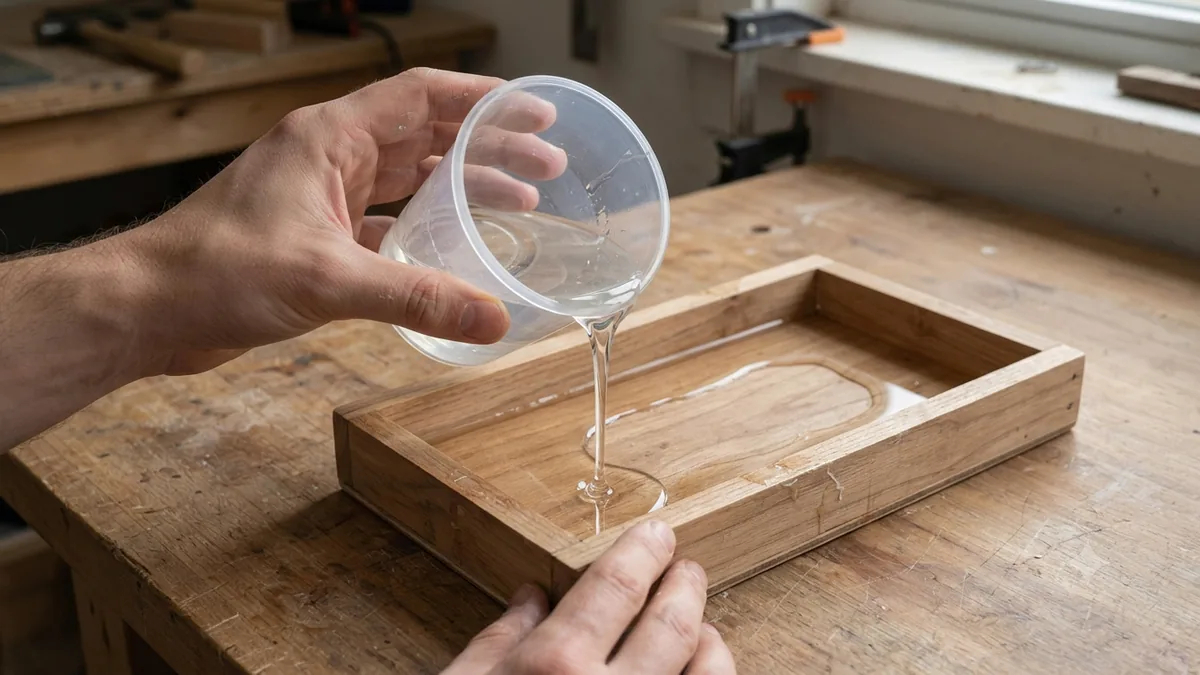
Full cure time depends mainly on the product category, so the label and data sheet should always come first. The table below gathers the windows published by the sources, and each row is a general range rather than a promise for your specific bottle.
Quick-set adhesives are the fastest to set but still need about a day to fully cure. Tabletop and craft epoxy is usually given a 72-hour full cure, while deep pour resin and floor coatings run closer to a week.
| Epoxy type | Set or touch dry | Full cure |
|---|---|---|
| Quick-set adhesive | Sets in 5 to 15 minutes | 12 to 24 hours |
| Tabletop and craft epoxy | Touch dry in 12 to 24 hours | About 72 hours |
| Deep pour casting resin | Touch dry in 48 to 72 hours | 5 to 7 days |
| Floor and garage epoxy | Walkable in about 24 hours | 5 to 7 days |
| Marine grade resin (Greenlight) | Dries in 75 minutes to 4 hours | About 7 days |
| 5-minute two-part epoxy (Defusco) | Short working time | 12 to 16 hours |
| 30-minute two-part epoxy (Defusco) | Longer working time | 24 to 48 hours |
Coating epoxy and deep pour casting resin behave differently because of thickness. A thin coat sheds heat quickly, while a thick pour holds heat from the reaction. Flowyline warns that using the wrong product for a thick pour can lead to overheating, cracking or yellowing, so the product must match the pour depth. If you want to go deeper, How Long Does Epoxy Take to Cure Guide covers a connected topic.
For a tabletop, Flowyline’s cure time chart gives 72 hours as the usual full cure, but a river table poured at depth should follow the 5 to 7 day figure. Read the label before you schedule the next step. For a deeper look at thick pours, see how long deep pour epoxy takes to cure.
How Temperature and Humidity Affect Curing
Temperature has the biggest effect on cure speed, and humidity comes second. Both factors can stretch a seven-day schedule into a much longer wait if the shop runs cold or damp.
Flowyline states that every 10°F drop roughly doubles the cure time. Defusco describes the same rule in reverse, saying that a 10°F increase above room temperature typically cuts cure time in half. Greenlight adds that temperatures below 60°F slow drying and curing, while temperatures above 75°F speed them up.
A cold garage in winter can therefore double the timeline you planned around. Greenlight also notes that high heat shortens working time, so a warm shop may leave you less room to position a large part. Keep the workspace steady rather than swinging between hot and cold.
Humidity works differently. Flowyline says humidity above 60 percent can make epoxy take longer and may leave a hazy or sticky film. Above 85 percent, it says the epoxy may not cure properly at all. A dehumidifier or a drier day helps more than extra waiting.
How to Tell When Epoxy Is Fully Cured
The safest way to judge a cure is to combine the elapsed time with a few physical checks. A calendar alone does not show whether a cool shop or a heavy pour has slowed the reaction.
Start with the time window printed on the product data sheet, then use the milestones below as a practical checklist. The milestones are general figures from Flowyline and should be adjusted for your conditions.
- Confirm the elapsed time. Count from the end of the pour, then compare against the full cure window for your product.
- Check the surface for tack. Press gently in an inconspicuous spot. A surface that still feels sticky or gives under light pressure is not cured.
- Wait for sanding. Flowyline advises waiting 72 hours before sanding tabletop pours and 5 to 7 days for deep pours.
- Wait for hardware. Flowyline advises at least 3 days before mounting table legs, and 7 days for heavy bases.
- Adjust for conditions. Add time if the shop was cold or humid during the cure period.
Be cautious about the first sign of a finished surface. Epoxy can look hard and glossy while the interior is still curing. The data sheet and the time windows above remain the most reliable guide. A related explanation is in How Long Does Art Resin Take to Cure.
Speeding Up Cure Safely
You can shorten the wait somewhat by controlling temperature, but there are limits. Heat should be gentle and even, and the mix ratio should never be changed to rush the process.
Flowyline recommends placing a heat lamp 18 to 24 inches above the surface. It warns against aiming a hair dryer or heat gun at epoxy, since concentrated heat can cause bubbles and yellowing. Warming the bottles in warm water before mixing can also help the resin flow more easily.
Do not add extra hardener to speed things up. Flowyline says it stops the cure rather than accelerating it. For a faster product, choose a formula made for quicker cure times from the start. Defusco also describes heat-cure structural epoxies that reach strength in 2 to 4 hours at 150 to 250°F, but those require controlled equipment and are not a home shop option.
Safety: Work in a ventilated space, wear nitrile gloves and keep the heat source away from flammable materials. Follow the product SDS and the manufacturer’s heating instructions.
Troubleshooting Epoxy That Stays Soft or Tacky
Epoxy that remains tacky past its expected window usually has a clear cause. The most common problems are an inaccurate mix, a cold or humid room, and incomplete stirring. Identifying the cause tells you whether waiting will help.
Flowyline names eyeballed measurements and quick stirs as leading reasons epoxy stays sticky. It recommends mixing at the exact ratio on the label and stirring for the full 3 to 5 minutes. Defusco recommends at least 60 seconds of mixing, but the manufacturer’s instruction should control the process.
| Symptom | Likely cause | What to do |
|---|---|---|
| Tacky after the full window | Off-ratio mix or under-stirred resin | Check the ratio on the label; consult the manufacturer before recoating |
| Slow cure in a cold room | Temperatures below 60°F | Warm the room gently and allow extra days |
| Hazy or sticky film | Humidity above 60 percent | Use a dehumidifier or wait for a drier day |
| Surface never firms up | Humidity near 85 percent or higher | Contact the manufacturer; the product may not cure properly |
Prevention matters more than repair. Measure carefully, stir thoroughly and keep the room within the range on the data sheet before you pour. Once a pour is soft, the fix is often to remove and redo it rather than wait indefinitely. For the next step after this check, see Will Any Uv Flashlight Cure Uv Resin.
For wider background on how the chemistry works, the Resin Basics & Q&A section covers the components. If you are still unsure whether your problem is cure time or the product itself, Defusco’s epoxy adhesive drying time guide explains how set and cure stages differ across two-part products.
Frequently Asked Questions
What is the difference between epoxy dry time and cure time?
Dry time usually refers to when the surface stops feeling sticky and can be touched lightly. Cure time is when the epoxy reaches full hardness and chemical resistance. Greenlight describes drying as tack-free and curing as full mechanical strength, which can be days later.
How long before I can drive on a garage floor epoxy coating?
Floor and garage epoxy is typically walkable in about 24 hours. Flowyline says a car can be parked on it after 5 to 7 days, while heavy items like toolboxes or appliances should wait the full week. Always check the specific product label before adding weight.
How soon can I use a surfboard after fiberglassing with epoxy?
Greenlight says a surfboard can generally be used about 24 hours after fiberglassing for light use. For maximum strength and durability, it recommends waiting the full 7 days before extensive use. Heavy riding or repeated stress should wait for the full cure.
Can I speed up epoxy cure time in a cold garage?
Yes, within limits. Warm the room gently, keep the temperature steady and place a heat lamp 18 to 24 inches above the surface. Avoid aiming a hair dryer or heat gun at the epoxy. Plan on extra time, since a 10°F drop can roughly double the cure window.
Plan the full cure window before you schedule sanding, mounting or shipping. Check the data sheet, control the room temperature and humidity, and use the physical checks above rather than guessing. A few extra days of patience usually produces a much more durable finish.
More in Resin Basics & Q&A
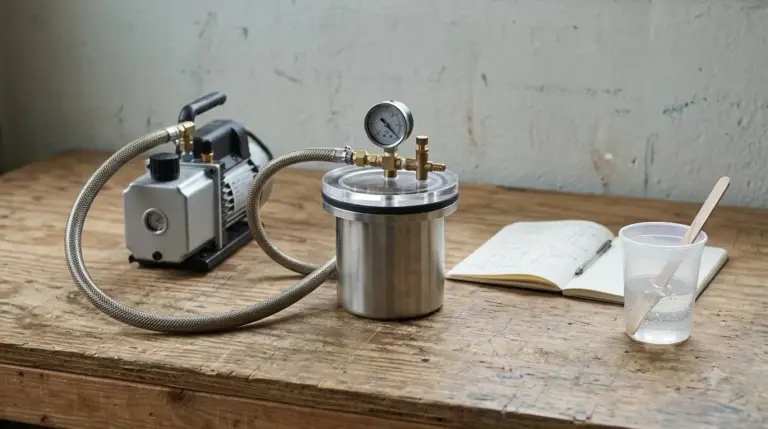 What Is Vacuum Degassing for Epoxy Resin and How It Removes Trapped BubblesUpdated Nov 26, 2026
 Envirotex Lite Pour On Instructions for a Glossy, Bubble-Free FinishUpdated Nov 26, 2026
 Deep Pour vs Table Top Epoxy: Which Fits Your Project Depth and Cure TimeUpdated Nov 26, 2026
 High Temperature Epoxy for Metal: How to Pick One That Holds Up to HeatUpdated Nov 26, 2026
 Amazing Clear Cast Resin Instructions: Mix, Pour and Cure Without BubblesUpdated Nov 26, 2026
 How Long for Deep Pour Epoxy to Cure: Demold and Full-Cure Times ComparedUpdated Nov 26, 2026