

We may earn a commission when you buy through links on this page, at no extra cost to you. Learn more.
High temperature epoxy for metal is a two-part epoxy system that keeps its bond and strength when parts run hot, but each product has its own temperature limit. Belzona 1511 is rated for immersion up to 150 °C (302 °F), while MG Chemicals 832HT lists a service range of -40 to 225 °C (-40 to 437 °F). J-B Weld HighHeat putty handles continuous heat of 450°F and intermittent heat up to 500°F. Read the rating that matches your exact service condition before you buy, mix or apply anything.
This guide explains what those numbers mean for home repairs and shop projects on steel, cast iron and other metal parts. It also covers how to choose a product, prep the metal, cure the repair and avoid the mistakes that cause bonds to fail. Treat it as a starting point, then confirm details on the manufacturer’s data sheet for the product you buy.
How Heat Resistance Ratings Work
A temperature rating tells you the highest heat a cured epoxy is designed to handle under a specific condition. The condition matters as much as the number, so read both.
Manufacturers often separate continuous heat from intermittent heat. J-B Weld says its HighHeat putty withstands continuous exposure of 450°F and intermittent heat up to 500°F. A part that runs at 450°F all day is a different job than one that spikes to 500°F for short periods.
Ratings can also depend on whether the part is submerged, splashed or simply exposed to air. Belzona publishes 1511 (Super HT-Metal) as a 100% solids repair composite rated for immersion up to 150 °C (302 °F), according to its Belzona 1511 product page. Dry service on the same material may behave differently, so check the data sheet for that case.
Some ratings are given as ranges. MG Chemicals lists 832HT at -40 to 225 °C, which describes both the cold and hot limits. Belzona 1593 is rated for continuous immersion up to 160°C (320°F) in aqueous or hydrocarbon systems. If you need a broader overview of heat-rated resins, see our page on very high temperature epoxy.
| Product | Format | Stated rating |
|---|---|---|
| J-B Weld HighHeat Epoxy Putty | Hand-mixed putty stick | Continuous 450°F; intermittent 500°F |
| Belzona 1511 (Super HT-Metal) | Two-part repair composite | Up to 150 °C (302 °F) under immersion |
| Belzona 1593 | Hand-applied lining | Continuous immersion up to 160°C (320°F) |
| Belzona 1813 | Two-part paste composite | Up to 200°C (392°F) |
| MG Chemicals 832HT | Rigid two-part epoxy | -40 to 225 °C (-40 to 437 °F) |
Tip: Write the rating, the condition it applies to, and the product name on a piece of masking tape near the repair. That habit keeps the numbers straight when you come back to the job.
Choosing the Right Epoxy for Your Metal Project
Start with the service conditions, then match the product format to the repair. Temperature is only one factor in that choice.
Selecting a high temperature epoxy should consider continuous and peak temperatures, chemical exposure, whether the part is immersed or only splashed, and how often it heats and cools. Belzona’s guidance makes the same point: the right product depends on the real service, not the top number alone.
For small cracks, holes and stripped areas, a putty stick such as J-B Weld HighHeat is the simplest format. For larger rebuilds, a two-part composite like Belzona 1511 is designed for buildup up to 12 mm in one application, according to the manufacturer. Belzona 1813 is a paste with ceramic aggregates aimed at abrasion, so it suits worn chutes or hoppers better than a crack in a small housing. Readers working through this often move on to Epoxy Curing Temperature.
For general-purpose potting or casting jobs on electronics and metal assemblies, the MG Chemicals 832HT page describes a rigid black two-part epoxy with excellent adhesion to metals and good electrical insulation. If your repair needs a rating above what standard products list, compare options on our extreme high temperature epoxy guide.
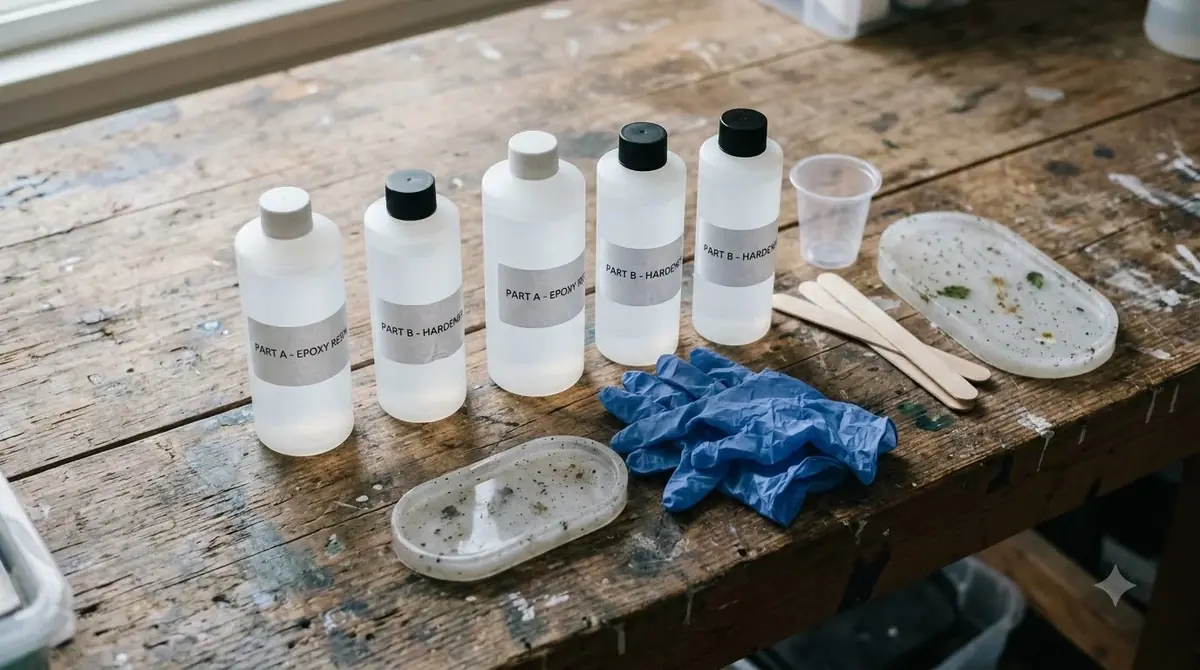
Surface Prep and Mixing for Metal Bonds
Surface preparation is the step most often linked to lining failure. Clean, profiled metal gives the epoxy something to grip.
Belzona’s guidance on high temperature linings points to abrasive blasting to the correct cleanliness and profile, along with removing salts, moisture and contaminants. A part that looks clean can still hold oil film or salt residue, so clean it with a solvent the data sheet recommends and let it dry fully. Remove loose rust and any active corrosion before you start.
Mixing matters just as much. Use the mix ratio and pot life printed on the product’s data sheet, and measure the components rather than guessing. For a putty stick, J-B Weld says to cut off the amount you need and knead it with your fingers until the color is uniform. Mix only what you can apply within the working time, because warm mixed epoxy gels faster.
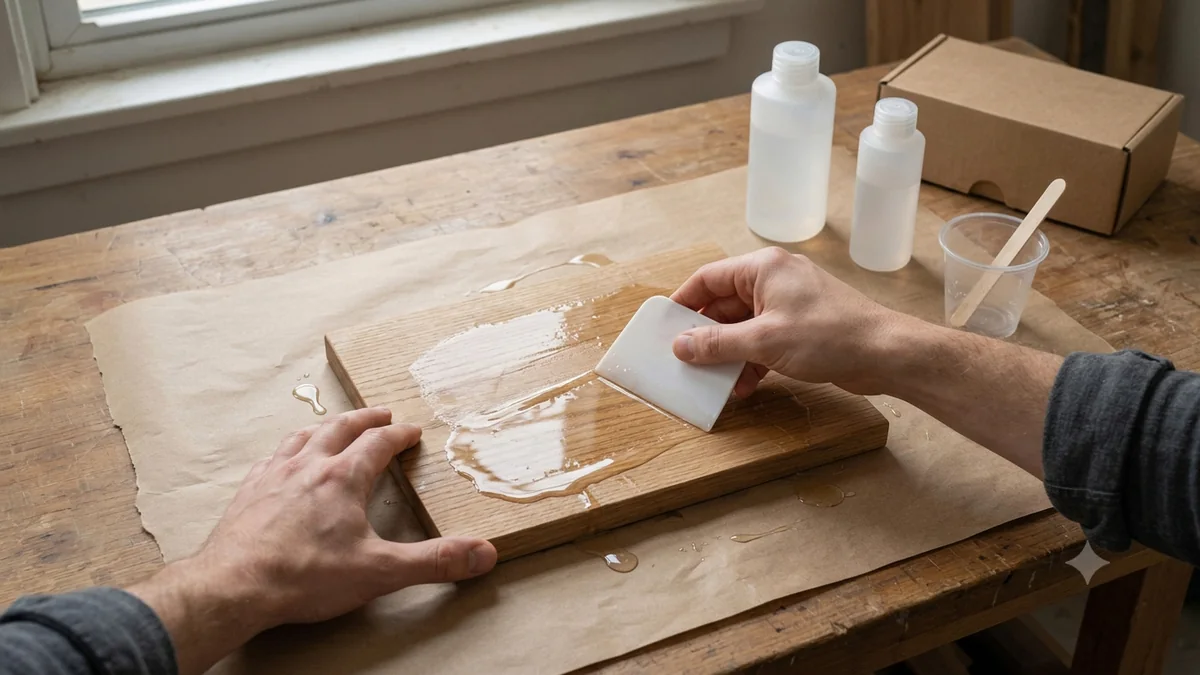
Curing and Set Times
Set time and full cure are different. A putty can feel hard long before the bond reaches its working strength.
J-B Weld HighHeat sets in 1 hour at room temperature, and the manufacturer says you can drill, tap, machine, grind, file and paint it after 8 hours. Belzona 1813 cures at room temperature with no hot work required, and Belzona describes a fast cure that allows prompt return to service. MG Chemicals states that 832HT can be cured at room temperature or higher, which gives you a choice depending on your shop setup.
Before you put a repaired part back into heat, follow the full cure schedule on the data sheet rather than the set time on the label. Heavy repairs usually need more time than thin ones. Keep the part at a steady room temperature while it cures.
- Clean and dry the surface. Remove oil, loose rust and salts before you mix.
- Mix to the stated ratio. Measure the components and mix until the color or consistency is uniform.
- Apply within the working time. Press the material firmly into the repair and build it to a thickness the product allows.
- Allow the initial set. For J-B Weld HighHeat, expect about 1 hour before light handling.
- Allow the full cure. Wait for the cure period on the data sheet. J-B Weld’s 8-hour mark applies to machining and finishing.
- Return to heat gradually. Bring the part up to operating temperature only after the full cure is complete, and stay within the rating.
Common Mistakes That Cause Bond Failure
Most failed repairs trace back to poor prep, overbuilding or running the part hotter than the rating allows. Each of these is avoidable with a little planning.
Skipping surface prep is the most common error. Poor profile, trapped moisture or leftover salts can let the bond peel even when the epoxy itself is sound. Belzona identifies surface preparation as one of the most common causes of lining failure.
Overbuilding is another trap. Belzona 1511 can go on at up to 12 mm in one application, but applying material beyond the stated limit can cause uneven cure. Read the thickness guidance before you fill a deep pit, and build in layers if the data sheet calls for it.
- Ignoring the difference between continuous and intermittent heat ratings.
- Assuming an immersion rating applies to dry, hot surfaces.
- Mixing by eye instead of by the stated ratio.
- Putting the part into service before the full cure period ends.
Treating an epoxy repair as a substitute for a welded or structurally engineered fix is also a mistake. Belzona notes that welding or pipe replacement often requires hot work and extended shutdowns, so a cold-applied repair can be a practical alternative. It still needs to be matched to the load and temperature on the job. For a wider view of the same system, see Does Epoxy Stick to Metal.
Safety Gear and Ventilation When Working With Epoxy
Epoxy is manageable with basic protection, but you should read the safety data sheet before you start any repair. The SDS for your exact product controls the handling advice.
Wear nitrile gloves and eye protection, and keep the work area ventilated, especially while mixing. Belzona says 1511 is 100% solids, which it describes as reducing health and safety risks. Belzona describes 1813 as 100% solids that can be applied safely in confined areas, but confirm the ventilation guidance on the product SDS before you work in a tight space.
Keep food and drinks out of the work area, and clean uncured epoxy from skin with the method the SDS recommends rather than harsh solvents. Store unused components as the label directs, with lids sealed.
Safety: Read the SDS for your exact product, wear nitrile gloves and eye protection, and keep the space ventilated. If skin irritation develops, follow the first-aid section of the SDS.
Frequently Asked Questions
These answers cover the rating, putty and cure questions readers ask most often about this material.
What is the maximum temperature rating for high temperature epoxy for metal?
It depends on the product and the condition. Belzona 1511 is rated up to 150 °C (302 °F) under immersion, Belzona 1813 up to 200°C (392°F), and MG Chemicals 832HT up to 225 °C (437 °F). Match the number to whether your part sees continuous or intermittent heat.
Which high temperature epoxy putty can withstand 500°F?
J-B Weld HighHeat Epoxy Putty is rated for intermittent heat exposure to 500°F. Its continuous heat rating is 450°F, so a part held at 500°F for long periods falls outside that rating.
Does high temperature epoxy need heat to cure?
Not always. Belzona 1813 cures at room temperature with no hot work required, and MG Chemicals says 832HT can cure at room temperature or higher. Check the cure instructions for your specific product before you plan the job.
Can high temperature epoxy be used on exhaust or engine parts?
Belzona describes 1511 for repairs of cracks and holes on engine and pump casings. Exhaust heat can vary widely across a part, so confirm that the rating covers the temperature at that exact spot. Review the data sheet and SDS before using it.
Choose the product by its rating under your real conditions, prep the metal carefully and follow the cure schedule on the data sheet. For more background on how these resins work, read Resin Basics & Q&A.
More in Resin Basics & Q&A
 What Is Vacuum Degassing for Epoxy Resin and How It Removes Trapped BubblesUpdated Nov 26, 2026
 Epoxy Full Cure Time: How Long Before Your Project Is Ready to UseUpdated Nov 26, 2026
 Envirotex Lite Pour On Instructions for a Glossy, Bubble-Free FinishUpdated Nov 26, 2026
 Deep Pour vs Table Top Epoxy: Which Fits Your Project Depth and Cure TimeUpdated Nov 26, 2026
 Amazing Clear Cast Resin Instructions: Mix, Pour and Cure Without BubblesUpdated Nov 26, 2026
 How Long for Deep Pour Epoxy to Cure: Demold and Full-Cure Times ComparedUpdated Nov 26, 2026