

We may earn a commission when you buy through links on this page, at no extra cost to you. Learn more.
Why is my epoxy getting hot? Mixing resin and hardener starts an exothermic reaction that releases heat as the material cures. Some warmth is normal and necessary. Trouble starts when heat builds faster than it can escape, usually because the batch is too large, the layer is too deep, the room is warm, or the resin is sitting in a cup. According to TotalBoat, coating epoxies generally go on in layers of about ⅛ to ¼ inch.
If your epoxy is warm, smoking, or curing faster than expected, you can often slow it down within minutes. This guide explains why it happens, how to spot the cause, and what to do right away. It also covers prevention and how to deal with a surface that already cured bubbly.
Why Resin Getting Hot Is Normal, and When It Becomes a Problem
Some heat is part of every epoxy cure. The problem starts when heat stacks up faster than it can leave the mixture.
When resin and hardener combine, new chemical bonds form and release energy as heat. Mas Epoxies notes that some heat is required for the mixture to solidify and cure properly. The warmth is not a defect in the product. It is how the material turns from liquid to solid.
The trouble is that the reaction feeds itself. INCURE states that the rate of an epoxy cure reaction roughly doubles for every 10°C rise in temperature, so heat that is not carried away speeds the reaction, which releases more heat. INCURE’s guide to controlling epoxy heat explains this loop in detail. Resin Obsession puts it simply: resin can get warm, but it should not heat up and cure quickly unless it was designed to do that.
Why Is My Epoxy Getting Hot? The Four Usual Causes
Most overheating traces back to four conditions. They often combine, which is why a batch that seems fine can suddenly run hot.
Start with four questions: how deep is the layer, how much is mixed, how warm is the room, and has the layer below cooled? Each one can speed the reaction on its own.
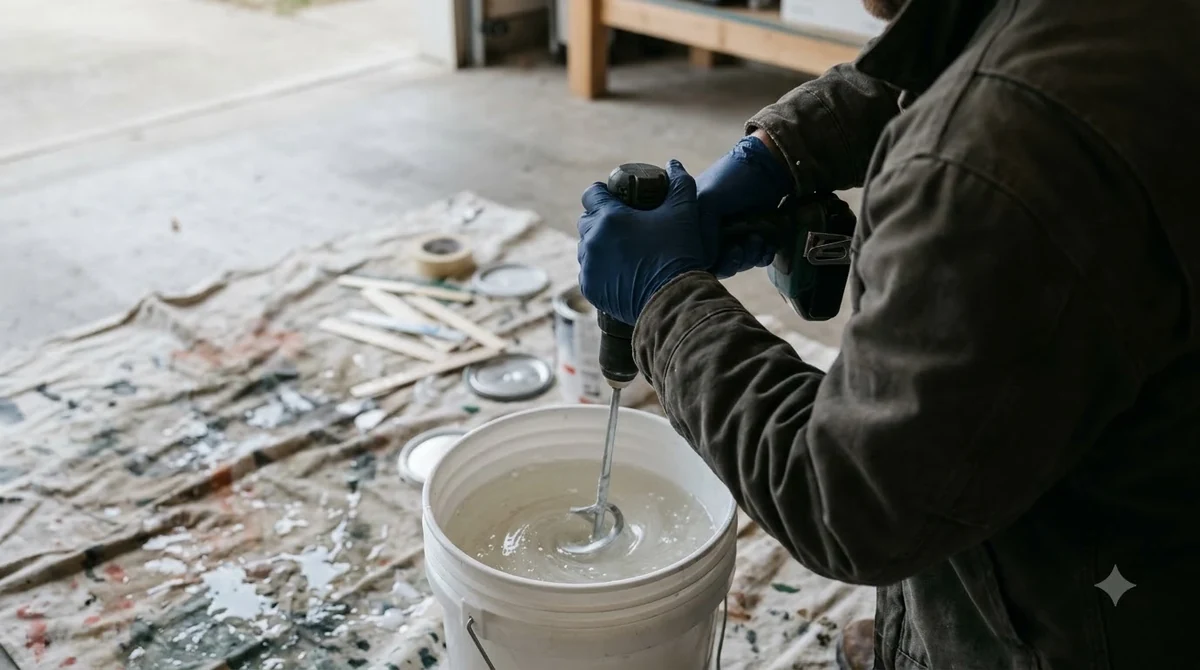
The layer or mix is too thick
Each epoxy has a safe pour depth per layer, and Mas Epoxies explains that exceeding it makes heat transfer a problem. TotalBoat lists about ⅛ to ¼ inch for its coating epoxies, while its deep pour casting resins allow much more per layer. Check your product’s data sheet rather than guessing. Mas also advises pouring a thinner layer when the mixed volume exceeds 1 gallon, so the heat can leave the mass.
The room or the resin is too warm
Warm air and warm resin both speed the reaction. Mas Epoxies gives an example: if the air is 95°F and the epoxy is already at 90°F when poured, the reaction generates even more heat and working time drops sharply. The same source says raising the temperature by 18°F (10°C) cuts gel time in half. Resin Obsession warmed its resin in a hot water bath for too long, then worked in an 80°F studio, and the combination added heat to the reaction.
The mix is too large or sits in the cup
Mixing more than a product’s maximum amount can overheat it quickly. Resin Obsession says its 3 oz batch was the maximum mixing amount for that resin. Resin left sitting in the cup keeps producing heat, and the unused portion added to the problem. INCURE also notes that a tall, narrow cup holds heat worse than a shallow, wide tray with the same volume.
The layer below has not cooled
Step pours need time between layers. Mas Epoxies warns that heat rises, so a top layer can overheat if the prior layer still gives off heat. TotalBoat advises waiting until each layer has cooled to room temperature, which it describes as 70-80°F.
How to Tell Which Cause You Have
Match what you see to the likely cause before you change anything. The symptom usually points to the first fix.
| What you notice | Likely cause | First action |
|---|---|---|
| Cup warms within minutes and smokes | Batch too large or sitting in the cup | Pour it out thin and spread it now |
| Cup softens, leaks or melts | Mix above the maximum amount, or a weak cup | Move it to a metal container outdoors |
| Fast gel on a warm day | Hot room or warmed resin | Cool the area and pour sooner |
| New layer heats up over the old one | Previous layer still warm | Wait for room temperature, then do the fingernail test |
| Bubbles, cracks or yellowing after cure | Excess exotherm from a thick pour | Remove the cured layer and restart within the depth limit |
Tip: Check the room before you mix. TotalBoat advises keeping the work area below 80°F, and an air conditioner or cooling mat helps when the room is not cool enough.
How to Slow Down an Overheating Mix
If a cup is already warm, act fast and in order. The goal is to spread the heat out so it can escape.
- Stop adding resin. More mass in a hot cup speeds the reaction even further.
- Pour it out thin. Mas Epoxies recommends pouring an overheating mix in a thin layer to slow the exotherm.
- Use a shallow surface. Spread the resin onto a tray or the work surface, since a wide, shallow shape sheds heat better than a tall cup.
- Move it to a cooler spot. Open a door or set a fan to blow across the surface. Mas warns that airflow can carry dust into the pour, so keep the area clean.
- Check the room. Keep the work area below 80°F, according to TotalBoat, and use an air conditioner or cooling mat if needed.
- Separate the leftovers. Do not leave unused resin in its mixing cup. Resin Obsession found that resin sitting in the cup kept producing heat.
Preventing Heat Damage and Fixing a Bad Cure
Prevention is easier than repair. Plan the pour around depth, batch size and temperature before you open the cup.
For deep pours, INCURE recommends casting in shallow lifts and letting each one gel and cool before adding the next. It also advises that for any pour deeper than roughly half an inch, several thin layers are generally safer than one deep pour, even when the datasheet allows more. TotalBoat’s ThickSet Clear Casting Epoxy allows 2 inches for castings under 10 oz and ½ inch for river and slab pours. Coating epoxies generate more heat per thickness than casting resins and cure faster, so they must stay in thin layers.
If a surface has already overheated, TotalBoat’s method for a ruined layer is a clear order of steps:
- Remove as much as you can with a scraper.
- Wipe with a clean cotton rag dampened with acetone and let it dry fully.
- Sand smooth with 220-320 grit sandpaper and remove all residue.
- Pour a new layer that stays within the maximum depth for your product.
If the piece is too far gone to rescue, see how to remove epoxy before you start over.
Safety Steps If Epoxy Starts Smoking
Smoking epoxy calls for calm, quick action. Move the material away from people and anything that can burn, and keep the room ventilated.
Resin Obsession recommends keeping a metal container nearby when mixing, because plastic and cardboard can leak or catch fire. Do not put hot resin in the trash, since the reaction can continue and melt a bin or start a fire. Carry it outside and set it on a surface such as concrete to cool. Keep a fire extinguisher nearby. The same source reports that its overheated batch cured in its cup in about 90 seconds, so speed matters.
Safety: Wear nitrile gloves, keep good airflow, and read the product SDS for fume and fire guidance. Use cups made for mixing resin, because cheap cups can soften or leak. If resin reaches your skin, see how to get resin off hands for cleanup steps.
Frequently Asked Questions
Why does my epoxy get hot and smoke?
Smoke usually means the reaction has run away, with heat building faster than it can escape. A large mass, a thick layer, a warm room or warmed resin can each push it there. Resin Obsession also notes that heat builds on itself, so the reaction speeds up as the temperature climbs. Pour the mix out thin right away if it is warming.
How thick can I pour epoxy resin in one layer?
Coating epoxies generally go on in about ⅛ to ¼ inch per layer, according to TotalBoat. Deep pour casting resins can go thicker. Mas Epoxies says its Deep Pour X can be poured 2 inches thick, and TotalBoat’s ThickSet allows 2 inches for smaller castings. Always confirm the limit on your own product’s data sheet.
What room temperature should I pour epoxy at?
TotalBoat recommends keeping the work area below 80°F. It also says a layer should cool to 70-80°F before the next pour. Mas Epoxies adds that warm air shortens working time, so a hot afternoon calls for a cooler room or a later start. Check the data sheet for gel time at its stated temperature.
How do I fix epoxy that overheated and cured bubbly?
A surface that overheated and cured with bubbles or distortion usually has to be removed and redone. TotalBoat’s method is to scrape it, wipe with acetone, sand with 220-320 grit, and pour a new layer within the maximum depth. INCURE notes that once cracking or voids have formed, the damage generally cannot be reversed, so prevention matters most.
Most overheating comes down to depth, batch size, temperature and cooling time. Change one variable at a time, and check your product’s data sheet before the next pour. For more fixes by symptom, visit the Troubleshooting & Fixes section.
More in Troubleshooting & Fixes
 How to Fix Scratches in Epoxy Tables Without Redoing the Whole TopUpdated Nov 26, 2026
 How to Remove Amine Blush From Epoxy Without Starting OverUpdated Nov 26, 2026
 What Will Remove Epoxy from Wood, Metal, Skin and Hair SafelyUpdated Nov 26, 2026
 Paint and Epoxy Remover: Which Type Strips Cured Epoxy and Paint SafelyUpdated Nov 26, 2026
 Resin Sticking to Mold? Causes, Release Fixes and Safe RemovalUpdated Nov 26, 2026
 Why Is My Epoxy Bumpy? Causes and Fixes for a Smooth FinishUpdated Nov 26, 2026