

We may earn a commission when you buy through links on this page, at no extra cost to you. Learn more.
Epoxy not curing usually means the resin and hardener did not react fully, most often because of an off-ratio mix, incomplete mixing, cold temperatures, or old or mismatched products. Mas Epoxies says epoxy that stays soft and sticky 24 hours after application has not cured. Most fixes follow one rule: find the cause, remove the uncured layer, and do not coat over it. Cure times vary by product, so check the label for your exact numbers.
This guide sorts soft or tacky epoxy into likely causes so you can decide whether the piece can be rescued or needs to start over. Work through the causes in order, starting with the ones you can check quickly.
What Does It Mean When Epoxy Is Still Sticky?
Sticky, gummy, or soft epoxy means the chemical reaction between resin and hardener stalled or never finished. Resin that is still tacky is different from resin that is simply slow, so it helps to know the timeline.
UltraClear says most epoxies have two phases. The first is the point where the surface can be used, and the second is full hardness. For its Bar and Table Top Epoxy, the company says a usable state typically arrives within 72 hours, with full hardness in about 7 days. If your surface is still tacky after the product’s stated usable time, a cure problem is likely.
Fully cured epoxy should feel hard and non-tacky. A surface that is still soft after the expected window usually needs a diagnosis, not more time.
Common Causes of Epoxy Not Curing
Most cure failures trace back to a short list of mistakes. Jeff Mack Supply names incorrect measuring, incomplete mixing, cold temperatures, the wrong epoxy product, and contamination as the main causes. Use the table below to match your symptoms to a likely cause.
| What you see | Likely cause | What to do |
|---|---|---|
| Soft layer that moves around or stays gummy across the whole surface | Off-ratio mix | Remove the layer and remix at the label ratio |
| Soft spots mixed with hard areas | Incomplete mixing | Remove soft areas and mix longer, scraping the cup |
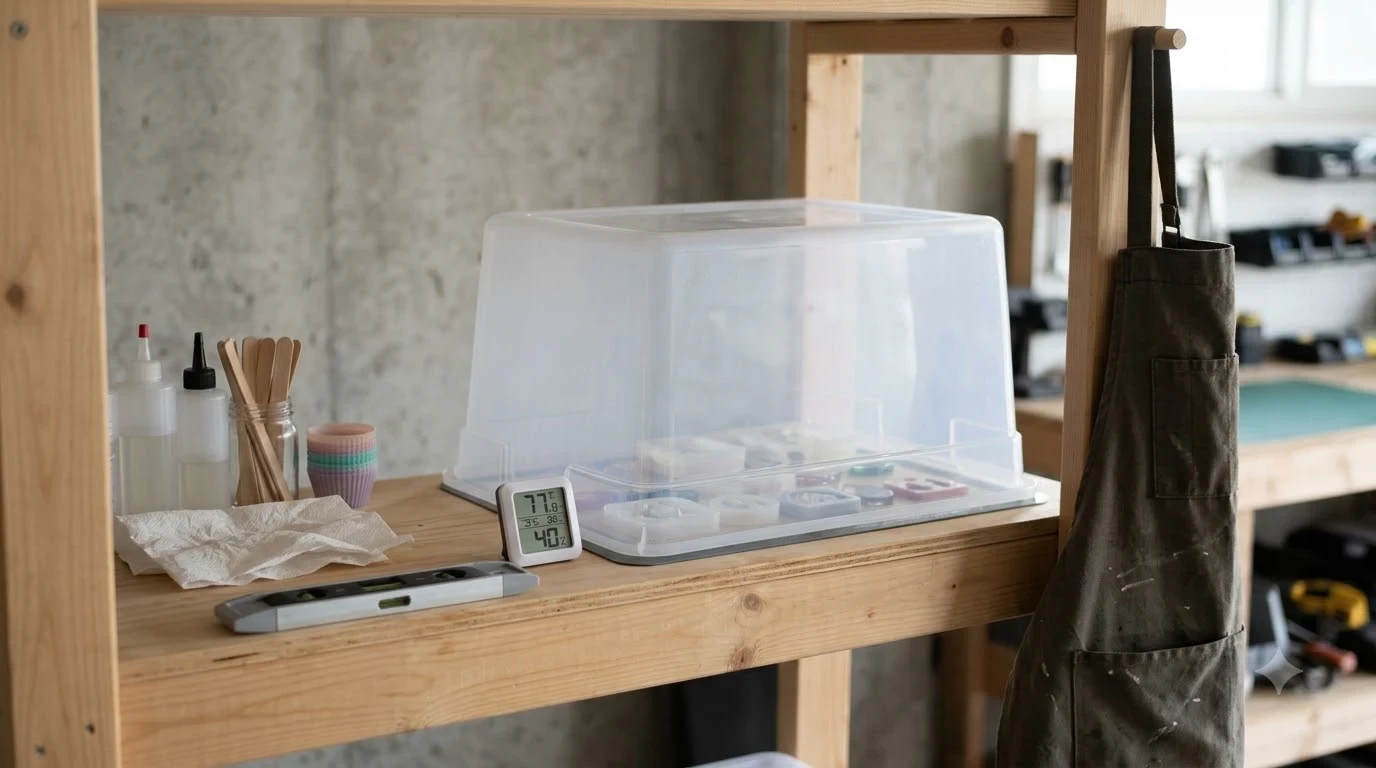
| Slow or stalled cure in a cold room | Low temperature | Move the piece to a warmer spot or apply gentle heat |
| Cloudy or waxy film on a clear coat | Moisture or amine blush | Wash the film off with water, then sand before recoating |
| Tacky surface that repels new coats | Contamination or mixed product brands | Remove and clean, then start a fresh batch with one brand |
Mix Ratio and Mixing Mistakes
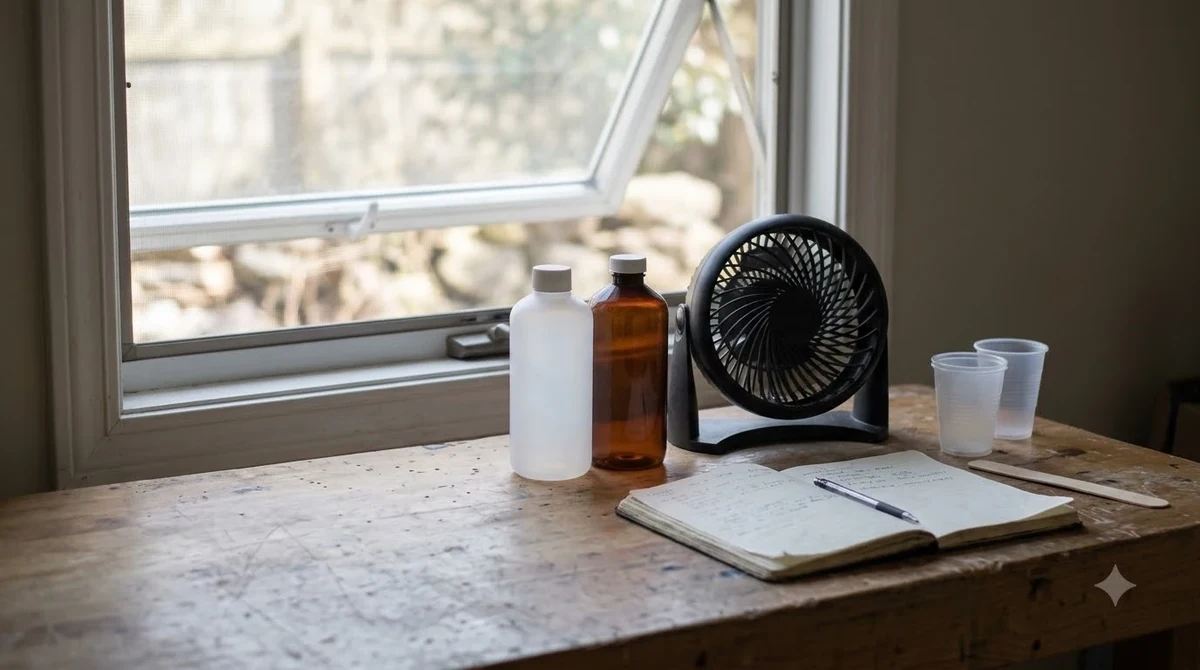
The mix ratio is the most common cause. Mas Epoxies calls an incorrect ratio the most common reason epoxy fails to cure. Ratios vary by product, and the examples it lists include 5:1, 3:1, 2:1, and 1:1. Measure exactly the ratio on your label, and do not guess by eye.
Entropy Resins says its products are formulated at 2 parts resin to 1 part hardener by volume. It also warns that pumps must dispense a steady stream. If the stream is interrupted, the batch can drift off ratio without you noticing.
Mixing is the second half of the problem. Mas Epoxies recommends mixing for 2 to 5 minutes depending on volume. Entropy Resins suggests stirring at least 1 minute for small batches and continuing until streaks disappear. Scrape the sides, bottom, and corners of the cup as you go. For 1 gallon or more, Mas Epoxies recommends a power drill with a mixing paddle on low-to-medium speed.
Never add extra hardener to speed things up. WEST SYSTEM says to use equal pump strokes of resin and hardener, and warns against adding extra hardener for a faster cure. Entropy Resins says epoxy does not cure faster with more hardener, and its only fix for off-ratio uncured epoxy is removing it and starting over. For a deeper look at this symptom, see epoxy not hardening.
Temperature and Humidity Effects on Cure
Temperature controls how fast epoxy reacts. Mas Epoxies says working conditions should be around 65 to 80 degrees Fahrenheit, and that temperatures below 60 degrees will stall the reaction. UltraClear recommends about 75 degrees with low humidity, and says cold can slow or halt curing.
Cold affects more than the cure itself. Entropy Resins notes that cold can thicken resin, which makes pumps dispense the wrong ratio. A shop that feels fine to you may still be too cold for the resin and hardener in their containers, so bring materials to a warmer room before you measure.
If the room is cold, you have two main options. You can allow extra time in a warm space, or apply gentle heat. WEST SYSTEM says heat can maintain the chemical reaction and speed the cure in cool weather. It also recommends 205 Fast Hardener for lower temperatures. Entropy Resins advises against unvented kerosene or propane heaters, because they may prevent curing and contaminate the surface. Use a heat source that is designed for the job and keep the room ventilated.
Humidity matters too. WEST SYSTEM says moisture from condensation or humidity can make clear coats cloudy, and that the resulting amine blush is water-soluble. It can be removed with water. The company also notes that its 207 Special Clear Hardener is blush-free. For more on this topic, see Epoxy Resin Curing Temperature and Time.
Expired, Old, or Mismatched Products
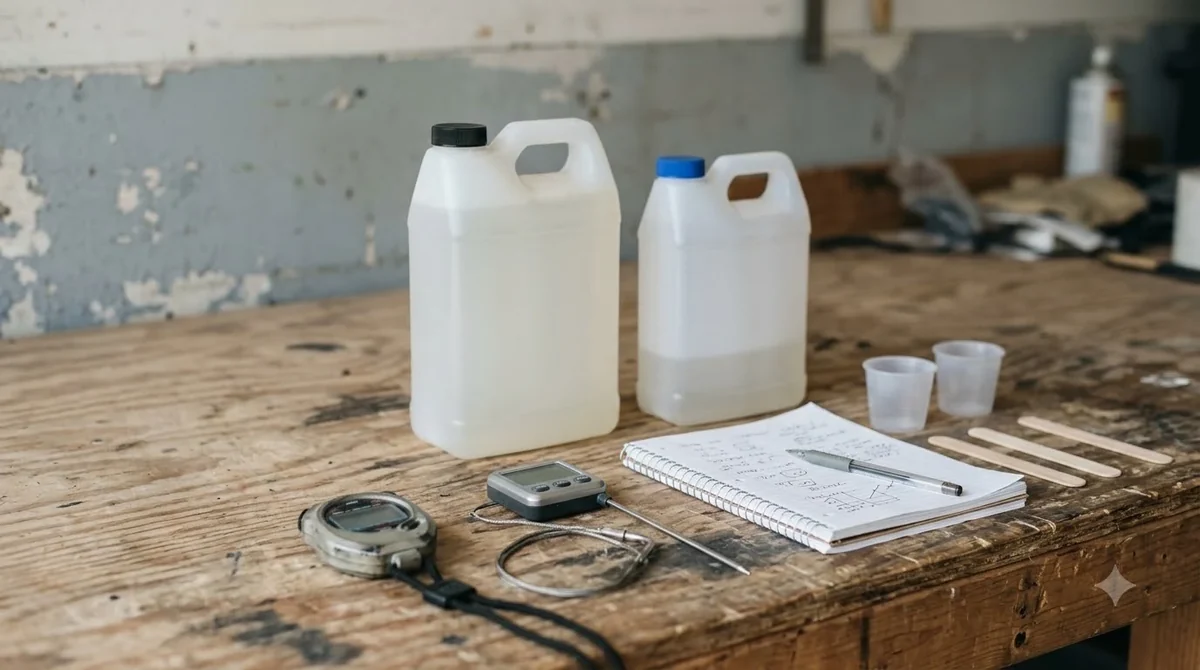
Sometimes the product itself is the problem. UltraClear advises checking the expiration date before you start, because old or low-quality epoxy can cure incompletely. A batch that has aged may look normal in the container and still fail to harden on the surface.
Mixing brands is a separate risk. WEST SYSTEM says epoxy resin will not cure properly with other brands of epoxy hardener or with polyester catalysts. Entropy Resins also recommends sticking with one brand when you buy resin and hardener. If a batch fails, check whether the resin and hardener came from the same system.
UV resin is a different chemistry. The causes in this guide apply mainly to two-part epoxy systems. If you are working with a light-cured product, read its label and follow its light and thickness instructions instead of these ratios and temperatures.
How to Fix Epoxy That Stays Soft or Tacky
You can often rescue a surface, but only after you remove the uncured layer. Coating over soft epoxy will not solve the problem. Start by deciding whether the whole surface is soft or only small spots are affected, because that answer shapes the repair.
- Find the cause first. Review your ratio, mixing time, room temperature, and product brands before you touch the piece.
- Warm the space. If the room was cold, move the piece to a warmer area and allow more time before you judge the cure.
- Scrape away the soft layer. Use a plastic scraper or a flat tool to remove the uncured material. UltraClear advises avoiding metal tools, which can damage the surface below.
- Wear gloves and clean the tools often. Mas Epoxies recommends denatured alcohol to keep tools from getting sticky and to clean them frequently.
- Clean the surface. Wipe the area with denatured alcohol or isopropyl alcohol and let it dry completely.
- Sand the base. UltraClear suggests fine sandpaper such as 120-grit to create a clean base. Remove all sanding dust with a tack cloth or vacuum.
- Remix and reapply. Measure and mix a fresh batch at the label ratio, mix for the stated time, and pour in thin, manageable layers.
For skin contact during cleanup, see how to get resin off hands.
When to Scrape It Off and Start Over
Some batches cannot be saved. Entropy Resins says that if a batch turns out to be unusable, you should step back, make a small test batch, and confirm it cures before you tackle the project again. That test costs little compared with a ruined piece.
UltraClear says moderate heat will not fix epoxy that was improperly mixed or measured, and it recommends removing and reapplying. If the surface is soft across the whole area and you have confirmed an off-ratio mix, scrape it back and start clean.
Be careful with heat as a rescue tool. WEST SYSTEM notes that heat can complete a cure that is already underway, but it does not turn a wrong mix into a good one. Use heat only after you have ruled out measuring and mixing errors.
Frequently Asked Questions
Why is my epoxy still sticky after 24 hours?
Mas Epoxies says epoxy that is still soft and sticky 24 hours after application has not cured. The usual causes are an off-ratio mix, incomplete mixing, or a room below about 60 degrees Fahrenheit. Check those first, then remove the soft layer before recoating.
Can I add more hardener to make epoxy cure faster?
No. WEST SYSTEM warns against adding extra hardener for a faster cure, and Entropy Resins says epoxy does not cure faster that way. Extra hardener usually makes the ratio worse. Remove the uncured epoxy and start over with a correctly measured batch.
What temperature does epoxy need to cure properly?
Mas Epoxies recommends working conditions around 65 to 80 degrees Fahrenheit. UltraClear suggests about 75 degrees with low humidity. Check your product label, because the exact working range varies by product.
Does heat fix epoxy that did not cure?
Heat can help when the problem is a cold room, because WEST SYSTEM says it can maintain the reaction and speed the cure. Heat will not fix an off-ratio or poorly mixed batch, according to UltraClear. In that case, remove the uncured epoxy and recoat.
Most cure problems are fixable if you catch them early and remove the soft layer instead of covering it. For more troubleshooting help, visit Troubleshooting & Fixes and keep a log of your ratio, room temperature, and mixing time for your next project.
More in Troubleshooting & Fixes
 How to Fix Scratches in Epoxy Tables Without Redoing the Whole TopUpdated Nov 26, 2026
 How to Remove Amine Blush From Epoxy Without Starting OverUpdated Nov 26, 2026
 What Will Remove Epoxy from Wood, Metal, Skin and Hair SafelyUpdated Nov 26, 2026
 Paint and Epoxy Remover: Which Type Strips Cured Epoxy and Paint SafelyUpdated Nov 26, 2026
 Resin Sticking to Mold? Causes, Release Fixes and Safe RemovalUpdated Nov 26, 2026
 Why Is My Epoxy Bumpy? Causes and Fixes for a Smooth FinishUpdated Nov 26, 2026