

We may earn a commission when you buy through links on this page, at no extra cost to you. Learn more.
Why is my epoxy rubbery? Most often the resin and hardener were off-ratio, badly mixed, or cured in a space that was too cold. Epoxy that is still soft or tacky 24 hours after pouring has usually not cured, according to Mas Epoxies. Working temperatures around 65-80F help the reaction finish, and below 60F the reaction can stall. The fix depends on the cause, but a soft batch rarely recovers on its own.
A rubbery finish is one of the most frustrating problems in resin work. This guide walks through the usual causes, helps you tell them apart, and explains when a piece can be salvaged and when it needs to be removed and poured again.
What Rubbery Epoxy Looks and Feels Like
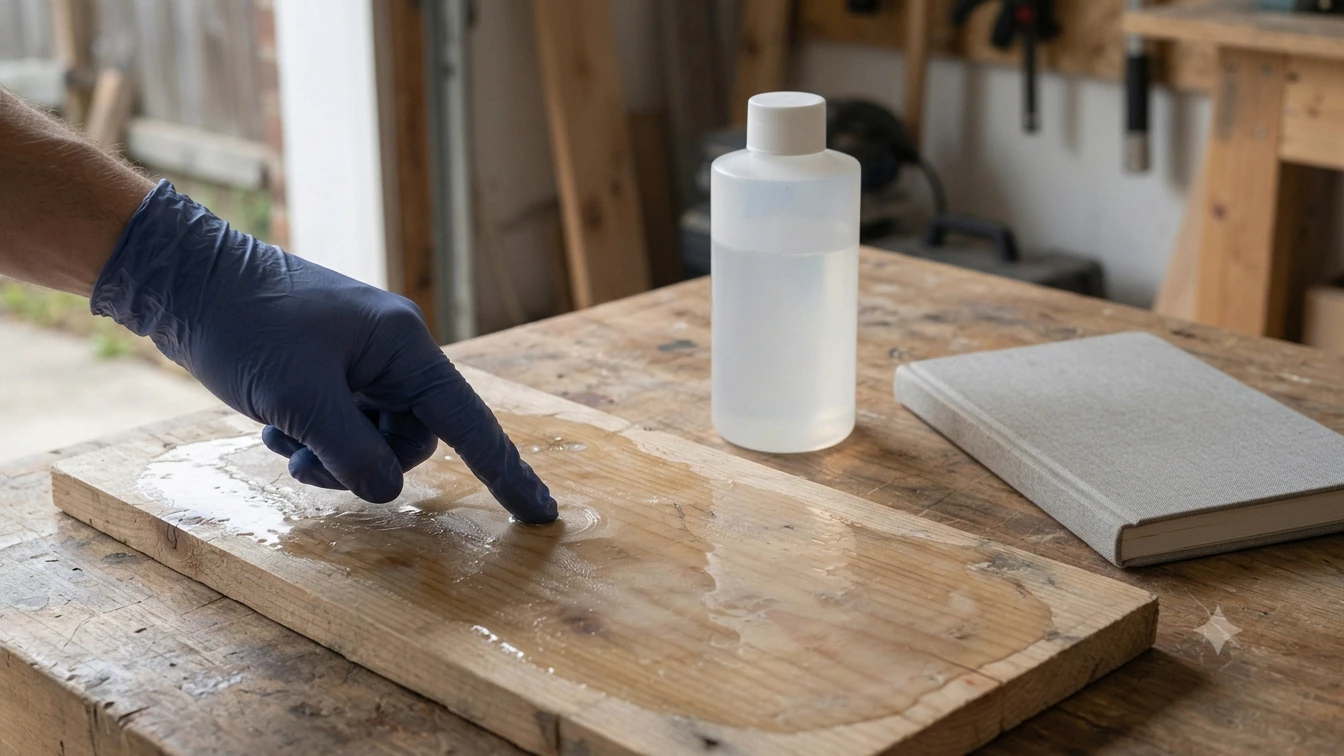
Rubbery resin usually feels soft, slightly springy, or tacky when you press on it. It may also leave a fingerprint or smear when touched. Sometimes the whole surface is affected, and sometimes only a few patches are.
Fully cured epoxy should feel hard and stable. If the surface is still giving under light pressure well past the product’s cure window, the chemical reaction is probably incomplete. Epoxy does not dry by evaporation like paint, so waiting longer in a cold room will not always help.
Look closely at where the softness appears. A uniform soft layer points to a different cause than a few sticky spots scattered across the piece. That pattern is your first clue.
Why Is My Resin Rubbery? The Main Causes
Four causes account for most soft or rubbery epoxy: a wrong mix ratio, poor mixing, low temperature, and moisture or contamination on the surface. Each one leaves a different pattern, so match your symptoms before you decide on a fix.
Rubbery resin in the first 24 hours is common and not always a failure. Many epoxies feel hard in about 24 hours, but full cure often takes 3-7 days, according to Pourlaepoxy. Check your product’s cure window before you start troubleshooting.
| What you see | Most likely cause | What to do |
|---|---|---|
| Entire pour soft or tacky, and it moves when touched | Off-ratio mix, such as more resin than hardener or the reverse | Remove the soft layer and repour with the correct ratio |
| Soft spots or sticky streaks in some areas only | Unmixed material from the sides and bottom of the cup | Scrape out soft areas, sand, clean, and recoat |
| Piece is slow everywhere, edges softer than center | Room or resin too cold | Warm the space and allow extra time before judging |
| Hard surface with a waxy or greasy film | Amine blush from humidity or moisture | Wash with warm water and mild soap, dry, then sand |
Use the table as a starting point. If the whole pour is soft, a ratio error is the most likely culprit. If only the surface is tacky, moisture or blush is more likely.
Mix Ratio and Mixing Errors That Cause Soft Epoxy
Mix ratio errors are a leading cause of rubbery epoxy. Mas Epoxies notes ratios such as 5:1, 3:1, 2:1 or 1:1, and says a sticky layer that moves around is most often caused by adding more resin than hardener or the reverse. Measure exactly what your product label specifies.
Some products are formulated by volume and others by weight. Pourlaepoxy warns that measuring by weight when the instructions call for volume can throw the mix off, because the two components have different densities. Use graduated mixing cups for volume ratios.
Mixing is the second big trap. Mas Epoxies recommends mixing for 2-5 minutes depending on volume, scraping the sides of the cup as you go. UltraClear suggests 3 to 5 minutes, scraping the sides and bottom. Unmixed material clinging to the cup is what leaves sticky streaks in an otherwise good pour.
Pourlaepoxy describes a double-cup method: mix, transfer to a clean cup, then mix again for 60-90 seconds. This step helps catch material stuck to the original container walls.
Tip: Do not scrape the last drops from the mixing cup onto your project. Elto Bert Studio notes that residue from the cup is a common source of sticky patches.
Temperature and Humidity Problems That Stall Curing
Temperature has a major effect on whether epoxy cures fully. Mas Epoxies gives a working range of about 65-80F and says temperatures below 60F will stall the reaction between resin and hardener. Pourlaepoxy recommends a room and resin temperature of roughly 72-78F (22-26C), and notes that cure can slow dramatically below about 70F. Pourlaepoxy’s guide on epoxy that is not curing explains how to check these conditions before you pour.
Cold resin is also thicker and harder to mix thoroughly. Elto Bert Studio recommends bringing resin and hardener to room temperature before mixing. Warm sealed bottles gently in warm water, not hot, and dry them before opening, as Pourlaepoxy suggests.
Bond Craftor lists an ambient range of 18-29C (64-84F) for its deep pour product, and advises keeping ambient humidity below 85% RH. UltraClear recommends keeping humidity under 60% to help prevent amine blush, the oily or waxy film that forms when moisture and carbon dioxide react with curing epoxy.
Can You Fix Rubbery Epoxy? How to Remove It
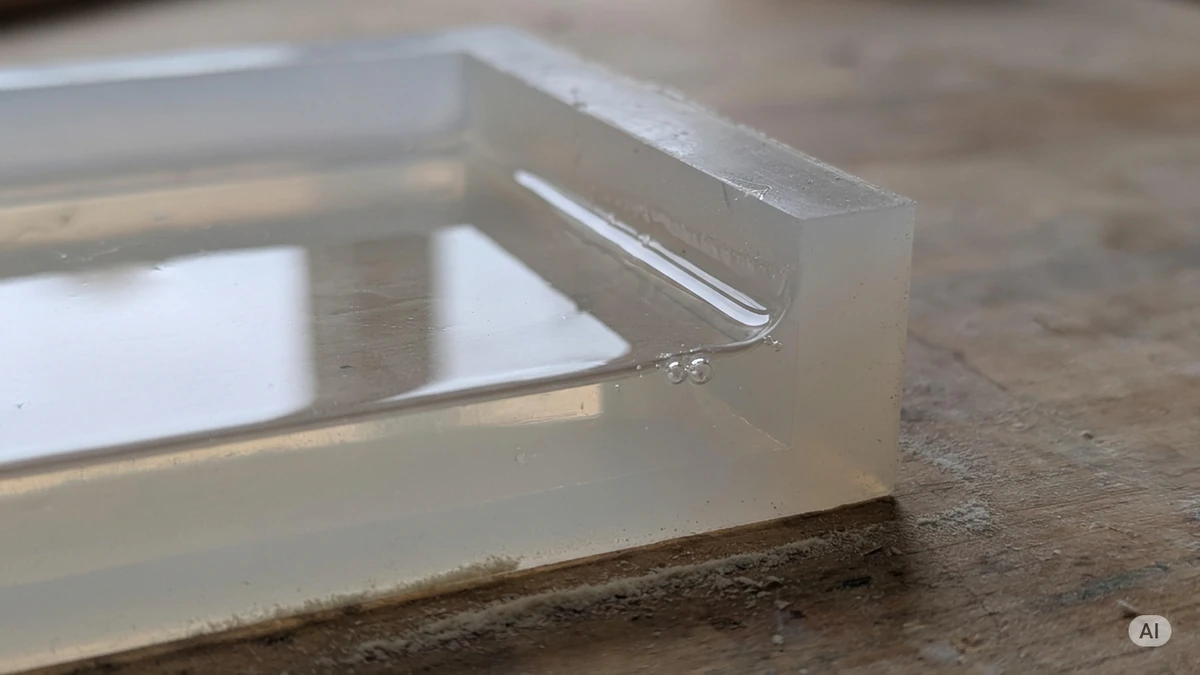
Sometimes you can. A slightly tacky surface may simply need a warmer room and more time. Bond Craftor suggests wiping the surface with isopropyl alcohol: if the tackiness disappears, it was likely oxygen inhibition, not a cure failure.
If the whole pour is soft, do not add extra hardener on top. Pourlaepoxy says that off-ratio epoxy typically cannot be saved this way, and the reliable fix is removal and a repour. Mas Epoxies adds that applying properly mixed epoxy over an uncured layer will not solve the problem.
To remove soft material, follow these steps:
- Wear gloves. Elto Bert Studio advises gloves whenever you handle uncured resin.
- Scrape the soft layer. Use a plastic scraper, paint scraper or chisel, and work into the soft area until you reach firmer material.
- Clean the tools often. Mas Epoxies recommends denatured alcohol to keep tools from getting sticky, and to wipe them clean frequently.
- Wipe the surface with denatured alcohol. Remove dust and residue completely.
- Sand lightly if needed. UltraClear suggests 220-grit sandpaper to help the new coat grip.
- Mix a fresh batch. Measure at the product’s correct ratio and mix thoroughly before pouring.
If you are removing a large area, our guide on how to remove epoxy covers tools and techniques for cured and partly cured material.
Start over if the entire pour is soft after the full cure window, or if the soft layer runs deep. Remove the uncured material completely before you repour, because fresh resin over a bad layer will fail too.
Preventing Rubbery Epoxy on Your Next Project
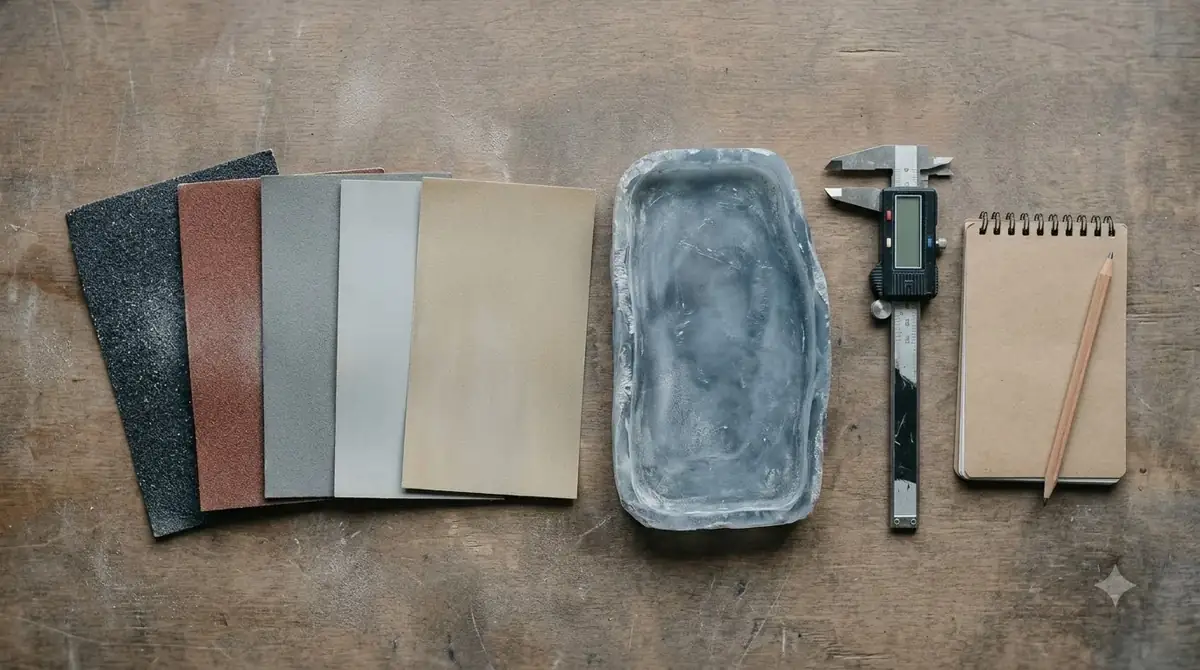
Most rubbery epoxy is preventable with a few habits. Check the ratio on the label before every pour, measure each part separately, mix for the full time, and keep the workspace within the temperature range your product recommends.
Bond Craftor suggests calculating pour depth for your project size, since large pours need shallower layers. Its deep pour product is listed at up to 4 inches per layer at 18C, reduced to about 2 inches at 25-32C. Check your own product sheet for its limits.
If you are pouring over wood, Bond Craftor advises checking that wood moisture content is below 12% with a moisture meter before you start. Keep total colorant, such as pigment paste, mica or alcohol ink, below 3-5% of total resin volume, according to the same source.
Safety: Keep the room ventilated and wear nitrile gloves. Read the product safety data sheet for handling and disposal details before you start.
Frequently Asked Questions
Why is my epoxy still rubbery after 24 hours?
Epoxy that is still soft or sticky 24 hours after pouring has most likely not cured, according to Mas Epoxies. Common causes include an off-ratio mix, incomplete mixing, or a room that was too cold. Many epoxies feel hard in about 24 hours, but full cure often takes 3-7 days.
Can I add more hardener to fix soft epoxy?
No, adding hardener on top usually does not fix it. Pourlaepoxy advises against adding extra hardener to off-ratio epoxy. Elto Bert Studio warns that too much hardener can stop resin from curing properly.
What temperature should epoxy be cured at?
Mas Epoxies recommends working conditions around 65-80F, and Pourlaepoxy suggests roughly 72-78F for both room and resin. Bond Craftor lists 18-29C (64-84F) for its deep pour product. Keep the temperature steady through the first 12-24 hours.
Why is epoxy sticky only in some spots?
Sticky patches are most often caused by unmixed resin or hardener left along the sides and bottom of the mixing cup. Localized contamination from silicone, wax or oil can also cause them. Scrape out the soft spots, clean, and recoat after proper prep.
If your piece is still soft, start with the cause that fits your symptoms and work through the steps. For more fixes, visit our Troubleshooting & Fixes hub, and see how to get resin off hands if uncured material reaches your skin.
More in Troubleshooting & Fixes
 How to Fix Scratches in Epoxy Tables Without Redoing the Whole TopUpdated Nov 26, 2026
 How to Remove Amine Blush From Epoxy Without Starting OverUpdated Nov 26, 2026
 What Will Remove Epoxy from Wood, Metal, Skin and Hair SafelyUpdated Nov 26, 2026
 Paint and Epoxy Remover: Which Type Strips Cured Epoxy and Paint SafelyUpdated Nov 26, 2026
 Resin Sticking to Mold? Causes, Release Fixes and Safe RemovalUpdated Nov 26, 2026
 Why Is My Epoxy Bumpy? Causes and Fixes for a Smooth FinishUpdated Nov 26, 2026