

We may earn a commission when you buy through links on this page, at no extra cost to you. Learn more.
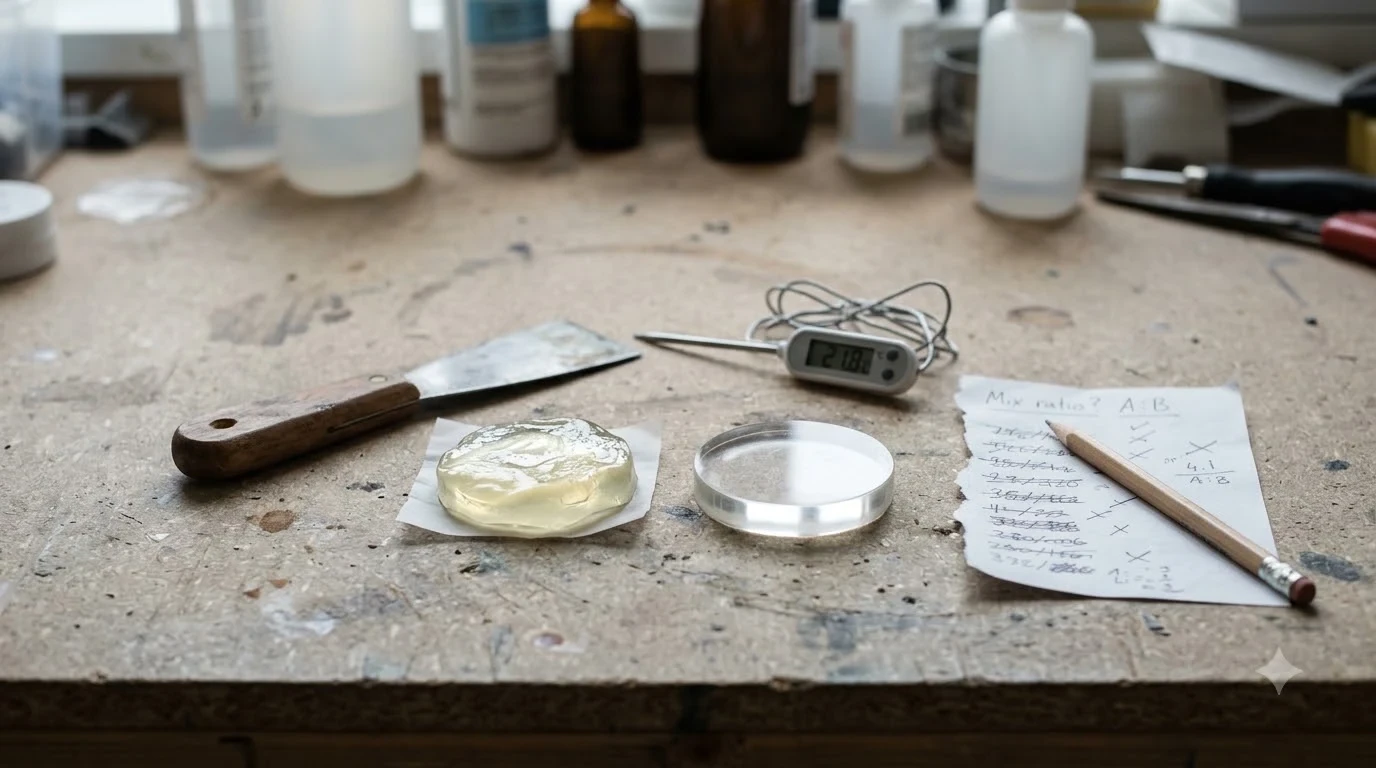
Sticky resin is usually resin that has not fully cured, and the most common cause is a wrong mix ratio or poor mixing. According to PlasticRanger, you should mix resin and hardener for at least 3 to 5 minutes, scraping the sides and bottom of the container. Cure slows noticeably when the room drops below about 21°C (70°F), so the manufacturer suggests working between 25 and 30°C (75 to 86°F). Keep relative humidity under 50% to avoid haze and tackiness.
If your resin is still tacky after 24 hours, do not assume it is ruined. Most sticky pours fall into a few clear categories, and each one has a different fix. This guide explains how to tell them apart, which repairs work on a finished surface, and when the safest choice is to scrape the piece and start over.
Why Resin Stays Sticky
Sticky resin is a sign of incomplete curing, where the chemical reaction between resin and hardener did not finish. The polymer chains stay loose, so the surface feels tacky, soft, or gooey. Most cases trace back to a handful of causes that you can check on your next pour.
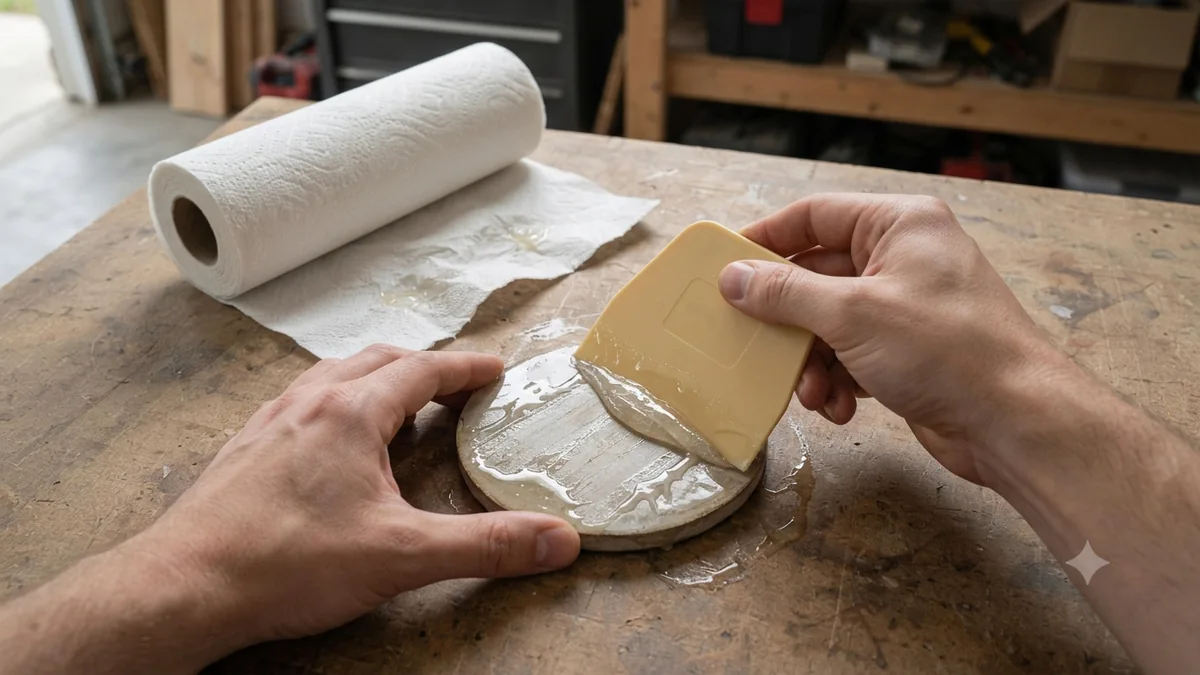
The usual suspects are these:
- An off ratio, since even a small measuring error leaves unreacted molecules behind.
- Incomplete mixing, which leaves unblended pockets trapped in the cup or on the sides.
- Cool air, which slows the reaction considerably.
- High humidity, which can cause a hazy, tacky film in some systems.
- Too much pigment, glitter, or water-based dye.
- Handling the piece before it has cured.
- Contaminated molds or mixing tools.
Start with the ratio and mixing, because they cause the majority of problems. Weigh both parts on a digital scale rather than relying on measuring cups. Then check the room temperature and humidity before you blame the product.
How to Fix Sticky Resin on a Cured Surface
A cured surface that feels like tape can often be repaired, but the method depends on how much of the piece is affected. Small tacky spots and whole-surface stickiness need different approaches. Gooey resin that has not set is a separate problem, and it must be removed.
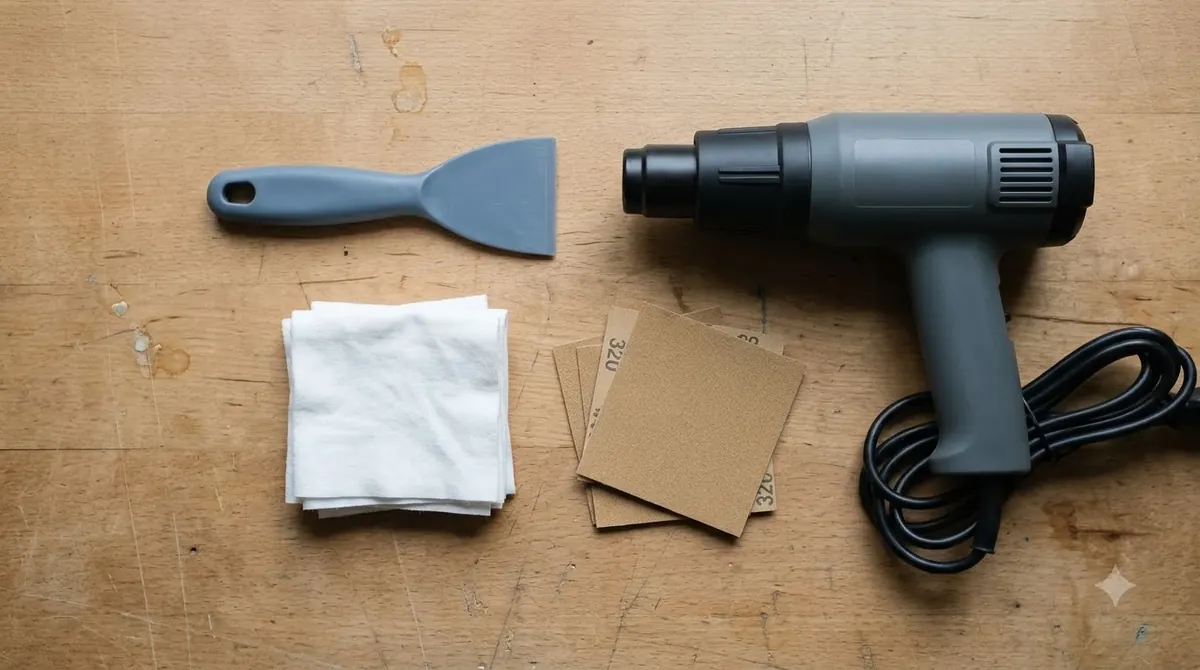
For a tacky surface that has firmed up underneath, try this sequence:
- Give it more time and warmth. Move the piece to a spot between 25 and 30°C and wait another 24 to 48 hours, as PlasticRanger suggests.
- Sand the tacky layer. Use 400 to 600 grit sandpaper until the surface feels solid, then wipe away all dust.
- Wipe with denatured alcohol. Resin Obsession advises this step to remove resin dust before recoating.
- Recoat the entire surface. According to Resin Obsession’s sticky resin fix guide, spot-coating leaves a visible seam line between old and new layers.
A clear-drying acrylic spray in light coats is another option for sealing sticky areas. Treat it as a cosmetic seal rather than a cure for under-curing. If the piece is a frame or sculpture with uneven surfaces, sanding may not be practical, so test the spray on a hidden area first.
Why Is My Epoxy Sticky After a Week
Epoxy that stays tacky for days or a week usually has a cause that time alone will not solve. Casting epoxy typically needs 36 to 72 hours to reach a workable hardness, according to PlasticRanger. Some deep pours need longer before they can be sanded or polished.
The manufacturer’s curing time is the number to follow. PlasticRanger recommends waiting at least 1.5 times that recommended time before handling. Check the technical data sheet for your specific product, since the number varies by system.
If the surface is still sticky after that window, look at the mix and the environment. Ratio errors, cool rooms, humidity, and too many additives are the likely causes. Amine blush can also cause a hazy, sticky film when the hardener reacts with moisture and carbon dioxide. Some owners report that leaving a sticky piece in the sun solved the problem, but that is an anecdote, not a reliable method, so check the room conditions first.
Sticky UV Resin: Causes and Fixes
UV resin behaves differently from two-part epoxy. Its tacky top layer usually comes from oxygen inhibition, where air at the surface interferes with the curing reaction. PlasticRanger describes this as a common quirk of UV resin systems, not a sign that the whole piece failed.
Light penetration and lamp strength matter most. PlasticRanger says UV light penetrates only about 1 to 3 mm, so pour thin layers and cure each one separately. It also recommends a UV lamp of at least 24W and curing each layer for 1 to 3 minutes. Opaque pigments can block the light and leave soft areas inside, so use translucent or UV-compatible colorants. For a deeper look at the top-layer problem, read the guide on uv resin sticky issues.
Tip: If a UV piece is tacky on top only, sand the top with 400 to 600 grit and recoat in a thin layer, then cure both sides when the shape allows.
Mix Ratio, Temperature, and Humidity Checks
Before you pour again, run a quick check of the variables that cause most sticky resin. The table below shows what each one should look like, based on the figures from PlasticRanger and Resin Obsession. Compare your setup against it before your next batch.
| Check | Target or limit | Why it matters |
|---|---|---|
| Mix ratio | Follow the manufacturer’s ratio, weighed on a digital scale | Off ratios leave unreacted molecules in the piece |
| Mixing time | At least 3 to 5 minutes, scraping sides and bottom | Unblended pockets stay soft |
| Room temperature | 25 to 30°C (75 to 86°F) | Cure slows below about 21°C (70°F) |
| Relative humidity | Below 50% RH | Humidity above about 60% can interfere with curing |
| Mica powder | Up to 5 to 7% of resin weight | Excess additives disrupt the reaction |
| Dry glitter | Up to 10% by weight | Keeps the cure intact |
| Water-based dyes | Avoid | Water interferes with resin chemistry |
Temperature and humidity work together. A warm, damp room can slow curing even if the mix is perfect. A dehumidifier or air conditioner helps, and warming cold bottles in warm water for a few minutes before mixing can help in winter. Always check the product’s own temperature guidance, because some systems list different ranges.
Tip: Warm resin and hardener bottles in warm, not hot, water for a few minutes before weighing. Cold components mix poorly and cure slowly.
Safety and Cleanup for Tacky Resin
Cleaning up sticky resin needs care, because scraping and solvents can create their own hazards. Wear nitrile gloves and work in a ventilated space. Read the product’s safety data sheet for specific guidance on handling and disposal. Resin Obsession warns that heat or solvents used to remove gooey resin may produce unsafe fumes.
Sticky resin on skin is common during cleanup. For tips on removing it, see how to get resin off hands. Avoid using solvents on your skin, and wash with soap and water first.
Silicone molds with leftover tacky resin are often hard to clean. PlasticRanger recommends wiping molds and mixing tools with isopropyl alcohol before each pour and letting them dry completely. Resin Obsession suggests putting the mold in the freezer to firm up the resin so it can be peeled out, and using mold release on future pours.
Frequently Asked Questions
Why is my resin still sticky after 24 hours?
Twenty-four hours is often too short for casting epoxy, which may need 36 to 72 hours to reach workable hardness. Check the mix ratio and room temperature first. A cool room below about 21°C (70°F) can slow the reaction a lot.
How long does epoxy resin take to fully cure?
PlasticRanger says casting epoxy typically needs 36 to 72 hours to reach workable hardness. It recommends waiting at least 1.5 times the manufacturer’s recommended curing time before handling. Some deep pours need longer, so check the technical data sheet for your product.
Can I fix sticky resin without sanding it?
Sometimes. Giving the piece more time at a warm temperature between 25 and 30°C can help. A light coat of clear-drying acrylic spray can seal tacky areas, though it is a cosmetic fix. Sanding and recoating the whole surface gives the most reliable result.
How much glitter or mica can I add without it staying sticky?
PlasticRanger lists mica powder up to 5 to 7% of resin weight and dry glitter up to 10% by weight. It advises avoiding water-based dyes because water interferes with the chemistry. Weigh additives rather than guessing, and test a small batch first.
If the stickiness persists after checking the ratio, temperature, humidity, and cure time, the batch may be unrecoverable. For more step-by-step help, browse the Troubleshooting & Fixes section and start with the cause that matches your symptoms.
More in Troubleshooting & Fixes
 How to Fix Scratches in Epoxy Tables Without Redoing the Whole TopUpdated Nov 26, 2026
 How to Remove Amine Blush From Epoxy Without Starting OverUpdated Nov 26, 2026
 What Will Remove Epoxy from Wood, Metal, Skin and Hair SafelyUpdated Nov 26, 2026
 Paint and Epoxy Remover: Which Type Strips Cured Epoxy and Paint SafelyUpdated Nov 26, 2026
 Resin Sticking to Mold? Causes, Release Fixes and Safe RemovalUpdated Nov 26, 2026
 Why Is My Epoxy Bumpy? Causes and Fixes for a Smooth FinishUpdated Nov 26, 2026