

We may earn a commission when you buy through links on this page, at no extra cost to you. Learn more.
Why is my resin bendy? It usually means the resin has not finished curing, the mix ratio is off, or the layer is too thin to hold its shape. ArtResin says its resin reaches about 95% of final hardness after 24 hours, and full hardness can take 3 to 5 days. The brand recommends a layer of at least ⅓ inch and a 1:1 mix by volume. Colorant above 6% of the total mixture may also soften the final cure.
Bendy resin is frustrating, especially after you have spent hours on a pour. The good news is that most causes are easy to identify once you know what to check. This guide walks through the usual culprits, how to tell them apart, and what you can still do with the piece.
Why Bendy Resin Happens
Bendy resin is cured resin that flexes, sags or gives under light pressure. Most of the time the chemical reaction was incomplete or the piece was too thin to stay rigid. The causes below are the ones makers mention most often.
According to ArtResin’s guide to bendy resin, the most common reason is simply that the resin needs more time. The brand says a piece moved before the 24-hour mark is likely to feel soft.
Not Enough Cure Time
Epoxy can feel firm on the surface long before it reaches full hardness. A piece that is handled or bent early may flex permanently. If the piece is still pliable after a few days, time is the first thing to rule out.
Thin Pours
ArtResin recommends a layer of at least ⅓ inch. Layers thinner than that may stay flexible until fully cured, especially when poured into a mold without a backing. A thin piece with no support is the most likely to bend.
Off Mix Ratio or Under-Mixing
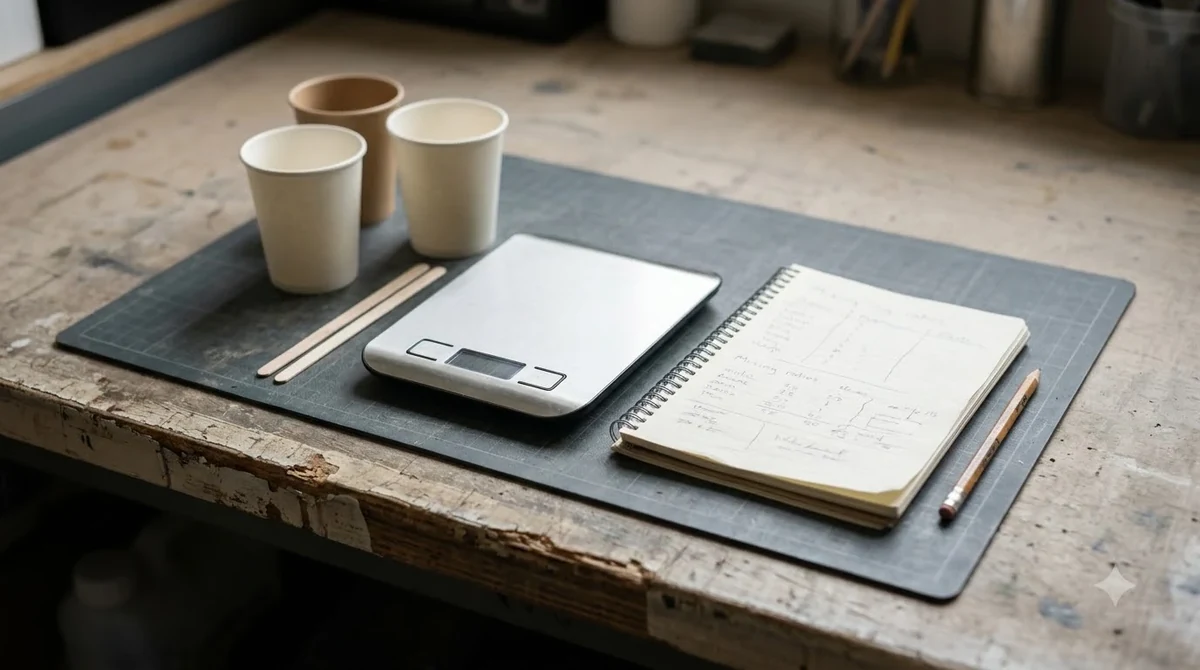
Both ArtResin and IntoResin describe their standard ratio as 1:1 by volume, not by weight. Measuring by weight or eyeballing the amounts can throw the reaction off. Stir for at least 3 minutes, and scrape the sides and bottom of the cup. Some makers, including The Creative Workshop, advise at least 5 minutes.
Too Much Colorant
Pigments, dyes and alcohol inks all count toward the total. Keep colorant at or below 6% of the combined resin and hardener. Palak StudioInk says going above 6% of any component can soften the final cure.
Cold or Humid Conditions
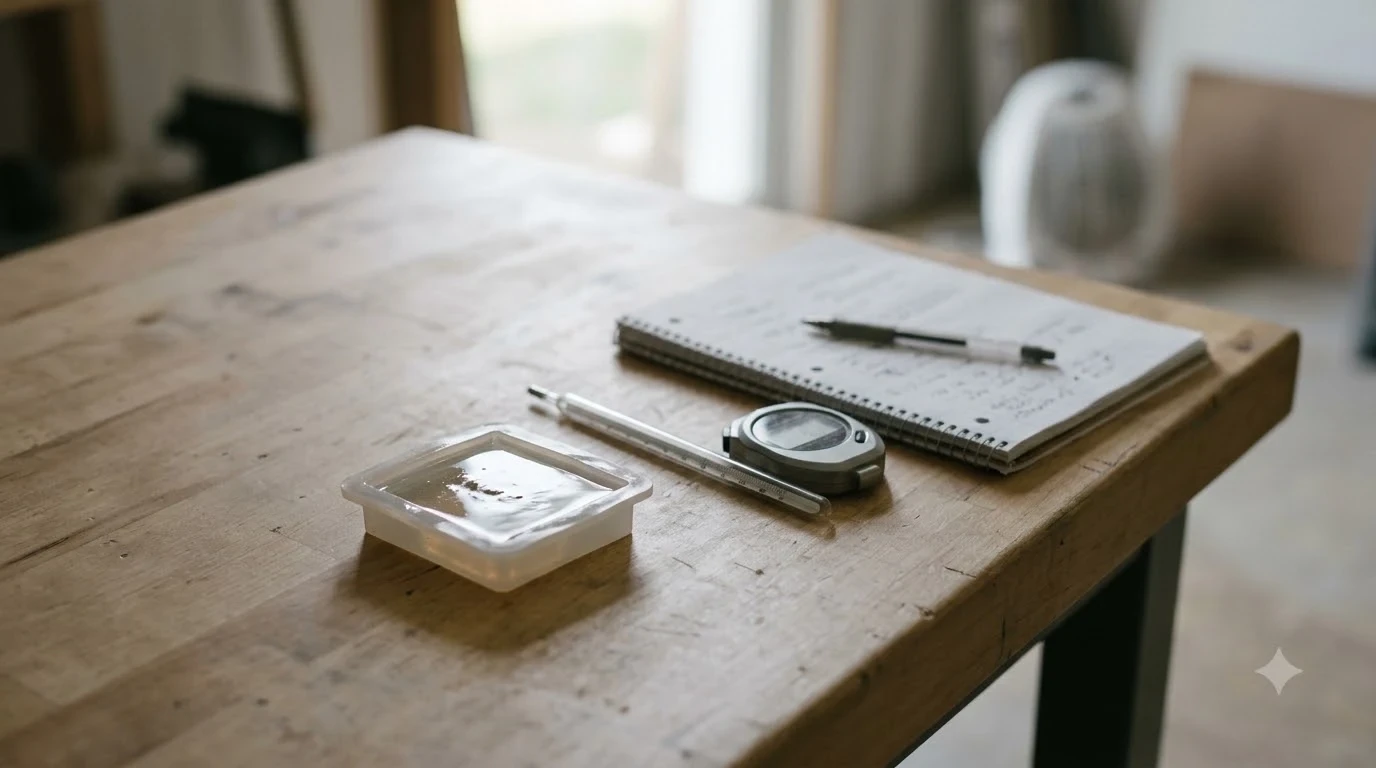
Cold slows the cure, and extra moisture can leave resin soft or cloudy. ArtResin recommends a workspace of 75-85°F (24-30°C) with humidity between 50 and 80%. A dehumidifier or a warmer room can help if your space runs cool or damp.
How to Tell Which Cause You Have
Look at when the softness appeared and how the piece behaves. A piece that is soft from the start points to mixing or ratio. A piece that firms up slowly often just needs more time.
| What you notice | Likely cause | What to check |
|---|---|---|
| Soft after 24 hours, firmer each day | Normal cure in progress | Wait the full 3 to 5 days before handling |
| Thin piece bends under its own weight | Layer thinner than ⅓ inch | Measure thickness and check for a backing |
| Sticky or soft spots, unmixed streaks | Under-mixing | Review your mixing time and cup scraping |
| Soft all over, never firms up | Off ratio or wrong measuring | Compare your method with the label, by volume |
| Soft area is deeply colored | Colorant above 6% | Recalculate total colorant as a share of the mix |
| Softness returns in a cold room | Low workspace temperature or humidity | Check the room with a thermometer and hygrometer |
Tip: Write down your batch size, measuring method, mixing time and room temperature for each pour. Comparing notes is the fastest way to spot the cause.
How to Fix Bendy Epoxy or Resin
Fixing bendy epoxy depends on the cause. If the resin is simply young, patience is enough. If the mix was wrong, the cure may not improve, and a fresh layer is the usual repair.
ArtResin says a bendy piece can often harden with another 2 to 7 days of curing. Work through the steps below in order before you decide to remake the piece.
- Confirm the date. Count the days since the pour. If it is under 3 to 5 days, wait before judging it.
- Move it to a warm, dry spot. Keep the room near 75-85°F (24-30°C) and humidity in the 50-80% range, according to ArtResin.
- Support the piece flat. Place it on a level surface so gravity does not keep bending it while it cures.
- Add a rigid base if the piece is thin. ArtResin suggests a sturdy bezel or panel to reinforce a thin pour.
- Recheck after several more days. IntoResin advises 3 to 7 days for thicker pieces that are still bendy.
- Pour a fresh, carefully mixed layer if the problem persists. ArtResin’s guidance is to measure and mix a new batch and pour it over the bendy piece for added strength.
- Use sanding only on cured areas. Sand lightly and wear a dust mask, because partially cured epoxy dust can irritate the lungs.
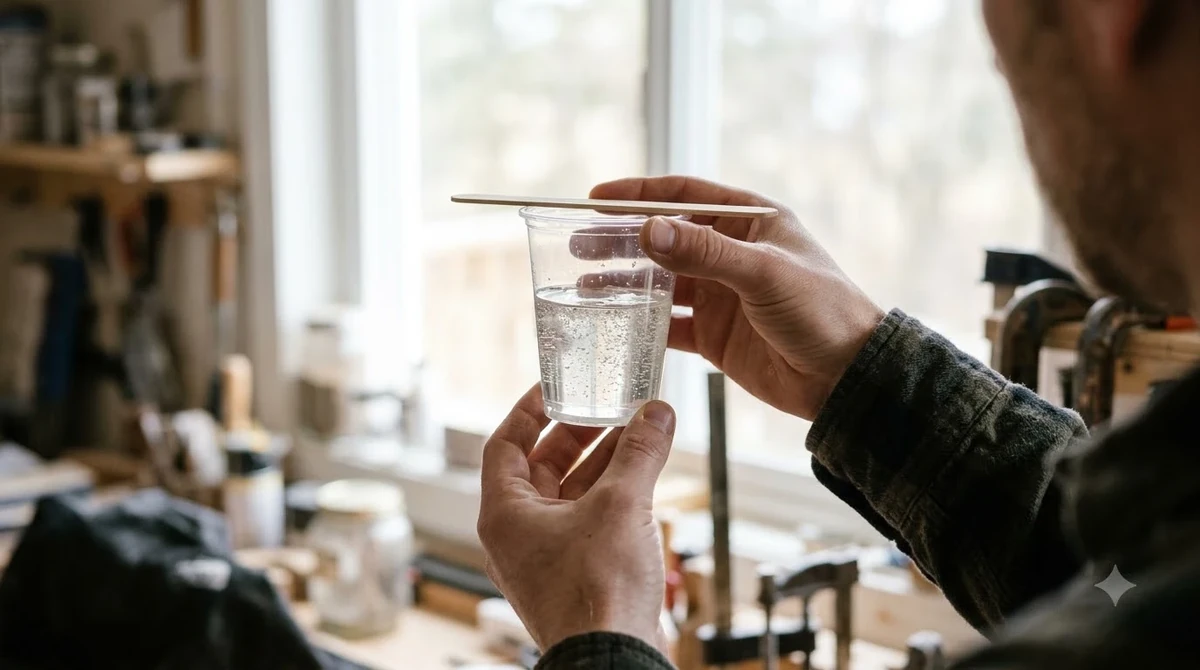
Safety: Wear nitrile gloves, work with good ventilation and read the product’s safety data sheet before mixing, sanding or reworking a soft piece. If you want to go deeper, Why Is My Epoxy Bumpy covers a connected topic.
Resin Still Bendy After 24 or 48 Hours
A piece that is still bendy after 24 or 48 hours is usually not finished, but it can be a warning sign. Most makers describe 24 hours as the point of partial hardness, not full strength.
IntoResin notes that its epoxy needs 12 to 24 hours to cure and around 72 hours to fully cure, according to the IntoResin bendy resin guide. Check the manufacturer’s label for the exact time for your product.
The Creative Workshop advises waiting at least 48 hours before sanding or processing. Plan around the longer window, especially for deep pours.
If the piece is still soft after 7 days, and the layer is at least ⅓ inch, the cause is probably a mix or colorant problem. In that case, you can try a fresh top layer over the piece. If the whole piece stays soft and sticky, remaking it is often the cleaner option. For softness that looks like an uneven surface, see why is my epoxy wavy.
Preventing Bendy Resin on Your Next Project
Prevention is mostly about measuring, mixing and waiting. A few habits prevent most soft pours before they start.
- Measure resin and hardener by volume, following the label.
- Mix for at least 3 minutes, and scrape the sides and bottom of the container.
- Keep colorant at or below 6% of the total mixture.
- Pour at least ⅓ inch thick, or add a rigid backing for thinner work.
- Keep the workspace warm and dry, close to 75-85°F (24-30°C).
- Wait the full cure time before bending, sanding or stacking the piece.
If your piece also shows bubbles, check why is my epoxy bubbling for common causes like mixing speed and pour depth.
Frequently Asked Questions
How long does resin take to fully cure so it is not flexible?
Many makers list 24 hours for a partial cure and 3 to 5 days for full hardness. IntoResin mentions around 72 hours for its epoxy. Always check the label for your specific product.
Does a thin resin pour stay bendy?
It can. ArtResin says layers thinner than ⅓ inch may stay flexible until fully cured, especially without a backing. Adding a sturdy base like a bezel or panel helps reinforce the piece.
Can too much colorant or pigment make resin soft?
Yes, according to Palak StudioInk, tinting above 6% of any component can soften the final cure. Count all colorants together, including alcohol inks and pigment powders, when you calculate the percentage.
Is bendy resin toxic, and is it safe to sell?
IntoResin says bendy resin is normally not toxic, but this depends on the brand. Check the product’s safety data sheet and wear gloves when handling soft pieces. Whether a soft piece is OK to sell depends on whether it still holds its shape and is safe to use.
Bendy resin is usually a timing or measuring issue, and most pieces can be saved with patience or a fresh top layer. If you are still stuck, the Troubleshooting & Fixes section has more guides for common resin problems. Start with the cure timeline and mix record, and you will know your next step.
More in Troubleshooting & Fixes
 How to Fix Scratches in Epoxy Tables Without Redoing the Whole TopUpdated Nov 26, 2026
 How to Remove Amine Blush From Epoxy Without Starting OverUpdated Nov 26, 2026
 What Will Remove Epoxy from Wood, Metal, Skin and Hair SafelyUpdated Nov 26, 2026
 Paint and Epoxy Remover: Which Type Strips Cured Epoxy and Paint SafelyUpdated Nov 26, 2026
 Resin Sticking to Mold? Causes, Release Fixes and Safe RemovalUpdated Nov 26, 2026
 Why Is My Epoxy Bumpy? Causes and Fixes for a Smooth FinishUpdated Nov 26, 2026