

We may earn a commission when you buy through links on this page, at no extra cost to you. Learn more.
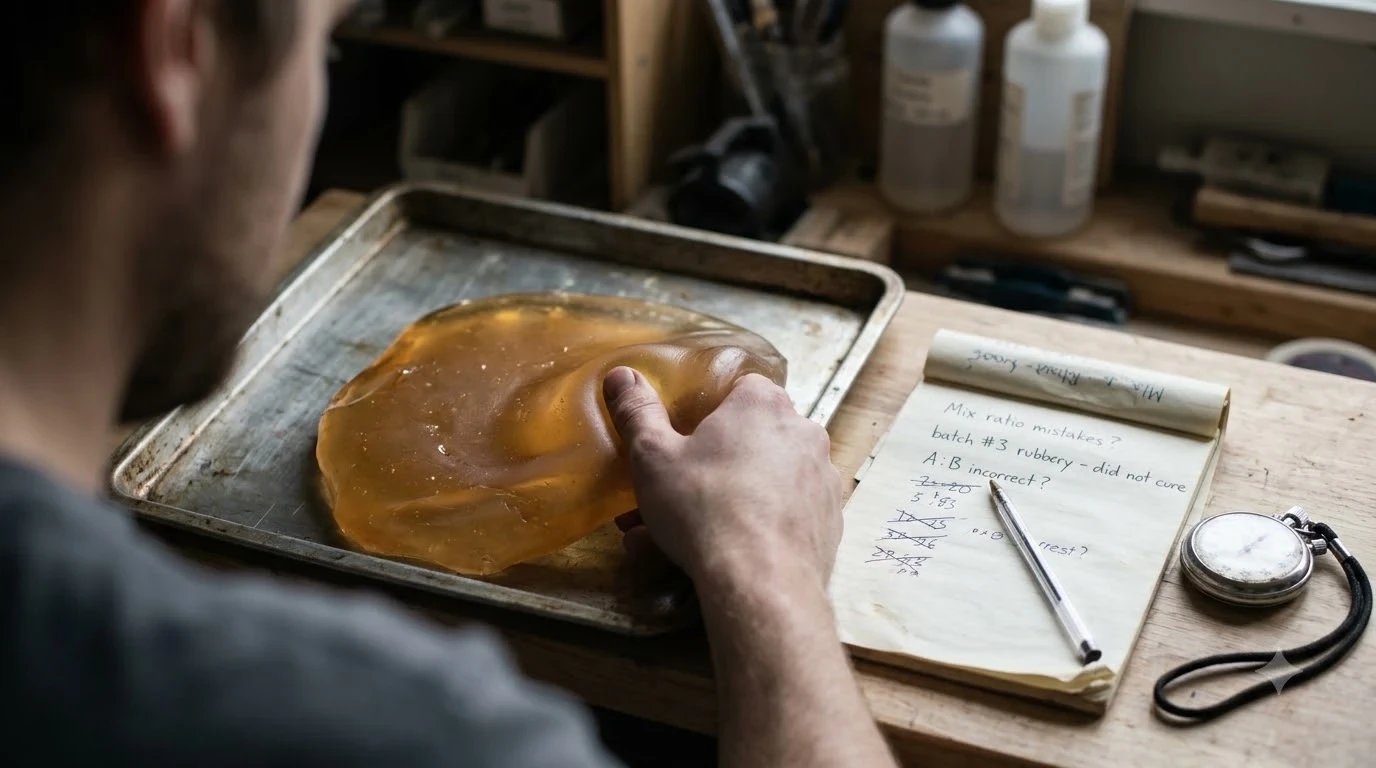
Why is my resin still soft? Most of the time it is still curing, or the mix was off, and the fix depends on which one it is. Epoxy from ArtResin reaches about 95% of its final hardness after 24 hours, and the maker says full hardness can take 3 to 5 days. Mill Lane Studio and PlasticRanger both list the mix ratio, mixing time, temperature and colorant load as the usual suspects. Work through those causes before you pour again.
Soft resin is frustrating because the piece looks finished but feels tacky, bendy or dented. This guide sorts the common causes so you can decide whether to wait, re-cure or start over. It covers epoxy and UV resin separately, since they fail in different ways.
Resin Still Soft After 24 Hours: What Is Normal
A soft surface at 24 hours is often normal for epoxy. According to ArtResin’s guide to bendy resin, its product reaches about 95% of final hardness in that window, so the last few percent take longer. Casting epoxy generally needs 36 to 72 hours to reach workable hardness, according to PlasticRanger.
Check the clock before you panic. If your piece is three days old and still soft, it is past the normal window and the cause is probably something in the batch or the room. Use the manufacturer’s stated cure time as your baseline, not a guess.
PlasticRanger also recommends waiting at least 1.5 times the manufacturer’s recommended curing time before handling. Many makers pick up a piece too early and leave fingerprints or dents that look like soft resin.
Mix Ratio and Mixing Errors That Cause Soft Spots
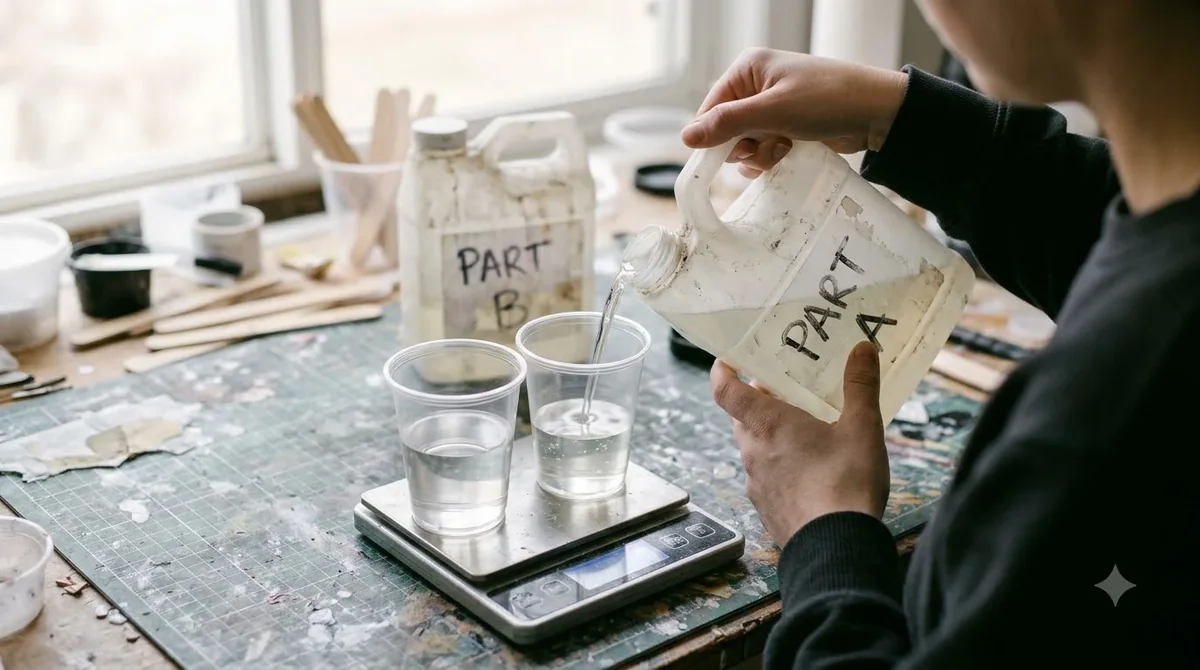
Mixing errors are the most common reason epoxy stays soft in one area but hardens in another. An off ratio or unmixed resin leaves pockets of material that never react fully. Fix the process before you blame the product.
ArtResin’s epoxy is a 1:1 mix by volume, not by weight. Adding too much of either part disrupts the chemical reaction, and the piece may harden but stay bendy. Resin-pro.co.uk notes that measuring by weight is usually the most reliable way to get the ratio right, while always checking your product’s own instructions.
Mixing time matters as much as measurement. ArtResin advises at least 3 minutes, and PlasticRanger suggests 3 to 5 minutes with the sides and bottom scraped. Mill Lane Studio recommends pouring the mixed resin into a second clean cup and mixing again, since unmixed resin can stay permanently soft.
| Symptom | Likely cause | What to do |
|---|---|---|
| Soft everywhere, even after days | Ratio error or wrong resin type | Check your ratio and kit; usually a restart |
| Soft in streaks or patches | Under-mixing or unmixed pockets | Light sanding, then a fresh thin coat |
| Soft only on the surface | Humidity, or a surface cure issue | Warm and dry the space, then re-check |
| Bendy in thin pours | Layer thinner than the resin’s limit | Give more time, or add a support base |
Tip: Write down your batch size, mixing time and room temperature for each pour. A short log makes it much easier to spot the cause next time.
Temperature and Humidity Effects on Curing
Temperature and humidity change how fast resin cures, and cold or damp rooms are a common hidden cause. Both sources in the research set say cold slows the reaction, and humidity can interfere with it. Treat your room as part of the recipe.
ArtResin recommends a workspace of 75 to 85°F (24 to 30°C) and says its resin cures best in warm, dry conditions. PlasticRanger gives a similar range of 75 to 86°F (25 to 30°C), and says cure slows significantly below about 70°F (21°C). Resin-pro.co.uk says room temperatures below 20°C slow curing.
Humidity is the other half. PlasticRanger says humidity above about 60% RH interferes with curing and recommends keeping the workspace below 50% RH. ArtResin gives a wider humidity range, so check your specific product’s data sheet and aim for the lower end if you are unsure.
Winter studios and cool basements are the usual problem. Warm the bottles in warm water before mixing, and use a space heater or dehumidifier if the room allows it. Avoid cranking heat on a finished piece without checking the manufacturer’s guidance first.
How to Fix Soft Resin Step by Step
Fix soft resin in order, starting with the least disruptive step. Most pieces that only need time will firm up without any sanding or pouring. Move to a fresh coat only when the surface stays tacky after the cure window has passed.
- Check the clock. If the piece is under the recommended cure time, leave it alone in a warm, dry spot and recheck at the end of the window.
- Move it to a warmer room. PlasticRanger suggests a spot around 25 to 30°C and another 24 to 48 hours before deciding it has failed.
- Test the surface gently. Touch an inconspicuous edge with a gloved finger. If it is firm, extra time usually finishes the job.
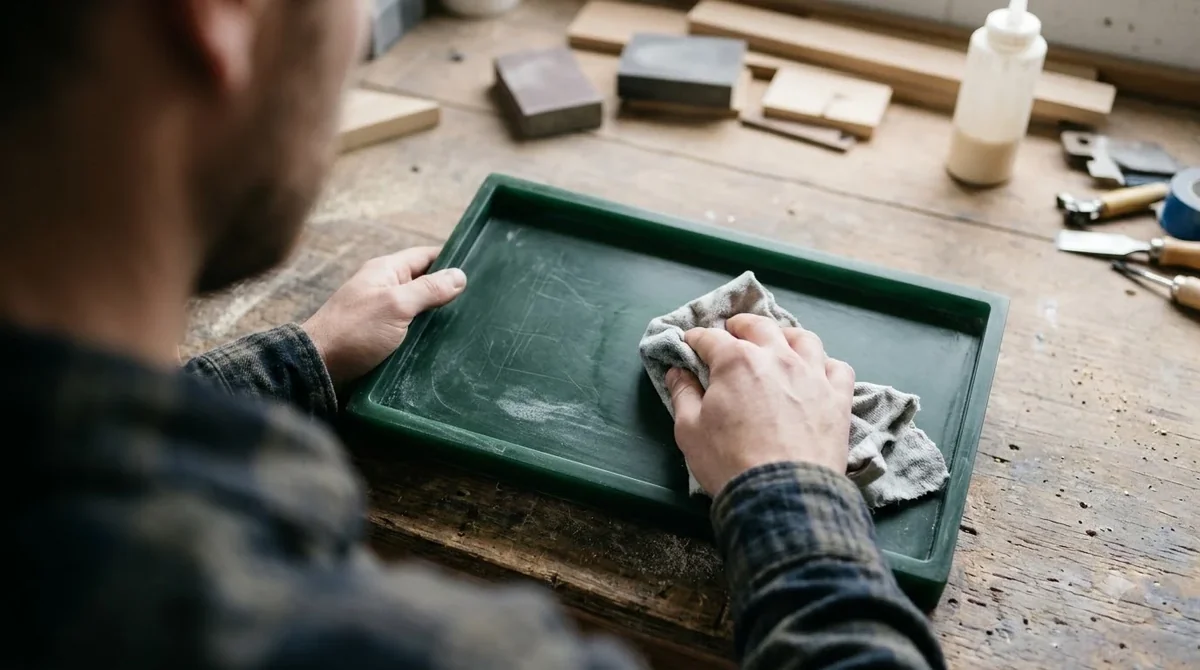
- Wipe mild tackiness. PlasticRanger says 90% or higher isopropyl alcohol on a lint-free cloth can remove very light surface tack. Treat this as a quick triage step, not a permanent fix.
- Sand the tacky layer. Use 400 to 600 grit sandpaper, then wipe away all dust with a clean, dry cloth.
- Apply a fresh thin coat. Mix a new batch, measure carefully and mix for a full 3 to 5 minutes. Pour a thin layer over the sanded surface.
- Allow full cure. ArtResin says a bendy piece can often be fixed by letting it sit another 2 to 7 days.
When Soft Resin Cannot Be Saved
Some soft resin cannot be rescued, especially when the whole batch was mixed wrong. If the piece stays gooey after the full cure window and warm, dry conditions, you may need to remove it and start over. Decide early so you do not waste more material.
Thin pours are a special case. ArtResin says layers under about one third of an inch may stay flexible until fully cured, and recommends a backing for support. Resin-pro.co.uk lists maximum pour thickness for specific products, such as up to 2 cm for its Trasparente casting resin and up to 1.5 cm for Icrystal. A pour thicker than the product allows can stay soft in the middle, so check the label before you blame the mix.
Mill Lane Studio suggests that if the batch was mis-measured or under-mixed, a fresh batch poured over the bendy piece can add strength and support. This works best on a stable base. If the surface is still gooey, scrape it off and restart with a clean mold.
Safety: Uncured resin can irritate skin. Wear nitrile gloves, work with good ventilation, and read the product’s safety data sheet before handling or disposing of soft material.
UV Resin Stays Tacky: Different Causes and Fixes
UV resin that stays tacky usually has a light problem, not a chemistry problem. The resin needs enough UV energy to cure fully, and the top layer can be affected by the air. The fix is more light, thinner layers or a different curing approach.
PlasticRanger says UV light penetrates only about 1 to 3 mm, and recommends a lamp of at least 24W. It also advises pouring no more than about 3 mm at a time and curing each layer before adding the next. Mill Lane Studio suggests a stronger lamp, a much longer cure or placing the piece in sunlight if the surface is still tacky.
Oxygen can leave a thin uncured film on top of UV resin, according to PlasticRanger’s sticky resin guide. Curing both sides when possible and using thin layers reduces this. For a fuller breakdown of UV-specific softness, see our guide to UV resin that stays soft.
Frequently Asked Questions
How long does epoxy resin take to fully cure?
ArtResin says its epoxy reaches about 95% of final hardness after 24 hours and recommends waiting 3 to 5 days for full hardness. PlasticRanger says casting epoxy typically needs 36 to 72 hours for workable hardness, and some deep pours need up to a week. Check your product’s instructions for the exact figure.
Does temperature affect whether resin cures soft?
Yes. PlasticRanger says cure slows significantly below about 70°F (21°C), and Resin-pro.co.uk notes that room temperatures below 20°C slow curing. Keep the room warm and give a cold piece extra time before deciding it has failed.
How much pigment can I add to resin without it staying soft?
ArtResin advises limiting colorants to 6% of the total resin volume. PlasticRanger says mica powder is safe up to 5 to 7% of total resin weight and dry glitter up to 10% by weight, and recommends keeping additives under 6% by weight. Water-based dyes should be avoided because moisture disrupts curing.
Can I fix soft resin that has already been poured?
Often you can, if the cause is time or a minor surface issue. Let it cure longer in a warm room, then sand any tacky layer with 400 to 600 grit and add a fresh thin coat. If the whole batch stays gooey, it is usually better to remove it and restart.
Start with time, temperature and humidity, then check the mix if the piece still feels soft. For more on cleanup while you work, read our guide on how to get resin off hands. You can also browse our Troubleshooting & Fixes library for other resin problems.
More in Troubleshooting & Fixes
 How to Fix Scratches in Epoxy Tables Without Redoing the Whole TopUpdated Nov 26, 2026
 How to Remove Amine Blush From Epoxy Without Starting OverUpdated Nov 26, 2026
 What Will Remove Epoxy from Wood, Metal, Skin and Hair SafelyUpdated Nov 26, 2026
 Paint and Epoxy Remover: Which Type Strips Cured Epoxy and Paint SafelyUpdated Nov 26, 2026
 Resin Sticking to Mold? Causes, Release Fixes and Safe RemovalUpdated Nov 26, 2026
 Why Is My Epoxy Bumpy? Causes and Fixes for a Smooth FinishUpdated Nov 26, 2026