

We may earn a commission when you buy through links on this page, at no extra cost to you. Learn more.
How to make alcohol ink for resin starts with mixing fluid acrylic paint or pigment with high-proof isopropyl alcohol, usually near 1 part paint to 5 or 10 parts alcohol. Resiners recommends 70-99% isopropyl alcohol for the blend, and ArtResin recommends 91-99%. Homemade ink is then dropped into epoxy or UV resin to make petri dish art, marbling, and resin blooms. Start small, test on scrap, and mix in batches you can use within a session.
Alcohol ink is a fast-drying colorant that works well in resin because it stays fluid and blends cleanly. This guide walks you through a homemade version, the ratios sources give, and the mistakes that cause cells and fisheyes. It also covers the safety gear to wear while you mix.
What Alcohol Ink for Resin Is and Why Makers Use It
Alcohol ink is a richly saturated, fast-drying dye suspended in alcohol rather than water. According to ArtResin, it stays fluid on non-porous surfaces, which lets colors spread and blend before the alcohol evaporates. That behavior is why it is the colorant behind petri dish art and many resin bloom flowers.
Makers choose homemade ink for custom shades and lower cost. Resiners notes that store-bought inks can get expensive quickly, while acrylic paint is widely available. Homemade ink also lets you control how strong the color is and how much it moves.
Materials You Need to Make Homemade Alcohol Ink
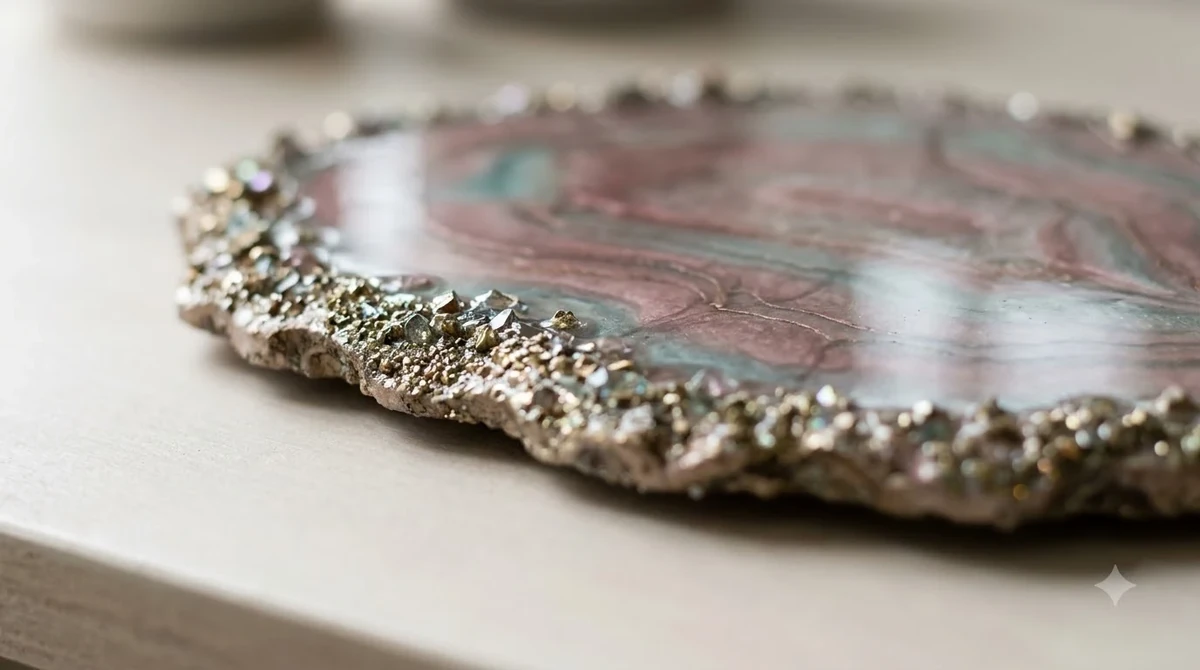
You need a short list of supplies: pigment or fluid acrylic paint, high-proof isopropyl alcohol, small bottles with eyedropper lids, and a mixing stick. Eye Candy Pigments suggests 2-ounce bottles and a funnel for filling them. Keep the workspace covered, since spills can stain.
Fluid acrylic paint blends more easily than heavy-body paint. Resiners advises avoiding paints with silicone or extra additives, because these can affect the resin finish. Check the paint label before you buy.
| Item | Why it matters |
|---|---|
| Fluid acrylic paint or mica powder | Provides the color; fluid paint mixes more smoothly |
| Isopropyl alcohol, 70-99% | Thins the pigment; higher proof dries faster and spreads more evenly |
| 2-ounce bottles with eyedropper lids | Easy to measure drops and store small batches |
| Mixing stick or small whisk | Breaks up lumps before the ink goes into resin |
| Fine mesh strainer | Removes clumps if they appear |
Step-by-Step Process to Mix Your Alcohol Ink
Mixing is simple, but the ratio controls color strength and flow. Resiners’ acrylic ink guide suggests starting near 1 part paint to 5 or 10 parts alcohol. Its example uses 2 oz of paint with 6 oz of isopropyl alcohol, which is about three times more alcohol than paint. Adjust from there in small steps.
Work in a well-ventilated area and wear gloves. Follow these steps for a small test batch:
- Measure the paint. Add a small amount of fluid acrylic paint to a clean glass or plastic container.
- Add the alcohol. Pour in isopropyl alcohol at roughly five to ten times the paint volume, starting with the lower amount.
- Stir until smooth. Use a wooden stick or small whisk until you see no streaks or lumps.
- Check the consistency. If it looks cloudy or too thick, add a little more alcohol. If the color is weak, add a little more paint.
- Add shimmer if you like. Mica powder or pearl pigment can go in at this stage. Stir again.
- Strain if needed. Pour the mixture through a fine mesh if you see clumps.
- Transfer to bottles. Fill labeled 2-ounce bottles with eyedropper lids, leaving room to shake.
- Swatch on scrap. Drop a little on glass or leftover cured resin to see how it spreads and how transparent it looks.
Eye Candy Pigments describes a mica method that uses 1 teaspoon of mica powder and 1.5 ounces of 91-99% isopropyl alcohol. It also suggests a half teaspoon of hairspray as a binder, but says that binder is not needed when the ink is added to epoxy, since resin is already a binder. Skip the hairspray for resin work.
Choosing the Right Alcohol Base and Pigments
The alcohol base and the pigment type shape how the ink behaves. Hirosart describes two main kinds of alcohol ink. Dye-based inks are more fluid and make subtle washes, while pigment-based inks are opaque and vivid. Hirosart recommends Jacquard White Pinata for the pigment-based option, and says a homemade version can be made by combining isopropanol with standard printer ink at a 1:2 proportion.
For the alcohol, isopropyl alcohol at higher proof dries faster and spreads more evenly. ArtResin’s alcohol ink guide says isopropyl alcohol increases movement but evaporates quickly, while blending solution dries more slowly and gives more control. Choose isopropyl when you want flowing shapes, and a slower blend when you need finer edges.
Tip: Mix in a trio of colors that work together. Hirosart notes that coordinated inks help prevent muddy colors when they interact in resin.
Adding Alcohol Ink to Epoxy and UV Resin
Add ink to resin in small drops. Happily Ever After uses 3-4 drops of alcohol ink per color for a marbled pour. Place each drop close to the others but not directly on top, so the edges mingle and swirl. Add a third color last and watch the pattern form.
Resin timing matters. Happily Ever After describes a clear cast resin with a 1:1 mix, about 35 ml per egg, mixed for 2 minutes, and a 30 minute working time. It recommends waiting 30 minutes between layers and at least 24 hours before demolding. Follow your own product’s data sheet for its exact mix and cure times, since products differ.
For a cloud effect, Happily Ever After layers a color and white alcohol ink up to six levels, then swirls lightly with a toothpick. Do not over-mix, or the colors can turn brown. Use cool air or a gentle breath to move the ink, not heat. ArtResin warns that heat can dry the ink too quickly and leave hard lines.
Common Problems and Troubleshooting Tips
Most problems come from ink that is too thick, too much paint, or too much movement. Resiners says that clumps usually mean the paint is too thick, so switch to fluid paint or pre-thin it with alcohol. Straining through fine mesh fixes many leftover lumps before they reach the resin.
Weak color means the paint ratio is too low. Add paint slowly, since too much can change drying time and make the ink less fluid. If the ink is too thick, add more alcohol, and test again on scrap before a full project.
| What you see | Likely cause | Fix |
|---|---|---|
| Clumps or separation | Thick, heavy-body paint | Use fluid paint or pre-thin, then strain |
| Faint color | Too little pigment | Add paint in small amounts and retest |
| Hard lines | Heat drying the ink | Use cool air or a hand pump instead |
| Muddy brown tones | Too many colors or over-mixing | Use three coordinated colors and swirl lightly |
Cells and fisheyes often come from contamination or a surface that is not clean. Keep your mixing containers and resin surfaces free of oil and dust. Work in a room without drafts, and use a heat gun only on the resin, not on the ink.
Safety Tips for Mixing and Storing Alcohol Ink
Isopropyl alcohol is flammable, so keep it away from heat sources and open flames. Work in a well-ventilated area. Hirosart recommends safety glasses, a VOC respirator or well-fitted mask, nitrile gloves, and a long-sleeved shirt or apron when you work with alcohol ink and resin.
Safety: Wear nitrile gloves, eye protection and a respirator rated for organic vapors when mixing. Read the SDS for your alcohol, paint or pigment, and resin before you start.
Store homemade ink in tightly closed, clearly labeled bottles away from heat and out of children’s reach. Keep a record of your paint-to-alcohol ratio so you can repeat good batches. For more on resin choice, see alcohol ink for resin projects, and for layering methods see resin alcohol ink techniques.
Frequently Asked Questions
What rubbing alcohol percentage should I use for alcohol ink?
Resiners recommends 70-99% isopropyl alcohol, and ArtResin recommends 91-99% for blending. Higher-proof alcohol dries faster and carries less water, which helps the ink spread evenly. Avoid lower-proof rubbing alcohol because the extra water can weaken color.
How many drops of alcohol ink should I add to resin?
Happily Ever After uses 3-4 drops per color in its marbled pour, placing each color close to the last without stacking them. Start with that amount, then add more only if the color looks faint. Test in a small mold first.
Can you use acrylic paint to make alcohol ink for epoxy resin?
Yes. Resiners describes mixing fluid acrylic paint with isopropyl alcohol, starting near 1 part paint to 5 or 10 parts alcohol. Avoid paints with silicone or extra additives, since they can affect the resin finish. Test on scrap resin before using it on a main piece.
Does alcohol ink need a binder like hairspray to work in resin?
No. Eye Candy Pigments says a binder is unnecessary when you color epoxy resin, because the resin already acts as a binder. Hairspray belongs in mica ink meant for paper or other non-resin surfaces. Keeping it out of resin work avoids extra ingredients.
Start with a small test batch and a scrap piece of cured resin before you commit to a large project. Once your ratios feel consistent, the techniques become much easier to repeat.
More in Techniques & How-To
 How to Make Resin Glow in the Dark, With Mixing Ratios and Pour LimitsUpdated Nov 26, 2026
 How to Use Deep Pour Epoxy for Clear, Bubble-Free LayersUpdated Nov 26, 2026
 How to Do a Dirty Pour with Resin Without Muddy ColorsUpdated Nov 26, 2026
 How to Cure Epoxy Faster Safely: Warmth, Ratios and Heat TipsUpdated Nov 26, 2026
 How to Make Resin Shine: Cure, Level and Polish for a Glossy FinishUpdated Nov 26, 2026
 How to Clean Epoxy Tools Fast Before the Resin CuresUpdated Nov 26, 2026