

We may earn a commission when you buy through links on this page, at no extra cost to you. Learn more.
Most two-part epoxy resin cures best at about 70 to 75°F (21 to 24°C), and it usually needs about 72 hours to reach full cure. Manufacturers and reviewers note that epoxy can become touch-dry in about 24 hours, but touch-dry is not the same as ready for use. Below about 60°F (15°C), the same resin can take days to harden, and very cold rooms may stop it from curing properly. Heat speeds the reaction, but the exact epoxy resin curing temperature and time depend on the product, so always check the label.
This guide explains what each stage of cure means, which temperature range fits common product types, and how pour depth and humidity change the timeline. It also covers the fixes that work when a finish stays tacky or cracks.
What Epoxy Curing Means
Curing is the chemical reaction between resin and hardener that turns a liquid mix into a solid. The reaction moves through stages, and each stage has a different meaning for your project. Knowing the difference keeps you from handling a piece too early.
The first stage is the working time, when the mix stays liquid and you can pour, brush or spread it. Packaging labels such as “5-minute” or “30-minute” usually describe this initial set time, not full strength. The second stage is gel, when the mix thickens and can no longer be worked. The final stage is full cure, when the resin reaches its maximum hardness.
A surface can feel dry long before the inside has finished reacting. According to the UltraClear epoxy FAQ, most two-part resins reach a touchable surface around 24 hours, while ready-for-normal-use takes about 72 hours. Hardness can keep increasing for weeks, though that later change is small. If you want more background on the chemistry, read our what is resin curing explainer before you start a pour.
Recommended Temperature Range for Curing
Room temperature is the safest starting point for most resins, and the target range depends on the product type. Most table top epoxies perform best around 70 to 75°F (21 to 24°C). Deep pour casting resins often allow a wider window, and UltraClear lists 60°F to 80°F for those products.
Cold is the main risk. Epoxy stored or cured below about 60°F may take several days to harden, and at very low temperatures it may not cure fully. Heavy pours and thick castings also trap heat as they react, so the internal temperature can climb above the room temperature. Keep the room steady rather than letting it swing between warm days and cold nights.
Some sources also describe a ceiling. UltraClear notes that very hot conditions, around 85°F or higher, can make the mix cure too quickly. That shortens your working time and can leave visual flaws in the finish. Check the temperature range printed on your product data sheet, since the number varies by brand and formula.
Heat as a Speed Control
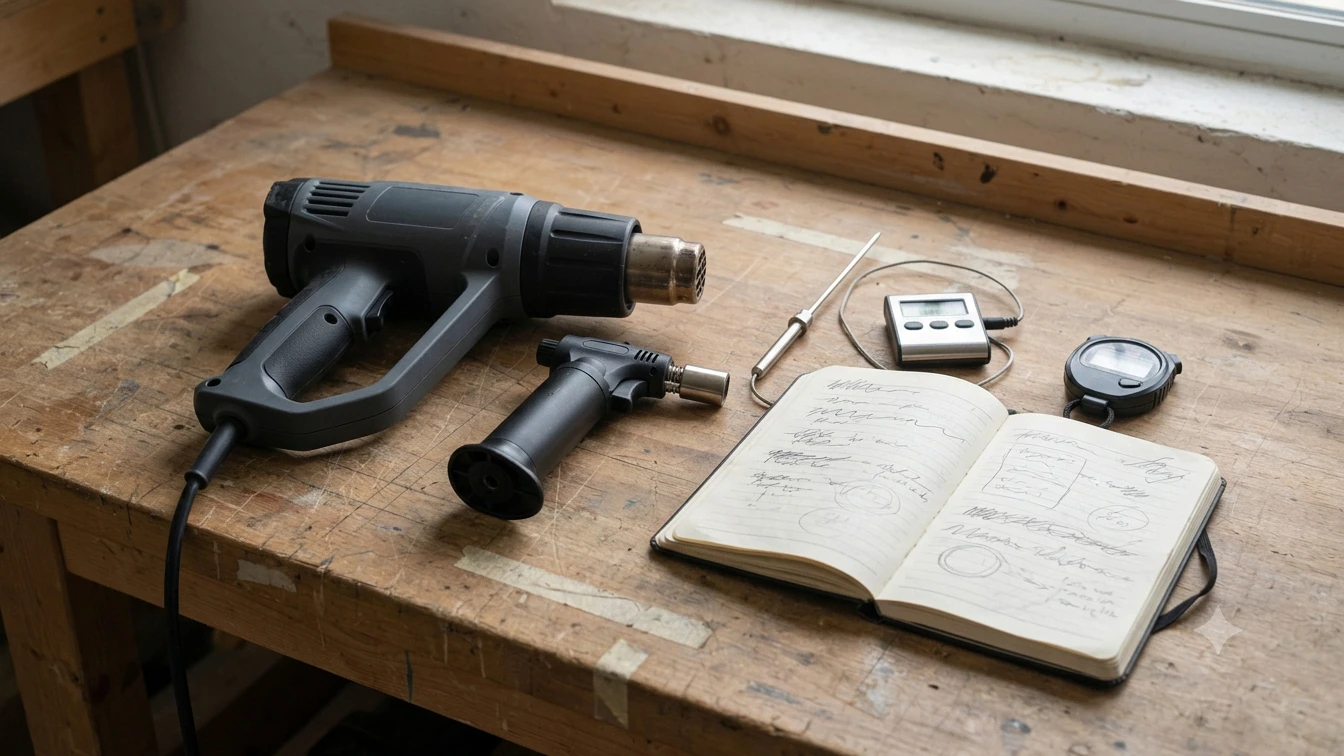
Heat is the most common way to shorten cure time. Resiners states that raising the temperature by about 10°C (18°F) can make epoxy cure roughly 50% faster, and it lists 120°F (49°C) for 2 hours or 140°F (60°C) for 1 hour as examples for reaching strength quickly. Those figures come from one guide, so confirm them against your manufacturer’s instructions before you apply heat.
Gentle, even warmth works better than hot spots. A warm room, kept in the range the manufacturer lists, is usually the simplest approach. Avoid hot air blasts, which can leave ripples and bubbles as described in the next sections. If this section raised more questions, Epoxy Curing Temperature may answer them.
Cure Time by Product Type
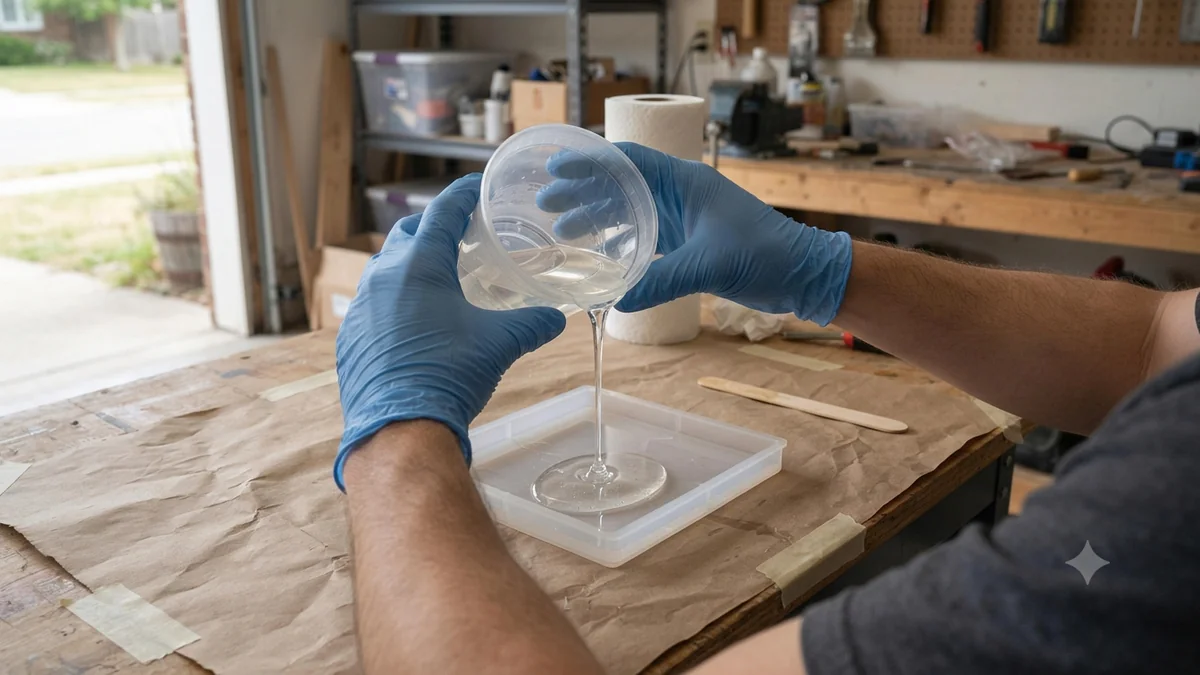
Product type changes the timeline more than most makers expect. A standard table top coat, a deep pour casting resin and a one-part heat-cure epoxy follow very different schedules. The table below compares the general ranges from the sources, but your product’s data sheet always wins.
| Product type | Touch-dry or set | Ready for light use | Full cure guidance |
|---|---|---|---|
| Two-part table top epoxy | About 24 hours | About 24 hours for light items, per HeatAuthority | About 72 hours, with strength building for about a week |
| Two-part deep pour casting resin | Slower than table top, depending on depth | Check the label for the specific product | Often several days or longer; wait the full recommended time |
| One-part heat-cure epoxy | Requires heat to start the reaction | Not applicable at room temperature | 60 to 75 minutes at 250°F, or 30 to 40 minutes at 300°F |
| Two-part epoxy at elevated cure | Faster at higher temperatures | Not applicable | 3 to 4 hours at 250°F, or 2 to 3 hours at 300°F |
HeatAuthority says epoxy is generally walkable after about 12 hours, ready for light use after 24 hours, and ready for heavy use after 72 hours. That timeline applies to typical two-part products at normal room conditions. Heavier or thicker projects should wait longer, not shorter.
The steel bridge deck study cited in the bridge deck epoxy curing study is a structural adhesive test, not a craft guide. It found an optimal ambient curing window of 48 to 72 hours, and it noted that bond strength dropped when curing ran beyond 72 hours. That result is useful context, but it does not replace the label on your resin.
Tip: Write the cure start time on the project with the date and temperature. That record makes it easier to judge whether the 72-hour window has passed.
How Pour Depth and Humidity Affect Curing
Pour depth is one of the biggest factors in how a resin cures. Reactions release heat, and a thick pour holds that heat inside. Surface coats of a few millimeters lose heat easily, while a deep casting can stay warm for much longer.
Deep pour epoxies are designed to cure more slowly for this reason. Resiners notes that thick pours generate more heat and can crack or bubble, and it recommends thinner layers for faster curing. UltraClear says its Deep Pour Epoxy is designed for layers up to 2 inches. Pour in stages if your product allows it, and check the maximum depth on the label before you start.
Humidity matters too. UltraClear recommends keeping humidity below 60% for most epoxy resins. Moisture in the air can cause cloudiness and can interfere with a clean, hard finish. If your shop feels damp, run a dehumidifier before you mix, and keep your resin containers sealed when you are not using them.
Also check the storage temperature. HeatAuthority gives a storage range of 65°F to 90°F, and it recommends a dry area away from moisture. Cold resin that sits in a garage over winter may behave poorly when you open it, so bring containers indoors and let them reach room temperature first.
Common Curing Problems and Fixes
Most curing problems come from three causes: the wrong mix ratio, temperature that is too low or unstable, or pouring too thick. Identifying the cause tells you which fix to try. A tacky surface and a cracked surface need different responses.
A tacky or soft finish after the full cure time usually points to mixing. UltraClear says under-cured epoxy most often comes from inaccurate measuring or poor mixing technique. HeatAuthority lists the mix ratio, temperature, humidity and surface preparation as the main causes of improper curing. Start by checking the ratio on your product label and mixing for the time the manufacturer specifies.
For a surface that is firm but slightly tacky, UltraClear suggests applying a new flood coat after measuring and mixing carefully. If the surface is wet or soft, scrape away as much soft material as you can, and use denatured alcohol or acetone if needed. Small soft spots can be filled with a small batch, and UltraClear advises waiting 4 hours before applying a new flood coat over the whole surface.
Cracks usually follow excessive heat or excessive depth. Heat applied too quickly, or a pour that is too thick for the product, can cause stress as the resin shrinks. Next time, pour thinner layers and keep the room temperature steady.
| Symptom | Likely cause | What to do |
|---|---|---|
| Tacky after the full cure time | Mix ratio or mixing technique | Apply a new flood coat, measured and mixed carefully |
| Soft or wet in spots | Under-mixing or localized cold | Remove soft material, fill with a small batch, wait 4 hours |
| Slow to harden in a cold room | Temperature below about 60°F | Warm the space to the manufacturer’s range |
| Cracks or bubbles in a thick pour | Pour too deep or too much heat | Pour thinner layers and allow heat to escape |
| Cloudy or hazy finish | High humidity or moisture | Lower humidity and keep containers sealed |
Avoid hair dryers and forced hot air to rush the surface. UltraClear warns that air blasts can trap bubbles, leave ripples and cause cloudy spots. A steady warm room is a better choice than a focused stream of heat. For the next step after this check, see Epoxy Not Curing.
Safety Precautions During Curing
Curing is safer when the room is ventilated and your skin and eyes are protected. Overheating epoxy can change its color and release fumes, so heat should be controlled and monitored. Read the safety data sheet for your product before you start.
HeatAuthority warns that overheating can cause yellowing, discoloration or fumes that can harm the lungs. Keep heat sources at the distance and setting the manufacturer recommends, and never leave a heater running unattended near a project. Ventilate the room, and wear nitrile gloves when you handle mixed resin.
Follow the product safety data sheet for respirator guidance, especially when sanding cured or partly cured surfaces. If you plan to use cured epoxy near food, check the product’s food-contact claims and read our article on whether a specific glaze coat is food safe, since claims vary by product.
Safety: Wear nitrile gloves and eye protection, keep the room ventilated, and follow the product safety data sheet. Keep heat sources away from containers of mixed resin.
Frequently Asked Questions
What temperature should epoxy resin be cured at?
Most table top epoxies cure best at about 70 to 75°F (21 to 24°C), and UltraClear gives 70°F to 80°F for that product type. Deep pour casting resins often accept 60°F to 80°F. Always confirm the range on your product data sheet.
How long does epoxy take to cure at room temperature?
Most two-part epoxies become touchable in about 24 hours and reach normal-use readiness at about 72 hours. HeatAuthority says maximum strength can take about a week. Hardness can keep increasing for weeks, but that later change is small.
Can I speed up epoxy curing with a heat gun or heat lamp?
Controlled, even warmth can speed the reaction, but a heat gun blasting air can leave ripples and bubbles. UltraClear advises against hair dryers for this reason. Keep any heater at a steady, moderate setting and monitor the surface.
Will epoxy cure in cold weather below 60°F?
Epoxy below about 60°F can take days to harden, and very cold conditions may prevent a proper cure. UltraClear suggests building a temporary enclosure and using space heaters to keep the area warm. Keep the enclosure warm for the full cure period.
Plan your cure window before you pour, and keep the room in the manufacturer’s temperature range for the full 72 hours. For more step-by-step help with timing, visit our project planning guides.