

We may earn a commission when you buy through links on this page, at no extra cost to you. Learn more.
Why does epoxy overheat? It happens because the chemical reaction between resin and hardener releases heat, and that heat builds up faster than it can escape when the mass is thick or the room is warm. Epoxyworks describes a snowball effect in which heat speeds up the cure, and the faster cure releases even more heat. TotalBoat says coating epoxies should go on in layers of about 1/8 to 1/4 inch, while Mas Deep Pour X is rated for 2 to 3 inch pours. Controlling pour depth and keeping the work area cool are the most reliable ways to prevent trouble.
Overheating is one of the most common reasons a resin project fails. Once the epoxy starts to bubble, smoke, or crack, the piece is often ruined. Understanding the cause helps you choose the right resin, the right pour depth, and the right working conditions before you mix anything.
What Causes Epoxy to Overheat
Epoxy overheats when the heat released during curing cannot escape fast enough. This is called exotherm, and it is a normal part of every epoxy cure. Problems start when the heat has nowhere to go.
Epoxyworks explains that heat buildup speeds the cure, and the faster cure creates even more heat. The manufacturer calls this a snowball effect. Temperature, the volume of mixed epoxy, and how well the heat can dissipate all shape how strong that effect becomes. You can read more in the Epoxyworks exotherm guide.
Hardener speed matters too. Faster systems release heat more quickly, so they are more prone to runaway heat in a large mass. Slower systems give the heat more time to spread out. Pot life also shortens as the mixed epoxy warms, which is why a big batch can set up quickly in the cup.
Why Deep Pours Get Hotter Than Thin Coats
Deep pours trap heat because most of the material sits in the middle, far from the cooler air. A thin coat has a large surface area compared with its volume, so heat escapes quickly. A thick casting does not.
Epoxyworks notes that the same mechanism that heats a thick mass also makes a thin film cure more slowly, because a thin film does not build heat. TotalBoat says coating epoxies generate more heat per thickness and must be applied in thin layers, while casting epoxies need deeper pours to generate enough heat to cure. That is why the right product matters as much as the right depth. For TotalBoat’s own single-layer limits, see its single-layer pour depth article.
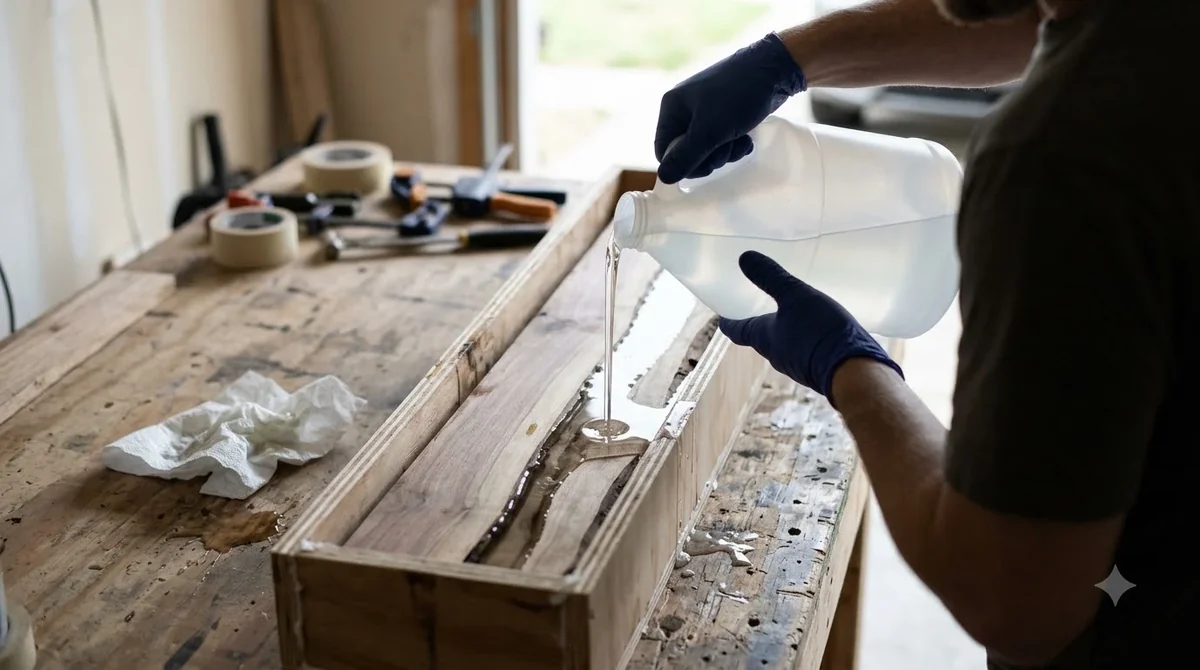
Pouring too much at once is the main mistake. TotalBoat warns that pouring individual layers deeper than recommended can cause excessive exotherm, which may lead to bubbles, cracking, yellowing, shrinkage, surface waves, and swirls. Step-pouring in smaller layers gives each layer room to cool before the next one goes on.
Signs Your Epoxy Is Overheating
Overheating usually shows up in stages, starting with a change in feel and ending with visible damage. Catching the early signs gives you a chance to stop the pour before the project is ruined.
| Sign | Likely cause | What to do |
|---|---|---|
| Mixed epoxy feels warm and thickens quickly in the cup | Large batch or warm room | Pour immediately or split the batch into smaller cups |
| Bubbling or foaming during cure | Excessive heat or moisture in porous material | Check the pour depth and seal porous surfaces first |
| Yellowing or discoloration | Heat damage to the cured polymer | Reduce depth and cooling time in the next pour |
| Surface waves or swirls | Layer too deep for the product | Remove the layer and repour within the stated depth |
| Cracking or shrinkage | Peak heat too high in the middle of the pour | Stop, let the piece cool, and plan a smaller pour |
| Smoke or strong fumes | Uncontrolled exotherm | Move away, ventilate, and check the product SDS |
Tip: Check the mixed epoxy with your hand at the outside of the cup. If it feels noticeably warm, the reaction is already running and you should pour right away.
How to Prevent Overheating During Pouring
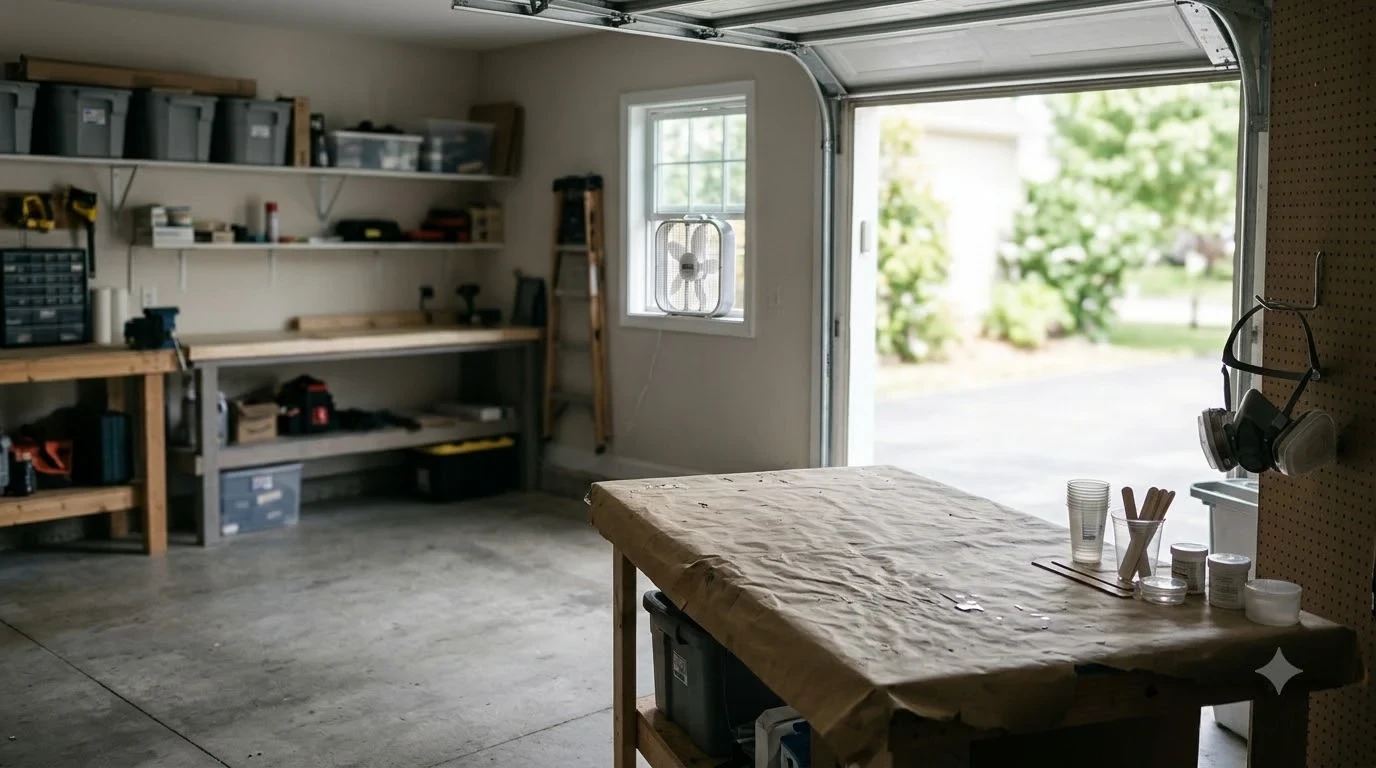
Prevention starts before you open the bottles. Choose a product rated for your pour depth, and plan the project in layers that stay within that limit. Work in a cool room and mix only what you can use right away.
- Confirm the product type. Use coating epoxy for thin layers and casting or deep pour epoxy for thicker castings.
- Check the maximum pour depth. Read the technical data sheet for the exact limit, and do not exceed it in one layer.
- Plan step pours. Divide the depth into layers, and wait until each layer cools before adding the next.
- Keep the room cool. TotalBoat advises keeping the work area below 80°F, and Mas recommends a constant 60°F to 80°F for its deep pour line.
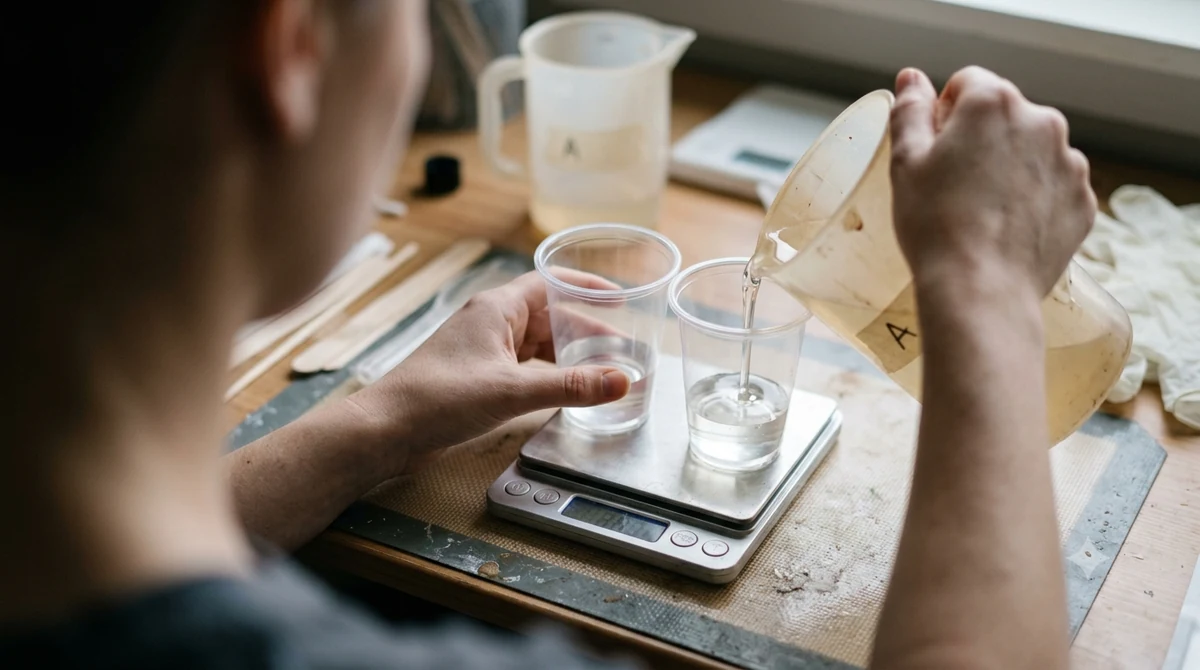
- Mix only what you need. Measure carefully, mix the stated ratio, and pour immediately after mixing.
- Watch the peak. Epoxyworks advises waiting until the mild exotherm peaks and begins to fall before pouring the next batch.
- Add airflow. Mas suggests a fan can help reduce the risk, and cooling mats or air conditioning can also help.
What to Do If Epoxy Starts Overheating
If the epoxy begins to smoke, bubble hard, or feel very hot, act quickly and stay calm. Your first priority is safe distance and ventilation, not saving the pour.
- Step back and ventilate. Move away from the piece and open windows or run a fan that does not blow directly across the cup.
- Let it cool. Do not add more epoxy to a reacting pour. Allow the piece to cool before you inspect it.
- Remove any spilled epoxy. Keep flammable materials away from the piece while it cools.
- Assess the damage. If the surface is sticky or distorted, you will likely need to remove it. Our guide on how to remove epoxy covers the cleanup steps.
- Plan a smaller repour. Start again with a shallower layer and a cooler room.
Safety Precautions When Epoxy Gets Hot
Overheating epoxy can release fumes, and the mixed material can be hard on skin. Safe handling starts with gloves and good airflow, and the product safety data sheet is the best guide for your specific resin.
Safety: Wear nitrile gloves, work with good ventilation, and keep the product SDS nearby. If epoxy touches your skin, follow the first-aid steps on the SDS. For cleanup on your hands, see how to get resin off hands.
Keep the work area clear of combustible materials, and never leave a reacting pour unattended. Store unused mixed epoxy away from heat. Heat-sensitive containers and nearby items can be damaged if the reaction runs hot.
Frequently Asked Questions
What temperature is too hot for epoxy resin curing?
TotalBoat recommends keeping the work area below 80°F. Mas Deep Pour X says not to use it in working temperatures above 85°F, and it advises a constant range of 60°F to 80°F. Check the specific product sheet, since limits differ between resins.
Can I use a fan or air conditioner to cool epoxy while it cures?
Yes, both are commonly recommended. Mas says a fan can help reduce the risk of overheating, and TotalBoat notes that air conditioners and cooling mats can help manage exotherm. Aim airflow at the room and the mold rather than directly at the cup.
Is it safe to pour a large batch of epoxy all at once?
Epoxyworks warns against pouring a large mass all at once because it can generate a lot of heat. The manufacturer notes that a gallon mixed together at once can turn solid in about 5 minutes. Divide large jobs into timed batches instead.
What should I do if my epoxy smokes or cracks?
Move away, ventilate the area, and let the piece cool before you touch it. Epoxyworks warns that uncontrolled heat can give off dangerous vapors, so do not stay close to a smoking pour. Once cool, sand and remove the damaged layer, then repour at a shallower depth.
Most overheating problems come down to depth, batch size, and room temperature. If you keep those three in check and follow the product data sheet, you can avoid most failures. For more fixes, visit our Troubleshooting & Fixes section and plan your next pour with a cooler room and smaller layers.
More in Troubleshooting & Fixes
 How to Fix Scratches in Epoxy Tables Without Redoing the Whole TopUpdated Nov 26, 2026
 How to Remove Amine Blush From Epoxy Without Starting OverUpdated Nov 26, 2026
 What Will Remove Epoxy from Wood, Metal, Skin and Hair SafelyUpdated Nov 26, 2026
 Paint and Epoxy Remover: Which Type Strips Cured Epoxy and Paint SafelyUpdated Nov 26, 2026
 Resin Sticking to Mold? Causes, Release Fixes and Safe RemovalUpdated Nov 26, 2026
 Why Is My Epoxy Bumpy? Causes and Fixes for a Smooth FinishUpdated Nov 26, 2026