

We may earn a commission when you buy through links on this page, at no extra cost to you. Learn more.
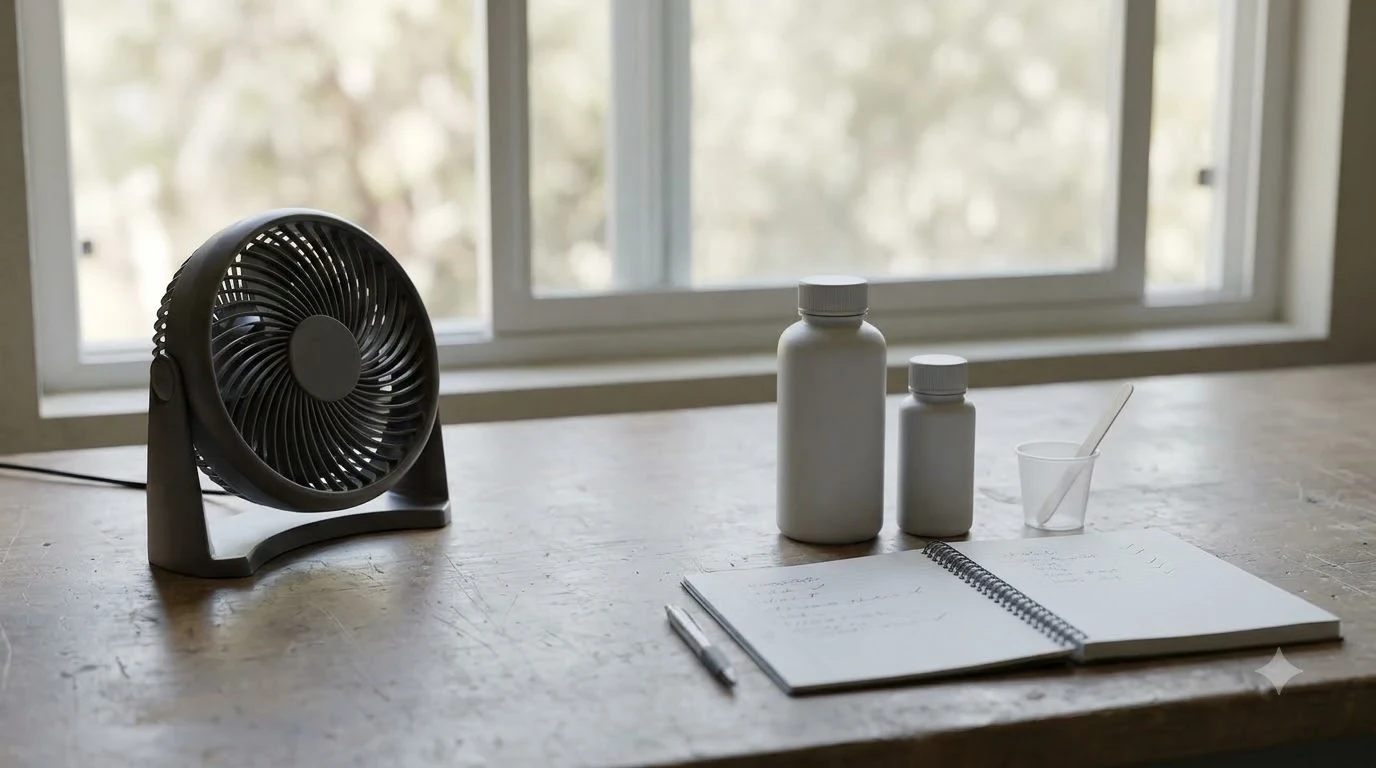
Epoxy not hardening usually comes from a mix ratio error, incomplete mixing, or a room that is too cold or too humid. Many resins are measured 1:1 or 2:1 by volume, and the product label controls the ratio. MEYSPRING gives 75-85°F as the best working temperature and says epoxy can stay sticky for days when the room sits below 72°F. Scraping the sides and bottom of the container matters as much as measuring.
If your resin is still tacky a day after pouring, the project is usually not lost yet. The cause decides the repair. Some tacky surfaces can be recoated, while runny or gooey resin has to be scraped off. This guide walks through the common causes in order so you can match your symptoms to a fix. For a broader look at slow cures, read our epoxy not curing guide.
Why Is My Epoxy Not Hardening?
Most stalled pours trace back to a chemical reaction that never finished, not to a bad batch. Epoxy hardens when resin and hardener react, so anything that throws off that balance or keeps the two parts from meeting can leave it soft. Three causes show up more often than the rest.
Mix ratio errors
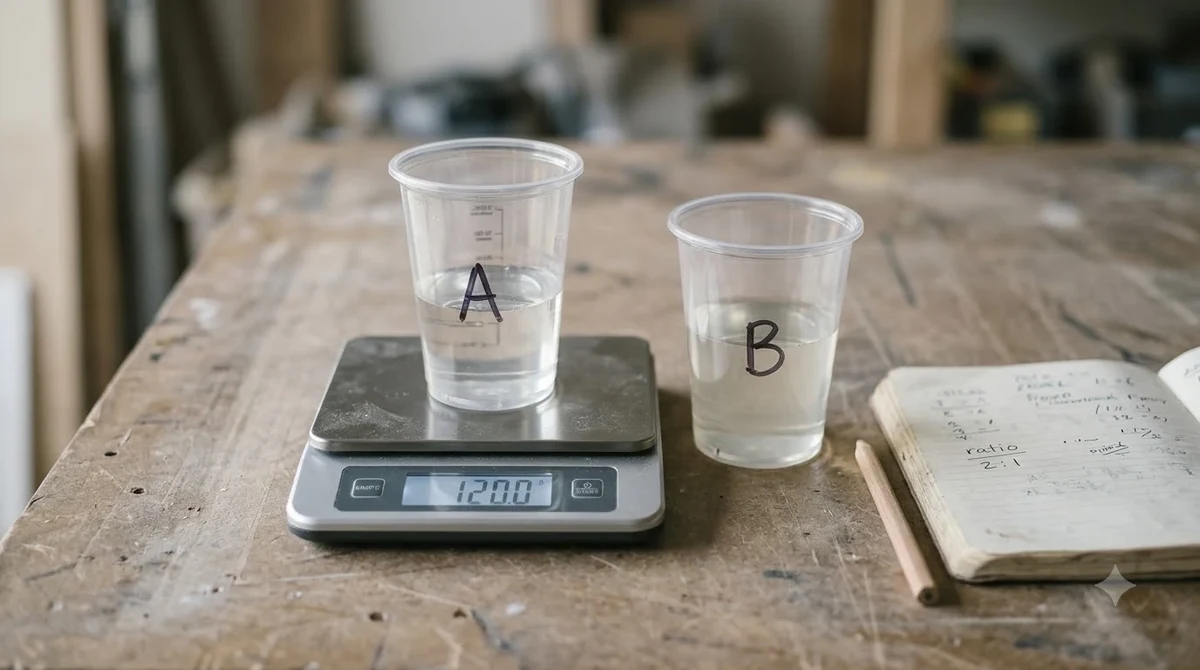
Measuring is the first place to look. Check the label before you pour, because some brands call for volume and others call for weight. Eyeballing the amounts or using a cup with unclear markings can push the mix off balance. Adding extra hardener does not speed things up. It disrupts the reaction and can keep the piece from curing fully.
Incomplete mixing
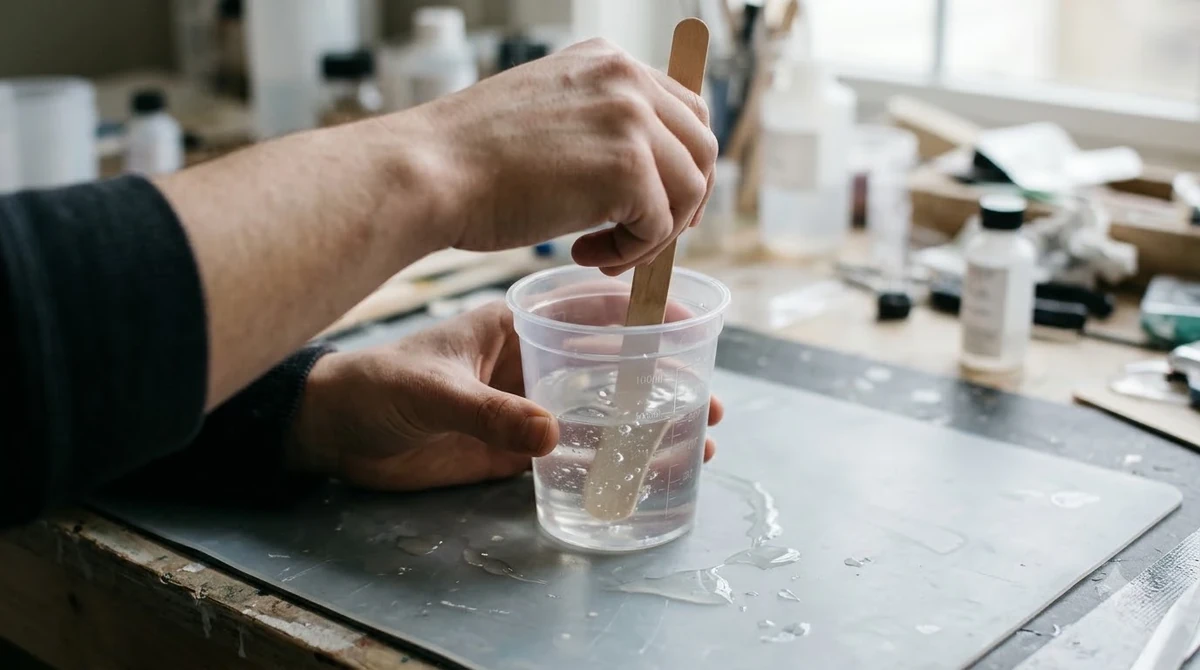
Even a correct ratio can fail if the two parts were not blended well. Unmixed resin clinging to the walls and bottom of the cup creates soft spots later. Mix for at least three minutes and scrape the sides and bottom throughout. Incure Lab recommends mixing for 3 to 5 minutes and using a double-cup method, with a second mix of 1 to 2 minutes in a clean cup. Their guide on slow epoxy curing explains why the second cup removes the unmixed film.
Too much colorant or wet additives
Pigments and liquids change the chemistry of the mix. Acrylgiessen advises keeping colorant at or below 6% of total mixture volume. For 50 ml each of resin and hardener, that means no more than 6 ml of colorant. Liquid dyes add volume that the ratio did not account for. Dry powders such as mica are safer, but they still have limits. MEYSPRING recommends keeping mica at or below 3% of the combined resin and hardener weight.
Temperature and Humidity Effects on Curing
Temperature has a large effect on how quickly epoxy sets. A cold room slows the reaction, and a cold piece or cold material can stall it entirely. Humidity matters too, though to a lesser degree. Plan your workspace before you mix, not after the surface goes soft.
MEYSPRING states the best working temperature is 75-85°F or 24-30°C. Epoxy hardens best in a room between 65 and 80°F, according to Eye Candy Pigments, with an average curing time of 12 to 14 hours. Those two ranges overlap, and both suggest that a room near the low end of the warm range will cure more slowly than one near the top. Garages in winter are a common problem. MEYSPRING notes that most epoxies will not fully cure below 50°F unless the product is formulated for cold weather, and it recommends warming resin and hardener to at least 70°F before use.
Humidity is the other variable. MEYSPRING says ideal humidity is below 50%, though you can work at up to 80%. Work in a warm, dry room when you can. Incure Lab suggests warming resin and hardener in a 70-80°F environment for several hours before use, but avoid intense direct heat, which can cause bubbling or cracking. Gentle, steady warmth works better than a space heater blowing on the piece.
Resin Not Hardening: UV vs. Epoxy Differences
UV resin and two-part epoxy harden in different ways, so the same fix does not always apply. Two-part epoxy cures through a chemical reaction after you mix resin and hardener. UV resin is a single part that sets when exposed to a specific light. If UV resin stays soft, the problem is usually the light, not the mix.
UV resin not hardening: light and thickness
Check the product label for the lamp type and exposure time it recommends. A weak lamp, an old bulb, or a lamp that is too far from the piece can leave the resin tacky. Thick pours are harder to cure because light does not reach the bottom well. Work in thinner layers and cure each one before adding the next. Sunlight is not a reliable substitute for a dedicated UV lamp because its strength changes with weather and time of day.
Sticky top layer on UV resin
A tacky surface on UV resin is often the top layer, which is exposed to air during curing. Covering the surface with a clear film or a sheet of glass during cure can reduce this problem. If the tack is only on top, a light sanding and a thin new coat usually solves it.
How to Tell Which Cause You Have
Matching your symptoms to a cause tells you whether to wait, recoat, or start over. Look at where the resin is soft and whether it runs. Compare your situation with the table below before you change anything.
| Symptom | Likely cause | Fix |
|---|---|---|
| Tacky across the whole surface, no liquid | Off ratio or a cold room | Warm the room, wait 24 more hours, then sand and recoat if still tacky |
| Soft or wet patches in spots | Unmixed resin from the container walls | Sand with 80-grit sandpaper, clean, then pour a new layer |
| Runny or gooey liquid | Ratio error or extra hardener | Scrape off as much as you can, then repour correctly |
| Sticky zones near heavy color | Too much colorant or mica | Remove the affected layer and remix within the stated limits |
| Small casting still tacky after 72 hours | Thin layer losing heat too fast | Move it into a small warm curing box |
Tip: Mark your cups with the measured volumes before you pour. Writing the batch size on the cup helps you catch a short pour before the resin goes into the project.
How to Fix Epoxy That Won’t Cure
Some epoxy can be rescued without starting from scratch. Tacky spots are usually easier to fix than runny resin. Work through the steps in order and stop once the surface is hard.
- Check the basics. Confirm the label ratio, the batch date, and the room temperature before you change anything.
- Warm the space. Move the piece to a room near 75-85°F. Avoid direct, intense heat on the surface.
- Wait another 24 hours. Give the piece a full day in the warmer room before you decide it has failed.
- Recoat tacky spots. If only some areas are tacky, pour a fresh layer over the whole surface, not just the spots, to avoid a seam line.
- Sand fully sticky surfaces. If the whole surface is tacky, sand it with 80-grit sandpaper, clean away the dust, and pour a new accurately mixed coat.
- Scrape off runny resin. Gooey or runny resin cannot be covered. Remove as much as you can, because leftover resin can leak into the new layer.
- Try a warm curing box for small pieces. If a small casting or thin coat is still tacky after 72 hours, an insulated box with a modest heat source can finish the cure.
- Use a spray as a last option. Acrylgiessen suggests spraying Triple Thick Polyurethane on a cast still tacky after 24 hours, letting each light coat dry about 30 minutes. Do not spray too thick, or the surface can cloud.
Safety Gear and Cleanup Tips
Protect your skin and lungs before you start scraping or sanding. Uncured resin can irritate skin, and sanding dust should not be breathed in. Wear nitrile gloves, work in a ventilated space, and read the product safety data sheet for specific guidance. Clean up soft resin while it is still workable, since it is much harder to remove once it hardens. For removing it from skin, see our guide on how to get resin off hands.
Safety: Wear gloves, keep the area ventilated, and check the product safety data sheet before sanding or spraying. Do not sand or spray in a closed room.
Frequently Asked Questions
Why is my epoxy resin still sticky after 24 hours?
The room may be too cold, since MEYSPRING says epoxy can stay sticky for days below 72°F. Check your ratio and mixing next. If the piece is warm and the surface is still tacky, recoat or sand it.
What temperature should epoxy resin cure at?
Acrylgiessen and MEYSPRING both give 75-85°F, or 24-30°C, as the best range. Eye Candy Pigments cites 65-80°F with an average curing time of 12 to 14 hours. Store unopened resin around 70°F, out of direct sunlight.
Can I fix epoxy that will not harden without starting over?
Often you can. Tacky surfaces can be sanded with 80-grit sandpaper and recoated with a correctly mixed layer. Runny or gooey resin must be scraped off first, and it should not be covered over.
Does adding too much pigment or mica stop epoxy from curing?
It can. MEYSPRING recommends keeping mica at or below 3% of the combined resin and hardener weight. Acrylgiessen advises keeping colorant at or below 6% of total volume. Do not add extra hardener to make up for it.
If your epoxy still will not set after warming the room and fixing the mix, the problem may be the product itself. Review the label, or contact the manufacturer for its cure limits. For more troubleshooting help, return to our Troubleshooting & Fixes section.
More in Troubleshooting & Fixes
 How to Fix Scratches in Epoxy Tables Without Redoing the Whole TopUpdated Nov 26, 2026
 How to Remove Amine Blush From Epoxy Without Starting OverUpdated Nov 26, 2026
 What Will Remove Epoxy from Wood, Metal, Skin and Hair SafelyUpdated Nov 26, 2026
 Paint and Epoxy Remover: Which Type Strips Cured Epoxy and Paint SafelyUpdated Nov 26, 2026
 Resin Sticking to Mold? Causes, Release Fixes and Safe RemovalUpdated Nov 26, 2026
 Why Is My Epoxy Bumpy? Causes and Fixes for a Smooth FinishUpdated Nov 26, 2026