

We may earn a commission when you buy through links on this page, at no extra cost to you. Learn more.
Can you epoxy over concrete? Yes, when the slab is sound, fully cured, dry, and properly profiled. Contractors aim for a Concrete Surface Profile (CSP) of 2 to 3 for most epoxy coatings, according to one contractor guide. Concrete is typically recommended to cure at least 28 days after pouring, longer in damp conditions. Epoxy coating thickness is usually between 300 and 600 microns depending on use.
Whether you are coating a garage floor, a patio slab, or a basement, the bond depends far more on preparation than on the product label. This guide explains how to check your concrete, prep it, and choose a resin that fits the job.
Does Epoxy Stick to Concrete?
Epoxy does bond to concrete, but only when the surface is clean, open-textured, and free of contaminants. Epoxy is a two-part resin and hardener system that cures into a dense layer, and its adhesion depends on mechanical grip in the slab.
Existing sealers and paints are the most common obstacle. One resin manufacturer’s guidance notes that epoxy cannot be applied over sealer, so sealers or paints must be removed first. Oils, grease, and laitance also block adhesion, so the slab needs thorough cleaning before any coating goes on.
Older slabs add another layer of risk. Cracks, pits, and unevenness must be repaired so the epoxy sits on a stable base. A patch that is not fully cured and sanded flush can show through the finished coat or fail early.
Will Resin Stick to Concrete?
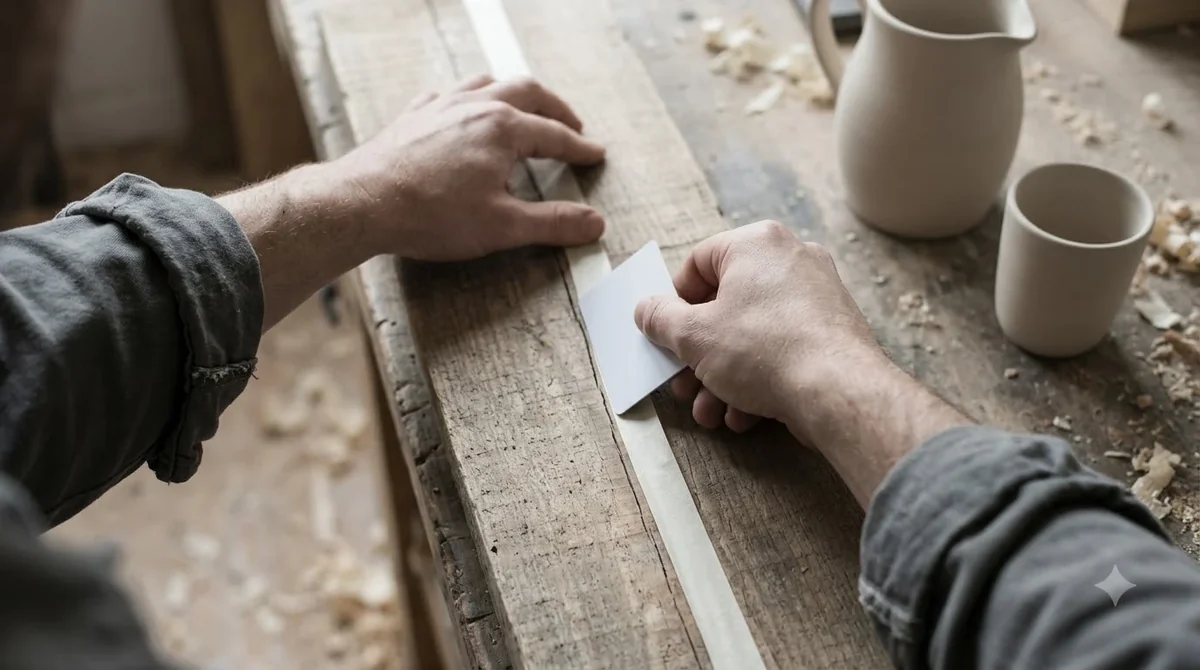
Resin sticks well to concrete that is dry, clean, and roughened, and it can fail quickly when moisture is trapped underneath. Moisture is the factor most often overlooked by homeowners, especially in basements and on new pours.
Moisture can cause bubbles, delamination, or peeling after installation. A step-by-step epoxy coating guide lists a typical moisture meter threshold of less than 4% by weight or under 75% relative humidity before applying epoxy. Check your product’s technical data sheet, because the manufacturer’s number governs your project.
- Dry slab: the surface looks dry and the meter reads within the product’s limit.
- Damp slab: water beads or darkens the concrete, or the meter reads high.
- Sealed slab: an old sealer must be stripped before resin can bond.
Testing Your Concrete Before Coating
Test the slab for moisture before you buy material or mix anything. A simple plastic sheet test is a good starting point, and a moisture meter gives a more precise reading.
For the plastic sheet test, tape a piece of plastic to the slab for 24 to 48 hours. If you see condensation on the underside of the plastic when you lift it, the slab is releasing moisture and needs a moisture control system or more drying time. Two industry standards measure vapor emissions in concrete: calcium chloride testing under ASTM F1869 and relative humidity testing under ASTM F2170. Professional installers often use these methods on larger jobs.
Also check the age of the slab and the conditions it has seen. Construction schedules that allow less than 28 days of drying, too much water in the mix, and air temperatures below 50 °F can all leave excess moisture behind, according to a flooring industry reference. Ask your product supplier which test method and threshold their system requires.
Preparing the Surface: Grinding, Cleaning, and Profiling
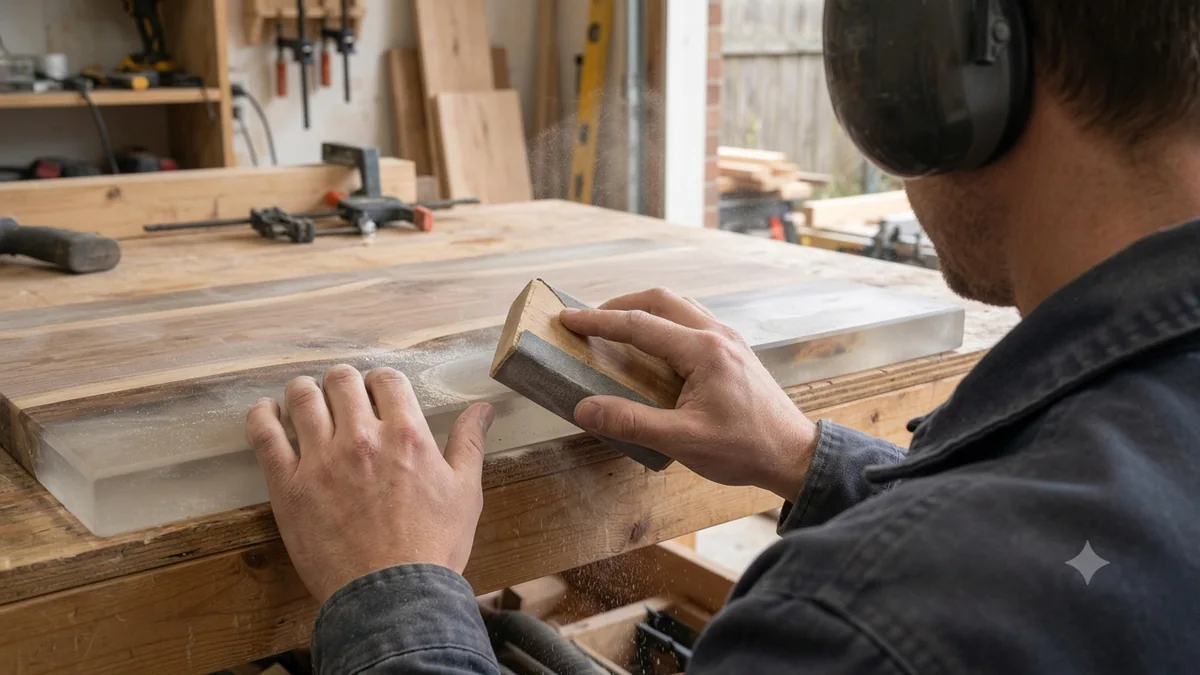
Mechanical preparation is the most reliable way to give epoxy a grip on concrete. Grinding or shot blasting opens the surface, removes laitance and old coatings, and creates the profile the resin needs.
Start with cleaning. Sweep, vacuum, and degrease the floor, then rinse and let it dry completely. Next, profile the slab to a CSP of 2 to 3 for most coatings. A contractor guide on old concrete renewal recommends against acid etching, saying mechanical methods are safer and more effective. Vacuum again after grinding so no dust remains, because dust under the coat weakens the bond.
| Step | What to check | Target |
|---|---|---|
| Cleaning | Oil, grease, dust, and old residue | Water should bead off cleanly |
| Repairs | Cracks, pits, and unevenness | Flush, fully cured patches |
| Profiling | Surface texture after grinding or shot blasting | CSP 2 to 3 for most coatings |
| Moisture check | Meter or plastic sheet result | Within the product’s stated limit |
Tip: Vacuum the slab twice after grinding and check for dust with a dry cloth before you mix any resin.
Choosing the Right Epoxy or Resin for Concrete
Choose a product by its use: garage floors need abrasion and chemical resistance, while countertops need food-safe and heat-resistant formulas. For floors, a primer, a build coat, and a topcoat are common. Epoxy primers are often spread at about 0.2 to 0.3 liters per square meter and usually need 12 to 24 hours to cure before the main layer.
Epoxy floor coatings are often cited as lasting 5 to 10 years or more with proper prep, compared with 1 to 2 years for traditional floor paint. For a basement with moisture concerns, a moisture control epoxy system may be a better fit than a standard floor coating. Moisture control systems are roller-applied and come as one-coat or two-coat products, and two-coat systems address pinholes that can cause future failures.
If you are coating over an older painted surface, compare your options before you start. The article on can you epoxy over paint explains when paint must be removed first. For ceramic floors, the guide on can you epoxy over tile covers adhesion differences.
Mixing, Curing, and Common Troubleshooting
Mix only what you can apply within the pot life, which is usually 20 to 40 minutes. Use a slow-speed mechanical stirrer and scrape the sides and bottom of the container so no unmixed resin remains. Poor mixing causes soft spots, uneven curing, or a tacky surface.
- Check the slab. Confirm cure time, moisture reading, and cleanliness.
- Prime. Roll or squeegee the primer at the spread rate on the data sheet.
- Wait. Let the primer cure, usually 12 to 24 hours.
- Mix. Use the exact ratio with a slow-speed stirrer.
- Apply. Pour in ribbons, spread, and back-roll to the target thickness.
- Cure. Allow 12 to 24 hours for light foot traffic and up to 7 days for full chemical and mechanical resistance.
If you see bubbles or peeling, suspect moisture or inadequate profiling first. Tacky spots usually point to incorrect mixing or incomplete cure. Recoat only within the window listed on the technical data sheet.
Safety Gear and Ventilation Tips
Epoxy resins and hardeners can irritate skin and eyes, so wear nitrile gloves and eye protection when you mix and apply. Ventilate the room with fans and open windows, and follow the product’s safety data sheet (SDS) for respirator needs. Keep children and pets out of the work area until the surface has cured.
Safety: Read the SDS for your specific resin and hardener before you start, and follow its gloves, ventilation, and respirator guidance.
Frequently Asked Questions
Can you epoxy over concrete without grinding it first?
Grinding or shot blasting is the standard way to create a profile for most coatings. Acid etching is not recommended by one contractor source because mechanical methods are more effective. Skipping profiling raises the risk of peeling.
Can you epoxy over old concrete with cracks?
Yes, but cracks and pits must be repaired first. Use patching compounds made for epoxy, let them cure fully, and sand them flush. Unrepaired cracks can show through the finished coat.
How long must new concrete cure before epoxy can be applied?
A common minimum is 28 days after pouring, and longer in damp conditions. Confirm the wait with your product’s technical data sheet. A moisture meter reading should also be within the stated limit before you coat.
Can epoxy be used on concrete countertops and is it food safe?
Only products designed for countertops should be used, since they are formulated to be food safe and heat resistant. Check the label and data sheet for food-contact approval. General floor epoxy is not a substitute.
Test your slab, prep it to the right profile, and choose a resin matched to the room. A careful prep saves more time than any product upgrade. Start with a moisture check this week so you know whether your concrete is ready.
More in Surfaces & Materials
 Can You Epoxy Over Wallpaper? The Prep Steps That Help It StickUpdated Nov 26, 2026
 Can You Epoxy Over Tile? Prep Steps That Help It BondUpdated Nov 26, 2026
 Can You Epoxy Over Laminate? Prep Steps and Limits for DIY SuccessUpdated Nov 26, 2026
 How to Seal Wood Before Epoxy for a Bubble-Free, Even FinishUpdated Nov 26, 2026
 Can You Epoxy Over Granite Countertops? Prep, Adhesion and Heat LimitsUpdated Nov 26, 2026
 Can You Epoxy Over Painted Wood? When It Works and How to Prep ItUpdated Nov 26, 2026