

We may earn a commission when you buy through links on this page, at no extra cost to you. Learn more.
Can you epoxy over polyurethane? Sometimes, but only when the finish is fully cured, firmly bonded, clean and evenly scuffed. Mas Epoxies gives 80 to 120 grit as its scuff-sand range before overcoating urethane, and it wipes with denatured alcohol rather than a tack cloth. Woodworking Advisor says the polyurethane must be deglossed uniformly, and the epoxy maker must approve the combination. Compatibility depends on the exact products, so check both labels first.
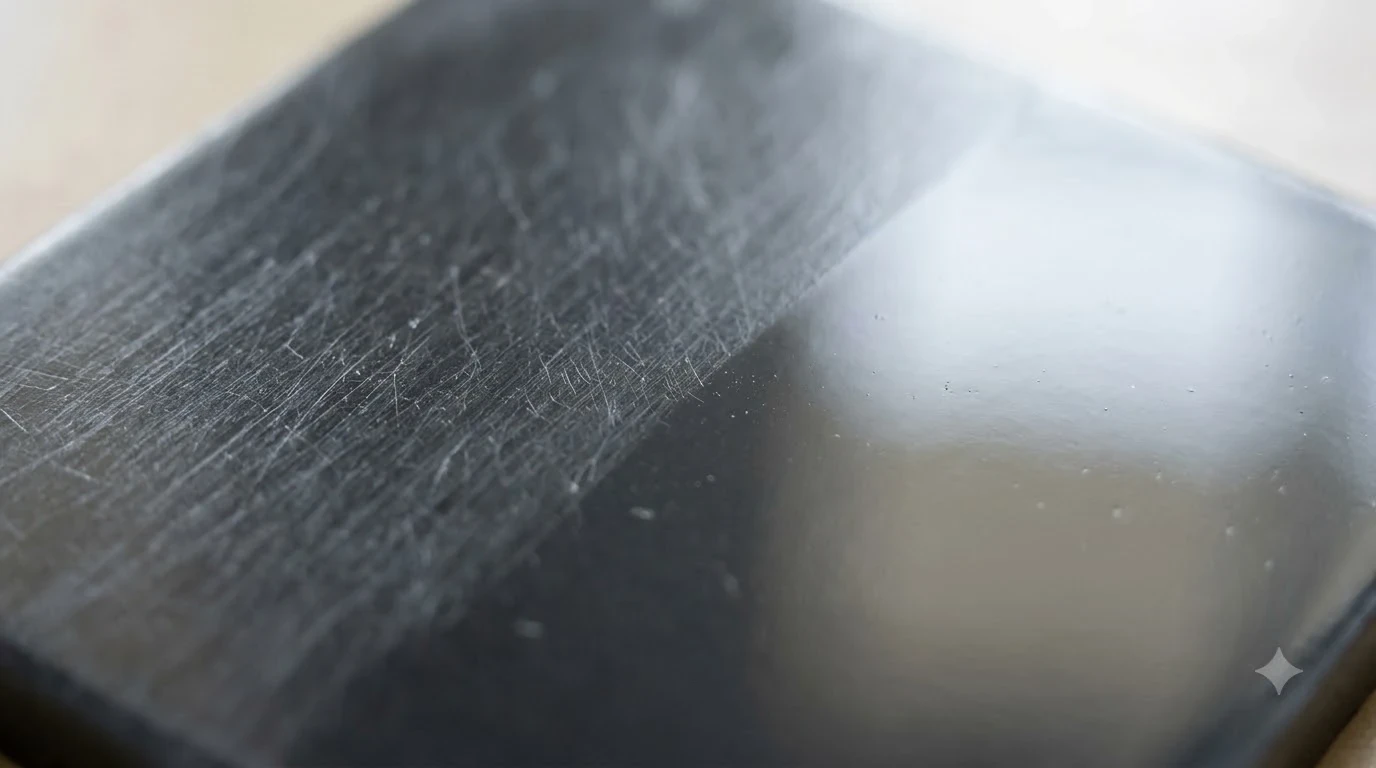
Polyurethane looks like a hard, finished base, but its smooth, often glossy surface gives new epoxy very little to grip. This guide explains why the bond can fail, how to test the old finish, how to prepare it, and when removal is the safer path.
What Makes Polyurethane Hard to Coat
A cured polyurethane film is smooth and chemically different from the epoxy you plan to pour. Its exact behavior depends on the product family and the formula, so a general yes or no answer is unreliable.
The word polyurethane covers several products. An oil-modified wood finish, a water-based clear coat and a two-component industrial coating do not act the same way. The Woodworking Advisor prep guide makes this point and notes that manufacturers disagree on the answer.
Timing matters too. Dry-to-touch is not full cure, and solvent or moisture still leaving a film can interfere with epoxy wetting. Use the full-cure time on the polyurethane label, not the recoat time. Cool, humid conditions, heavy coats and thick film builds can all extend the cure.
Think of the job as two bonds. The new epoxy must bond to the old finish, and the old finish must stay bonded to the wood or substrate underneath. One Stop Epoxy makes this same point for floor coatings, and it applies to furniture and countertops as well.
Does Epoxy Stick to Polyurethane?
Sometimes. A fully cured, clean, evenly abraded oil-based polyurethane may accept epoxy in some systems, while water-based films carry more risk. The answer depends on the manufacturer’s written approval, not on general habit.
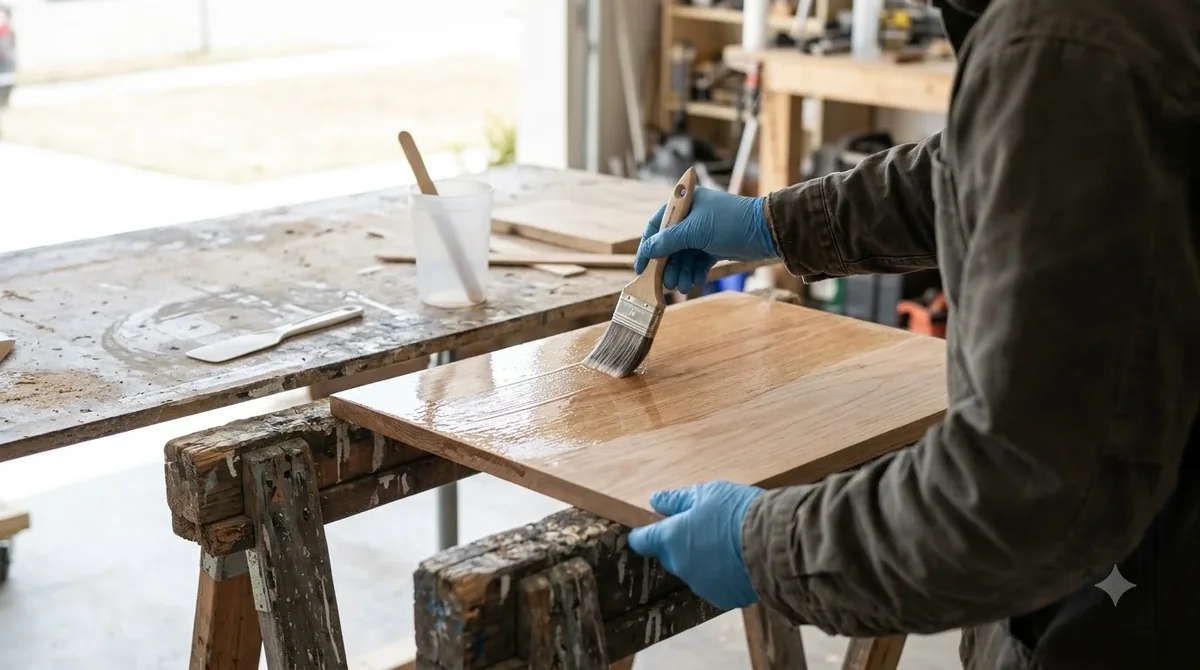
Woodworking Advisor separates the situation into several outcomes. Your surface condition decides which path applies, and the table below summarizes that logic.
| Surface condition | Likely decision | What to do |
|---|---|---|
| Unknown, soft, waxed, oily or peeling finish | Do not pour | Remove the weak or contaminated layer first |
| Water-based polyurethane | High compatibility risk | Get written approval from the epoxy maker and run a test |
| Fully cured, sound oil-based polyurethane | Possible for some systems | Clean, abrade evenly and test before the full job |
| Bare, dry wood under the polyurethane | Follow the epoxy maker’s seal coat process | Do not rely on the polyurethane as the bond layer |
Mas Epoxies recommends starting with epoxy and overcoating with polyurethane, not the reverse. Its technical team warns that epoxy over polyurethane can cause interlaminar adhesion problems that shorten the life of the project. Even so, the same team says a properly prepared urethane is usually fine to overcoat.
Some sellers present their primers as a bridge between the two systems. Treat those claims as the seller’s position and confirm them against the epoxy maker’s data sheet before you buy. To understand the system behind this, read What Solvent Can Remove Epoxy.
How to Test Adhesion Before You Commit
A test panel shows whether the bond holds before you commit the full project. Build it to match the real job as closely as you can, because small differences can change the result.
Woodworking Advisor recommends a panel made with the same wood, the same polyurethane coats, the same cure time, the same sanding, the same epoxy batch, the same depth and the same room conditions. Keep a note of each variable so you can repeat the test if something fails.
After the epoxy has fully cured, inspect the panel. Look for fisheyes, wrinkles, soft spots, cloudiness and any edge that lifts. A scraper or tape test at a damaged edge can also show whether the polyurethane is already loose.
For larger floors, flooring specialists use pull-off testing. On concrete coating work, one cited benchmark is at least 1.5 MPa with the failure inside the substrate, not at the coating interface. That benchmark comes from concrete work, so treat it as a professional reference rather than a home-shop standard.
Surface Prep and Primer Choice
Prep means abrading the whole glossy surface evenly and removing every trace of wax, oil and dust. A primer or seal coat can help, but only after the surface is clean and matte.
Work through the surface in this order:
- Clean first. Remove wax, silicone polish and grease with a cleaner that both manufacturers approve. Avoid oily solvents that can leave a film.
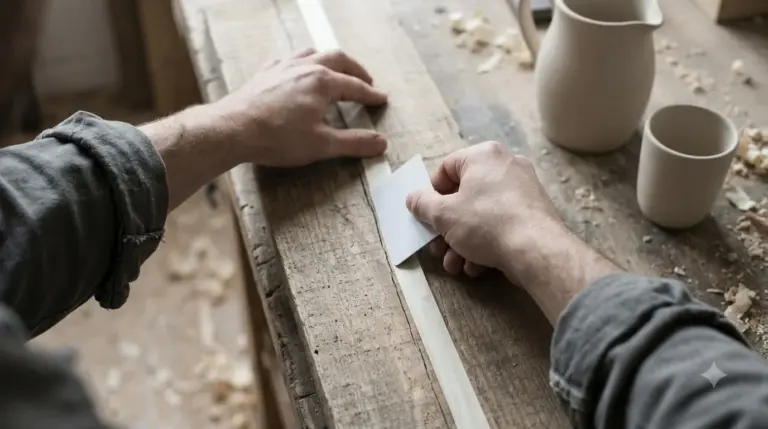
- Scuff evenly. Abrade the whole surface to a uniform matte finish. The Mas Epoxies technical FAQ gives 80 to 120 grit for urethane overcoats, but the epoxy maker’s grit comes first.
- Remove the dust. Vacuum the sanding debris completely. Mas Epoxies advises against tack cloths because they can leave residue.
- Solvent wipe. Wipe with denatured alcohol on a clean cotton rag, then let it evaporate fully before coating.
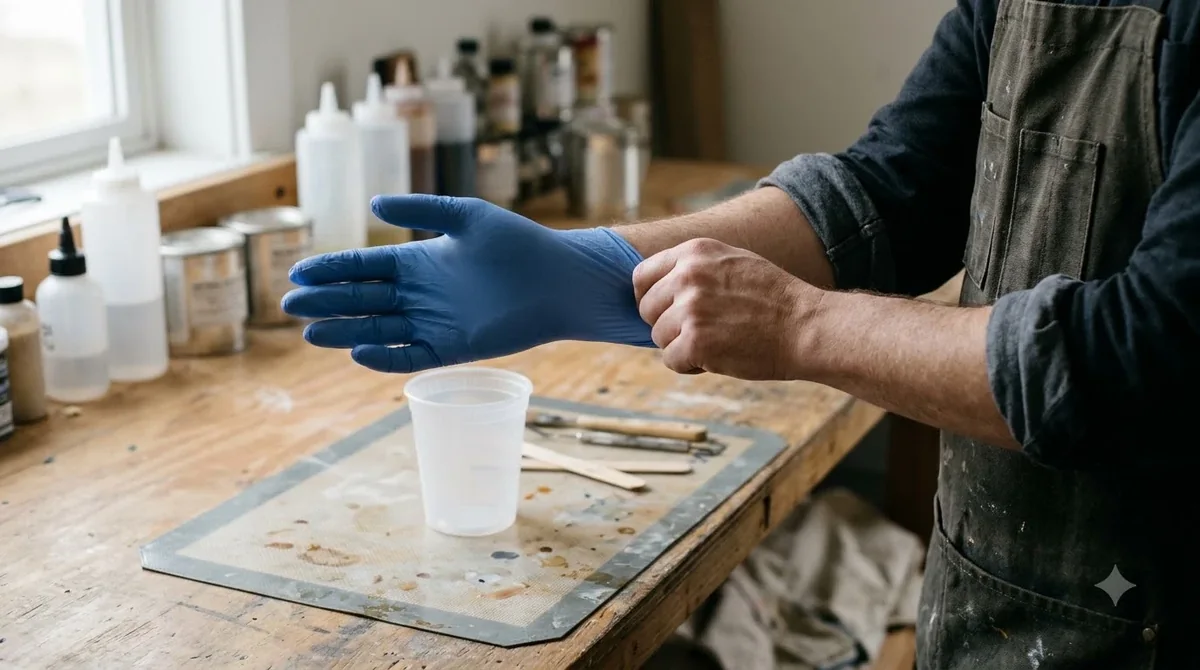
Primers and seal coats add a second layer of decision-making. Mas Epoxies recommends a thin seal coat of its own epoxy before a flood coat on porous surfaces, and it allows a 2 to 5 percent denatured alcohol dilution for seal coats only. Never thin the final flood coat.
Mix ratios and application limits come from the product data. Mas Tabletop Pro is mixed 1A:1B by volume, or 100 parts resin to 83 parts hardener by weight. The same maker advises keeping the work at 70 to 80 degrees Fahrenheit and applying no thicker than 1/8 to 1/4 inch per coat.
Safety: Wear the gloves and eye protection named in both SDS documents, and ventilate the room. Denatured alcohol is flammable, so keep it away from open flame and heat sources. Background on this topic is covered in Can You Epoxy Over Stain.
When You Need to Strip the Old Finish
Strip the polyurethane when it is peeling, soft, waxy, cloudy or unidentified. Epoxy cannot repair a weak layer underneath it, and a thicker pour only adds stress to a bad bond.
One Stop Epoxy advises removing failed material and determining why the coating released before installing a new system. The same logic applies to a tabletop or furniture piece. If the finish lifts under tape or a scraper, the epoxy will only be bonded to a failing layer.
When the existing finish is unknown, stripping to sound wood is the safer choice. Woodworking Advisor says a complete coating system from one manufacturer is safer than trusting a large pour to an unknown layer. If you are weighing a different base, our guide on can you epoxy over paint covers the same identify-test-prepare steps for painted surfaces.
Common Mistakes and Troubleshooting Bubbles or Peeling
Most failures trace back to skipped prep, an unknown finish or a pour that was too thick. The table below links the common symptoms to likely causes and fixes.
| Symptom | Likely cause | Fix |
|---|---|---|
| Fisheyes or craters | Wax, oil or skin contamination | Clean with an approved cleaner, re-abrade and re-wipe |
| Edges peeling or lifting | Weak finish or shiny spots left unabraded | Strip to sound material and abrade every edge |
| Bubbles in the epoxy | Trapped air, porous wood or mixing too hard | Let it sit about 10 minutes, then pass a propane torch or heat gun 6 to 8 inches above the surface |
| Wrinkling or softening | Incompatible or soft polyurethane | Stop, strip and test a new panel |
| Cloudy or beaded surface | Amine blush or residue | Wash with warm detergent and water, then check again |
Bubble removal needs restraint. Mas Epoxies warns against overheating, because scorching or burning can damage the epoxy. Check the surface periodically and repeat the heat pass only as needed.
Peeling after cure is usually a bonding problem, not a mixing problem. Check whether the polyurethane was fully cured and evenly abraded before the epoxy went on. Rework the surface before recoating, because adding more epoxy does not restore a weak bond.
Tip: Mark the glossy spots with a pencil before you sand. The marks disappear when the surface is fully matte, which makes missed areas easy to spot. Readers working through this often move on to Can You Epoxy Over Chalk Paint.
Frequently Asked Questions
Can you epoxy over polyurethane without sanding?
Plan on sanding unless the epoxy maker names an approved recoat window that is still open. Once the polyurethane has cured past that window, abrasion is the normal way to create a mechanical key. Even a light scuff with the grit the maker specifies is safer than skipping it.
Do you need to sand polyurethane before applying epoxy resin?
Yes, in most cases. Abrade the entire surface until the gloss is gone, and do not leave shiny islands around edges or profiles. One urethane overcoat guide cites 80 to 120 grit, but the epoxy maker’s grit takes priority.
Can epoxy go over water-based polyurethane?
Do not assume it can. Some epoxy makers warn against applying their product directly over water-based polyurethane, and others require written approval and a test panel. Check the data sheet for your exact epoxy before you start.
How long should polyurethane cure before applying epoxy?
Wait for the full-cure time printed on the polyurethane label, not the dry-to-touch or recoat time. Cool or humid conditions, heavy coats and thick films can all lengthen the cure. If you are unsure, extend the wait and confirm with the test panel.
If you are planning a different base, the guide on can you epoxy over tile follows the same test-first approach. For more on preparing other surfaces, browse Surfaces & Materials. Start with the label on your existing finish, then run a small test before you mix a full batch.
More in Surfaces & Materials
 Can You Epoxy Over Wallpaper? The Prep Steps That Help It StickUpdated Nov 26, 2026
 Can You Epoxy Over Tile? Prep Steps That Help It BondUpdated Nov 26, 2026
 Can You Epoxy Over Laminate? Prep Steps and Limits for DIY SuccessUpdated Nov 26, 2026
 How to Seal Wood Before Epoxy for a Bubble-Free, Even FinishUpdated Nov 26, 2026
 Can You Epoxy Over Granite Countertops? Prep, Adhesion and Heat LimitsUpdated Nov 26, 2026
 Can You Epoxy Over Painted Wood? When It Works and How to Prep ItUpdated Nov 26, 2026