

We may earn a commission when you buy through links on this page, at no extra cost to you. Learn more.
How long does epoxy take to cure? Most epoxies feel dry to the touch within about 24 hours, but a full cure usually takes about 72 hours. Many sources note that some epoxies need up to 7 days to reach full hardness, and cold rooms can add time. Light use is often possible after about 24 hours, while heavy loads should wait longer. The exact window depends on the product, the room temperature, humidity and how thick you pour.
This guide breaks the cure process into stages so you can tell when a project is ready for handling, light use or real load. It also explains how pot life, temperature, humidity and pour depth change each stage. Use the product data sheet as your final authority, because the numbers below are typical ranges from manufacturer and trade sources.
Epoxy Cure Time by Stage: Tack-Free, Handling and Full Cure
Epoxy cure time is not one number. It is a sequence of stages, and each stage has a different safe use. Treat the surface feeling dry as the start of the process, not the end.
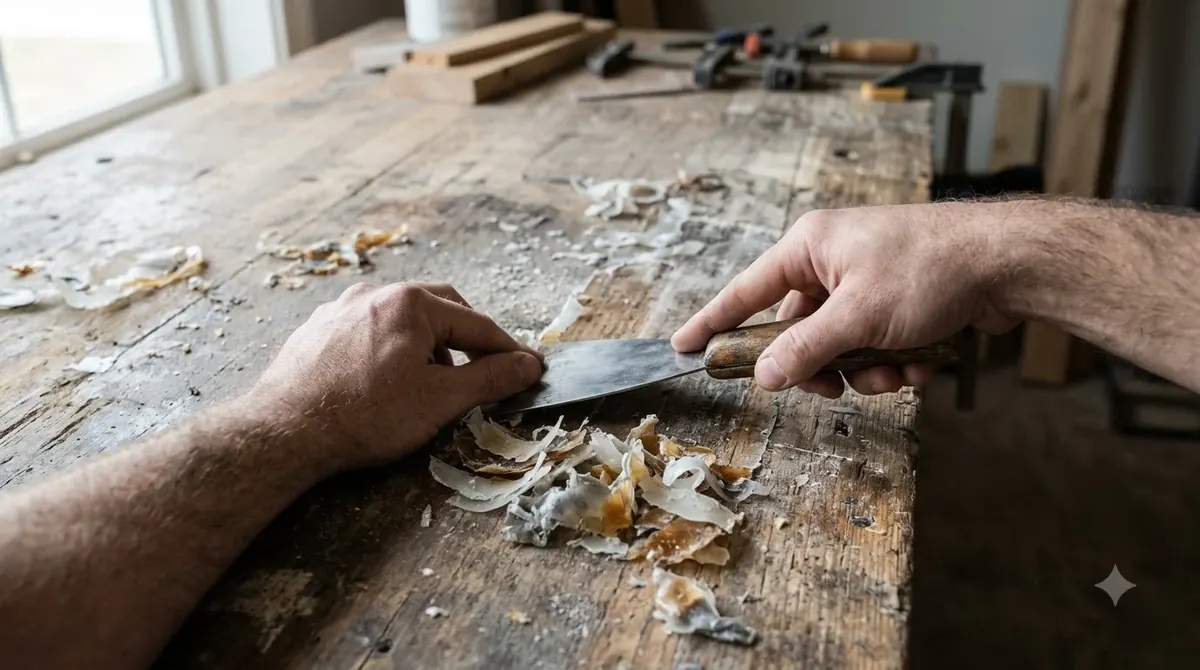
Resiners describes the first stage as touch-dry, usually around 24 hours, when the surface is no longer sticky. Partial strength comes later, around 72 hours, and full hardness and chemical resistance often arrive after about 7 days. Primaloc says a strong cure takes about 72 hours and that the epoxy is about 99 percent cured at that point.
Primaloc also gives a timeline for recoating. It says you can apply another coat after about 4 hours, but after about 10 hours you should lightly sand before recoating. After about 24 hours the epoxy is gently usable, though it is not ready for hard use.
| Stage | Typical timing from sources | What it means for you |
|---|---|---|
| Tack-free or touch-dry | About 24 hours | The surface no longer feels sticky, but it is still soft inside. |
| Gently usable | About 24 hours (Primaloc) | Small project changes are possible. Avoid heavy stress. |
| Partial strength | About 72 hours | Light handling is generally fine. Avoid moving or loading the piece. |
| Full cure | About 72 hours to 7 days | Full hardness and chemical resistance are reached. Heavy use is safer now. |
Tip: Mark the date and time you poured on the project. A simple note makes it easier to judge when each stage should be reached.
Pot Life Versus Cure Time
Pot life is the working window after you mix resin and hardener. Cure time starts at mixing too, but it runs far longer. Confusing the two is one of the most common reasons people handle epoxy too early.
Resiners notes that package times such as 5-minute or 30-minute epoxy usually refer to the initial set. They do not describe full cure. Most epoxies still need at least 24 hours for functional strength and 72 hours or more for full strength.
Pot life also shortens in a warm mass. Resiners says thicker pours generate more heat, which can speed the reaction. Pouring the mixed epoxy into a flat tray instead of leaving it in a cup can spread out that heat and give you more working minutes.
How Long Resin Takes to Dry Versus Cure
Drying and curing are different steps. Leggari explains that curing is the chemical reaction between resin and hardener, while drying refers to solvent leaving the mixture. A surface can feel dry long before the chemical reaction is finished.
For a typical tabletop or craft resin, expect a dry surface within about 24 hours and a full cure in about 72 hours. Leggari reports that its garage-floor base coat takes about 24 hours to dry and its clear coat can take up to 72 hours. Thick deep-pour formulas may need longer. Resiners mentions some deep-pour resins can need up to 7 days.
If the surface stays tacky after the full window, check the mix ratio and room temperature before you add more coats. Those two causes account for many cure failures in the sources.
How Long UV Resin Takes to Cure
UV resin cures by light rather than by a two-part chemical reaction at room temperature. The sources in this set focus on two-part epoxy, so they do not give a reliable UV cure time. Check the label on your UV resin and the light you use for the exposure time and lamp distance.
Because UV resin is usually poured in thin layers, the cure depth matters. Follow the manufacturer’s guidance on layer thickness and do not assume a two-part epoxy schedule applies to it.
How Temperature, Humidity and Pour Depth Change Cure Time
Temperature has the largest effect on how quickly epoxy cures. Warmer rooms speed the reaction, and cold rooms slow it down. Your project’s real timeline depends on the conditions in your workspace.
The sources disagree on the ideal range, so pick the range printed on your product. Leggari gives 55 to 75 degrees Fahrenheit, Resiners recommends 75 to 80 degrees Fahrenheit, and Impact Flooring gives 24 to 30 degrees Celsius. Resiners says working below 60 degrees Fahrenheit dramatically extends cure times. Leggari says cold-weather curing can take roughly twice as long.
Humidity matters too. Resiners and Primaloc both advise keeping relative humidity at or below 60 percent. Resiners warns that high humidity can cause blushing, cloudiness or a tacky surface. Impact Flooring gives a limit of 85 percent for flooring work.
Pour depth controls heat. Resiners advises pouring in layers no thicker than 1/8 to 1/4 inch at a time to avoid overheating, bubbles, yellowing or cracking. Thick pours can cure faster in the middle than at the edges, so plan several thin layers instead of one deep pour. For a deeper look at thick castings, read how long for deep pour epoxy to cure. The Leggari flooring guide on dry times also covers how thickness and room conditions shift the schedule, and you can review it at Leggari’s epoxy flooring dry time guide.
Safety: Work in a ventilated space and wear nitrile gloves. Read the product SDS for the exact respirator and ventilation guidance for your resin.
How to Make Epoxy Cure Faster Safely
You can help epoxy cure on schedule, but there are no reliable shortcuts. Most of what speeds a cure also raises the risk of bubbles, cracks or uneven results. Start with the conditions the manufacturer specifies.
Resiners says raising the temperature by 10 degrees Celsius (18 degrees Fahrenheit) can make epoxy cure about 50 percent faster. It also lists heat-cure guidance of 120 degrees Fahrenheit for 2 hours or 140 degrees Fahrenheit for 1 hour for many epoxies. Use heat only if your product data sheet allows it. Keep the heat source steady and well away from the resin.
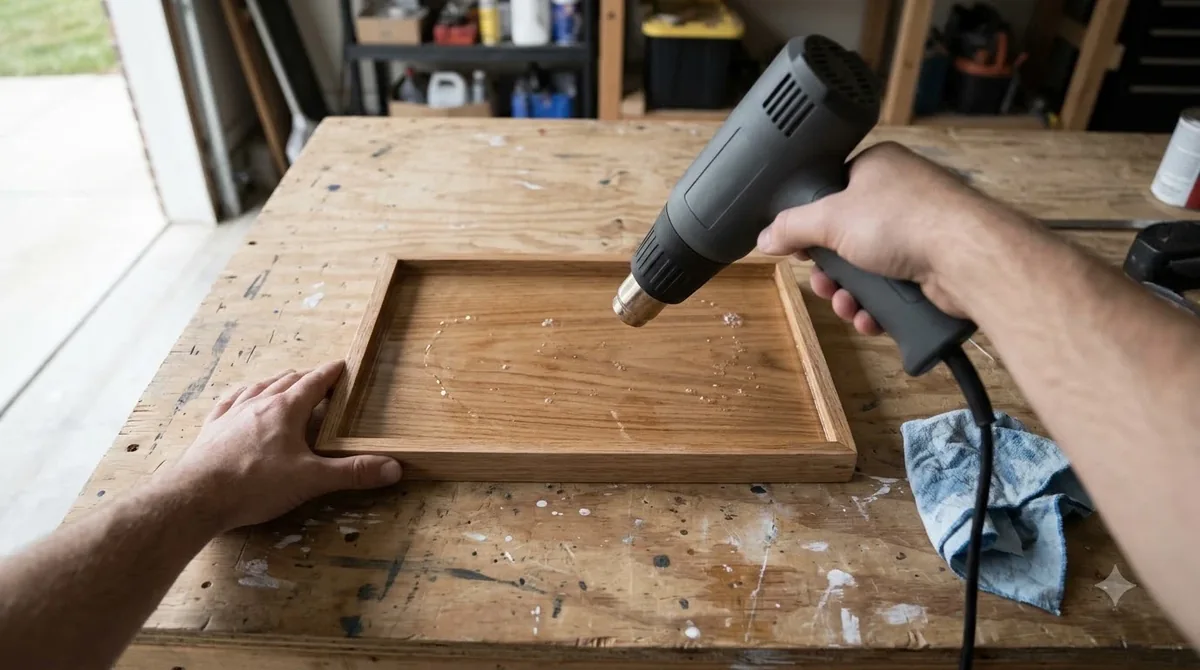
Primaloc advises against using a hair dryer, because it can push air bubbles into the epoxy. It also says you should not use a hair dryer to remove bubbles. Primaloc suggests removing bubbles right after pouring, using a heat gun or torch in a controlled way.
- Check the room. Confirm the temperature and humidity are inside the product’s range before you mix.
- Measure exactly. Use the stated ratio by volume or weight, and do not add extra hardener to hurry the cure.
- Pour thin layers. Keep each layer within the depth on the label, commonly 1/8 to 1/4 inch per layer.
- Remove bubbles. Use a brief, controlled pass with a heat gun or torch just after pouring.
- Hold a steady temperature. Use a space heater or dehumidifier if the room drifts outside the range.
Heat can soften cured epoxy later. Primaloc says heat above 135 degrees Fahrenheit can soften it, so keep finished pieces away from hot pans and heat lamps.
Common Cure Problems and Fixes
Most cure problems come from mixing, temperature or humidity. Sticky or soft epoxy after the full window usually means the chemistry did not complete. Sort the symptom first, then choose the fix.
| Symptom | Likely cause from sources | What to do |
|---|---|---|
| Sticky but solid surface | Surface not fully cured, or mix ratio slightly off | Apply a new flood coat following the brand’s instructions, then allow full cure time. |
| Soft or wet spots | Inadequate mixing or incorrect proportions | Remove the soft material, clean with denatured alcohol or acetone if needed, then flood coat. |
| Cloudy or blushed surface | High humidity, often above 60 percent | Lower humidity before recoating, and clean the surface before the next layer. |
| Slow cure in a cool room | Temperature below the recommended range | Move the piece to a warmer, stable spot and give it more time. |
Resiners suggests two simple checks for full cure. A fingernail pressed into an inconspicuous spot should not leave a mark. A tap with a coin should produce a clear, hard sound. Primaloc advises sanding cured epoxy with 220 to 300 grit before recoating.
If the epoxy stays soft, do not keep waiting in a cold room. Correct the conditions first, then decide whether the layer needs removal. For more on full timing for finished pieces, see epoxy full cure time.
Frequently Asked Questions
How long does epoxy take to cure before I can use it?
Many sources say light handling is possible after about 24 hours, while full cure usually takes about 72 hours. Heavy use or chemical exposure should wait for full cure, which can take up to 7 days. Check your product’s data sheet for the exact window.
When can I walk on epoxy flooring?
Impact Flooring says most epoxy floors can take light foot traffic after about 24 hours. It recommends waiting 48 to 72 hours before heavy use. Leggari recommends waiting the full 7 days before placing heavy furniture, since indents can be hard to remove.
How long does epoxy take to cure in cold weather?
Leggari says cold-weather curing can take roughly twice as long as curing in the ideal range. Resiners notes that epoxy below 60 degrees Fahrenheit cure times extend dramatically. Warm the room to the product’s stated range rather than simply waiting longer.
How do I fix epoxy that is still sticky after curing time?
Primaloc says a solid but sticky surface can be fixed by applying a new flood coat that follows the brand’s instructions. Soft, wet areas need the soft material removed first. Check your mix ratio and room conditions before recoating.
Epoxy cure time depends on the stage you care about and the conditions in your room. Plan for about 24 hours before light handling, about 72 hours for a strong cure and up to 7 days for full hardness. For broader background on resin chemistry and terms, visit Resin Basics & Q&A.
More in Resin Basics & Q&A
 What Is Vacuum Degassing for Epoxy Resin and How It Removes Trapped BubblesUpdated Nov 26, 2026
 Epoxy Full Cure Time: How Long Before Your Project Is Ready to UseUpdated Nov 26, 2026
 Envirotex Lite Pour On Instructions for a Glossy, Bubble-Free FinishUpdated Nov 26, 2026
 Deep Pour vs Table Top Epoxy: Which Fits Your Project Depth and Cure TimeUpdated Nov 26, 2026
 High Temperature Epoxy for Metal: How to Pick One That Holds Up to HeatUpdated Nov 26, 2026
 Amazing Clear Cast Resin Instructions: Mix, Pour and Cure Without BubblesUpdated Nov 26, 2026