

We may earn a commission when you buy through links on this page, at no extra cost to you. Learn more.
How much resin for a coaster depends on its size, but a 4 inch round coaster poured to about 1/8 inch takes roughly 0.9 fluid ounce of mixed resin. That is about 0.45 fluid ounce each of resin and hardener. You get the number by multiplying the coaster’s surface area by the pour depth. ArtResin recommends pouring about 1/8 inch (3 mm) per pour, and it asks for equal parts resin and hardener by volume. Plan a little extra for spills, overpour and the mixing cup residue.
This guide shows you how to turn coaster dimensions into a resin volume you can measure. It also covers batch sizes for sets of coasters, a quick look at how much the ArtResin 16 oz kit covers, and the mistakes that most often leave makers short at the end of a pour.
How Coaster Resin Volume Is Calculated
The amount of resin depends on the area you fill and how deep you fill it. Area is the surface the resin covers. Depth is how thick the pour is. Multiply the two and you get the volume of liquid you need.
For a round coaster, area equals pi times the radius squared. The radius is half the diameter. For a square coaster, area is one side times the other side. Once you have the area in square inches, multiply by the depth in inches to get cubic inches.
Convert cubic inches to fluid ounces at the end. One fluid ounce is roughly 1.8 cubic inches, so divide your cubic inch total by about 1.8. ArtResin’s own calculator does this math for you, and its guide says the result is the amount for one coat. If you plan two or three layers, multiply by the number of layers.
Remember that the result is the total mixed volume. Half of it is resin and half is hardener, because the ratio is 1:1 by volume.
Coaster Size and Thickness Reference Chart
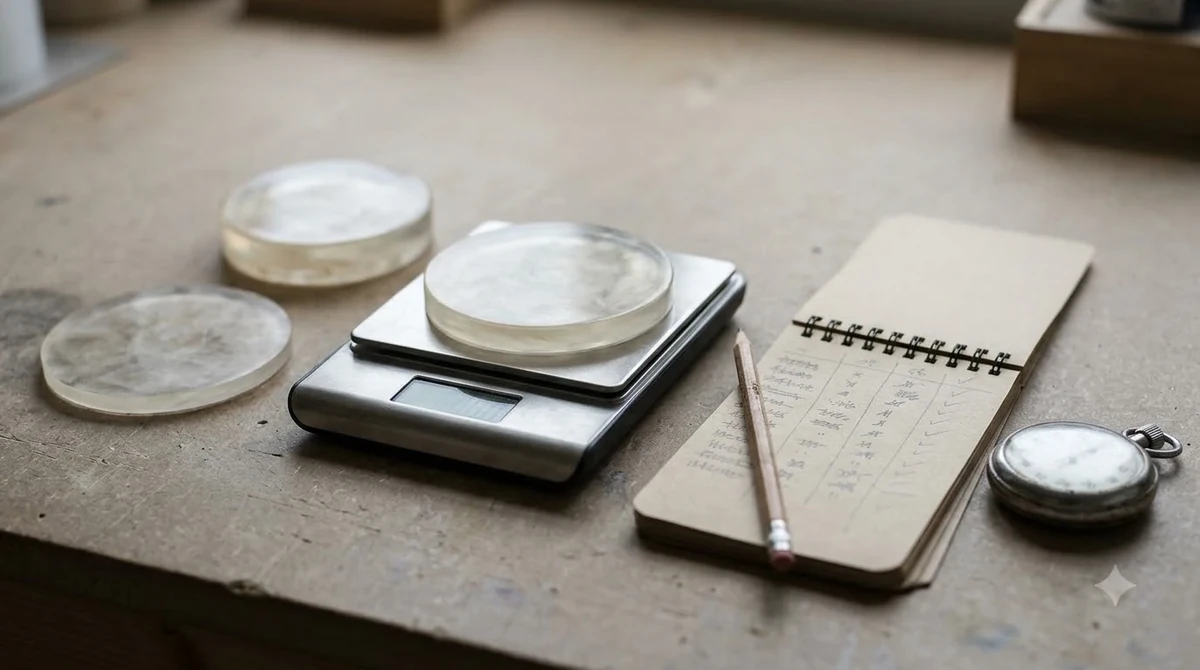
Use this chart as a starting point for common coaster sizes at the 1/8 inch pour depth that ArtResin recommends. The numbers are calculated from the dimensions, so they are close estimates rather than exact measurements of your mold or base.
Coasters with raised edges, deeper molds or embedded objects will need more resin than these figures show. Measure your own mold cavity if you have one.
| Coaster shape and size | Surface area (approx.) | Total mixed resin at 1/8 inch (approx.) | Each part, resin or hardener (approx.) |
|---|---|---|---|
| 3.5 inch round | about 9.6 sq in | about 0.7 fl oz | about 0.35 fl oz |
| 4 inch round | about 12.6 sq in | about 0.9 fl oz | about 0.45 fl oz |
| 4 inch square | 16 sq in | about 1.1 fl oz | about 0.55 fl oz |
| 4.5 inch round | about 15.9 sq in | about 1.1 fl oz | about 0.55 fl oz |
Tip: Write the calculated volume on the mixing cup or your project notes before you start. A quick check against the chart prevents mixing too little for the last coaster. For a wider view of the same system, see How Much Does It Cost to Make Resin Coasters.
Worked Examples for Common Coaster Sets
Working through a real set shows how the numbers add up. Start with the area of one coaster, multiply by the depth, and then multiply by the number of coasters you plan to pour in that batch.
Example one: four 4 inch round coasters at 1/8 inch. Each coaster needs about 0.9 fluid ounce, so four coasters need about 3.5 fluid ounces of mixed resin. That is about 1.75 fluid ounces of resin and 1.75 fluid ounces of hardener.
Example two: four 4 inch square coasters at 1/8 inch. Each square needs about 1.1 fluid ounces, so the set needs about 4.5 fluid ounces total. Square coasters take more resin than round ones of the same width because they have more corners and more surface area.
Example three: a set of four coasters that you plan to build in two thin layers. Calculate one layer at 1/8 inch, then double the total. Two layers of four 4 inch round coasters means about 7 fluid ounces of mixed resin, split evenly between the two bottles. Check ArtResin’s guidance on layering before you start the second coat.
Accounting for Waste, Overpour and Mold Fill
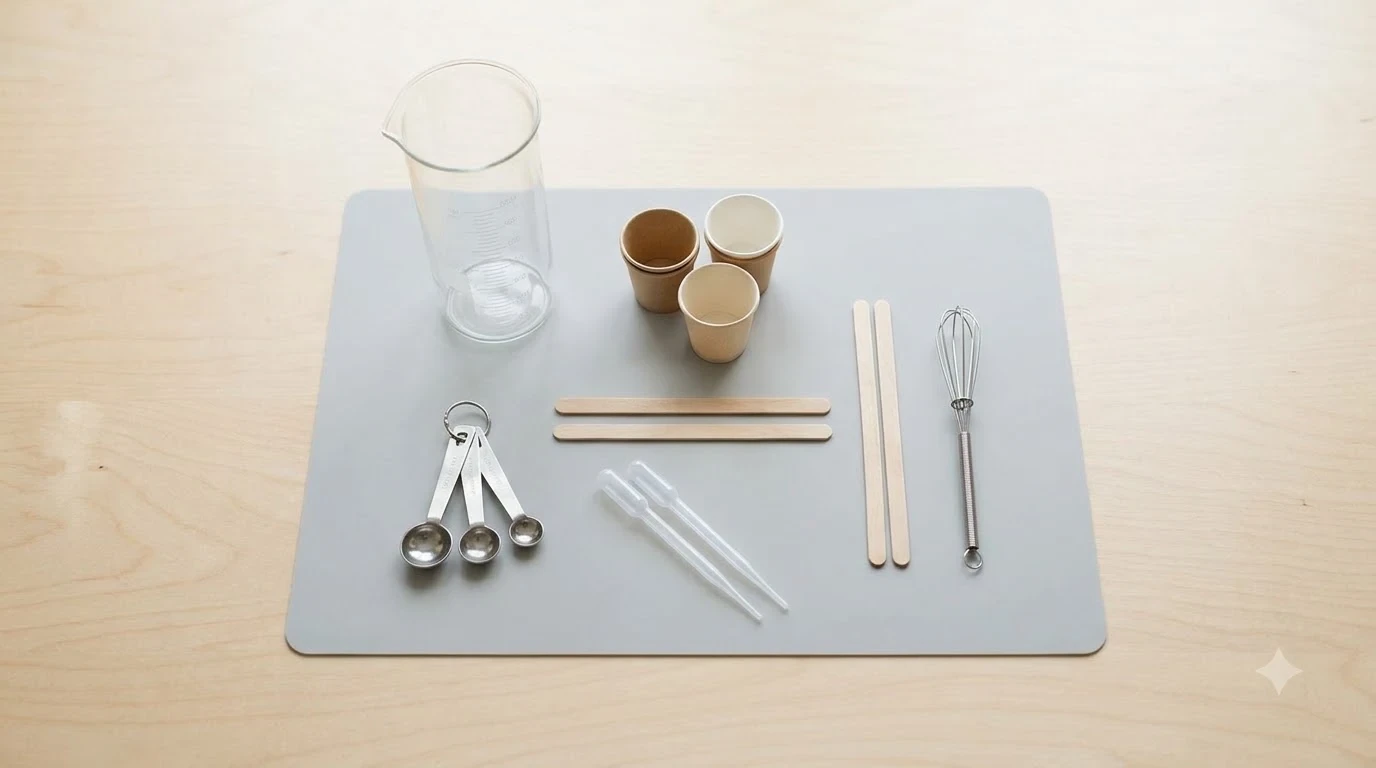
The math gives you the volume that will sit in the coaster. It does not account for resin left in the mixing cup, on your stir stick or on the spreader. Plan for a bit more than the calculated volume so you can finish every piece in one session.
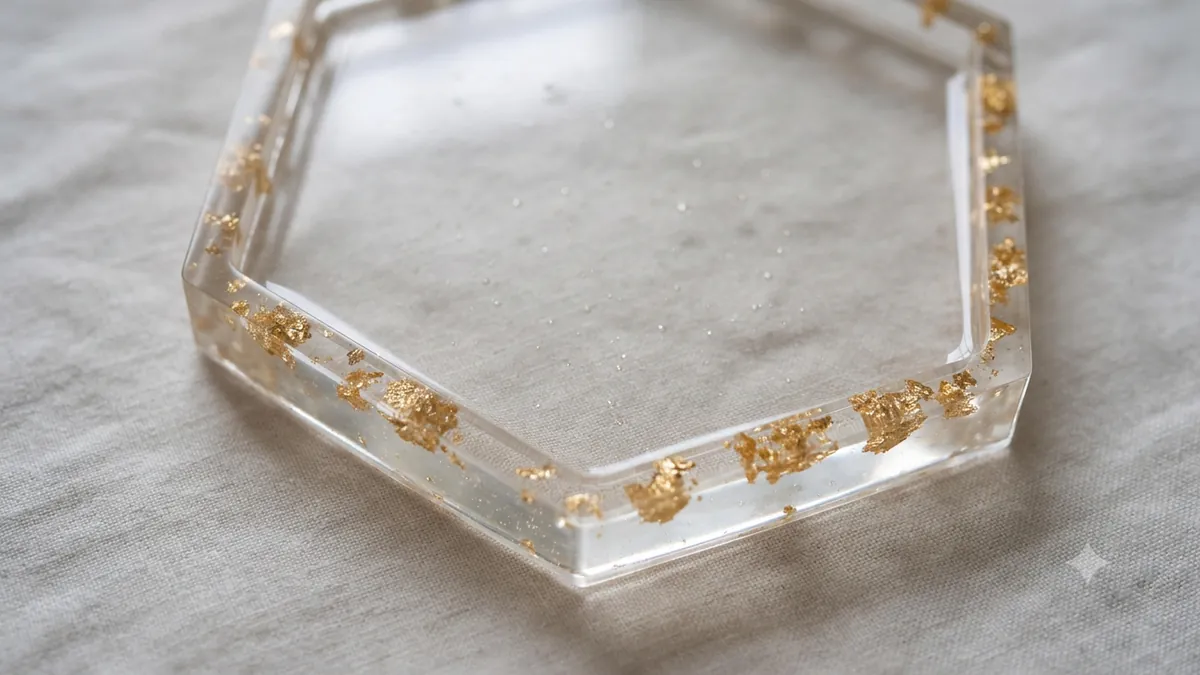
Overpour is the resin that runs over the edge of a flat base. ArtResin’s tutorials describe letting resin run over the edges or nudging it to the edge so it domes. Either method uses resin you will not see in the final thickness, so the math may come up short if you pour generously.
Silicone molds need a closer look. The mold cavity sets the shape, and the 1/8 inch depth is a guideline. ArtResin says a silicone mold filled to about 1/8 inch lets bubbles escape, and a warm water bath can let you pour a little thicker. Objects you embed also take up space, so the resin level will rise. Pour a little extra and check the level before you let it set.
Safety: Wear nitrile gloves and work in a well-ventilated area. Read the ArtResin Safety Data Sheet before you start, and keep resin out of the drain, as ArtResin’s FAQ advises. For more on this topic, see How Much Epoxy Do I Need for a Table Top.
Mixing Batch Sizes for Multiple Coasters
Mix in batches that match your mold count, not the largest number you could fit in a cup. Smaller batches give you less time pressure, and ArtResin gives you about 45 minutes of working time after mixing.
ArtResin asks for equal volumes of resin and hardener, and it says to stir for at least 3 minutes while scraping the sides and bottom. For more on measuring and mixing, read ArtResin’s guide to measuring resin. Mixing one large batch for a big set can eat into your working time, so split a set into two or three smaller batches if you have many coasters to fill.
Warm the bottles in a warm water bath if your room is cool. ArtResin says warming shortens working time by about 10 to 15 minutes, so the timing changes. Dry the bottles completely before you open them, since even a drop of water can cause cloudiness.
| Batch plan | Best use | Things to watch |
|---|---|---|
| One coaster per batch | Embedded objects or a first attempt | Measuring small amounts takes care |
| Four coasters in one batch | A matched set in one mold tray | Keep the pour inside the 45 minute working window |
| Two batches for a larger set | Sets of six or more | Mix each batch fresh and pour it right away |
Common Mistakes That Cause Resin Shortages
Most resin shortages come from a few predictable errors. Knowing them helps you plan the batch before you open a bottle.
The first mistake is using the wrong thickness. A pour that is a little deeper than 1/8 inch uses far more resin than the chart suggests. ArtResin’s ArtResin FAQ on pour depth describes 1/8 inch as the self-leveling depth, so adding depth in one go changes the math.
The second mistake is forgetting the coats. ArtResin’s calculator gives the amount for one coat, so multiply by the number of coats you plan. Forgetting this step is the most common reason a second layer runs short.
The third mistake is measuring by eye. ArtResin’s blog says to use a graduated measuring cup and avoid eyeballing. Adding extra hardener does not make the resin cure faster, and it throws off the ratio.
The fourth mistake is adding too much colorant. ArtResin says no more than 6 percent of the combined resin and hardener volume should be colorant, so colorant does not add to your resin supply in a useful way. For the next step after this check, see How Much Does Uv Resin Cost.
Frequently Asked Questions
How much resin does a 4 inch round coaster take?
A 4 inch round coaster poured to about 1/8 inch takes roughly 0.9 fluid ounce of mixed resin. That is about 0.45 fluid ounce each of resin and hardener. Add a small margin for overpour and the mixing cup.
How thick should resin be poured for coasters?
ArtResin recommends pouring about 1/8 inch (3 mm) per pour, because the resin self-levels to about that depth. For more thickness, ArtResin says to build up in layers after the resin reaches a gel stage, roughly 3 to 5 hours later. A warm water bath can let you pour a little thicker.
How many coasters can you make with a 16 oz resin kit?
ArtResin’s FAQ says the 16 oz kit makes about 8 standard-sized coasters. The kit holds 8 oz of resin and 8 oz of hardener. Simple area math at 1/8 inch can suggest more coasters, so the result depends on size and depth. Run your own numbers with the chart above.
How long does a resin coaster take to cure before use?
ArtResin says the coaster is dry to the touch within about 24 hours and reaches full cure in about 72 hours. Keep the temperature steady during the first 24 hours. Once fully cured, ArtResin says the surface handles heat up to 120°F (50°C) before softening.
Measure your coaster, multiply by the depth and add a small margin for waste. Then check ArtResin’s resin calculator before you mix. For more project ideas, browse resin coaster ideas, or see Resin Art & Decor projects for other pieces you can pour with the same method.
More in Resin Art & Decor
 What Is a Resin Art Kit? What It Includes and How to StartUpdated Nov 26, 2026
 Resin Lamp Ideas and How to Build a Glowing Piece at HomeUpdated Nov 26, 2026
 Resin Coasters for Beginners: Mix, Pour, and Cure a Glossy First SetUpdated Nov 26, 2026
 Resin Over Watercolor Without Bleeding: How to Seal and Pour SafelyUpdated Nov 26, 2026
 How Much Epoxy for a Tumbler? Measure by Ounces and Avoid WasteUpdated Nov 26, 2026
 Ocean Resin Art Tutorial: Make Realistic Waves on Canvas or WoodUpdated Nov 26, 2026