

We may earn a commission when you buy through links on this page, at no extra cost to you. Learn more.
Learning how to make epoxy matte usually means wet sanding the fully cured surface, starting around 360 to 500 grit and working up to 2000 grit or higher. Resin Pro recommends that mid-range starting point and a finish at 2000 or higher for a uniform matte effect. Wet sanding keeps the surface cool and helps the paper cut cleanly. Mineral-based resins can cure matte on their own, and matte pastes or matting agents can be mixed in before the pour.
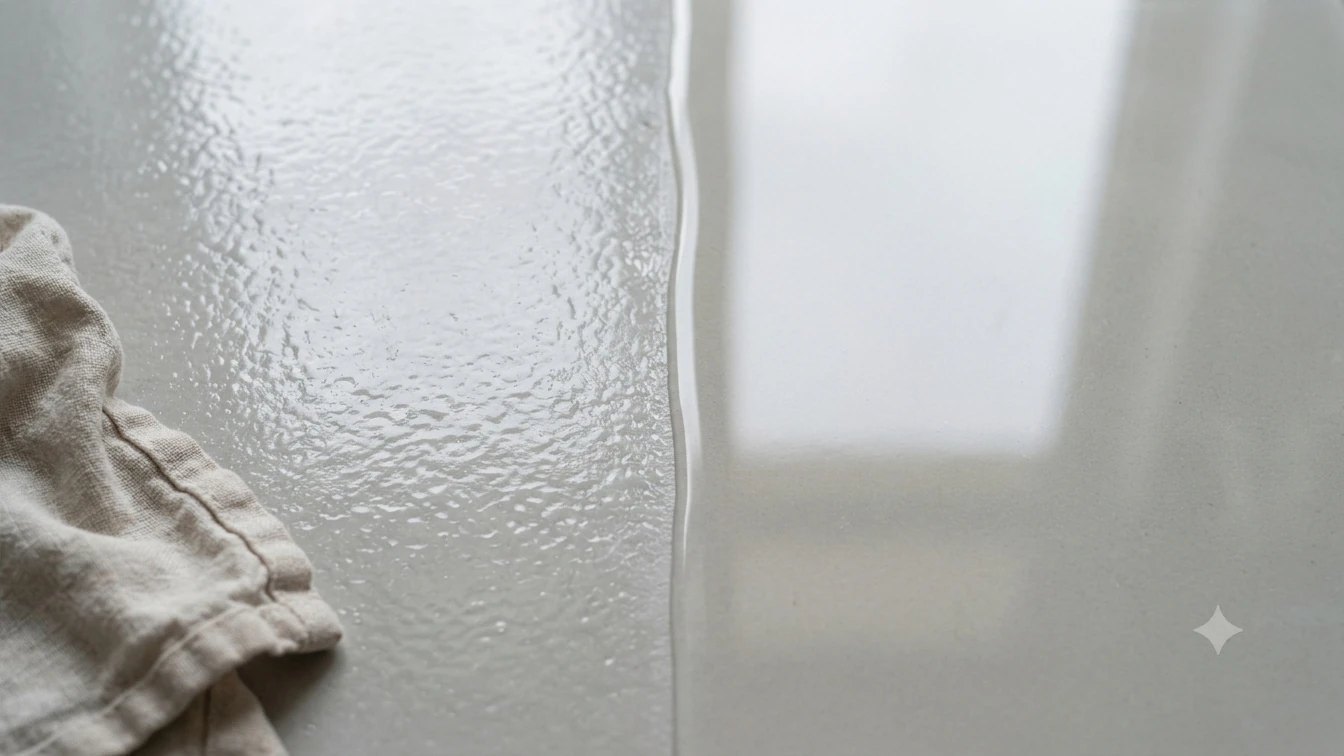
Most standard epoxy is made to self-level into a clear, reflective surface, which is why it looks glossy when it cures. That shine suits many projects, but a satin or matte look often works better on furniture tops, decorative panels, and art pieces. This guide covers the main methods, a step-by-step sanding sequence, fixes for blotchy or tacky results, and safety basics.
Matte Finish Methods Compared
Sanding a cured surface is the most common route for clear epoxy. You can also add a matting agent before the pour, choose a mineral-based resin, or cover the surface with a matte primer and paint. Each option trades off effort, cure time, and how even the final look will be.
| Method | How it works | Best for | Watch for |
|---|---|---|---|
| Wet sanding after full cure | Abrades the gloss with progressively finer grit | Tabletops, panels, flat art | Uneven pressure can leave blotches |
| Matte paste or matting agent | Mixed into the resin before pouring | Satin or low-sheen looks | Test a small batch first |
| Mineral-based resin | Cures matte without sanding | Coasters and tactile crafts | It is a different product from standard epoxy |
| Matte primer and paint | Covers the glossy resin with a matte layer | Surfaces where a paint layer is acceptable | Follow the paint maker’s drying times |
Resin Pro’s guidance says mineral-based resin naturally cures matte, which makes it the simplest route if you want no sanding at all. Its Coasters kit, for example, can be de-moulded in about 60 minutes according to the product description. Standard clear epoxy, such as a One-2-One style 1:1 resin, cures glossy and needs sanding or a dedicated matting agent to look matte.
Sanding Epoxy to a Matte Finish
Sanding is the core of the job for most flat pieces. Wet sanding gives the most even matte result on standard epoxy because water keeps the surface cool and flushes away debris. Sanding a glossy surface will look cloudy at first, and that is normal.
Dry sanding can create enough heat to soften epoxy, which then smears and clogs the paper. According to TotalBoat’s epoxy polishing guide, dry sanding also throws fine dust into the air. Wet sanding avoids both problems and leaves a more even scratch pattern.
Resin Pro recommends Ebonite Abralon pads in 360 to 4000 grit for resin and wood, used wet with open-mesh pads. Water flows through the open mesh, which reduces clogging. Its matte finish guide says to rinse the surface and pad between each stage.
Never skip grits. A typical epoxy sanding sequence runs 400 or 600 grit, then 800, 1000, 1500, 2000, and 3000 grit. For a matte look, you can stop once the surface is uniformly dull, but sanding to 2000 or higher is the usual target.
Adding Matting Agents Before Pouring
If you want the matte look built into the resin, you can add a matte paste or matting agent before the epoxy cures. Resin Pro’s guidance notes that matte pastes and mineral pigments can produce a uniform matte effect. This avoids the sanding step, though it does change the resin itself.
Resin Pro also advises that a dedicated matting agent is needed when standard 1:1 epoxy should look matte. Read the label on any additive for the amount to use and whether it suits your resin type. Mixing too much can change clarity or how the resin cures.
Pigments also affect opacity. If you want a solid, non-reflective colour, review how to make resin opaque before you choose a paste. Mix a small test batch on scrap material and let it cure fully before judging the sheen.
Step-by-Step: Making Epoxy Matte
This sequence works for a cured, flat epoxy surface such as a tabletop or panel. For small pieces like jewelry or coasters, use hand sanding with lighter strokes and shorter passes.
- Confirm full cure. Check the product instructions before sanding. Resin Pro lists Art Pro cure times of 10 to 12 hours for the first stage and 18 hours for the second.
- Control the curing environment. Resin Pro advises avoiding high humidity and direct sunlight during cure, because both affect the final sheen.
- Clean the surface. Remove dust and wipe away residue. Lightly spray the surface and your sandpaper with clean water.
- Start at 360 or 500 grit. Use a sanding block on flat areas to keep pressure even and avoid low spots.
- Sand in straight, overlapping passes. Use light, consistent pressure and keep the surface wet, but not flooded.
- Rinse and check often. Rinse away slurry and move on only when the previous grit’s scratches are gone.
- Progress to 1000 to 2000 grit or higher. Do not skip any grit between your starting point and your finish.
- Dry and inspect. Wipe with a clean, lint-free towel. Look for shiny spots, deep scratches, or swirl marks; the surface should look uniformly matte.
- Seal or paint if needed. If you add a matte primer, paint, or sealer, follow its maker’s instructions for thin coats and drying time.
Tip: Mark the surface with a pencil before sanding. Scuffed pencil marks disappear as you work, so you can see which areas still need attention.
Fixing Blotchy or Tacky Matte Results
Most problems come from uneven sanding, a skipped grit, or a surface that has not cured fully. Identify the symptom first, then correct the cause instead of sanding harder. Heavy pressure only creates more scratches.
| Symptom | Likely cause | How to fix it |
|---|---|---|
| Blotchy, uneven patches | Uneven pressure or a skipped grit | Resand the area evenly, then move up the grit sequence in order |
| Shiny spots remain | Missed areas or light pressure | Sand the missed zones and recheck the whole surface |
| Cloudy haze | Slurry or residue left on the surface | Rinse thoroughly and dry with a lint-free towel |
| Tacky or soft surface | Incomplete cure or high humidity | Allow full cure per the product instructions and keep the space dry |
Heat is another common cause of problems. Epoxy softens with heat, so keep the sander moving and avoid lingering in one spot. A soft spot can smear and create a patch that looks different from the rest of the surface.
Do not sand epoxy that still feels tacky. It will smear and load the paper quickly. Wait for full cure, then start the sequence again from your first grit.
Safety and Ventilation Tips
Sanding cured epoxy creates dust, and some finishing products carry flammability warnings. Wet sanding cuts down on airborne dust, and good ventilation handles what remains. Read the safety data sheet for every product you use.
Wear nitrile gloves and a dust mask or respirator suited to the product, following its SDS. Work in a ventilated space and clean the area with a workshop vacuum rather than sweeping dust into the air.
If you use isopropyl alcohol at 99.9% for surface effects, treat it as highly flammable. Resin Pro’s safety guidance says to wait at least 5 to 10 minutes for evaporation before using heat tools near treated areas, and to keep containers at least 2 meters away from heat sources.
Safety: Keep isopropyl alcohol away from torches and heat guns, and have a CO2 or dry chemical extinguisher nearby. Do not use water on an alcohol fire.
Frequently Asked Questions
Can you sand epoxy resin to make it matte?
Yes. Wet sanding cured epoxy from a mid-range grit up to 2000 or higher produces a uniform matte look. Sanding first looks cloudy, which is normal, and the matte effect shows once the scratches are even.
What grit sandpaper should I use to make epoxy matte?
Start at 360 or 500 grit, according to Resin Pro. If you plan to polish afterward, a typical sequence runs through 800, 1000, 1500, 2000, and 3000 grit. Do not skip steps.
Should I wet sand or dry sand epoxy for a matte finish?
Wet sand. Dry sanding can generate enough heat to soften epoxy and clog the paper, and it releases more dust. Rinse the surface and pad between each grit stage to keep scratches even.
Does mineral resin cure matte without sanding?
Yes, according to Resin Pro’s guidance, mineral-based resin naturally cures matte. It is a different material from standard epoxy, so check the product type before you buy. Its Coasters kit can be de-moulded in about 60 minutes.
Test any method on a scrap board before working on the main piece, so you can compare sheens side by side. For more step-by-step guides on finishing techniques, visit the Techniques and how-to library. Keep the cure time and grit sequence in mind, and the result should be even and matte.
More in Techniques & How-To
 How to Make Resin Glow in the Dark, With Mixing Ratios and Pour LimitsUpdated Nov 26, 2026
 How to Use Deep Pour Epoxy for Clear, Bubble-Free LayersUpdated Nov 26, 2026
 How to Do a Dirty Pour with Resin Without Muddy ColorsUpdated Nov 26, 2026
 How to Cure Epoxy Faster Safely: Warmth, Ratios and Heat TipsUpdated Nov 26, 2026
 How to Make Resin Shine: Cure, Level and Polish for a Glossy FinishUpdated Nov 26, 2026
 How to Clean Epoxy Tools Fast Before the Resin CuresUpdated Nov 26, 2026