

We may earn a commission when you buy through links on this page, at no extra cost to you. Learn more.
Why is my resin smoking? Usually the curing reaction is overheating a batch that is too thick, too large or too warm. Mixing Part A (resin) and Part B (hardener) starts an exothermic reaction that releases heat. According to Mas Epoxies, standard tabletop layers should stay within the product’s limits, with Deep Pour rated to 1 inch and Deep Pour X to 2 inches. If the volume exceeds 1 gallon, the maker advises pouring a thinner layer so the heat can escape.
This troubleshooting guide explains the most common reasons resin smokes during cure, how to stop the reaction safely, and what to do with a batch that has already gone too far. Use it as a checklist the next time a cup gets hot or a pour starts to fume.
Why Epoxy Smoking Happens
Smoke almost always means the reaction is making heat faster than the mixture can shed it. Thickness, mass, room temperature and hardener amount are the main levers. Each one speeds the reaction up.
The pour is too thick
Each epoxy system has a safe pour depth at room temperature. Exceed it, and heat builds faster than it can leave the material. Standard coating epoxies are generally applied in layers of 1/8 to 1/4 inch at a time. Deep-pour casting epoxies generally allow 2 to 3 inches in a single layer, depending on the product.
Using a coating epoxy for a deep casting is a common mistake. The coating formula was never designed for that depth, so the center of the pour can run hot.
Too much mixed mass in one container
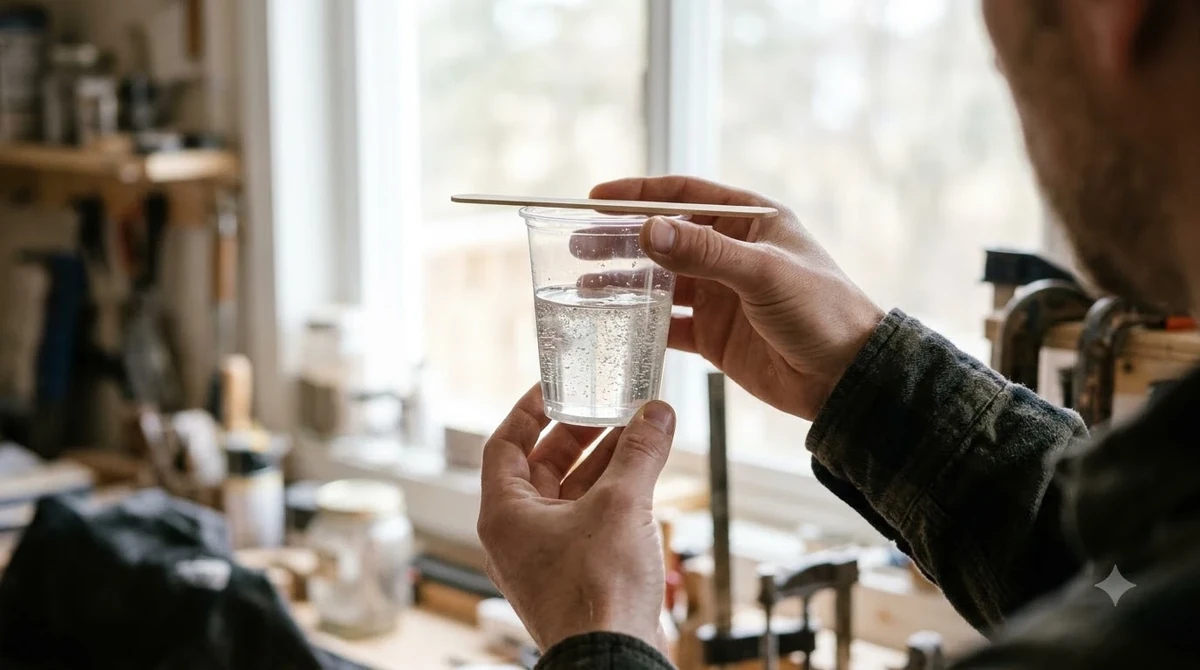
Epoxy sitting in a cup or bucket concentrates its mass. A large batch has less surface area per unit of material, so heat gets trapped in the middle. Mas notes that doubling the mixed mass will likely cut gel time roughly in half. Less working time means the reaction is moving faster.
A cup that feels warm to the touch is a warning sign. Spreading the mixture into a thin layer is the usual way to slow it down.
A warm room or warm resin
Air temperature and the starting temperature of the components both matter. Mas gives an example: if the air is 95F and the epoxy is already at 90F, the reaction produces even more heat and working time drops sharply. ScienceInsights cites a shop temperature around 20°C (68°F) as giving the most working time and the gentlest curve.
Warming resin to make it flow is fine, but do not leave it sitting in the mixing container. Spread it out as soon as you can.
Extra hardener
More hardener does not make resin stronger. ScienceInsights says excess hardener creates additional reactive sites and sharply increases heat output. The result can be a flash cure with smoke and yellow or brown discoloration. Salvage Secrets also names an incorrect resin-to-hardener ratio as the most likely culprit for excessive smoke.
UV Resin Smoking Causes
The sources I used for this guide describe two-part epoxy, not UV resin, so the figures above do not transfer directly. UV resin cures by light rather than by mixing two parts, which means its heat behavior depends on the product. Check the manufacturer’s maximum layer depth and lamp instructions before you cure any thick pour.
As a general rule, a thick UV pour or a lamp left running too long on a small area can build heat. Treat any smoking as a stop signal, and follow the maker’s guidance on curing time and layer thickness.
Why Is My Epoxy Smoking? Common Mistakes
Most smoking traces back to a handful of habits. The table below matches what you see with the likely cause and the fix. Work through it from top to bottom.
| What you notice | Likely cause | What to change |
|---|---|---|
| Cup feels hot and smokes within minutes | Too much mass in one container | Mix smaller batches and spread the mixture into a thin layer |
| Thick pour heats up from the center | Layer deeper than the product allows | Split the pour into layers within the maker’s stated depth |
| Fast cure with brown or yellow color | Extra hardener or wrong ratio | Measure by the label ratio and check both parts carefully |
| Heat builds on a warm day | High room or material temperature | Move to a cooler room and let components reach a moderate temperature |
| Smoke starts on a fresh layer over a warm one | Previous layer has not cooled | Wait until the prior layer is back to room temperature |
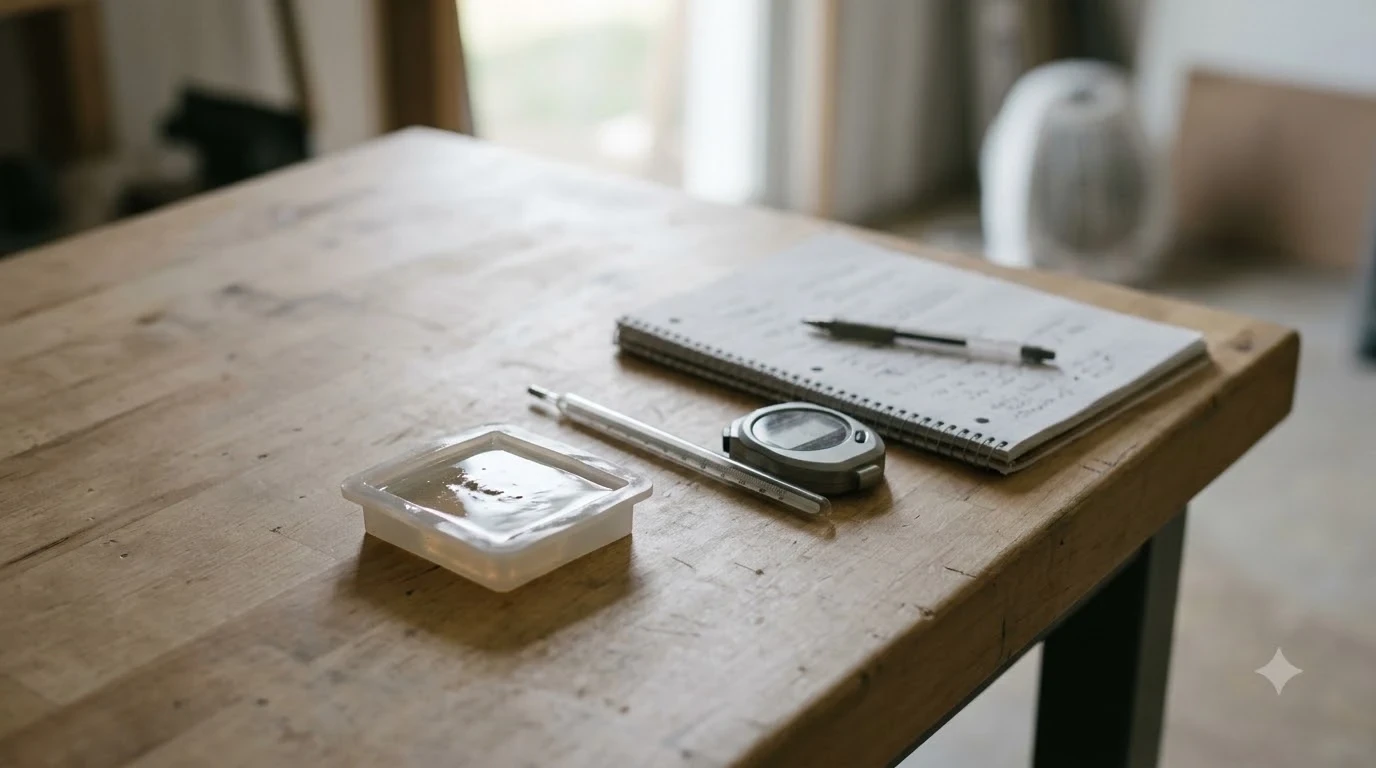
Tip: Check the data sheet for the gel time at a stated temperature and mass. Smaller batches and cooler rooms stretch that time, which gives you more room to work.
How to Stop Smoking During Cure
If resin is smoking now, your first job is safety, not saving the batch. Step back, ventilate, and let the reaction run its course. Only after it is safe should you assess what can be done.
- Move away and leave the room if needed. ScienceInsights advises moving away from actively smoking resin and ventilating the area.
- Do not lean over the container. Keep your face and hands out of the fumes.
- Do not stir or pour it. Disturbing an active reaction can spread heat and fumes.
- Open doors and windows. Improve airflow until the smell and smoke clear.
- Let it cool completely. Once the reaction has stopped, cool the batch fully before handling.
- Use a fan on large molds. Salvage Secrets suggests a fan instead of a heat gun when a mold is larger than about 10 inches (25 cm).
Safety: Keep kids and pets out of the room, and never put water on burning resin. Treat any flame as a fire emergency and follow local emergency guidance.
Safety Gear and Ventilation
Treat smoking resin as a hazard. ScienceInsights states that overheating epoxy releases hydrogen cyanide, phenol, benzene and naphthalene, all toxic. Salvage Secrets calls smoke normal and harmless, which conflicts with that view. Since the two sources disagree, the safer assumption is that the fumes are toxic.
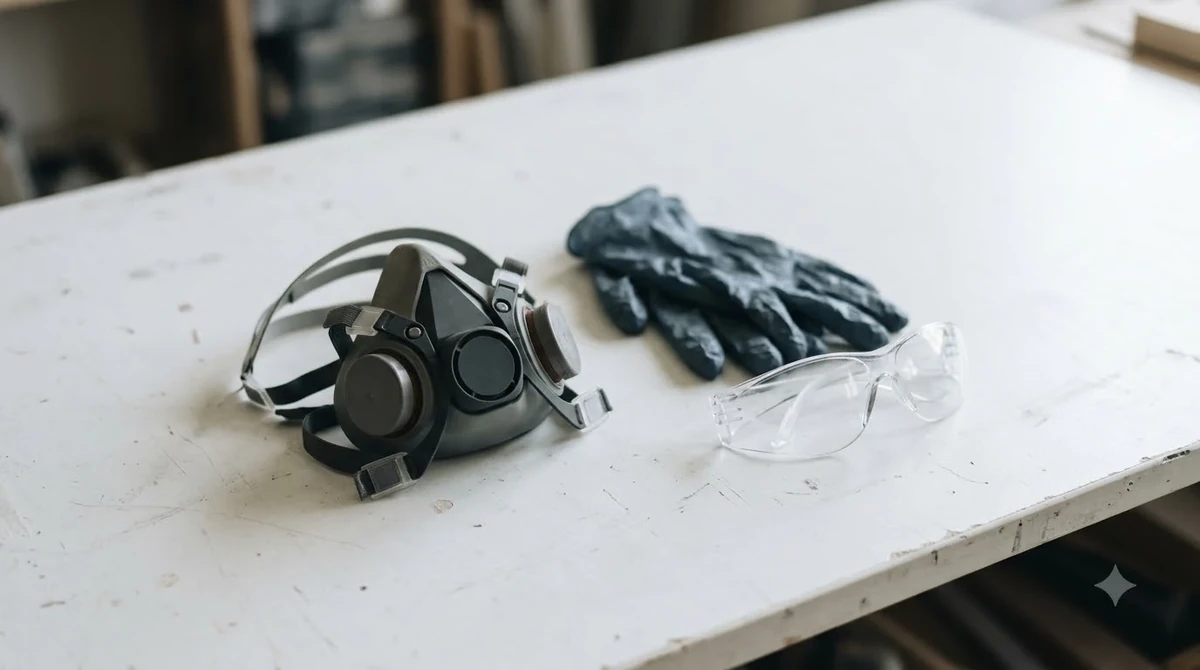
Wear nitrile gloves and work in a space with good airflow. Read the product’s safety data sheet (SDS) for the specific gear and ventilation it recommends. For a helpful overview of the fume risks, the ScienceInsights guide on epoxy smoking describes the decomposition products in plain terms.
For skin contact during cleanup, see how to get resin off hands before you touch anything else.
Preventing Smoking in Future Pours
Prevention is about keeping mass and heat low. Small batches, thin layers and a cool workspace do most of the work. Plan the pour before you mix.
- Mix only what you can use quickly, within the maker’s stated maximum batch size.
- Choose a casting epoxy for any pour deeper than the coating limit, and respect its per-layer depth.
- Spread mixed resin onto the surface instead of leaving it in a cup.
- Let each layer cool to room temperature before adding the next.
- Measure hardener exactly by the label ratio, never more to speed things up.
Mas explains that a higher temperature also cuts gel time, so a warm room shortens your window. Plan around the data sheet, not your memory of an earlier project.
When to Remove and Start Over
Resin that has gone into thermal runaway usually cannot be saved. ScienceInsights says the rapid, uneven cure creates stress, cracks and discoloration, and the material is brittle. Let it cool completely, then dispose of it according to local rules and the SDS.
Check the surface under the batch for heat damage, especially wood, plastic or a finished bench. If the resin is still in a mold, scraping it off after it cools is the usual path. For guidance on removing cured material, read how to remove epoxy before you scrape anything.
Frequently Asked Questions
Is it normal for epoxy resin to smoke while curing?
Sources disagree. Salvage Secrets calls a little smoke normal, while ScienceInsights says the fumes are toxic. Smoke that is heavy or accompanied by heat is a sign the reaction is overheating, so stop and ventilate.
Is epoxy fume from smoking resin toxic?
ScienceInsights states that thermal decomposition of overheating epoxy releases hydrogen cyanide, phenol, benzene and naphthalene. Treat the fumes as hazardous, avoid breathing them, and check the product SDS for guidance.
How thick can I pour epoxy at one time without it smoking?
It depends on the product. Standard coating epoxies are typically 1/8 to 1/4 inch per layer, while Mas Deep Pour allows 1 inch and Deep Pour X allows 2 inches. Always follow the depth on your own label.
Can smoking or overheated epoxy be saved or fixed?
ScienceInsights says thermally runaway resin is ruined and cannot be salvaged. Once it has cooled, plan to remove it and start a new batch. For the next attempt, see Troubleshooting & Fixes for related problems.
Smoking is a warning that heat is outrunning your batch. Smaller mixes, thinner layers and a cool room solve most cases. When in doubt, stop, ventilate and start fresh.
More in Troubleshooting & Fixes
 How to Fix Scratches in Epoxy Tables Without Redoing the Whole TopUpdated Nov 26, 2026
 How to Remove Amine Blush From Epoxy Without Starting OverUpdated Nov 26, 2026
 What Will Remove Epoxy from Wood, Metal, Skin and Hair SafelyUpdated Nov 26, 2026
 Paint and Epoxy Remover: Which Type Strips Cured Epoxy and Paint SafelyUpdated Nov 26, 2026
 Resin Sticking to Mold? Causes, Release Fixes and Safe RemovalUpdated Nov 26, 2026
 Why Is My Epoxy Bumpy? Causes and Fixes for a Smooth FinishUpdated Nov 26, 2026