

We may earn a commission when you buy through links on this page, at no extra cost to you. Learn more.
How long does epoxy take to cure? Most epoxies reach a usable strength in about 72 hours and full hardness in about 7 days. Epoxy usually becomes touch-dry around 24 hours, but a surface that feels dry is not yet cured. Sources note that full cure can run longer in cold rooms, humid air or thick pours. Check the label of your product for its specific times.
Waiting is the hardest part of most epoxy projects. Knowing the stages helps you plan when a tabletop, floor or craft piece is ready for handling, light use or heavy loads. The timelines below come from manufacturer guidance and published product guides, so treat them as typical ranges rather than promises. Each stage has its own job, and skipping ahead is the most common reason projects get damaged after they look finished.
Curing and drying are not the same thing
Drying and curing are two separate processes, and mixing them up is the most common source of early damage. Drying is the surface losing its stickiness. Curing is the chemical reaction between resin and hardener that builds strength.
Leggari, a flooring coatings maker, explains that curing is a chemical process while drying refers to solvents evaporating from the mix. Its guide on epoxy flooring dry time notes that epoxy is typically dry to the touch but often still tacky after 24 hours. That tacky layer is still reacting underneath, so it is not ready for anything that leaves a mark.
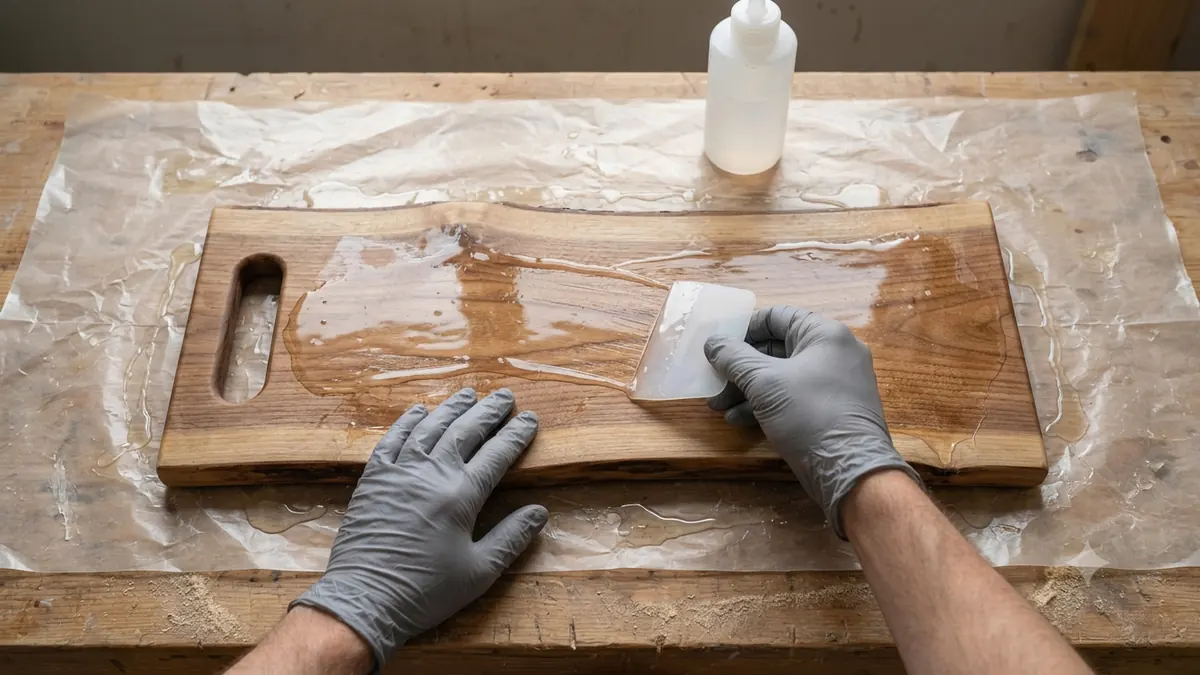
Treat a dry-feeling surface as the start of the wait, not the end. Keep dust, pets and tools off the piece until the stage you need has been reached. A simple habit helps here: write the pour date on a card near the project and count forward from it using the stages in the table below.
Typical cure timeline by stage
Epoxy cures in stages, and each stage unlocks a different level of handling. The table below groups the timing that the sources describe most often. Use it as a planning guide, then confirm the numbers against your product’s instructions.
| Stage | Typical timing | What it means for you |
|---|---|---|
| Touch-dry | About 24 hours | The surface is no longer sticky, but it is still soft underneath. |
| Light use | About 24 hours for many epoxies | Gentle handling is possible. Avoid stress and heavy loads. |
| Partial strength | About 72 hours | Primaloc says epoxy is about 99 percent cured at this point, given stable conditions. |
| Full cure | About 7 days | Maximum hardness and chemical resistance are usually reached. |
| Long-term hardening | Weeks to months | Primaloc notes that epoxy keeps hardening slowly after the 72-hour mark. |
Heavy furniture, appliances and sharp objects should wait for full cure. Leggari warns that placing furniture on a floor too early can leave indents that are hard or impossible to remove. For floors, Impact Floors advises waiting 48 to 72 hours before heavy use, which gives the coating time to firm up before it carries real weight.
How temperature and humidity change cure time
Temperature and humidity are the two conditions that move your timeline most. Cold slows the chemical reaction, and damp air can leave the surface cloudy or tacky. Most manufacturers and guides describe a comfortable workspace rather than a single exact setting, so aim for the middle of the recommended band.
Leggari recommends applying epoxy floor coatings when room temperature is between 55 and 75 degrees Fahrenheit. It says epoxy can take roughly twice as long to cure in cooler conditions. A coat that would take 7 days at 75 degrees Fahrenheit could take several weeks at 50 degrees Fahrenheit, which is a big difference for a schedule you may have already promised someone.
Resiners, a resin supplier, says most epoxies need at least 60 degrees Fahrenheit to cure properly, and that working below that point dramatically extends cure times. Its guide recommends a workspace around 75 to 80 degrees Fahrenheit and humidity under 60 percent. Above 60 percent humidity, it warns, you may see blushing, cloudiness or a tacky surface that refuses to firm up.
Impact Floors gives a best-case range of 24 to 30 degrees Celsius with humidity below 85 percent. Its guide adds that a cold base slab must be warmed before the epoxy goes down, and that this warming adds time to the project schedule. If your garage or basement is cold overnight, plan for that warm-up before the first pour.
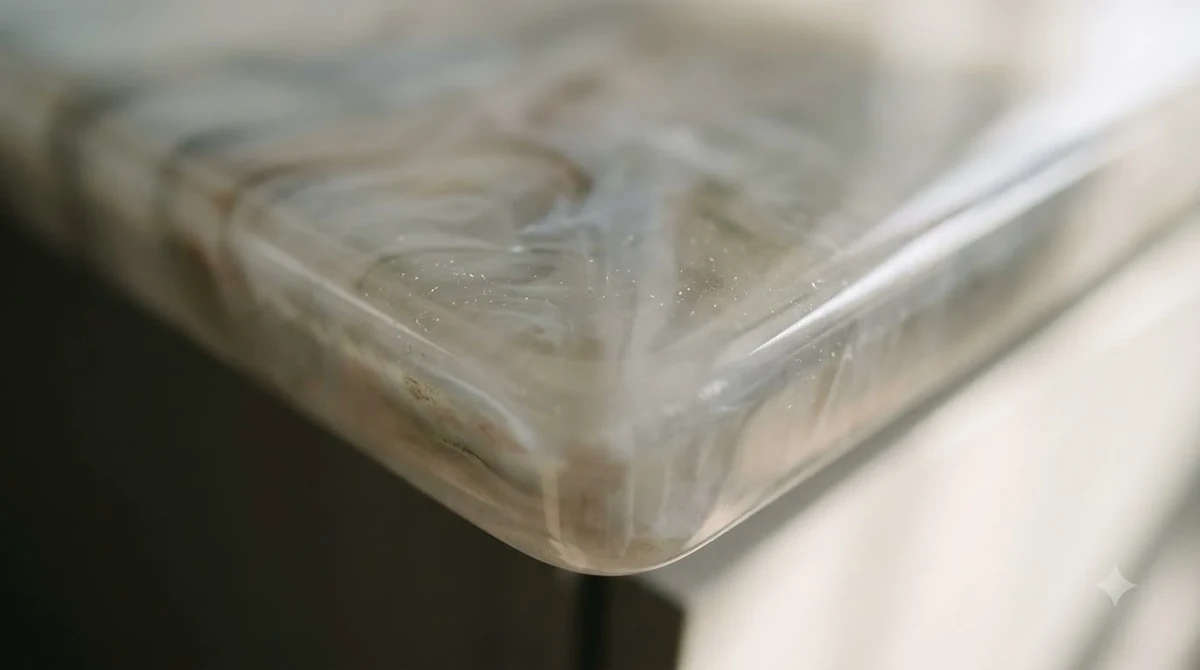
Tip: Use a thermometer and a hygrometer in the room for the first few days. Logging both numbers helps you explain a slow cure later and tells you whether to wait longer. A closely related guide is TotalBoat Tabletop Epoxy Cure Time.
Can you speed up epoxy curing with heat?
You can warm epoxy to speed it up, but heat is easy to overdo. Resiners says raising the temperature by 10 degrees Celsius (18 degrees Fahrenheit) can make epoxy cure about 50 percent faster. For many epoxies, it suggests 120 degrees Fahrenheit for 2 hours or 140 degrees Fahrenheit for 1 hour. Always confirm that method against your product’s instructions first, because some formulas react badly to fast heating.
Primaloc takes the opposite view. It says there are no reliable shortcuts and warns against forcing the cure. It advises against using a hair dryer to speed curing, since the airflow can add bubbles. Its only heat recommendation is a heat gun or torch used just after pouring to pop bubbles, and then you let the piece cure undisturbed.
Safety: Heat can make uncured resin fumes stronger, so work with good ventilation. Wear nitrile gloves and keep open flames and heat sources away from the mix. Read the product safety data sheet before using any heat source.
Common mistakes that extend cure time
Most long or failed cures trace back to a handful of avoidable errors. Fixing them usually costs you nothing but patience, and the list below covers the ones the sources mention most.
- Wrong mix ratio. Primaloc notes that inadequate mixing or incorrect proportions are the usual cause of epoxy that never fully hardens.
- Pouring too thick. Resiners recommends layers no thicker than 1/8 to 1/4 inch at a time to avoid heat buildup, bubbles, yellowing and cracking.
- Recoating at the wrong time. Primaloc says you can add a new layer about 4 hours after the last coat, but after more than 10 hours you should lightly sand first, using 220 to 300 grit.
- Setting items down early. Indents from furniture can be permanent, so wait for full cure before moving anything heavy onto the surface.
- Ignoring a cold base. Impact Floors says a cold base slab must be warmed before epoxy goes down, which adds time to the schedule.
Which resin type changes the timeline?
Not every epoxy cures at the same speed. Thin coatings, table tops and deep pours can behave very differently, so the product label should always set the final schedule. A general overview of resin categories is in Resin Basics & Q&A, which can help you match a product to your project size and the number of layers you plan to pour.
Deep pour formulas are built to cure more slowly so that heat stays under control. If you are choosing between chemistries, the comparison in epoxy vs polyurethane explains how the two families differ in hardness and handling. Whatever you choose, plan for the full cure window before you rely on the piece, and keep the product’s technical data sheet on hand.
Frequently Asked Questions
How long before you can walk on epoxy floors?
Many epoxy floors can take light foot traffic after about 24 hours, according to Impact Floors. Leggari says it generally accepts foot traffic after about 3 days, but recommends waiting the full 7 days before heavy use or furniture. Wait longer if the room is cold or humid.
How long does epoxy take to cure in cold weather?
Cold weather can roughly double the cure time, according to Leggari. Resiners says working below 60 degrees Fahrenheit dramatically extends cure times. Keep the room near the recommended range and allow extra days before loading the piece.
How long does deep pour epoxy take to cure?
Deep pour formulas are designed to cure slowly so they do not overheat. Resiners notes that deep pour resins can need up to 7 days, and it warns that pouring in layers no thicker than 1/8 to 1/4 inch helps prevent problems. Follow the label for the exact pour depth and schedule.
How long should epoxy countertops cure before use?
Primaloc says epoxy is gently usable after about 24 hours, and it is about 99 percent cured by 72 hours. Full hardness can take about 7 days, and hardening continues for weeks. Avoid placing hot cookware on the surface, since heat above 135 degrees Fahrenheit can soften cured epoxy.
Give epoxy the time its stages require, and you will get a cleaner, harder finish. Start with the touch-dry, light-use and full-cure milestones, then adjust for your room’s temperature and humidity. For the exact schedule, read your product’s technical data sheet before you start, and plan extra days if your workspace runs cold.
More in Resin Basics & Q&A
 What Is Vacuum Degassing for Epoxy Resin and How It Removes Trapped BubblesUpdated Nov 26, 2026
 Epoxy Full Cure Time: How Long Before Your Project Is Ready to UseUpdated Nov 26, 2026
 Envirotex Lite Pour On Instructions for a Glossy, Bubble-Free FinishUpdated Nov 26, 2026
 Deep Pour vs Table Top Epoxy: Which Fits Your Project Depth and Cure TimeUpdated Nov 26, 2026
 High Temperature Epoxy for Metal: How to Pick One That Holds Up to HeatUpdated Nov 26, 2026
 Amazing Clear Cast Resin Instructions: Mix, Pour and Cure Without BubblesUpdated Nov 26, 2026