

We may earn a commission when you buy through links on this page, at no extra cost to you. Learn more.
Knowing what is epoxy resin used for starts with one idea: it coats, bonds, seals, casts and protects many materials. It is a thermosetting system that hardens when a resin is mixed with a hardener. According to Wikipedia’s Epoxy entry, epoxies can bond wood, metal, glass, stone and some plastics. Mixing ratios commonly run from 1:1 to 4:1 by volume or weight, according to R S Components’ epoxy guide, and the manufacturer’s label sets the exact ratio for your product.
This guide walks through the most common uses of epoxy resin for home makers and DIYers. It also covers the basics of mixing, curing and protective gear, so you know what a project needs before you open a bottle.
What Epoxy Resin Is and How It Works
Epoxy resin is a family of reactive prepolymers that contain epoxide groups. On its own it stays liquid, so it needs a hardener to become solid. Once the two parts combine, they form a cross-linked network that is rigid, strong and resistant to chemicals and moisture.
The reaction gives off heat. Wikipedia notes that mixing a resin and hardener starts an exothermic reaction, which is why the mixing step matters so much. Some systems also need warmth to cure fully, while others set at room temperature.
Common Uses of Epoxy Resin Around the House and Workshop
Epoxy is valued because it bonds to many surfaces and resists wear. Makers use it for gluing, sealing and finishing. The list below covers the most frequent household and workshop jobs.
Common applications include:
- Structural gluing of wood, metal, glass, stone and some plastics
- Protective coatings on workbenches, tables and countertops
- Sealing and filling gaps in wood and other materials
- Casting small decorative objects, labels and doming projects
Epoxy also appears in larger projects. Wikipedia lists uses in boat and aircraft building, where its strength and adhesion to timber made it popular with amateur builders.
Coating and Tabletop Epoxy Projects
Tabletop epoxy is a coating that levels a surface with a thin, glossy layer. It is one of the most common ways makers use epoxy at home. The coating protects the wood beneath from spills and everyday wear.
Epoxy paints can chalk when exposed to UV light over time. Wikipedia explains that boat builders often overcoat epoxy with polyurethane paint or marine varnish for that reason. You can apply a UV-resistant topcoat if a project will sit in sunlight.
| Project type | Typical goal | What to check on the label |
|---|---|---|
| Tabletop coating | Glossy, durable surface | Recommended coat thickness and pot life |
| River table or deep pour | Filling a channel or void | Maximum pour depth per layer |
| Jewelry or doming | Clear, bubble-free surface | Cure time and working time |
| Floor or countertop | Hard, chemical-resistant finish | Cure schedule and temperature range |
Tip: Check the label for pour depth before starting. A thin coat that cures evenly is easier to get right than one thick flood.
Deep Pour Casting Resin Projects
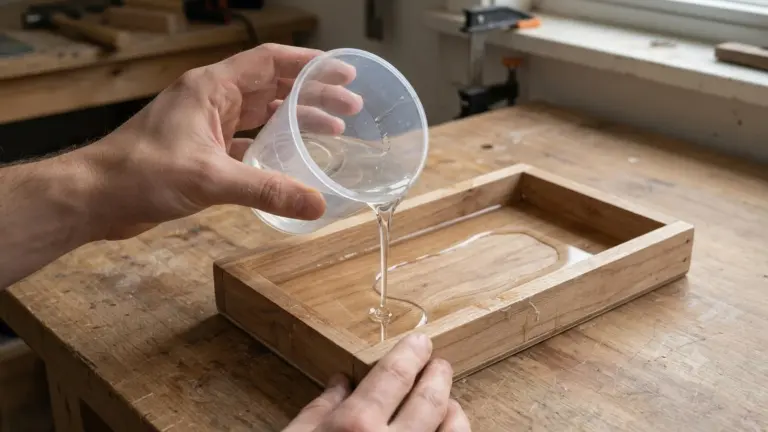
Deep pour casting resin is used when you need to fill a larger cavity, such as a river table channel or a mold. These products are formulated to cure in thicker layers than a standard coating. Manufacturers list a maximum depth, and you should follow it.
Pour in stages if your product requires it. Heat built up by a large volume of mixed resin can speed the reaction and shorten your working time. Wikipedia notes that mixing large quantities can cause premature hardening, melt the container or even catch fire, so mix smaller batches when possible.
You can read more about how the two main resin families compare in epoxy vs polyurethane, which helps when choosing a casting material.
Epoxy for Jewelry, Molds and Resin Art
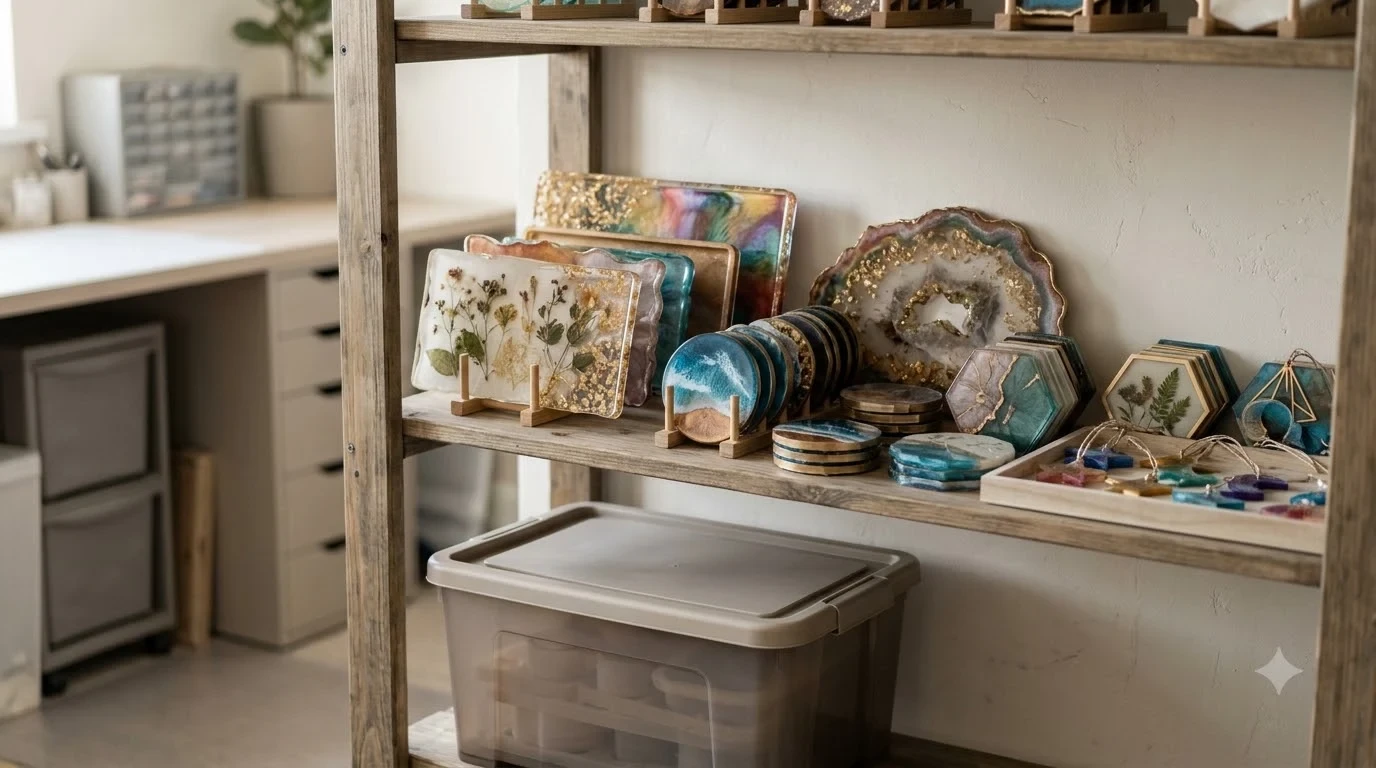
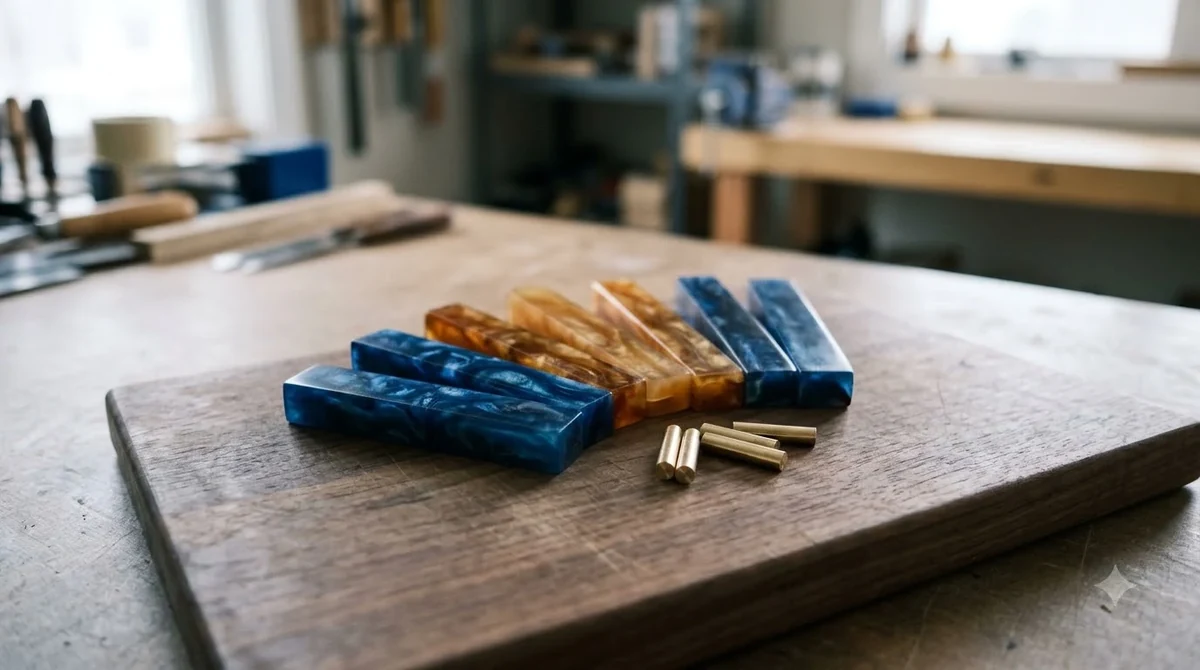
Jewelry makers and resin artists use epoxy for pendants, bezels, coasters and layered paintings. Wikipedia describes pigmented epoxy poured in layers as a painting medium, and says it is used as a doming resin for decorations and labels. Doming resin creates a raised, glossy dome over a flat surface.
Epoxy can also make molds and master models. Industrial tooling uses epoxy to produce molds and fixtures, and home makers can use the same idea on a smaller scale. Choose a product labeled for the thickness and detail you need.
Yellowing is a concern for art pieces. Wikipedia reports that epoxy resins yellow over time, even without UV exposure, which matters for pieces meant to stay clear for years.
Epoxy Repairs, Floors and Structural Bonding
Epoxy is a popular repair adhesive because it fills gaps and bonds strongly. Wikipedia reports that epoxy adhesives are used on wood, metal, glass, stone and some plastics. They can be rigid or flexible, and fast or slow setting, depending on the product.
Epoxy is also used on floors. Decorative flooring includes terrazzo, chip flooring and colored aggregate floors, according to Wikipedia. For concrete or floor repairs, read the product data sheet to confirm the surface preparation and temperature range.
Some industrial floor coatings use bisphenol F resins, which R S Components says offer higher chemical and solvent resistance. Home projects rarely need that level of performance, but it shows why the resin type matters.
Mixing, Curing and Safety Basics
Mixing and curing decide whether your project looks good and lasts. Measure the resin and hardener exactly as the label says, and mix for the time the instructions give. Pot life varies: R S Components epoxy resin guide reports about 10 to 20 minutes for fast systems and 30 to 120 minutes for standard systems.
Many epoxies need heat to cure fully. Wikipedia’s epoxy article notes that temperatures up to 150 °C are common for some systems, and up to 200 °C for specialist ones. Insufficient heat leaves the network incomplete, which lowers its strength and chemical resistance. Read the manufacturer’s data sheet for the cure temperature your product needs.
Wear protective gear every time. R S Components recommends nitrile gloves, a plastic apron, safety goggles and good ventilation or a respirator. Wikipedia notes that rubber gloves give poor protection against epoxy chemicals, so choose nitrile instead.
- Read the product data sheet and SDS. Note the ratio, pot life and cure temperature.
- Set up ventilation. Open a window or run a fan in the work area.
- Put on gloves, goggles and an apron. Use nitrile gloves.
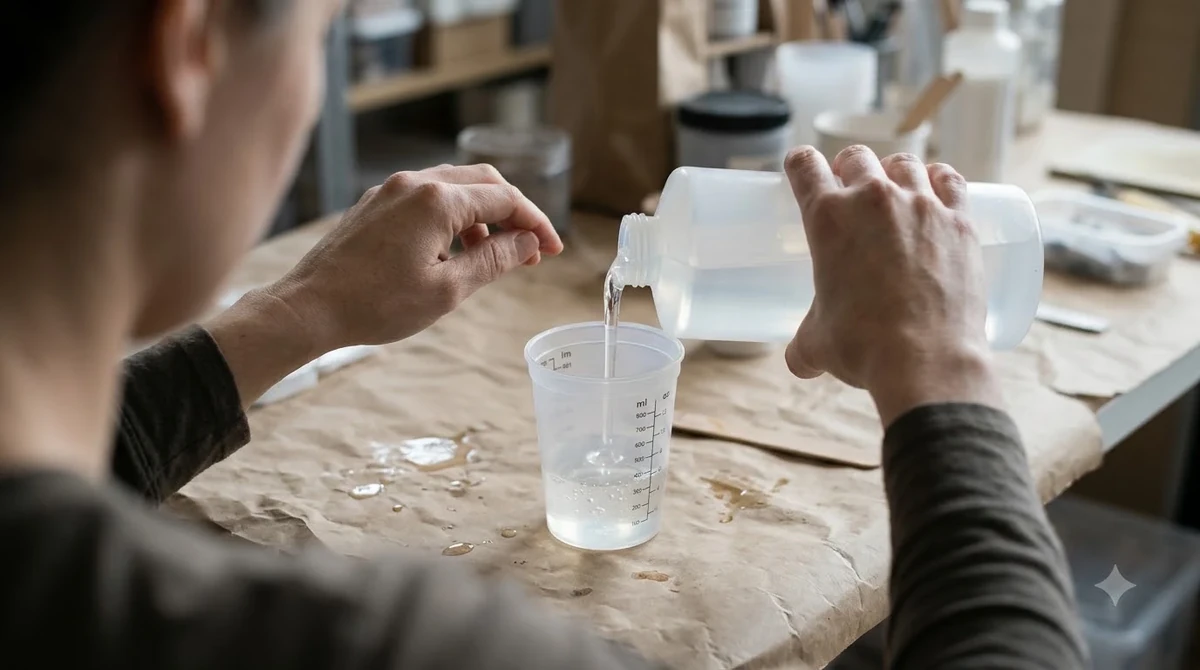
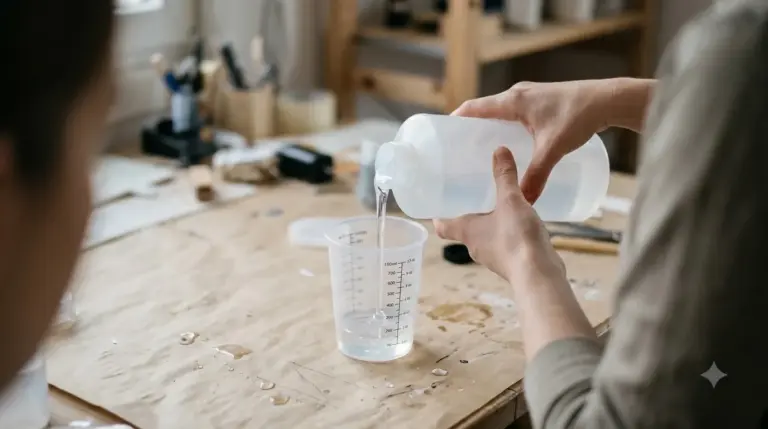
- Measure the resin and hardener exactly. Use a scale or measuring cups marked for the ratio.
- Mix thoroughly and scrape the sides. Finish mixing within the pot life.
- Pour or spread in the recommended thickness. Work in stages for deep casts.
- Remove bubbles and dust. A heat gun or torch can help bring bubbles to the surface, if your product allows it.
- Let it cure for the full time. Keep the piece at the recommended temperature.
Safety: If resin contacts your eyes, flush with water for 15 minutes and seek medical attention. Wikipedia advises avoiding rubbing. Check the SDS for your product’s specific hazards.
Troubleshooting Common Epoxy Problems
Sticky or cloudy results usually trace back to the mix, the temperature or the cure time. Most problems are easier to avoid than to fix, so check your measurements and conditions first. Small errors in ratio are a frequent cause.
Common issues include:
- Tacky surface: often an incorrect ratio or incomplete mixing
- Yellowing: can occur over time, even without UV light
- Soft or weak cure: may come from too little heat during curing
- Bubbles: can come from mixing too vigorously or pouring too fast
For more on the resin family and how it differs from UV-cured products, see the Resin Basics & Q&A hub. Setting up your cure conditions before you start is the simplest way to avoid most of these problems.
Frequently Asked Questions
What is epoxy resin used for around the house?
Households use epoxy to glue wood, metal, glass and some plastics, and to coat workbenches, tables and countertops. It can also seal gaps and fill small repairs. Always check the product label for the surfaces it suits.
Can epoxy resin be used for river tables and countertops?
Yes, epoxy is widely used for river tables and countertops, according to Wikipedia. Use a product rated for deep pours or coatings, and follow its maximum depth. Work in stages if the label calls for it.
How long does epoxy resin take to cure?
Pot life is the working time before the mix starts to set, and R S Components lists about 10 to 20 minutes for fast systems and 30 to 120 minutes for standard ones. Full cure takes longer and depends on the product and temperature. Check the data sheet for the exact schedule.
Is epoxy resin safe to use indoors?
Epoxy can be used indoors with good ventilation, nitrile gloves, goggles and a plastic apron. Opening a window or running a fan helps, and a respirator is an option if airflow is limited. Review the SDS for your product before starting.
Epoxy resin suits many projects, but the right product depends on the job. Read the data sheet, measure carefully and protect your skin and eyes. Once you know the basics, you can choose the resin type that fits your next project.
More in Resin Basics & Q&A
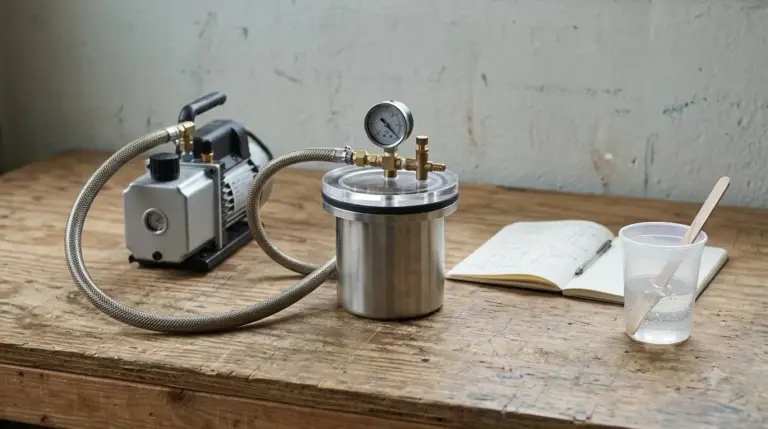 What Is Vacuum Degassing for Epoxy Resin and How It Removes Trapped BubblesUpdated Nov 26, 2026
 Epoxy Full Cure Time: How Long Before Your Project Is Ready to UseUpdated Nov 26, 2026
 Envirotex Lite Pour On Instructions for a Glossy, Bubble-Free FinishUpdated Nov 26, 2026
 Deep Pour vs Table Top Epoxy: Which Fits Your Project Depth and Cure TimeUpdated Nov 26, 2026
 High Temperature Epoxy for Metal: How to Pick One That Holds Up to HeatUpdated Nov 26, 2026
 Amazing Clear Cast Resin Instructions: Mix, Pour and Cure Without BubblesUpdated Nov 26, 2026