

We may earn a commission when you buy through links on this page, at no extra cost to you. Learn more.
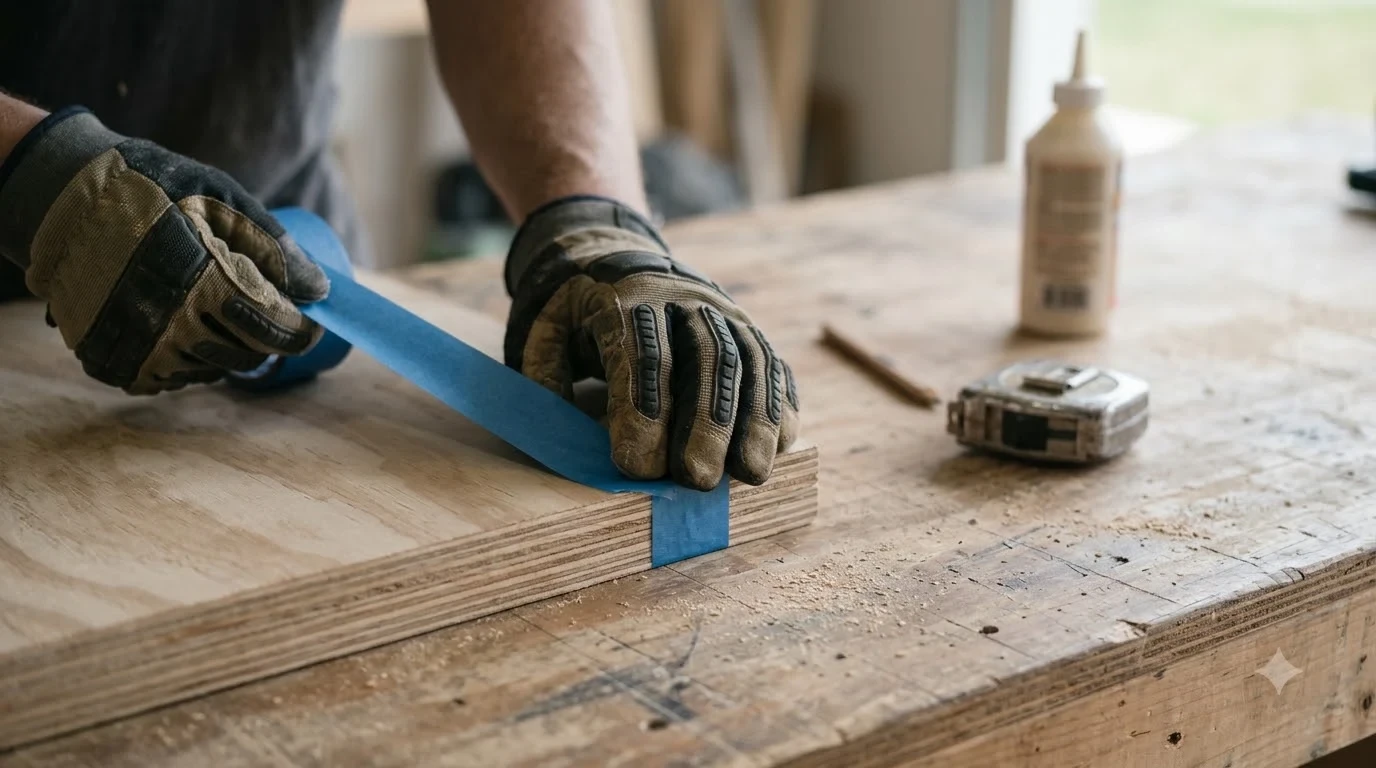
Does epoxy stick to Tyvek tape? In most cases, no, so Tyvek tape is a common barrier for holding resin in place during a pour. Sources describe Tyvek as a plastic that epoxy resin does not bond to well, which lets you peel the tape away after the resin cures. Tyvek is also described as melting at 275 F (135 C), so keep heat sources in mind when you work around it. Always confirm behavior with a small test on your own materials before committing to a large project.
This guide explains why Tyvek tape resists epoxy, how it compares with other tapes you may already have, and how to test and prep your surfaces. It also covers how to remove cured resin and the mistakes that cause unwanted bonding.
What Is Tyvek Tape and Why It Matters
Tyvek tape is a tape made from the same synthetic material as the Tyvek brand of sheet products. Makers use it because it is smooth and easy to peel from many surfaces. That combination matters when you need a temporary wall around liquid resin.
DuPont’s Tyvek entry on Wikipedia describes Tyvek as a brand of flashspun high-density polyethylene fibers. The same entry notes that Tyvek is difficult to tear but easy to cut. Those traits help explain why the material is used as a dam in many small craft projects.
You will see two different plastics named in epoxy sources. The Sincere Mommy post on what epoxy does not stick to says Tyvek tape is made of polypropylene. The Wikipedia entry on Tyvek describes the fibers as high-density polyethylene. Those are different polymers, so check the manufacturer’s product information for the exact tape you buy.
Does Epoxy Stick to Tyvek Tape and Why?
Epoxy generally does not bond to Tyvek tape, which is why many makers use it as a release barrier. The tape is usually peeled away once the resin has cured, leaving a clean edge.
The same post that names polypropylene says Tyvek tape is a plastic that epoxy resin does not stick to. It also lists several other materials that resist epoxy, including silicone, wax paper, Teflon, and Mylar. That list is useful because it shows that low-adhesion plastics are a regular part of resin work.
A common use is on the back of open bezel pendants. Some artists place Tyvek tape there so resin does not leak out, then remove the tape after curing. The idea is simple, but it still depends on pressing the tape down firmly so the resin cannot slip underneath.
Tape performance can vary by product and surface. A product page for an epoxy edge tape includes a customer review that says the tape does not adhere to epoxy and is easy to apply. That is one owner report, not a lab test, so treat it as a starting point and run your own check.
Tyvek Tape vs. Painter’s Tape and Packing Tape
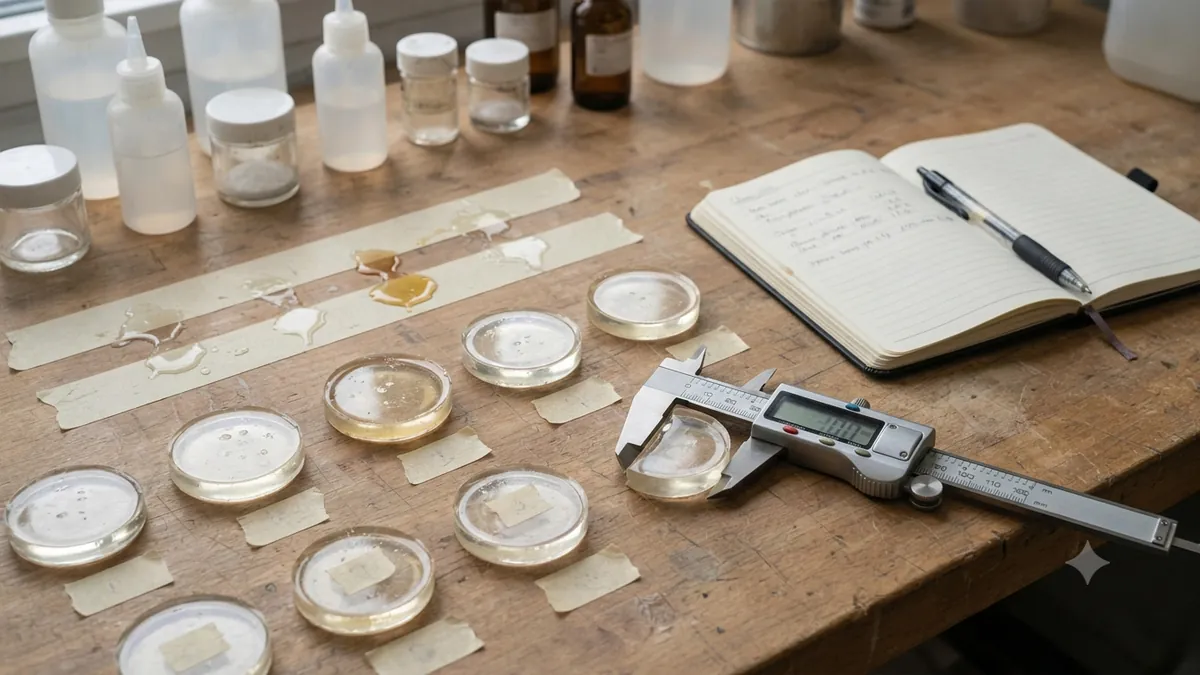
Tyvek tape is usually the stronger choice for deep or heavy pours, while other tapes suit smaller jobs. The right pick depends on how deep the pour is and how much leak protection you need. Comparing the options side by side makes the trade-offs clearer.
Clear packing tape can work for edges, but sources say it is better for smaller or shallow pours. One guide notes that packing tape may not create a strong seal on deep pours, which can lead to leaks. Some brands also leave adhesive residue that needs cleanup.
Regular masking tape is the riskiest of the common options. A guide on epoxy edges warns that epoxy can stick to ordinary masking tape, especially if the tape absorbs resin. Plastic-coated masking tape is suggested as a better choice. If you want a closer look at that tape, read our page on does epoxy stick to painters tape before you decide.
| Tape | What sources say | Best use |
|---|---|---|
| Tyvek tape | Ideal for deep or heavy pours; epoxy peels off without residue | Dams, deep pours, bezel backs |
| Clear packing tape | Epoxy does not adhere strongly; may leak on deep pours | Small or shallow pours |
| Plastic-coated masking tape | Suggested over regular masking tape | Light pours and intricate edges |
| Regular masking tape | Can absorb resin and stick | Only for light, controlled work |
Tip: Label your tape roll with the pour depth you tested it on. That habit makes it easier to remember which tape held up on your last project.
How to Test Adhesion and Prep Surfaces
A short test on scrap material tells you more than any general rule. Testing takes only a few minutes and can prevent a ruined piece. Surface prep matters too, because a clean, dry surface helps the tape seat properly.
Start by cleaning the surface and making sure it is dry. Press the tape firmly along the edge where you want the resin to stop. Pour a small amount of mixed epoxy, let it cure according to the manufacturer’s data sheet, and then peel the tape. Look for residue, tearing, or resin that clung to the tape.
For a stronger barrier, use a steady, firm press along the full length of the tape. Pour slowly so the resin does not lift the edge. A heat gun can help remove bubbles, but keep it moving and away from the tape edge, since Tyvek melts at 275 F (135 C) according to the Wikipedia entry on Tyvek.
Surface type also matters for the piece itself. Epoxy bonds well with wood, glass, and metal, so you do not want tape or prep residue on those surfaces. Keep your tape to the edges that need a barrier. Our page on does epoxy stick to plastic covers how plastics behave in more detail.
Removing Cured Epoxy from Tyvek Tape
Most cured epoxy peels off Tyvek tape cleanly, but a small amount of residue can remain on some surfaces. Work slowly and avoid tearing the tape into the resin edge. The goal is a smooth, finished edge with no tape left behind.
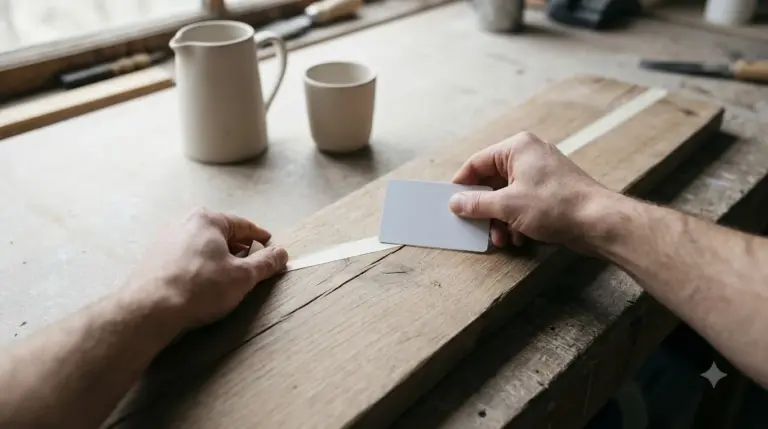
Peel the tape after the resin has fully cured. Pull it back at a low angle so the edge of the resin is not lifted or chipped. If you feel resistance, wait a little longer before trying again, because the resin may not be fully set.
If residue remains on the cured surface, a guide on epoxy edges recommends isopropyl alcohol or a scraper. Test the alcohol on a hidden area first. Use a plastic scraper rather than a metal one when you can, so you do not scratch the finish.
An owner review of a different edge tape describes trouble when the tape was set directly on a finished board instead of being used as a dam. That reader found the tape hard to remove and had to refinish the board. Lay the tape where it will act as a dam, not on a surface you want to keep.
Safety Notes and Common Mistakes
Tape mistakes are usually simple to avoid, but they can ruin a piece quickly. The most common problems are poor pressing, using the wrong tape for the pour depth, and skipping a test. Safe handling of the resin itself matters too.
Do not rely on regular masking tape for deep pours. Do not press the tape only at one end and hope it holds the whole edge. Do not skip cleanup of the surface before taping, since dust and oils can weaken the seal.
Safety: Wear nitrile gloves when handling epoxy and tape adhesive, and work in a ventilated space. Read the epoxy manufacturer’s safety data sheet (SDS) for specific handling and disposal guidance, and keep heat tools away from the tape edge.
Avoid using heat that is hot enough to soften or melt the tape. Check the product’s instructions before you apply any heat source near the edges. If you are unsure about a product or a reaction, stop and consult the manufacturer’s documentation rather than guessing.
Frequently Asked Questions
Is Tyvek tape good for epoxy resin pours?
Sources describe Tyvek tape as ideal for deep or heavy epoxy pours, because epoxy peels off without leaving residue. It is often recommended alongside epoxy release tape for dams. Still, run a small test on your own surface before a large pour.
Can you use Tyvek tape as a dam for epoxy?
Yes, many makers use it as a dam along the edges of a pour, and it is also used on the back of open bezel pendants to hold resin in place. Press it down firmly along the whole edge so resin cannot slip underneath. Remove it after the resin has cured.
Will epoxy stick to packing tape?
Epoxy does not adhere strongly to the smooth surface of clear packing tape, which makes it easier to peel off. However, packing tape may not create a strong seal on deep pours and can leak. Some brands also leave adhesive residue that needs cleaning.
How do you remove epoxy from Tyvek tape?
Peel the tape after the epoxy has fully cured, pulling at a low angle so the resin edge is not chipped. If adhesive residue stays on the cured surface, isopropyl alcohol or a scraper is the suggested cleanup. Test the alcohol on a hidden area first.
Tyvek tape is a dependable choice for many resin barriers, but it is not a substitute for a test. If you want to compare more materials before you pour, start with our Surfaces & Materials section and pick the tape that fits your project depth.
More in Surfaces & Materials
 Can You Epoxy Over Wallpaper? The Prep Steps That Help It StickUpdated Nov 26, 2026
 Can You Epoxy Over Tile? Prep Steps That Help It BondUpdated Nov 26, 2026
 Can You Epoxy Over Laminate? Prep Steps and Limits for DIY SuccessUpdated Nov 26, 2026
 How to Seal Wood Before Epoxy for a Bubble-Free, Even FinishUpdated Nov 26, 2026
 Can You Epoxy Over Granite Countertops? Prep, Adhesion and Heat LimitsUpdated Nov 26, 2026
 Can You Epoxy Over Painted Wood? When It Works and How to Prep ItUpdated Nov 26, 2026