

We may earn a commission when you buy through links on this page, at no extra cost to you. Learn more.
Does epoxy stick to plastic? Yes on many rigid plastics, but not on all of them. Rigid PVC, ABS, acrylic and polycarbonate generally accept epoxy after cleaning and light sanding. Polyethylene, polypropylene, PTFE and silicone resist it. Surface prep usually means a solvent wipe, a light scuff, and at least 10 minutes of drying before the epoxy goes on.
Plastic is not one material, so the answer changes from one item to the next. A cracked bracket, a plastic mold, a food container and a 3D print can behave very differently under the same epoxy. This guide explains which plastics bond, which ones fight back, and which prep steps make a difference on the tricky ones.
Why Some Plastics Resist Epoxy
Low surface energy is the main reason epoxy fails to bond to plastic. Epoxy has to wet the surface, meaning spread across it, before it can grip as it cures. Jinhua Resin gives approximate figures: ABS and polycarbonate sit around 38 to 42 dyn/cm, while epoxy generally needs about 35 to 38 dyn/cm to wet properly.
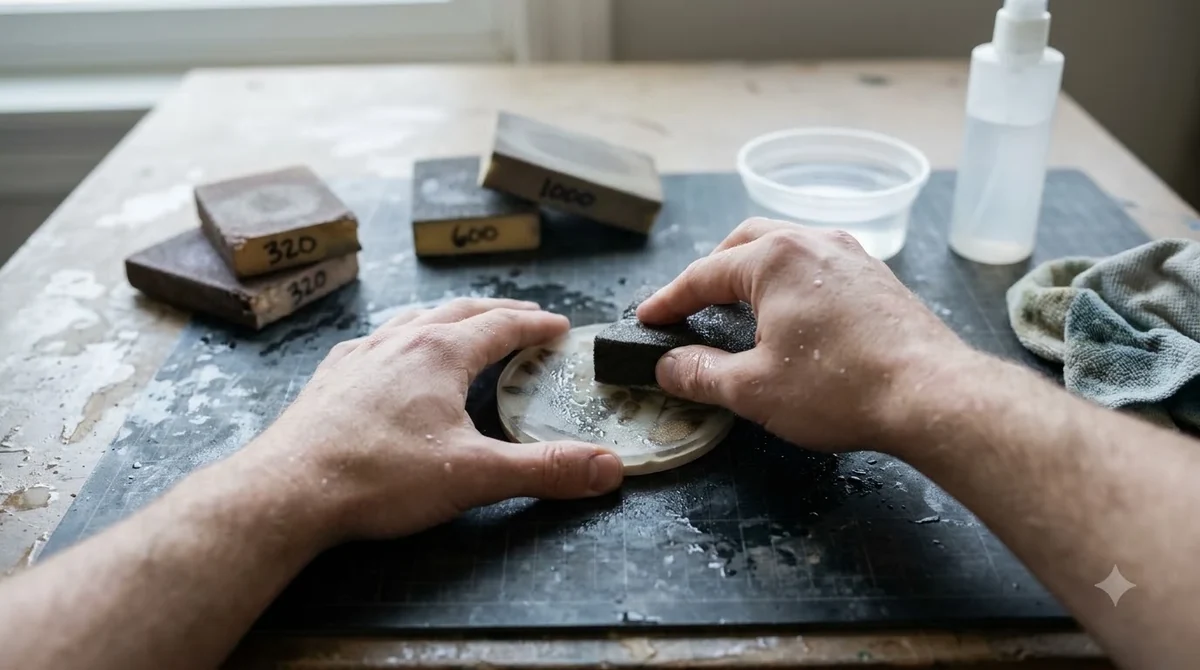
Polyethylene and polypropylene fall much lower, at roughly 29 to 31 dyn/cm. At that level the resin beads up, much like water on a waxed car hood, instead of spreading out. PlasticRanger describes the same problem in terms of bonding mechanisms: epoxy relies on interlocking with surface texture and on chemical attraction, and low-energy plastics block both.
Contamination is the other common cause. Mold release, fingerprint oil, wax, silicone and dust can sit between the resin and the plastic and weaken a bond that would otherwise hold. Many failures trace back to the surface prep rather than the epoxy itself. Adding more resin does not fix a contaminated or incompatible surface.
Plastics Epoxy Bonds to Easily
Rigid plastics with higher surface energy are the good candidates. ABS, rigid PVC, acrylic and polycarbonate are the ones most people try to bond or coat, and they usually respond well to a clean, lightly sanded surface. The table below gives a starting point, but you should still test your exact material.
| Plastic | Typical epoxy result | Prep notes from the sources |
|---|---|---|
| ABS | Good | Sand and degrease first; additive packages vary, so test a sample |
| Rigid PVC | Good | Clean thoroughly and use light abrasion |
| Polycarbonate | Good | Confirm the resin system is chemically compatible with the grade |
| Acrylic (PMMA) | Moderate to good | Sanding marks can cause haze if the piece must stay clear |
| Polystyrene | Good | Listed as compatible in PlasticRanger’s compatibility table |
UniBond’s epoxy glue guide says its repair product is only suitable for hard plastics, which fits this pattern. Its guide describes a 5-minute set time with handling after 15 minutes, but that applies to that product only, not to every epoxy.
Flexible PVC is a special case. Jinhua Resin says plasticizers can migrate to the surface over time and weaken a bond that looked strong at first. If the part bends or flexes, treat flexible PVC as a test-first material.
Plastics That Need Surface Prep or Primer
Polyethylene and polypropylene are the plastics most likely to defeat standard epoxy. Sanding alone usually will not create a dependable bond on them, so they generally call for a primer or a surface treatment step.
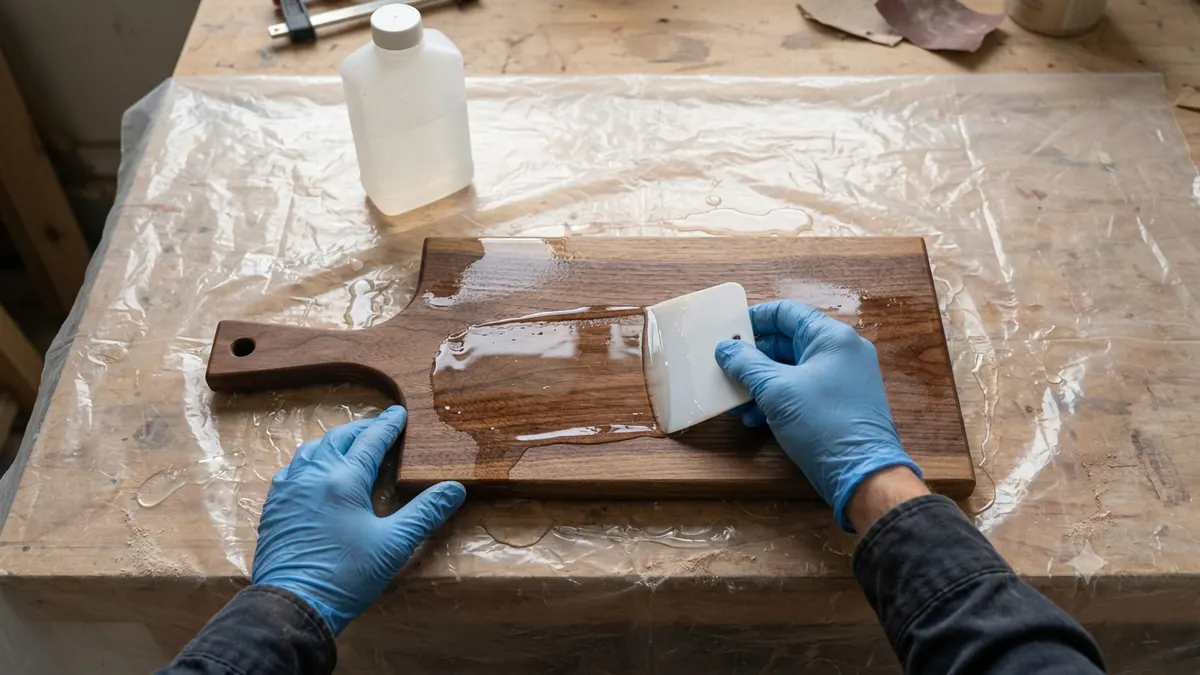
Jinhua Resin lists flame, corona and plasma treatments, along with primers made for low-surface-energy substrates, as options for improving epoxy adhesion to PE and PP. These treatments change the surface chemistry, which is why they are common in packaging and automotive production. Results still depend on the exact material and on how long you wait between treatment and bonding.
PlasticRanger notes that epoxy on an untreated polyolefin may cure normally and then lift off as a sheet when an edge is pried up. Its guidance for demanding work includes controlled flame treatment, a polyolefin adhesion promoter, or mechanical fastening combined with the adhesive. Check its full plastic bonding guide for the compatibility table and prep sequence.
PTFE sits at the far end. Jinhua Resin describes it as non-stick by design and says bonding it reliably takes specialized surface chemistry. PlasticRanger lists silicone as having no epoxy compatibility. If your job involves one of these materials, consider a different adhesive family rather than adding more epoxy.
Safety: Wear nitrile gloves and work in a ventilated area when using isopropyl alcohol or acetone. Read the solvent and epoxy safety data sheets for the specific products you buy.
How to Prep Plastic Before Applying Epoxy
Prep works as a sequence: identify the plastic, clean it, scuff it, clean again, then bond within an hour. Skipping a step tends to weaken the result, even when the plastic itself is compatible.
- Identify the plastic. Look for a recycling code on the part. PlasticRanger lists #3 PVC, #6 polystyrene and many #7 plastics as bonding well, while #2, #4 and #5 do not bond reliably without a primer. If there is no code, a waxy or slippery feel usually signals poor compatibility.
- Clean with a compatible solvent. Wipe the surface with isopropyl alcohol or acetone on a lint-free cloth. Let it dry for at least 10 minutes. Avoid household cleaners with silicone or fragrance additives, which can leave residue.
- Sand for grip. Use 220 to 320 grit sandpaper on hard plastics such as PVC, ABS and acrylic. Use 400 grit or a Scotch-Brite pad on softer plastics. Keep strokes light, since friction heat can melt the surface.
- Clean again. Remove sanding dust with a fresh alcohol wipe. Let it evaporate fully, which PlasticRanger says usually takes 10 to 15 minutes in normal ventilation.
- Handle the part by its edges. Skin oil can contaminate a prepped surface within seconds, so use gloved hands or hold the part by its edges from this point on.
- Apply epoxy within one hour. PlasticRanger advises applying the epoxy within one hour of the final cleaning.
- Mix thoroughly. Scrape the sides and bottom of the mixing cup, since under-mixed resin hides there. UniBond’s guide for its repair product calls for 60 seconds of mixing with the spatula provided.
- Run a patch test. Apply epoxy to a hidden area, let it cure for at least 7 days, then try to peel it. Clean separation means the plastic or the prep needs another look.
Tip: Keep the work area above 50°F (10°C) during cure. PlasticRanger says epoxy should not be cured below that temperature, and a cold room can weaken the bond.
Will Resin Stick to Plastic?
Resin generally behaves like epoxy on plastic, but the product type matters more than the word resin. A clear casting resin is not the right choice for bonding a plastic bracket, and a glossy coating behaves differently from a structural adhesive under load. Jinhua Resin recommends picking a system evaluated for adhesion when bonding is the real job.
Casting into plastic molds is a separate question. If you want the cured piece to come out easily, PlasticRanger says polyethylene and polypropylene molds release cured epoxy without any treatment. Acrylic, PVC and rigid plastic molds bond strongly and need a mold release spray before pouring.
Plastic wrap is another special case. According to INCURE, most commercial wrap is LDPE or LLDPE with surface energy around 30 to 31 dynes/cm, and the epoxy usually does not form a permanent bond with it. For more detail on that specific material, read how resin behaves on plastic wrap.
Can You Epoxy Over Plastic?
You can epoxy over a plastic surface if the plastic is compatible and properly prepped. A coat applied over paint, wax or an old finish will usually peel along with that layer, because the epoxy bonds to the coating rather than the plastic.
Flexibility is the next issue. PlasticRanger says standard rigid epoxy normally cracks on flexible plastic, and PCOTEC notes that repeated bending or heat cycling can separate a bond that looked strong after one day. A flexible or toughened epoxy may suit a bending part better, but test it under realistic conditions.
When a rigid plastic part is cracked, epoxy putty can fill the gap. PlasticRanger names J-B Weld Plastic Repair Epoxy Putty as a standby for repairs, and it names Loctite Epoxy Plastic Bonder as a two-part option that cures in 20 to 25 minutes. Multiple layers do not rescue a bad first coat, since each new layer bonds to cured epoxy instead of the plastic.
When peeling happens, PCOTEC lists the common causes: incorrect plastic identification, mold-release contamination, excessive thickness, flexible substrate movement, and moisture entering the edge. Working through that list usually points to the fix. For a different material, see does epoxy stick to silicone.
Frequently Asked Questions
Does epoxy stick to PVC and ABS?
Rigid PVC and ABS generally bond after cleaning and light abrasion. Flexible PVC needs more testing because plasticizers can migrate to the surface and weaken the bond over time. Fillers and pigments can shift results between batches, so test your exact grade.
Does epoxy stick to polypropylene or polyethylene?
Not reliably on its own. Standard epoxy can look bonded right after cure and then peel weeks later. Plan on flame, corona or plasma treatment, or a primer made for low-surface-energy plastics, and run a test first.
Can I use epoxy to repair a cracked plastic part?
Sometimes, depending on the plastic and whether the part flexes. Rigid epoxy tends to crack on flexible plastic. PlasticRanger names J-B Weld Plastic Repair Epoxy Putty for filling cracks and gaps, and Loctite Epoxy Plastic Bonder for structural bonds.
Does epoxy stick to plastic wrap or plastic molds?
Plastic wrap generally does not bond, because most wrap is LDPE with low surface energy. Polyethylene and polypropylene molds release cured epoxy easily, while acrylic, PVC and rigid plastic molds bond strongly and need a mold release spray before pouring.
Start by identifying your plastic, then prep the surface and run a patch test before committing to a full job. For more material guides, visit the Surfaces & Materials section.
More in Surfaces & Materials
 Can You Epoxy Over Wallpaper? The Prep Steps That Help It StickUpdated Nov 26, 2026
 Can You Epoxy Over Tile? Prep Steps That Help It BondUpdated Nov 26, 2026
 Can You Epoxy Over Laminate? Prep Steps and Limits for DIY SuccessUpdated Nov 26, 2026
 How to Seal Wood Before Epoxy for a Bubble-Free, Even FinishUpdated Nov 26, 2026
 Can You Epoxy Over Granite Countertops? Prep, Adhesion and Heat LimitsUpdated Nov 26, 2026
 Can You Epoxy Over Painted Wood? When It Works and How to Prep ItUpdated Nov 26, 2026