

We may earn a commission when you buy through links on this page, at no extra cost to you. Learn more.
The best 3M respirator for epoxy resin is a half mask with an organic vapor cartridge, and the 3M 60921 covers the most epoxy tasks. Epoxy fumes are an organic vapor hazard, so a P100 filter or an N95 mask alone does not protect you. According to WC Safety, the 3M 60921 pairs organic vapor protection with a 99.97% P100 filter for mixing, casting, sanding, and spraying. For mixing and pouring with no dust present, the 3M 6001 is the vapor-only option.
This guide matches 3M cartridges to what epoxy releases when you mix, pour, cut, and sand. It also covers fit, replacement timing, and the safety gear that goes with a respirator.
What 3M Respirator Works for Epoxy Resin
A 3M half facepiece with an organic vapor cartridge handles most mixing and casting. Sanding cured epoxy calls for a P100 filter, and a combination cartridge covers both jobs.
PK Safety describes the 3M 6000 half facepiece as its top selling half mask and offers the 3M 7500 as a more comfortable option. WC Safety says the 3M 60921 fits 3M 6000, 6500, and 7500 series respirators, so one cartridge can move between those masks.
A half mask has an OSHA assigned protection factor of 10, while a full-face respirator has a factor of 50. WC Safety prefers a full-face unit for spraying, large or heated pours, and fiberglass layup, and says a half mask suits most mixing and casting. The mask body only sets up the seal; the cartridge decides which gases get captured.
If you are still sorting out cartridge types, read what type of respirator for resin before you buy. That page helps you match the mask to the job before you compare individual models.
Why Epoxy Vapors Need Organic Vapor Protection
Epoxy releases organic vapors from the resin and hardener, and the amine hardener is usually the more irritating part. Dust filters do not capture those gases, so the vapor layer has to come from activated charcoal.
WC Safety’s WC Safety epoxy cartridge guide, last updated May 2026, names the main inhalation hazard as organic vapor from the resin, reactive diluents, and the amine hardener. It also says a P100 filter or an N95 mask on its own will not protect you from that vapor. Resin Art Basics adds that an N95 filters particles and does nothing against VOC fumes.
Hardener deserves extra caution. Resin Art Basics says hardener contains amines, which are more volatile and irritating than the resin, and advises against sniffing the mixing cup. Heat makes the fumes stronger: the same source notes that mixing in a small, deep cup creates more fumes than mixing in a wide, shallow container.
Smell is a poor guide. WC Safety says organic vapor cartridges saturate over time, and people can become desensitized to odor, so the warning properties are weak. That is why a cartridge needs a replacement schedule, not just a sniff test. For a side-by-side look at how the two chemistries differ, see the epoxy vs polyurethane comparison.
Recommended 3M Models and Cartridges
Choose the cartridge by task: vapor only, vapor plus dust, or dust only. WC Safety’s short list for epoxy is the 3M 60921 for all-around use, the 3M 6001 for mixing and pouring when no dust is present, and the 3M 2091 P100 filter for sanding cured epoxy dust.
| Cartridge or filter | Vapor protection | Particulate protection | Best use for epoxy |
|---|---|---|---|
| 3M 6001 | Organic vapor, NIOSH TC-23C | None | Mixing and pouring when no dust is present |
| 3M 60921 | Organic vapor, NIOSH TC-23C | P100, 99.97%, TC-84A | All-around: mixing, casting, cutting, sanding, spraying |
| 3M 2091 | None | P100 | Sanding cured epoxy dust |
| 3M 2097 | Nuisance-level relief only | P100 | Dust and welding fume; not a vapor substitute |
| 3M 6006 | Organic vapor plus acid gases | None | Several solvents or cleaners at once |
| 3M 60926 | Multi-gas | P100 | Places with several hazards; heavier to breathe |
PK Safety recommends the 3M 60921 for handling liquid epoxy and for cutting hardened epoxy. It says the same combination works for cutting fiberglass and plastic. Its 3M 2097 is a P100 filter with only nuisance-level charcoal relief. WC Safety notes that the 2097 and 2297 are not NIOSH TC-23C approved for organic vapor, so they are not substitutes for a vapor cartridge.
PK Safety’s 3M cartridge color-code guide explains how the 6001 differs from the 6006 and 60926. It describes the 6006 as a multi-gas cartridge that also traps acid gases such as chlorine and formaldehyde. Its 60926 adds a P100 filter, costs about twice as much as a regular cartridge, and makes each breath harder. PK Safety reserves it for places with several hazards.
Between the 6001 and 60921, the answer depends on whether you also sand or cut. The 6001 is vapor only, so dust from sanding passes through it. WC Safety lists the 6001 as the choice for mixing and pouring when no dust is present. Resin Art Basics names the 3M 6500QL1 half facepiece with organic vapor cartridges as its editor’s choice for hobbyists who pour resin regularly indoors.
Tip: If a session includes both pouring and sanding, a combination cartridge avoids swapping parts mid-project. Keep the older PK Safety material in mind: its epoxy answer is dated 2011, so check current 3M data sheets for any changes.
Fit Testing and Proper Seal Tips
A respirator protects you only when it seals to your face. Size guidance is a starting point, and a fit test is the step that confirms the result.
PK Safety says about 80% of its customers buy a medium mask. It advises small for a petite face and large when the face is noticeably broad or the nose is unusually prominent. The same source states that fit testing is the only reliable way to confirm sizing, and that no set measurements can replace it.
OSHA 29 CFR 1910.134(f) covers fit testing, and both PK Safety and WC Safety cite it. In workplaces, employers must fit test each user on the specific make, model, and size before first use. A home shop has no employer doing this, but the logic holds: a leaking seal lets vapor in around the edges of the mask.
Check the seal every time you put the mask on. Cover the cartridge openings with your palms, breathe in gently, and feel for air leaks at the edges. Facial hair along the seal line can also break the fit. For broader resin safety questions, the Resin Basics & Q&A hub collects related answers.
When to Replace Cartridges
Replace a vapor cartridge when you smell or taste the solvent through the mask, or when your schedule says so. Replace a P100 filter when breathing becomes noticeably harder.
Resin Art Basics recommends replacing organic vapor cartridges about every 40 hours of use, or sooner when fumes come through the mask. PK Safety calls that smell or taste breakthrough, and says a new cartridge should give no solvent odor at all.
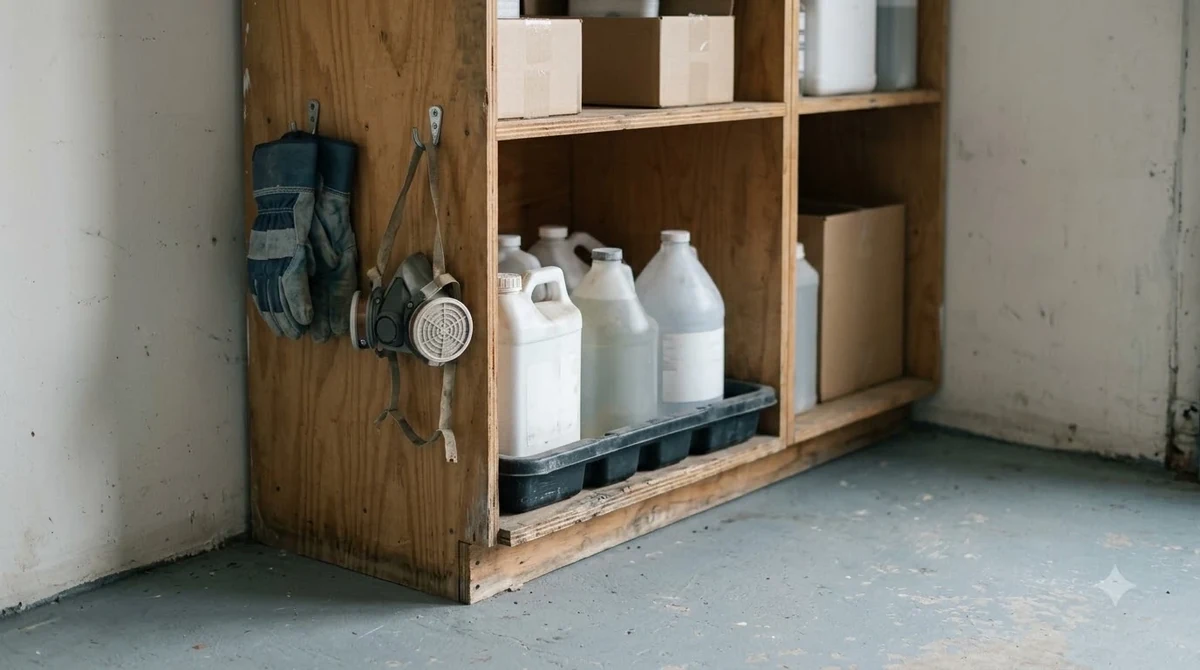
PK Safety says there is no fixed service life, because it depends on contaminant concentration, breathing rate, and conditions. Cartridges also degrade in storage. PK Safety advises replacing opened cartridges older than 6 months, or following the manufacturer’s expiration date. WC Safety suggests storing them sealed in an airtight bag between sessions.
- Replace a vapor cartridge when you smell or taste epoxy fumes through the mask.
- Replace a P100 filter when breathing resistance rises noticeably.
- Replace opened cartridges after about 40 hours of use, or on the manufacturer’s schedule.
Common mistakes include relying on odor to decide, using a P100 or N95 for vapor work, and skipping the seal check. Each one leaves a gap between the gear you wear and the fumes in the room.
Ventilation and Other Safety Gear for Resin Work
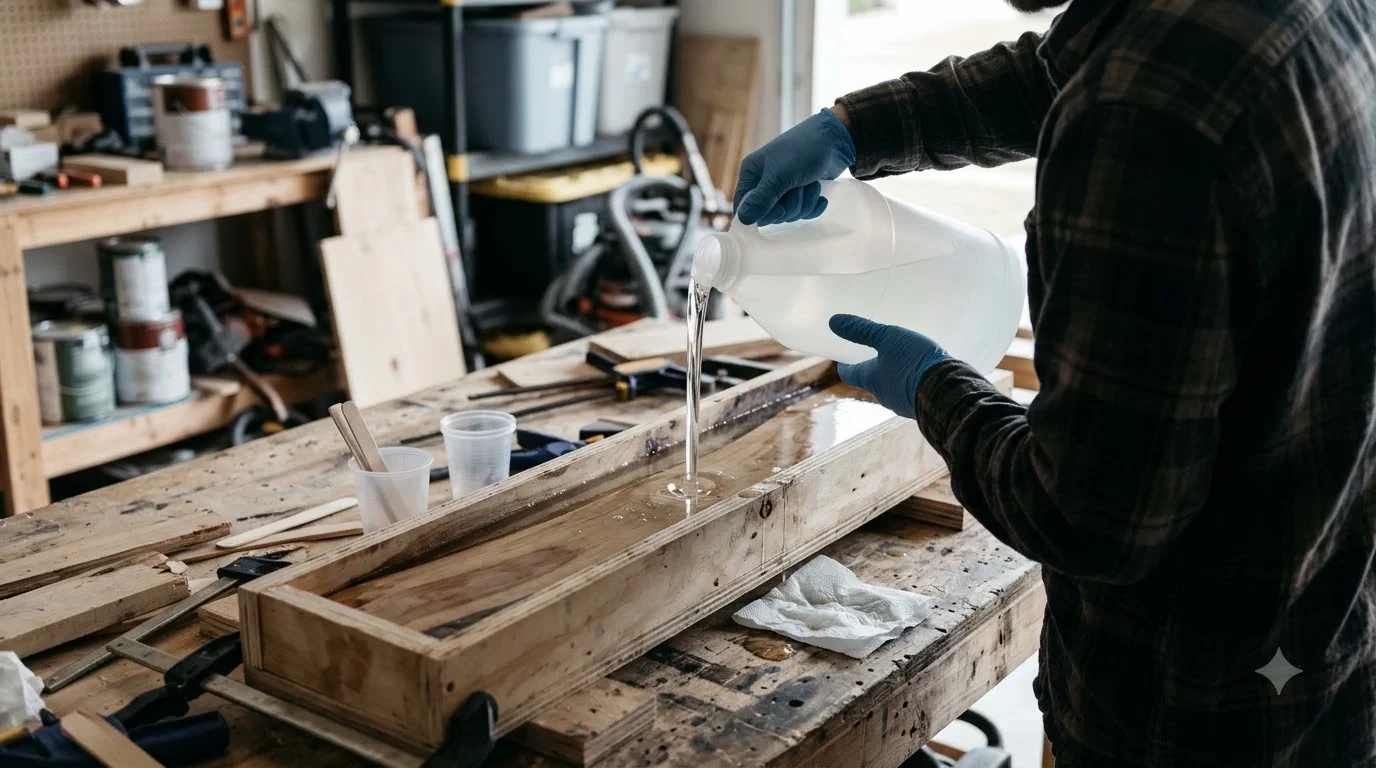
A respirator works best alongside airflow, nitrile gloves, and eye protection. Ventilation moves fumes away from your breathing zone, so the mask does not carry the whole load.
Resin Art Basics recommends placing a fan behind you so it blows fumes out a window, rather than pointing it at the workspace. Cross-ventilation, with open windows on opposite sides, pulls fresh air through the room. The same source suggests a simple curing box vented to a window for deep pours that cure for many hours.
Gloves matter as much as the mask. PK Safety says skin contact is the primary sensitization route for uncured epoxy and recommends nitrile gloves at minimum, with long sleeves. Resin Art Basics adds that latex can react with epoxy. Safety glasses help prevent splashes during mixing.
Safety: Read Section 8 of the safety data sheet for both the resin and the hardener before you choose a respirator. If irritation continues after you leave the area, stop the work and speak with a health professional.
Frequently Asked Questions
Which 3M respirator cartridge is best for epoxy resin?
For most epoxy work, the 3M 60921 is the all-around pick because it combines organic vapor and P100 protection. PK Safety says the same combination also works for cutting fiberglass and plastic composites. If you only mix and pour with no dust, the 3M 6001 is the vapor-only option.
Is a 3M 6001 or 60921 better for mixing epoxy?
The 6001 is the better choice when mixing and pouring happen with no dust present. WC Safety describes it as the lightest and least restrictive cartridge in the 3M organic vapor line. Choose the 60921 if sanding or spraying happens in the same session.
Do I need a P100 filter when sanding cured epoxy?
Yes, sanding cured epoxy creates fine dust that needs particle filtration. WC Safety recommends the 3M 2091 P100 filter for that job and notes that P100 does nothing against epoxy vapor. PK Safety says a P100 filter captures particles at the 0.3-micron most-penetrating size.
Does an N95 mask protect against epoxy fumes?
No, an N95 is designed for particles, not gases. Resin Art Basics states that an N95 mask does not protect against VOC fumes and recommends a respirator with organic vapor cartridges. The same source says a full-face mask is not required for every project, but the vapor layer is essential.
Choosing the best 3M respirator for epoxy resin comes down to matching the cartridge to the task, then checking the seal and the replacement schedule. Start with a half mask and a 60921 for mixed work, and read the safety data sheet for your exact product before you begin.
More in Resin Basics & Q&A
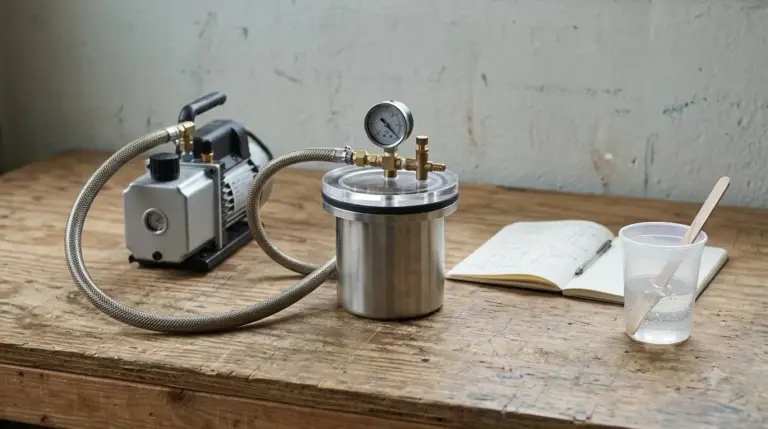 What Is Vacuum Degassing for Epoxy Resin and How It Removes Trapped BubblesUpdated Nov 26, 2026
 Epoxy Full Cure Time: How Long Before Your Project Is Ready to UseUpdated Nov 26, 2026
 Envirotex Lite Pour On Instructions for a Glossy, Bubble-Free FinishUpdated Nov 26, 2026
 Deep Pour vs Table Top Epoxy: Which Fits Your Project Depth and Cure TimeUpdated Nov 26, 2026
 High Temperature Epoxy for Metal: How to Pick One That Holds Up to HeatUpdated Nov 26, 2026
 Amazing Clear Cast Resin Instructions: Mix, Pour and Cure Without BubblesUpdated Nov 26, 2026