

We may earn a commission when you buy through links on this page, at no extra cost to you. Learn more.
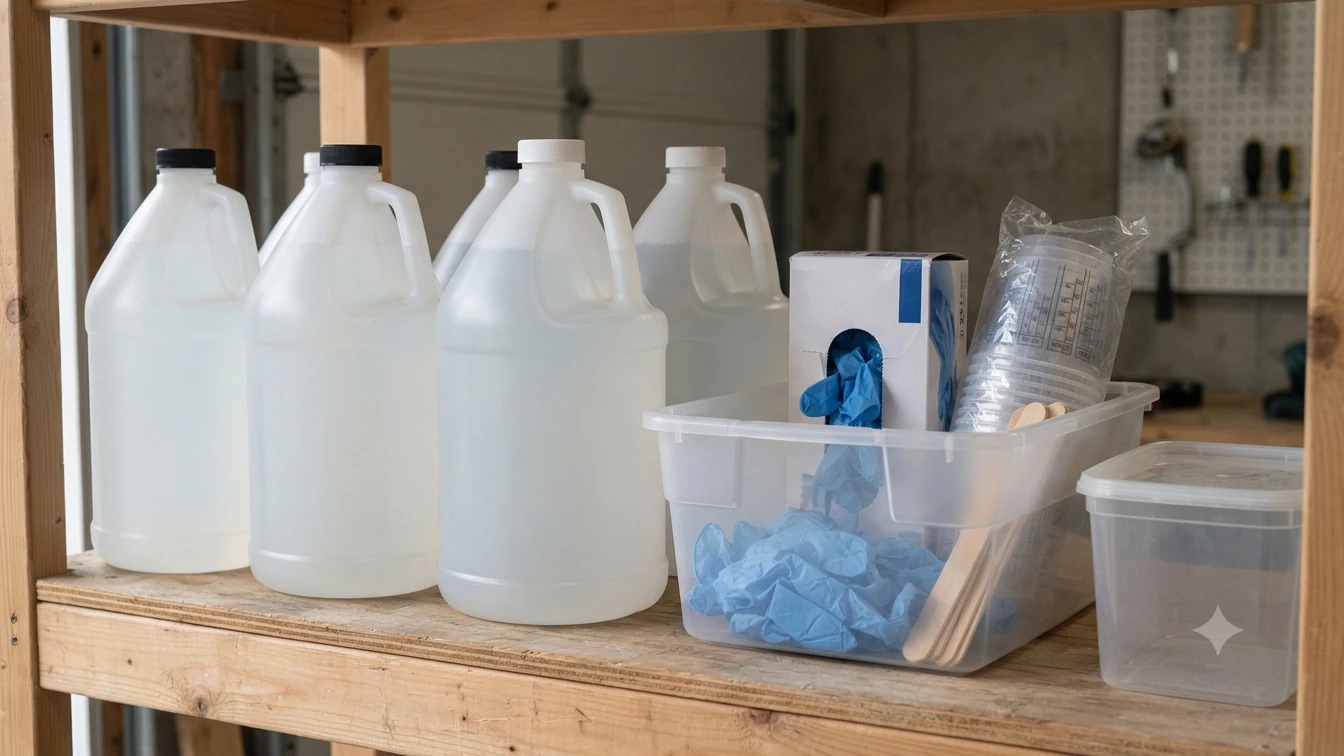
The cost of a gallon of epoxy resin depends on the resin type, the brand, and whether you buy bare resin or a full kit, so coverage math is the best budget check. According to Epoxy Planner, one US gallon of 100% solids epoxy covers about 160 square feet at 10 mils and only about 12.8 square feet at 1/8 inch, with no waste. Base coats for floors are often planned at 150 to 200 square feet per mixed gallon, according to DoorstepHQ. Start with your square footage and target thickness, then price the gallons you actually need.
Shoppers often search for one price, but a gallon is only a unit of material. What you spend on a project is the number of gallons you need, multiplied by the price of each kit, plus the extras that go with the job. The sections below show how to estimate each part before you buy.
What a Gallon of Epoxy Resin Costs in the US
A single gallon has no fixed price, because epoxy is sold in kits, in part sets, and in sizes that vary by manufacturer. Retail listings differ by brand, color, and whether the hardener is included in the same kit. Always check the current listing from the seller on the day you buy, since listings change.
For example, One Stop Epoxy sells its Self Leveling 100% Solids Epoxy as a 3 gallon short fill kit in clear or five pre-pigmented colors. That tells you the package size, but it does not tell you how much area the kit will cover. Read the technical data sheet for coverage before you compare kits.
Price per gallon alone can mislead you. A cheaper gallon that covers less area can cost more per square foot than a pricier gallon that covers more. Compare cost per square foot at the same film thickness.
Price Ranges by Epoxy Type
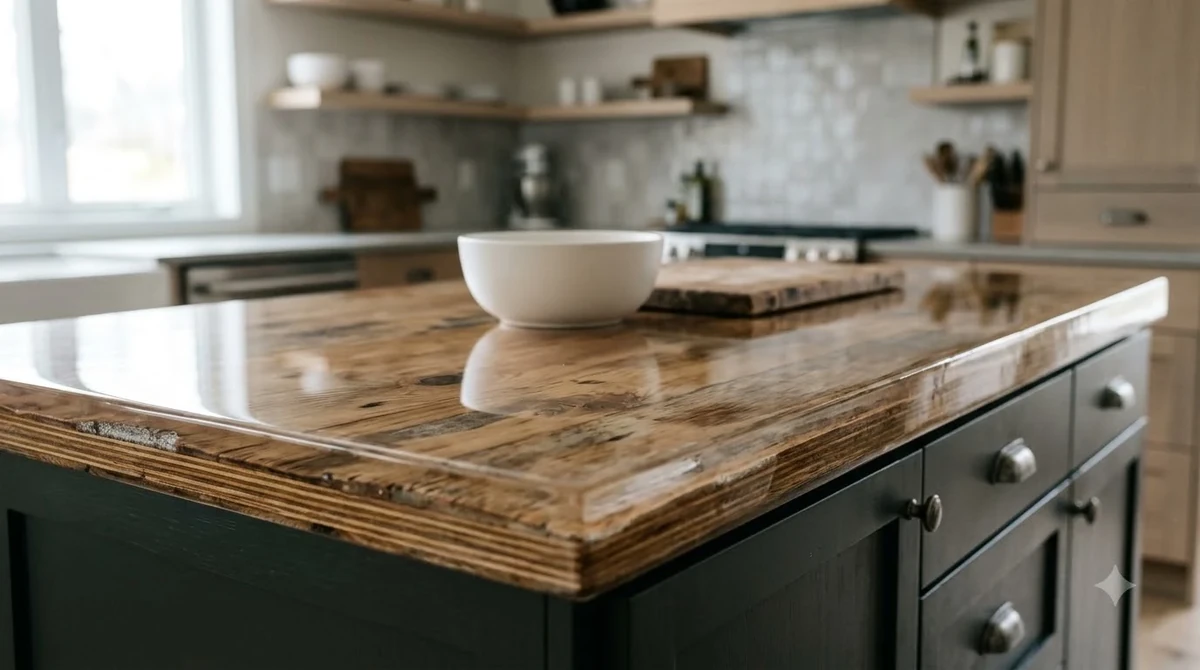
Epoxy cost tracks the type of resin, the job it does, and the thickness you need. Floor coatings, topcoats, flood coats, and casting resins each behave differently in both coverage and cost. The table below groups common types by use and shows the coverage figures published by the sources.
| Resin type | Typical job | Published coverage figure | What moves the cost |
|---|---|---|---|
| 100% solids floor base coat | Garage floor base or flake receiver coat | 150 to 200 sq ft per mixed gallon at 6 to 8 mil wet film, per DoorstepHQ | Kit size, pigment, primer needs, and number of coats |
| Clear polyaspartic, polyurethane, or urethane-fortified topcoat | Protective topcoat over flake or solid color | 200 to 300 sq ft per gallon per coat, per DoorstepHQ | Two coats usually double the gallon count |
| Tabletop or countertop flood coat | Bar tops, tables, and counters | About 12.8 sq ft per gallon at 1/8 inch, per Epoxy Planner | Thickness is the biggest driver of volume |
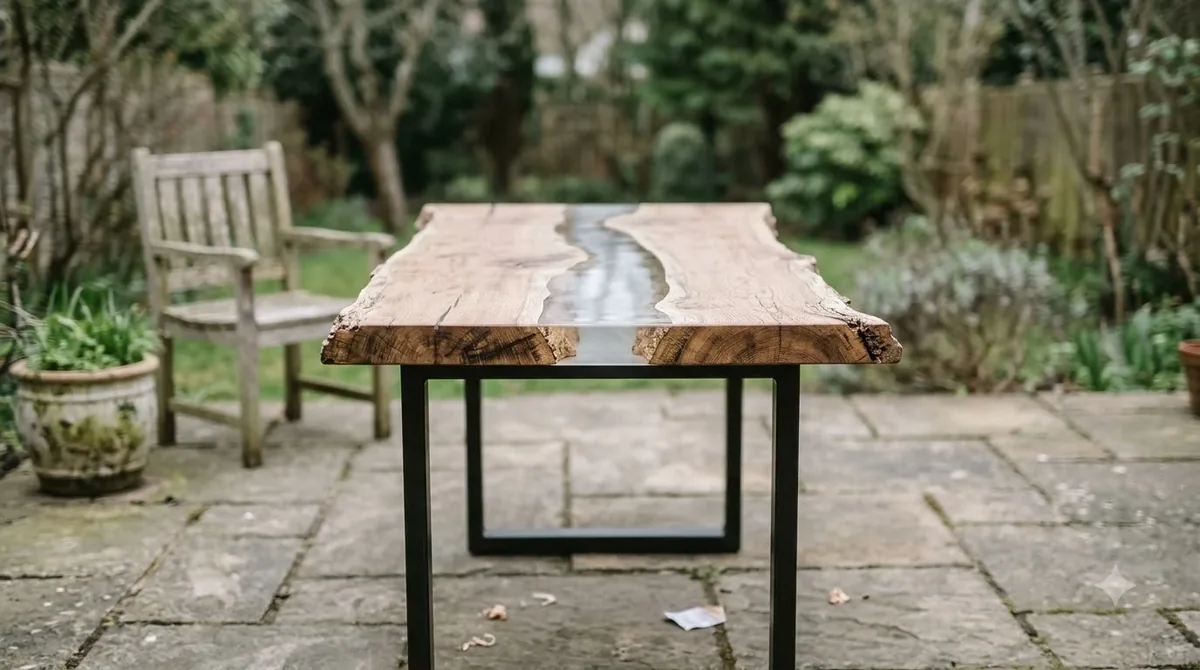
| Deep pour or river table casting resin | River tables, pours, and casting molds | About 3.2 sq ft per gallon at 1/2 inch, per Epoxy Planner | Maximum pour depth per layer set by the product |
| Specialty resin for porous or chemical areas | Porous concrete, chemical exposure, wall coatings | Varies by product; check the technical data sheet | Higher performance specs can mean higher cost per gallon |
Thick-pour resins often cost more in total because each project needs more gallons. A river table built with 1/2 inch to 2 inch pours can use far more resin than a thin countertop coat on the same surface. Compare totals, not just the label price, when you plan a casting project.
If you are budgeting small craft pours instead, the cost pattern for UV-cured products is different. For that comparison, see UV resin costs before you commit to a product line.
How Coverage Rates Change the Real Cost
Coverage rate is the fastest way to decide whether a gallon is a good value for your surface. Coverage falls as thickness rises, so the same gallon can cover a large floor at a thin build and a small table at a thick pour. Epoxy Planner explains that one US gallon is 231 cubic inches, so coverage equals 231 divided by the thickness in inches times 144. Doubling the thickness halves the square feet one gallon covers.
The chart below uses the raw coverage figures from Epoxy Planner’s thickness and coverage chart. These numbers assume no waste, so your real order will be larger. Use them to see how quickly area coverage drops as the coat gets thicker.
| Thickness | Raw sq ft per gallon |
|---|---|
| 10 mils | 160 |
| 20 mils | 80 |
| 1/16 inch | 25.7 |
| 1/8 inch | 12.8 |
| 1/2 inch | 3.2 |
Garage floor coatings are typically applied at 10 to 20 mils per coat, usually in two coats, according to Epoxy Planner. At 20 mils, one gallon covers about half the area it covers at 10 mils. That difference is why a floor spec with thicker coats can need noticeably more material than the box suggests.
Calculating Gallons Needed for Your Project
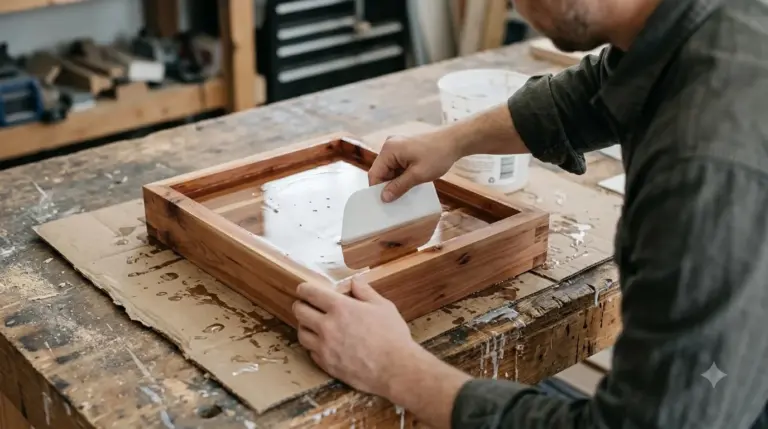
Calculating gallons takes four steps and only needs your floor size and a coverage rate from a data sheet. Each step is simple, but skipping the waste step is the most common reason people run short. Use the same method for garages, countertops, and casting molds.
- Measure the area. Multiply length by width in feet. Break irregular shapes into rectangles and add them together.
- Divide by coverage. Divide square feet by the coverage rate for your product and thickness. Use the technical data sheet number when you have it.
- Add waste. Add 10 to 15% for base coat and topcoat, according to DoorstepHQ. Add 15 to 20% for broadcast flake.
- Round up to a kit size. Buy the nearest kit size that covers your total, and do not plan to run short.
For a two-car garage at 400 square feet, a base coat at 150 to 200 square feet per gallon needs about 2.0 to 2.7 gallons before waste. Adding 10 to 15% brings that to roughly 2.2 to 3.1 gallons. Epoxy Resins Source lists a standard two-car garage as about 20 by 20 feet, or 400 square feet, which gives you a workable starting size.
For a countertop, take a 3 by 5 foot top at 1/8 inch. That is 15 square feet, or about 1.2 gallons raw at 12.8 square feet per gallon. With 10 to 15% added, plan on roughly 1.3 to 1.4 gallons. For a 2 by 4 foot river table at 1/2 inch, the area is 8 square feet, or about 2.5 gallons raw. Check the product’s maximum pour depth before you pour that thick.
Cost Differences Between Brands and Kits
Brands differ in kit sizes, color options, and whether components come packaged together, so compare kits on the same terms. Epoxy Resins Source lists its 100% Solids Epoxy as covering about 300 square feet per 3 gallon kit at 10 mil, or 100 square feet per gallon. Its RS Poly 90 polyaspartic covers about 300 square feet per 2 gallon kit at 8 mil, or 150 square feet per gallon. The same area can need very different gallon counts depending on the product.
Complete flooring kits and individual resins are not the same purchase. A complete kit may include a primer, moisture vapor barrier, pigmented base coat, flake or metallic body coat, and a compatible topcoat. One Stop Epoxy describes an individual resin as one layer of the floor, and a flooring kit as the full installed configuration. Choose an individual resin when you already know the system you are building.
For a broader look at project-level spending, read how much does epoxy cost and compare it with the gallon math in this guide. Always confirm what is in the box before you compare totals across brands.
Hidden Costs: Hardeners, Pigments, Flake, and Safety Gear
The resin line is rarely the only line on the order. Flake, primers, pigments, and protective gear can add more to a floor budget than people expect. Plan for each item before you place the order so the total matches your estimate.
Broadcast flake is estimated by weight per 100 square feet. DoorstepHQ gives about 1 to 2 pounds for a light accent and 4 to 6 pounds for a full broadcast to refusal. On a 400 square foot garage with a full broadcast, that is roughly 16 to 24 pounds before waste. With 15 to 20% added for flake waste, plan on about 18 to 29 pounds.
Primers and moisture barriers add their own line. Epoxy Resins Source lists its MVB primer at about 200 square feet per gallon at 8 mil. Pigments and color additives add cost only if you mix your own; pre-pigmented base coats skip that step. Confirm whether the hardener is included with each kit, since the two parts are mixed in a set ratio.
Tip: Buy mixing cups, a notched squeegee, and rollers in the same order as the resin so you are not paying rush fees later.
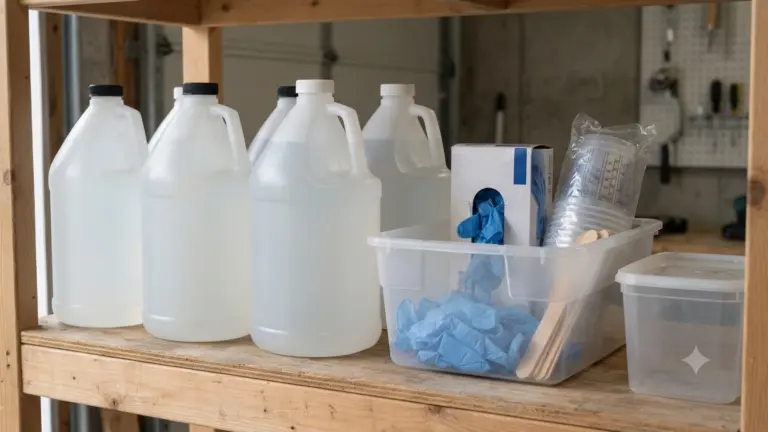
Safety: Wear nitrile gloves, work with good ventilation, and read the product’s safety data sheet before mixing. Follow any respirator guidance listed on that sheet.
Ways to Save Without Compromising Cure Quality
Saving money works best when you cut waste and avoid mixing errors, not when you cut thickness or change the mix. Thinner coats stretch material, but they can leave a floor under-built. Epoxy Resins Source warns that going thinner risks a floor that wears through in high-traffic areas.
- Measure the room carefully and calculate with the data sheet coverage rate.
- Order the rounded kit size rather than stopping at the exact calculated amount.
- Keep the coat thickness at the product’s recommended spec.
- Use the same batch for the whole floor, so the color and cure match.
- Store unopened kits as the label directs so you can use them on a later job.
Running out mid-coat is the expensive mistake. Epoxy Resins Source says running out causes a cold joint that usually requires sanding and recoating. One extra kit costs less than redoing a floor, so treat that extra gallon as part of the job budget.
Frequently Asked Questions
How many gallons of epoxy do I need for a two-car garage?
A 400 square foot two-car garage needs about 2.0 to 2.7 gallons of base coat before waste at 150 to 200 square feet per gallon, according to DoorstepHQ. Add 10 to 15% for waste, then add topcoat gallons for each coat. A three-car garage at about 600 square feet scales the same way.
How much area does a 3 gallon epoxy kit cover?
Epoxy Resins Source lists its 100% Solids Epoxy 3 gallon kit as covering about 300 square feet at 10 mil. At 1/8 inch, the same three gallons would cover only about 38 square feet raw, based on Epoxy Planner’s coverage math. Thickness changes the result far more than the kit size does.
How much waste should I add to my epoxy order?
DoorstepHQ recommends 10 to 15% waste for base coat and topcoat and 15 to 20% for broadcast flake. Epoxy Resins Source says the same 10 to 15% range covers mixing containers, roller absorption, edges, and uneven concrete. Round up to the nearest kit size after you add waste.
Why does a river table need so much more epoxy?
Deep pour casting resin goes in at 1/2 inch to 2 inches per pour, according to Epoxy Planner. At 1/2 inch, one gallon covers only about 3.2 square feet raw, so the volume climbs quickly. Check the product’s maximum pour depth per layer, since that limit is set by the specific resin.
Use the four-step method in this guide for any project, then check the current price of the exact kit you plan to buy. For more planning tools, visit Calculators & Coverage and confirm your numbers before you place the order.
More in Calculators & Coverage
 How Much Deep Pour Epoxy Do I Need? Calculate Gallons and Kits From Your Mold SizeUpdated Nov 26, 2026
 How to Measure Epoxy Resin and Hardener by Weight or VolumeUpdated Nov 26, 2026
 MAS Epoxies Resin Calculator: How Much Epoxy Your Project NeedsUpdated Nov 26, 2026
 How Much Does UV Resin Cost Per Ounce and Per Project?Updated Nov 26, 2026
 How Much Does Epoxy Cost? Gallon Prices and Project BudgetsUpdated Nov 26, 2026
 Epoxy Calculator: How Much Resin Your Project Really NeedsUpdated Nov 26, 2026