

We may earn a commission when you buy through links on this page, at no extra cost to you. Learn more.
Does resin stick to aluminum foil? Usually not well enough to count on, because smooth foil gives epoxy and other resins very little to grip. Resin bonds best when it can flow into pores or wet a surface with high surface energy, and smooth foil offers neither. Foil can still work as a release layer for some mold jobs, but the result depends on the foil, the finish, and how the resin cures. Test a scrap piece before you commit a full pour.
This guide explains why resin tends to bond poorly to foil, what research on aluminum adhesion does and does not tell you about kitchen foil, and how to decide between prepping foil, release-coating it, or switching to a different surface. The short version: treat foil as a surface that needs planning, not as a guaranteed bond or a guaranteed release.
Does Epoxy Stick to Aluminum Foil?
Epoxy generally sticks poorly to smooth, untreated aluminum foil. Adhesion depends on mechanical interlocking, where liquid resin flows into microscopic texture and hardens in place, and on chemical wetting of the surface. Smooth foil has little texture, so there is less for the resin to lock onto.
Researchers studying adhesive bonds to aluminum say that a given level of surface roughness creates mechanical interlocking between resin and metal, and that this roughness helps prevent premature failure at the interface. That finding points in one direction: a smooth metal surface is the weaker starting point. The same research also shows that bond performance depends on the surface prep, not only on the adhesive you choose. You can read the original fracture toughness and roughness study at University of Tennessee research on epoxy and aluminum roughness.
Foil is not the same as a machined aluminum panel, though. The studies behind these claims used prepared aluminum plate, and none of the sources you can read here measured how epoxy bonds to household foil. Treat that gap as a reason to test, not a reason to assume.
Will Resin Stick to Aluminum Foil? What Changes With Alloy and Finish
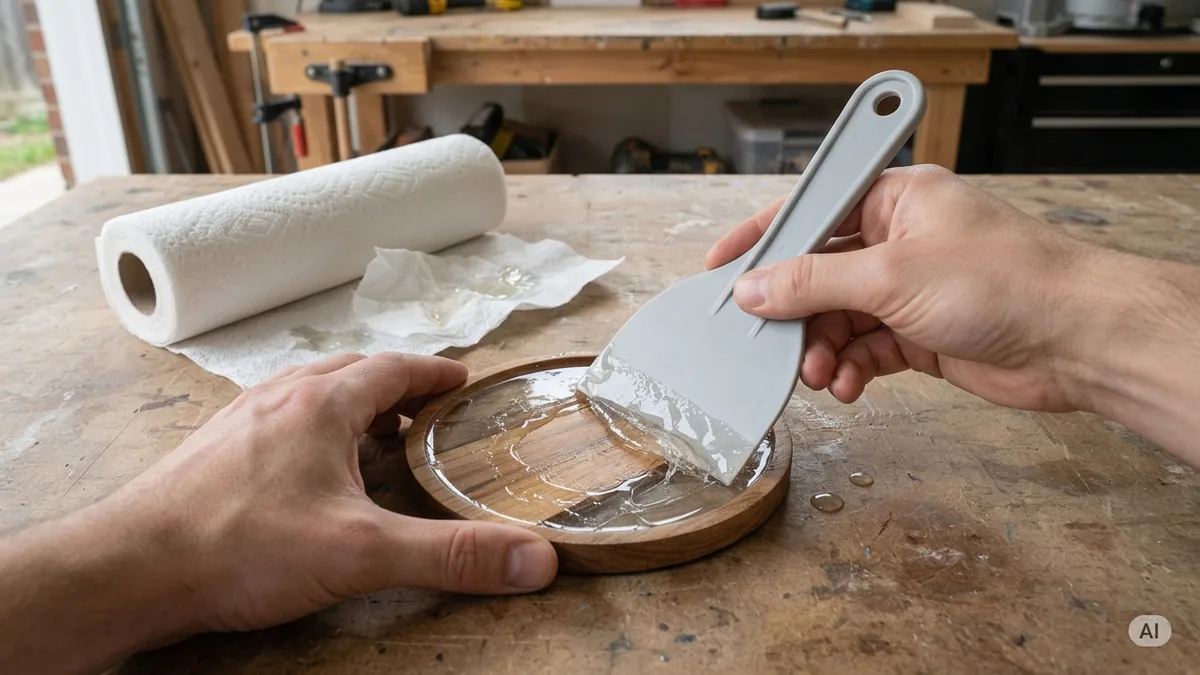
Resin bonding to aluminum changes a lot with the alloy, the surface finish, and any treatment applied before the resin goes on. The best-documented example in the sources is a lab study of AlMg 3, a magnesium-aluminum alloy supplied as a 1.5 mm plate cut into 100 mm by 25 mm pieces. Its treatment steps are a useful model for what a serious prep looks like.
In that study, crushed aluminum oxide was blasted at 8 bar, with the nozzle held 10 cm from the surface at a 45° angle for 60 seconds per sample. After the blasting and degreasing, a hydrogen peroxide treatment produced an initial single lap-shear bond strength of 22.5 ± 0.5 MPa with an epoxy adhesive. After four weeks at 70 °C and 100% relative humidity, those samples still measured 18.1 ± 0.2 MPa, a drop of about 10%.
Those numbers show what a roughened, chemically prepared aluminum surface can do. They do not show what a sheet of kitchen foil will do. Foil is much thinner, often has a bright rolled face on one side and a duller face on the other, and may carry residue or oils from manufacturing. A reasonable reading is that foil starts from a weaker position than prepared plate.
| Aluminum surface | What the sources show | What it means for resin |
|---|---|---|
| Smooth, untreated foil | No bond data in the sources | Expect weak grip; test before relying on it |
| Blasted, degreased plate (AlMg 3 study) | Roughened with 8 bar blasting, then treated | Mechanical texture gives resin something to grip |
| Chemically treated plate | 22.5 MPa initially, 18.1 MPa after 4 weeks at 70 °C and 100% R.H. | Prep can improve and preserve bond strength |
Tip: Foil that looks shiny and feels slick is the most likely to release. Dull, matte foil may give slightly more grip, but neither side should be treated as a reliable bonding surface without a test.
How to Prep Foil for Better Adhesion
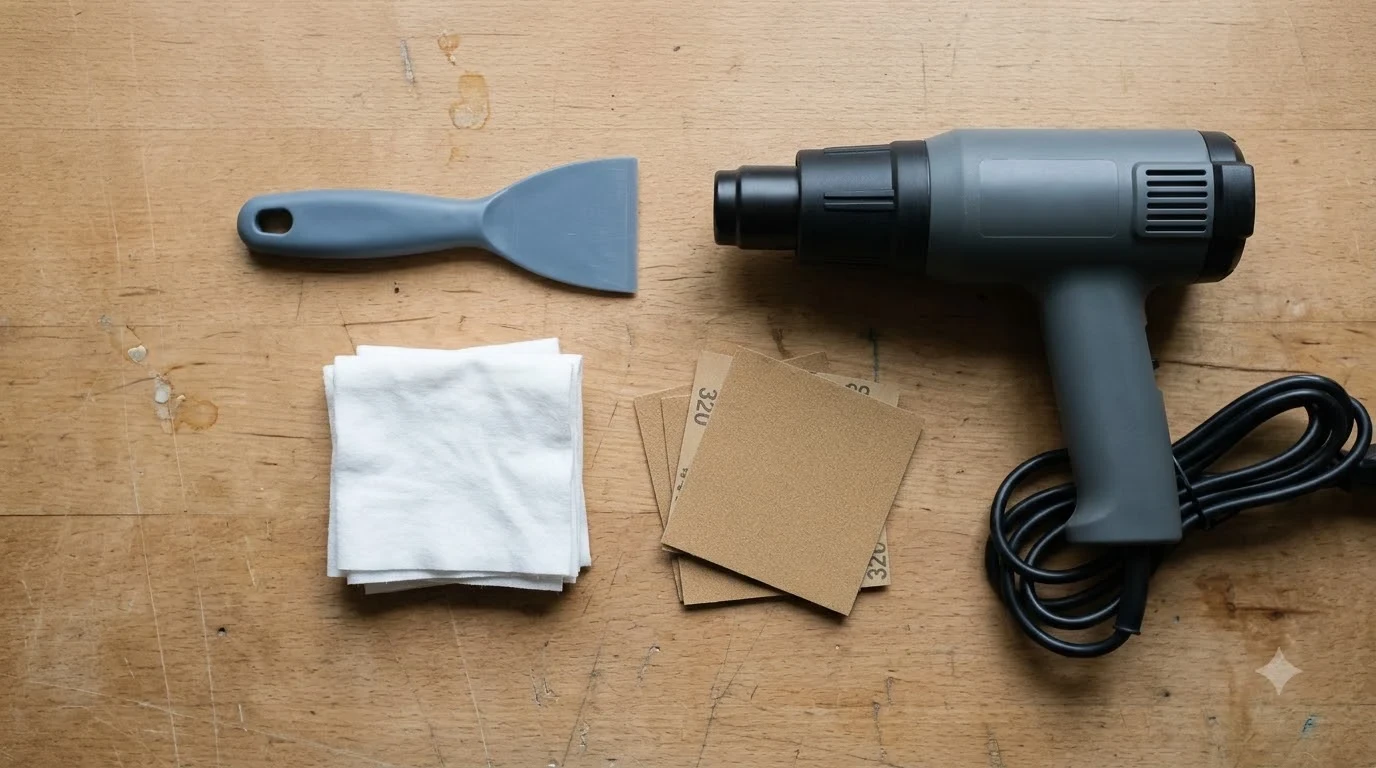
If you need resin to bond to foil, the goal is to add texture and remove anything that blocks wetting. Start with clean hands and clean foil, because oils and fingerprints interfere with adhesion. Then roughen the surface before you apply resin.
- Degrease the foil. Wipe it with a clean solvent-free cleaner and let it dry fully, using gloves so skin oils do not return.
- Roughen the face you want to bond. Light abrasion with fine sandpaper or a scuff pad adds the texture that the research associates with mechanical interlocking.
- Clean the dust. Wipe away all particles so they do not become weak points in the bond.
- Test a scrap first. Pour a small amount of resin on a matching piece and check it after the full cure time on the manufacturer’s data sheet.
Foil is thin and tears easily, so backing it with a rigid, flat support helps keep the surface even. Avoid heavy scrubbing that punctures the foil, because holes can let resin seep through and create a messy bond line.
Using Foil as a Release Layer for Molds and Casts
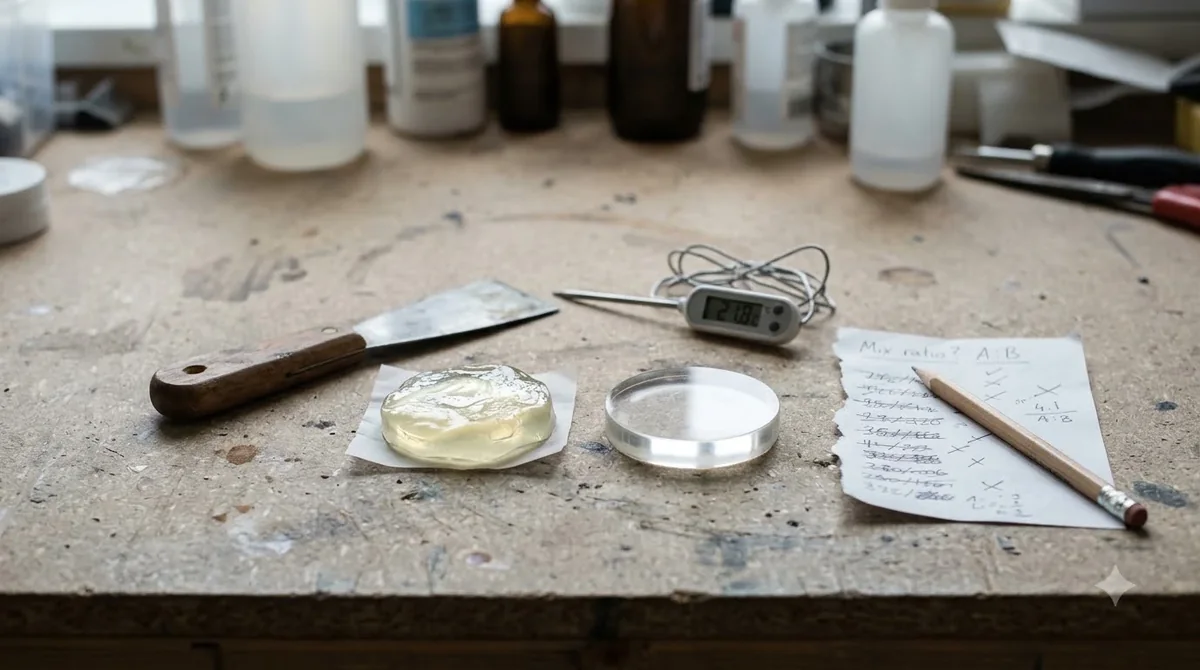
Foil is more often used as a release layer than as a bonding surface, mainly because it is cheap and resin often does not grip it strongly. Some makers wrap a shaped form in foil before pouring, and then peel the cured piece off. That approach can work for simple shapes, but it is less predictable than a purpose-made release system.
The release result depends on heat. Resin generates heat as it cures, and that heat can make cured resin stick more firmly to a mold surface. A mold release spray or wax is the usual backup, and the sources recommend one for exactly this reason. Carnauba-based paste wax is described as durable enough to handle cure heat on flat surfaces or large molds.
Compare foil with surfaces the sources describe as strongly non-stick. Polypropylene, identified by the number 5 recycling code, lets cured resin pop off with minimal effort. Silicone releases cleanly until repeated heat makes it brittle. PTFE is described as having one of the lowest coefficients of friction of any solid, and polyethylene is often used for mold boxes. Foil does not appear on those lists. For a wider list of release materials and their limits, the INCURE guide to materials resin does not stick to is a practical reference.
| Release option | What the sources say | Best use |
|---|---|---|
| Aluminum foil alone | No release data; resin may grip it | Quick, low-stakes shapes with a test first |
| Foil plus release spray or wax | Mold release recommended against cure heat | Detailed or complex forms |
| Polypropylene or polyethylene | Listed as non-stick materials | Mold boxes and reusable forms |
| Silicone | Releases cleanly, but can dry out and grip after repeated heat | Small, flexible molds |
Safety: Wear nitrile gloves, work with good ventilation, and read the resin’s safety data sheet before mixing. Keep mixed resin away from thin plastic sheeting, which can melt if a container overheats on it.
Curing, Safety, and Mixing Tips When Working With Foil
Foil can change how a cure behaves, so mix and pour with care. A thin foil layer does little to slow heat, and a large mass of mixed resin can get warm while it sets. Pour depth and batch size matter, so stay within the maximum depth and pot life listed on the manufacturer’s data sheet.
Measure by weight or volume exactly as the data sheet directs, and mix thoroughly while scraping the sides and bottom of the container. Under-mixed resin is one of the most common reasons for soft spots and cloudy patches, and it can make a poor release look worse.
Ventilate the room, wear nitrile gloves, and keep the work surface covered. Check the SDS for the specific resin you use, since ventilation and respirator needs vary by product. Cure temperature also affects results, so follow the cure window on the data sheet rather than rushing demolding.
Troubleshooting Peeling, Cloudiness, and Poor Bonds
Most foil problems come from three sources: a smooth surface, contamination, or heat. Work through the likely cause before changing the resin.
- Resin lifts or peels off foil: the foil was too smooth or greasy, so roughen and degrease it, then retest.
- Piece will not release from foil: the cure heat or a sticky film caused grip, so add a release spray or paste wax and let it cure fully.
- Cloudy or hazy surface: wax or residue may have transferred, or the resin was under-mixed, so clean the surface and mix more thoroughly.
- Tacky spots after cure: the ratio was off or the cure was too cold, so check the data sheet for temperature and mix ratio.
Prevention beats repair. Clean and roughen foil before any bond attempt, apply a release agent before any release attempt, and test every new combination on scrap. If a foil surface keeps failing, switch to a material the sources describe as non-stick, such as polypropylene or silicone, for that step.
Frequently Asked Questions
Can you use aluminum foil as a release surface for resin casting?
Yes, for some simple shapes, but results vary. Foil alone may grip resin, so a release spray or paste wax is a safer backup. Test a small pour before you use foil on a valuable piece.
Will resin stick to foil on a cookie sheet or baking tray?
It can, especially if the surface is smooth and clean. Baking trays are often coated or treated differently from kitchen foil, so the sources do not give a reliable answer for them. Use a release agent and test first.
Does aluminum foil need a release agent for resin?
For best results, yes. The sources recommend a mold release spray or wax because resin heat can make cured material stick to a mold. Carnauba-based paste wax is one option for flat surfaces or large molds.
What surfaces should I use for a resin mold instead of foil?
Polypropylene, identified by the number 5 recycling code, is listed as a material cured resin releases from easily. Polyethylene and PTFE are also named as non-stick options. Silicone works well too, but check it for brittleness after repeated pours.
Foil is a useful but unpredictable surface, so plan around it rather than assuming either a strong bond or a clean release. If you are deciding how resin behaves on other common surfaces, the guide on does epoxy stick to aluminum covers metal bonding in more depth, and the Surfaces & Materials section lists related materials.
More in Surfaces & Materials
 Can You Epoxy Over Wallpaper? The Prep Steps That Help It StickUpdated Nov 26, 2026
 Can You Epoxy Over Tile? Prep Steps That Help It BondUpdated Nov 26, 2026
 Can You Epoxy Over Laminate? Prep Steps and Limits for DIY SuccessUpdated Nov 26, 2026
 How to Seal Wood Before Epoxy for a Bubble-Free, Even FinishUpdated Nov 26, 2026
 Can You Epoxy Over Granite Countertops? Prep, Adhesion and Heat LimitsUpdated Nov 26, 2026
 Can You Epoxy Over Painted Wood? When It Works and How to Prep ItUpdated Nov 26, 2026