

We may earn a commission when you buy through links on this page, at no extra cost to you. Learn more.
Is EcoPoxy food safe? EcoPoxy states its products are not FDA compliant for direct contact with food, so do not treat them as food-contact surfaces by default. The company says its products are good for 2 years unopened and should be used within 3 months once opened. It also advises letting resin cool to 20-25°C (68-77°F) before you start work. For cure time and any food use, the product’s Technical Data Sheet is the document to check.
This page explains what the manufacturer says, how to read the paperwork, and where makers most often go wrong. It covers the questions readers ask about cure time, colorants, heat and cleaning. The short answer depends on the exact product, a full cure, and how you finish the surface.
What EcoPoxy Says About Food Safety
EcoPoxy’s own published statement is the starting point. The company says its products are not FDA compliant for direct contact with food, which is a clear limit on how you can use them.
The company’s EcoPoxy support and FAQ knowledge base repeats that line in its product FAQ. According to that page, the products are not FDA compliant for direct food contact. That wording matters more than any general phrase like food safe on a sales page.
House Of Resin, a UK retailer, describes EcoPoxy Liquid Plastic as safe for incidental food contact but says it has not yet received FDA approval. That is a retailer’s summary, not a test result from the manufacturer. Treat it as a lead to verify, not a guarantee.
Food safety for epoxy is usually defined as inert once the product is used as directed and fully cured. Several sources describe that idea, but none of them turns a non-compliant product into a food-contact surface.
Checking the Technical Data Sheet and FDA Claims
The Technical Data Sheet and the Safety Data Sheet answer more questions than a product page does. Read both before you commit a project to food use.
Start with the Technical Data Sheet. EcoPoxy says that document lists recommended working temperatures, application thickness and maximum volume for each layer. Look for any explicit food-contact or FDA statement there, and confirm it names the exact product you bought.
Next, find the Safety Data Sheet. ArtResin says the SDS shows the chemical classifications of the components and the personal protective measures to use. Hirosarts adds that the SDS helps you see which hazardous compounds may be present. If a product does not offer an SDS, contact the manufacturer before using it around food.
A real US compliance claim should point to FDA 21 CFR 175.300, the standard for resinous and polymeric coatings. A vague phrase like food safe is not enough on its own.
| Document or label | What to look for | Why it matters |
|---|---|---|
| Technical Data Sheet | Working temperature, layer thickness, maximum volume, cure guidance | Sets the conditions the product was made to meet |
| Safety Data Sheet | Hazard classes, components, protective measures | Shows what the resin contains and how to handle it safely |
| Product label | Hazard symbols and precautionary statements | Hirosarts calls warning statements such as do not ingest a red flag |
| Manufacturer statement | A named standard such as FDA 21 CFR 175.300 | Points to a specific test standard rather than a general claim |
Tip: Save the datasheet PDF and the batch number with your project notes. If you later question a claim, you will have the version that matched the product you used.
Food Contact vs. Incidental Contact Explained
Food contact and incidental contact are different categories. Mixing them up is one of the most common ways makers end up with a surface that does not suit its use.
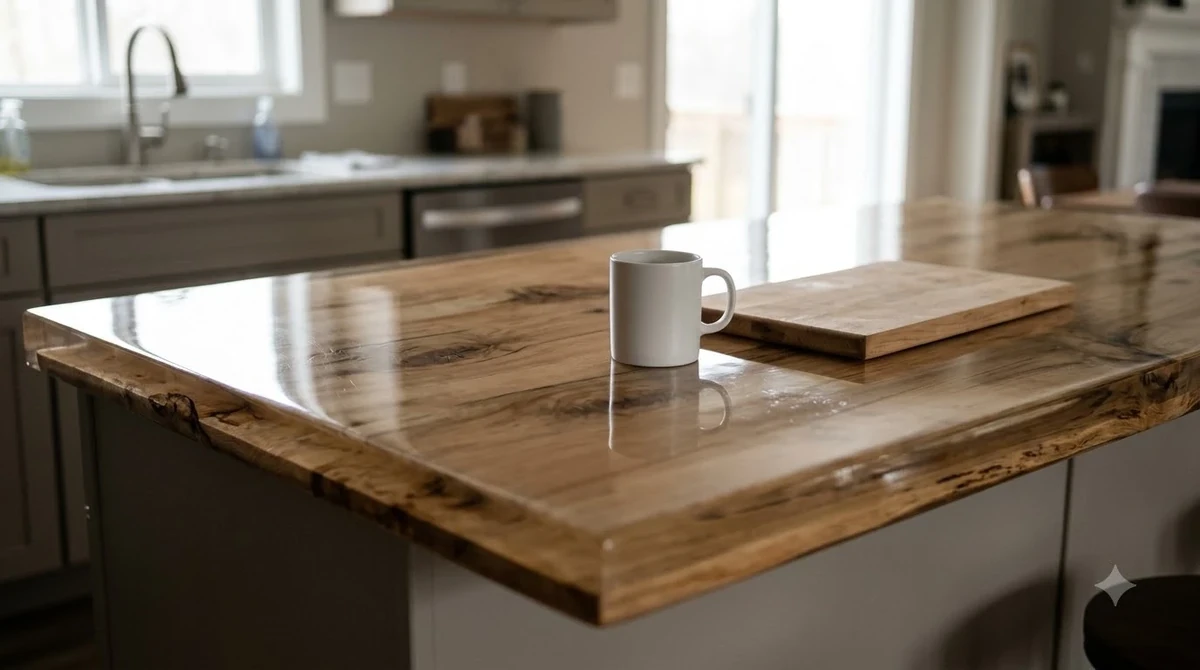
Direct food contact means food sits on, or is cut on, the surface, such as a cutting board, serving tray or countertop. Incidental contact means occasional, brief contact, such as a spill or a glass set down by accident. The House Of Resin summary places EcoPoxy Liquid Plastic in the incidental category, which is narrower than what boards and trays need.
Hirosarts says that even when cured epoxy is acceptable to touch food, it is not recommended as a food storage container or plate. A surface can be safe to touch food and still be a poor choice for holding it.
- Cutting boards and serving trays: direct contact, so look for a direct-contact compliance claim on the datasheet.
- Drinkware: repeated liquid contact over time, which raises the bar for verification.
- Decorative coasters and tabletops: lower exposure, but still check the datasheet for the product you used.
Why Incomplete Curing and Mixing Undermine Food Safety
Most food-safety problems with epoxy start in the mixing cup, not on the product label. Under-cured, poorly mixed or contaminated resin can leach or fail even when the product itself is sound.
Incomplete cure
ArtResin says a resin is only considered safe for food contact once it has fully cured, typically 72 hours. That figure belongs to ArtResin, so your product may need a different schedule. EcoPoxy says cure depends on resin volume and geometry, the temperature of the resin and hardener, ambient conditions and how well the mold sheds heat. Check your datasheet rather than assuming any clock applies.
Mix ratio and mixing
ArtResin and Hirosarts both stress accurate measuring and thorough mixing. Hirosarts notes that an incorrect ratio can lead to incomplete curing and a sticky or soft finish. ArtResin warns that insufficient mixing can leave patches that are not properly sealed. Measure exactly as the label says, scrape the sides and bottom of the cup, and mix for the time the datasheet gives.
Crystallized or old part A
EcoPoxy says crystals can form in part A over time, making it look cloudy. Its guidance is to heat the jug in a water bath at 50°C (122°F), without submerging it, and never heat above that. EcoPoxy also says not to leave a kit at elevated temperatures for longer than 8 hours. Let the resin cool to 20-25°C (68-77°F) before use, because hot resin cures faster and can trap air.
Heat and alcohol
Hirosarts advises against heating cured epoxy beyond 165°F and against placing food or liquids above 165°F on the surface. It also says to keep microwaves away from epoxy projects. Hirosarts notes that alcohol contact can weaken epoxy coatings and may cause leaching into food. Keep spirits, alcohol-based cleaners and hot pans off the surface.
How to Tell Which Problem You Have and How to Fix It
Symptoms point to causes. Match what you see with the likely cause before you put food on the surface.
| Symptom | Likely cause | What to do |
|---|---|---|
| Tacky or soft surface after the cure window | Under-cure or off-ratio mix | Wait longer if the datasheet allows it, then recheck. Keep the surface off food until it is firm and not tacky. |
| Cloudy or crystallized part A | Cold storage or temperature swings | Heat in a 50°C (122°F) water bath, following EcoPoxy’s limits, then cool before use. |
| Streaks or patches in the finish | Insufficient mixing | Sand and recoat per the datasheet, then confirm the topcoat is verified for food contact. |
| Yellowing over time | UV exposure from daylight | Keep projects indoors. EcoPoxy says its clear casting resins are not recommended for outdoor use. |
| Color from inks or unverified dyes | Alcohol ink or unverified colorant | Do not use it on a food surface. Add a clear, non-tinted food-contact topcoat if you must use the color. |
Use these steps to avoid the problems above on your next surface.
- Confirm the claim. Read the datasheet for your exact product and check for a named food-contact standard before you start.
- Measure exactly. Measure by the label’s ratio and mix thoroughly, scraping the cup sides and bottom.
- Bring resin to temperature. Let the components reach 20-25°C (68-77°F) before pouring, as EcoPoxy recommends.
- Respect the thickness limit. Pour no thicker than the datasheet’s maximum for each layer, since thick pours can overheat.
- Cure for the full time. Keep the piece undisturbed and at a steady temperature until the full cure window has passed.
- Test for tack. Touch a small, hidden area with a clean, gloved finger. Any tackiness means the surface is not ready.
- Seal colored areas. If you used a colorant you cannot verify, add a clear, non-tinted food-contact topcoat over the whole surface.
- Clean gently. Hand wash with mild soap and warm water, and keep the piece out of the microwave.
Safety Gear and Storage for Food-Contact Projects
Handle uncured resin with care, and keep it away from any food or drink. Use nitrile gloves and good ventilation, as the product’s SDS describes, and keep the workspace clear of food prep.
EcoPoxy says cured epoxy is inert and can go out as non-hazardous solid waste, while uncured resin and residue need hazardous waste handling. Store products in a cool, dry, well-ventilated place away from direct sunlight, within the 15-25°C (59-77°F) range EcoPoxy recommends. Use opened part A and part B within 3 months, and do not mix batches. For more on handling, see Resin Safety.
Safety: Keep uncured resin and hardener out of reach of children and pets, and never use them as a food container. Follow the SDS for protective equipment and disposal.
Frequently Asked Questions
Is EcoPoxy food safe?
EcoPoxy says its products are not FDA compliant for direct contact with food. A UK retailer describes Liquid Plastic as safe for incidental contact but not yet FDA approved. Check the datasheet for your exact product before any food use.
How long does epoxy need to cure before it is safe for food?
ArtResin says its resin is considered safe for food contact once fully cured, typically 72 hours. EcoPoxy does not give that number and says cure depends on volume, temperature and mold heat. Follow your product’s datasheet for its cure time.
Can I use alcohol ink or pigments in epoxy for food-safe projects?
Not for food surfaces with alcohol ink. ArtResin describes alcohol ink as a flammable solvent that makes the resin no longer considered non-toxic. Hirosarts lists titanium dioxide, copper phthalocyanine and chromium oxide green as pigments that may leach, so a clear, non-tinted topcoat is the safer route.
Can epoxy go in the microwave or dishwasher?
Hirosarts advises keeping microwaves away from epoxy projects and avoiding heat above 165°F on cured surfaces. House Of Resin says its Alumilite product should not go in a dishwasher or microwave. Hand wash with mild soap and warm water instead.
If you are still choosing a product, the general rules in is epoxy food safe give a broader starting point, and is there a food safe epoxy compares options. Verify each product’s datasheet before you build anything you plan to serve from.
More in Resin Safety
 Is There a Food Safe Epoxy? Yes, but Only When Fully CuredUpdated Nov 26, 2026
 How to Get Rid of Epoxy Smell: Fixes That Actually Reduce OdorUpdated Nov 26, 2026
 Can You Put Food in Resin? Safer Choices and How to Prevent RotUpdated Nov 26, 2026
 Do You Need a Respirator for Resin? When Ventilation Is Enough and When It Isn’tUpdated Nov 26, 2026
 Food Coloring in Resin: Results, Fading and Safer AlternativesUpdated Nov 26, 2026
 Is Epoxy Food Safe Once Fully Cured? What Makers Need to KnowUpdated Nov 26, 2026