

We may earn a commission when you buy through links on this page, at no extra cost to you. Learn more.
Is there a food safe epoxy? Yes, some epoxies are tested for food contact, but only after they are mixed correctly and fully cured. Manufacturers that cite FDA 21 CFR 175.300 say their cured surfaces meet that standard for food contact. Published cure times range from about 72 hours to 30 days, depending on the brand and the source. Mix ratios also differ, from 1:1 to 2:1 by volume, so the product label matters.
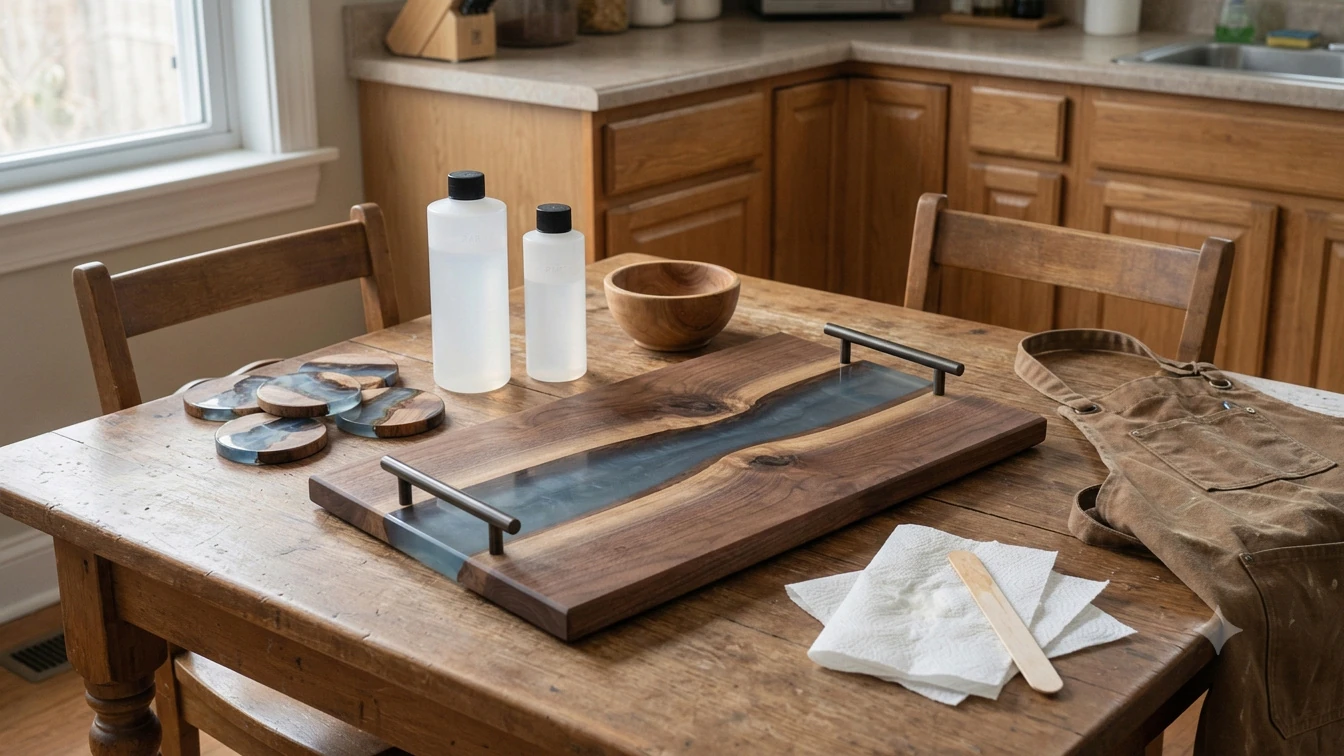
Many makers want to serve food on a board, tray or countertop they have coated with resin. This page explains which epoxies are marketed as food safe, what the cure and mixing steps change, and when you should avoid epoxy on food contact surfaces altogether.
What Food Safe Epoxy Actually Means
A food safe epoxy is one that, when used as directed and fully cured, is described as inert. The manufacturer’s claim is that it will not leach chemicals into food that touches it. That claim applies to the hardened surface, not to the liquid resin in the bottle.
Two terms appear most often. Food safe usually refers to a product that has been tested against a specific standard. Food grade is a looser phrase that many sellers use without naming any test. Check which standard the seller is citing before you trust either label.
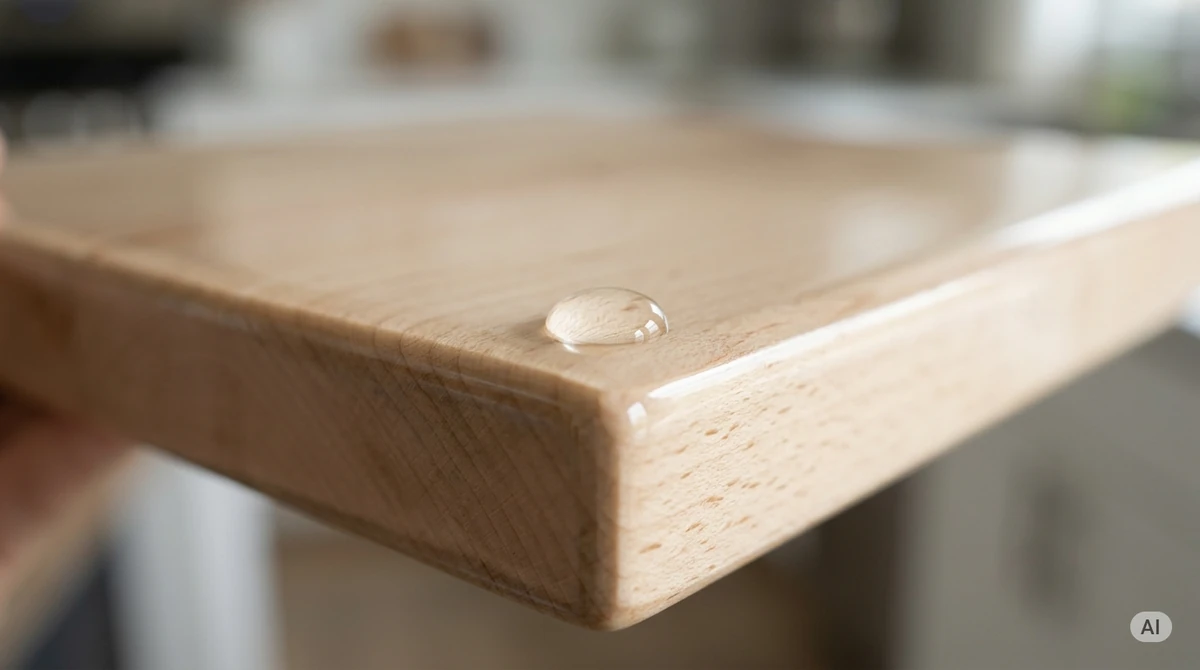
The most common US reference is FDA 21 CFR 175.300, which covers resinous and polymeric coatings. According to WiseBond, certain of its clear epoxies were tested to Condition E of that regulation by an independent lab. Superclear says its Table Top 1:1 was tested under the same condition and covers several food simulant types.
Which Epoxies Are Marketed as Food Safe
Several brands market clear coating resins as food safe, but the claims differ in scope. Some cover indirect contact, such as a serving board or bar top. Others cover only brief direct contact. Read the product’s technical data sheet to see which applies.
ArtResin says its resin was tested for leaching in 13 food safety tests and passed each one. The company also says its cured product is compliant with FDA 21 CFR 175.300. Acrylgiessen notes that only a few epoxies carry the EU food safety test seal, because obtaining it is costly for manufacturers.
MAX CLEAR GRADE, a two-part coating, is described by its maker as FDA approved for only brief direct contact with food. Its working time is listed as 70 minutes, with a minimum of 24 hours to cure. That limited approval is narrower than a full indirect contact claim, so treat it as a different category. If you want to go deeper, Is Ecopoxy Food Safe covers a connected topic.
How Cure Time and Mixing Decide Food Safety
Food safety depends on the cured state, and cure time is the biggest variable. Some sources say 72 hours. Others say the surface only reaches full hardness after 30 days. The safest reading is to follow the longest cure your product’s instructions state for food contact.
Cure time stated by the source
ArtResin says a resin is only considered safe for food contact once fully cured, and typically cites 72 hours. WiseBond says epoxy should be fully cured for 30 days before it is considered an inert plastic. Superclear says its resins harden to the touch in about 24 hours, but full cure to maximum hardness takes about 30 days at 70°F to 84°F.
Incorrect mix ratio
Two-part epoxy reacts in a fixed proportion. If you measure the resin and hardener wrong, some material is left without a partner and stays soft or tacky. Superclear lists Table Top 1:1 at 1 part resin to 1 part hardener by volume, while Countertop Epoxy is 2:1. Mixing a 2:1 product at 1:1 will not cure properly.
Insufficient mixing
Unmixed resin clinging to the container wall can end up in the pour. Superclear recommends hand stirring Table Top epoxy for three to five minutes. For Countertop Epoxy and Liquid Glass Deep Pour, it recommends at least five minutes with a drill mixer, then three more minutes in a second container.
How to Tell Which Problem You Have
A surface that is sticky, soft or cloudy after the cure window usually points to one of a few causes. Matching the symptom to the cause tells you whether the piece can be salvaged for food contact. If the surface is still tacky after the full cure time, do not use it for food.
| Symptom | Likely cause | What to do |
|---|---|---|
| Tacky or soft spots after the cure window | Incomplete mixing or an off ratio | Do not use for food. Remove and recoat, following the manufacturer’s ratio and mixing times. |
| Surface still soft at 72 hours | Cure not finished yet | Wait for the full cure stated on the data sheet before any food contact. |
| Hard surface with streaks or cloudy patches | Unmixed material or moisture during cure | Confirm the cured surface is hard, then check the SDS and the manufacturer’s guidance before use. |
| Color changed or spotted after adding pigment | Colorant or solvent-based dye added | Treat the surface as untested. Apply a clear food-safe topcoat if the manufacturer allows it. |
Tip: Write the mix date and the ratio on the container label. A dated note makes it easier to confirm the full cure window has passed before you serve on the piece. A related explanation is in Food Coloring in Resin.
How to Check a Product Is Food Safe Before You Use It
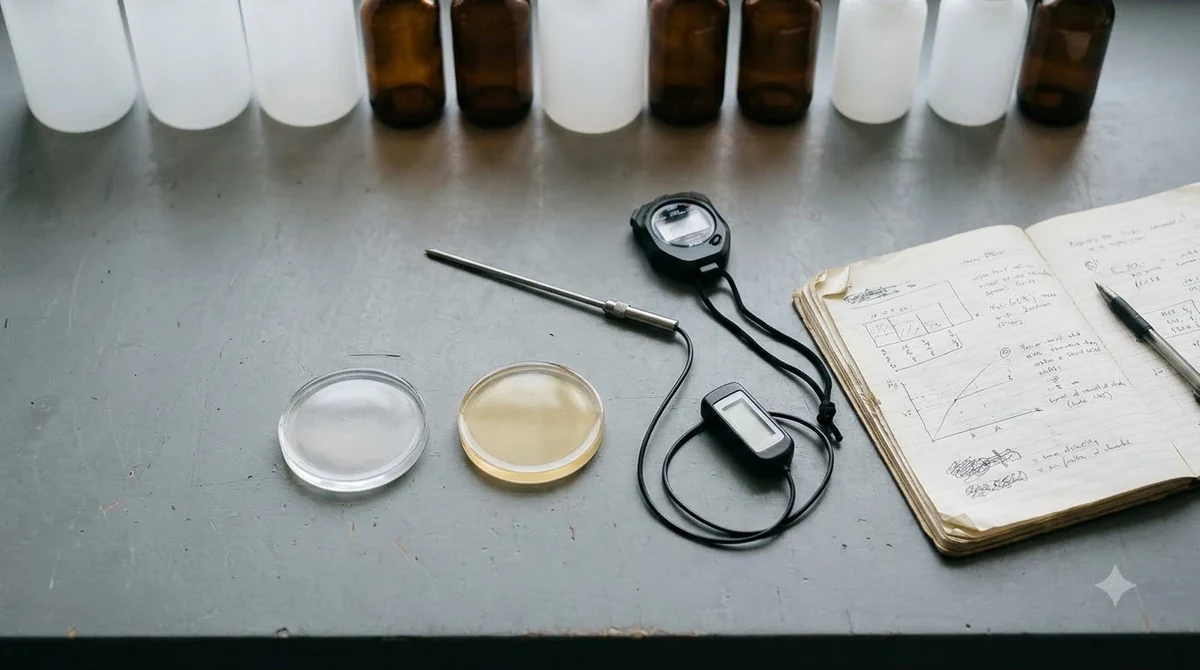
Start with the manufacturer’s documentation, not the marketing page. Look for a named standard, a stated scope of contact and a cure time. If the product does not name any standard, treat its food safe claim as unverified.
- Find the standard. Look for FDA 21 CFR 175.300 or an EU food contact seal on the technical data sheet.
- Confirm the scope. Check whether the approval covers indirect contact, direct contact or brief direct contact only.
- Read the cure window. Note whether the source says 72 hours, 30 days or another time for the fully cured state.
- Check the mix ratio. Use the ratio printed for that exact product, measured by volume or weight as the label directs.
- Review the SDS. The Safety Data Sheet lists the chemical makeup and personal protective measures for handling.
- Ask the maker. If the documentation is unclear, contact the manufacturer directly and request its test records.
For a broader look at how these claims are evaluated, the ArtResin food safe epoxy guide explains the certifications it lists. You can also review the general safety points for epoxy on this site, and the Resin Safety section covers handling basics for mixing and curing.
Common Mistakes That Make Epoxy Unsafe for Food
Most food safety problems come from a handful of habits. The biggest is treating a cured surface as ready for food on day one. Another is adding a colorant to a product whose tested results only cover clear resin.
WiseBond states that adding any colorant alters the formula and the product will no longer conform to the tested results. ArtResin advises that alcohol ink, nail polish and solvent-based dyes compromise food-safe status. If you add color, its guidance is to apply a clear, untinted food-safe topcoat over the decorative layer.
WiseBond also advises against cutting or preparing raw food on epoxy surfaces. A cutting board and a serving board are different uses. Keep a separate board for raw meat and use the epoxy piece for serving or display only.
Safety: Wear nitrile gloves and work with airflow while the resin is liquid. Read the SDS before mixing. Avoid skin contact with uncured resin, because liquid epoxy is always treated as toxic. Is Epoxy Safe for Cutting Boards explains a closely connected part of this problem.
Frequently Asked Questions
Is there a food safe epoxy that is FDA approved?
Some manufacturers say their epoxies comply with FDA 21 CFR 175.300 after testing. Look for that citation in the technical data sheet and check its stated scope. Brands may describe approval for indirect or only brief direct contact, so the wording matters.
How long does epoxy need to cure before it is food safe?
Sources give different answers, with ArtResin citing about 72 hours and WiseBond and Superclear citing about 30 days for full cure. Use the longest window the product’s documentation gives for food contact. Surfaces that still feel soft or tacky are not ready.
Can you cut food directly on epoxy resin?
WiseBond advises against cutting or preparing raw food on epoxy surfaces, even after full cure. Cutting can scratch the surface and create grooves where food can collect. Use epoxy for serving boards and trays, and use a separate cutting board for food prep.
Is cured epoxy toxic or safe to touch?
Acrylgiessen states that liquid epoxy resin is always toxic and that the resin is non-toxic only in the cured state. Resiners says food safe epoxy should not be eaten or used as a food ingredient. Wear gloves while mixing, because the liquid stage is the main concern.
Food safe epoxy exists, but the label alone does not settle the question. Check the named standard, the cure window and the approved scope on the data sheet before you serve food on a piece. If the surface is not fully cured or has been colored without a tested topcoat, treat it as not food safe.
More in Resin Safety
 How to Get Rid of Epoxy Smell: Fixes That Actually Reduce OdorUpdated Nov 26, 2026
 Can You Put Food in Resin? Safer Choices and How to Prevent RotUpdated Nov 26, 2026
 Do You Need a Respirator for Resin? When Ventilation Is Enough and When It Isn’tUpdated Nov 26, 2026
 Food Coloring in Resin: Results, Fading and Safer AlternativesUpdated Nov 26, 2026
 Is Epoxy Food Safe Once Fully Cured? What Makers Need to KnowUpdated Nov 26, 2026
 Is EcoPoxy Food Safe? What Makers Should Verify Before UseUpdated Nov 26, 2026