

We may earn a commission when you buy through links on this page, at no extra cost to you. Learn more.
Do you need a respirator for resin? Often yes for epoxy mixing and sanding, but not always, and the answer depends on the product, the volume, and the room. Some manufacturers say their product is safe to use without a respirator when used as directed in a well-ventilated area, while other resin brands are labeled as hazardous and call for respiratory protection. Epoxy fumes are an organic-vapor hazard, so an N95 mask does not stop them. Sanding cured epoxy creates fine dust, which a P100 filter handles well.
This guide sorts the common home situations into clear groups, so you can see when a respirator is worth wearing and when good airflow is likely enough. It also explains the cartridge types, replacement signs and safety steps that the main resin safety sources describe. Always check the safety data sheet (SDS) for the exact product you bought, because resin formulas differ.
When a Respirator Is Actually Needed
A respirator is most clearly needed when you handle many brands of epoxy in larger amounts, heat the resin, or work in a closed room. Many resin sources treat respiratory protection as a requirement for these cases. The safety guidance from Epoxy King lists heated epoxy, large-volume pours in enclosed spaces, poorly ventilated areas and extended mixing sessions as situations that call for it.
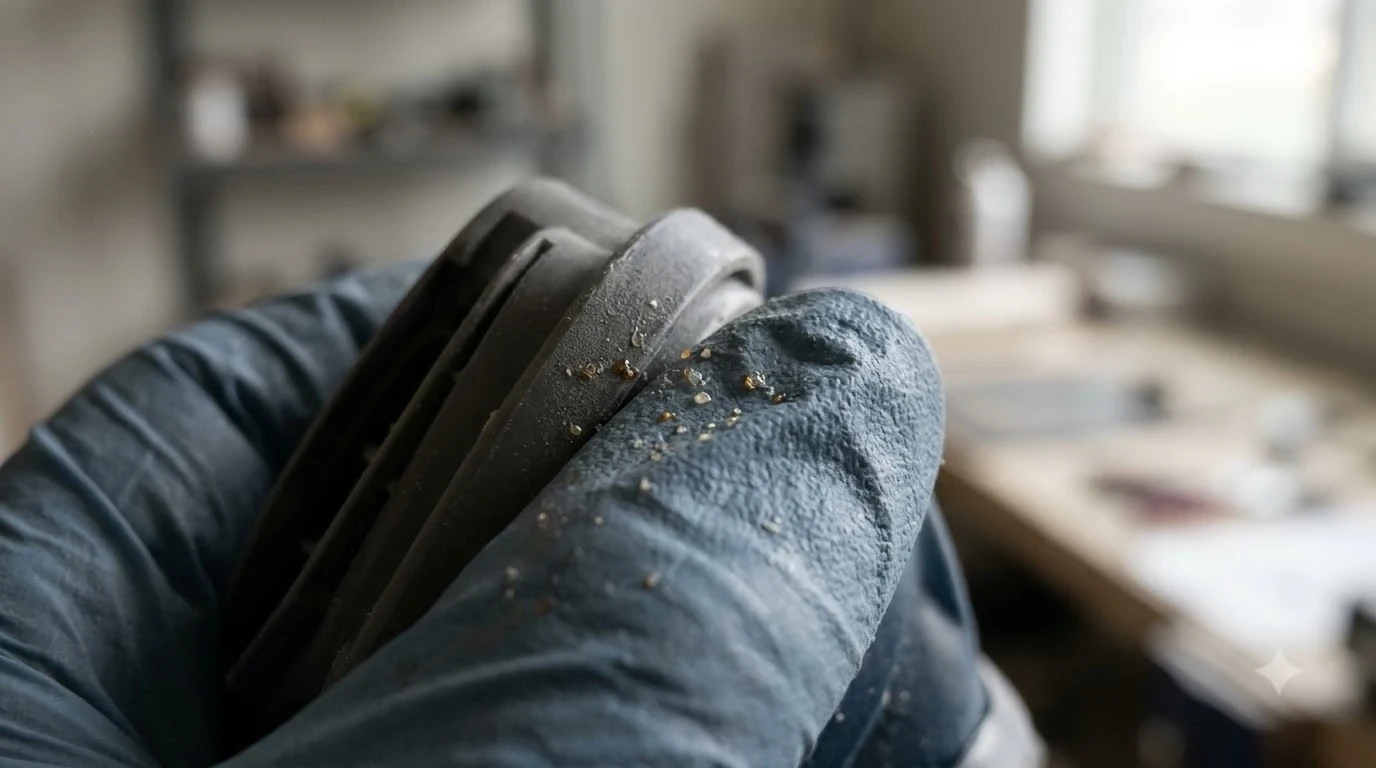
Sanding is a separate trigger. Epoxy King’s PPE table lists an N95 or P100 respirator for sanding cured epoxy, with excellent ventilation and dust collection as added controls. For a small casting project in a garage with the door open, ventilation and gloves may cover most of your exposure, but you should still check the SDS.
| Project situation | Usual recommendation |
|---|---|
| Small mixing batch, open windows, low-odor product | Ventilation and gloves, with a respirator as an extra precaution if you prefer |
| Large or heated pour in a closed room | Organic vapor respirator plus mechanical exhaust |
| Sanding or polishing cured epoxy | P100 particulate filter, or an OV/P100 combination if vapors are present too |
| Spraying epoxy or coatings | OV/P100 cartridge, often in a full-face respirator |
ArtResin states that you do not need a respirator when its product is used as directed in a well-ventilated area, and it describes a respirator in a non-ventilated space as an extra precaution. That is the manufacturer’s position for its own product. Other resin brands carry different warnings, so read the label and SDS before deciding.
Epoxy vs. UV Resin Fume Risks
Epoxy and UV resin do not carry the same airborne risks, so one rule cannot cover both. Epoxy is a two-part system where the hardener is often the more irritating component. Resin Art Basics notes that hardener contains amines that are more volatile and irritating than the resin, and it advises never sniffing the mixing cup.
Heat changes the picture. Epoxy King says cold resin produces minimal vapors while heated resin releases more volatile organic compounds, and large pours generate heat as they cure. A deep pour in a warm room therefore deserves more airflow than a thin coat on a cool day.
UV resin is a different product. Resin Art Basics says UV resin has lower VOC emissions than standard epoxy but still releases fumes during curing, so it should not be treated as risk-free. Check the SDS for the specific UV formula you use, since the sources here do not give exact emission figures.
What Respirator for Epoxy Works Best
For epoxy, the best match is an organic vapor cartridge for mixing and pouring, and a P100 filter for dust. A combination cartridge covers both. In its epoxy and fiberglass mask guide, PK Safety recommends the 3M 60921 for handling liquid epoxy and cutting cured epoxy, because it pairs an activated charcoal vapor layer with a P100 particulate filter.
Filters and masks come in different sizes and levels of coverage. PK Safety says a half-mask has an OSHA assigned protection factor of 10, while a full-face respirator has a factor of 50. The 3M 6000 half facepiece is described as its top-selling half mask, and the 3M 7500 is described as more comfortable. Both accept the same cartridges, so the mask choice is mostly about comfort and eye coverage.
Do not rely on an N95 for epoxy vapor. Resin Art Basics says an N95 filters particles but does nothing against VOC fumes, and WC Safety says a P100 filter or N95 alone will not protect against epoxy vapor. For sanding alone, WC Safety lists the 3M 2091 as a P100-only filter suitable for cured epoxy dust.
Organic Vapor Cartridges and Filter Ratings
Organic vapor cartridges use activated carbon to capture gas-phase fumes, while P100 filters trap particles mechanically. The two do different jobs, and they are not interchangeable. WC Safety says organic vapor cartridges are color coded black and P100 filters magenta, which helps you check you have the right part before you start.
The P100 rating matters for dust. PK Safety says the 3M 2097 is rated P100 and captures at least 99.97% of particles at 0.3 microns. That rating covers wood dust and welding fumes, which makes it a practical choice for a woodworker who also sands epoxy projects. Confirm the rating printed on the filter you buy.
Cartridge labels also tell you what they stop. Check that the cartridge is rated for organic vapors and that it fits your respirator brand. Mixed-task work often calls for both a vapor layer and a P100 layer, which is why a combination cartridge is a common pick. To understand the system behind this, read How to Do a Dirty Pour with Resin.
Ventilation Setups That Reduce Exposure
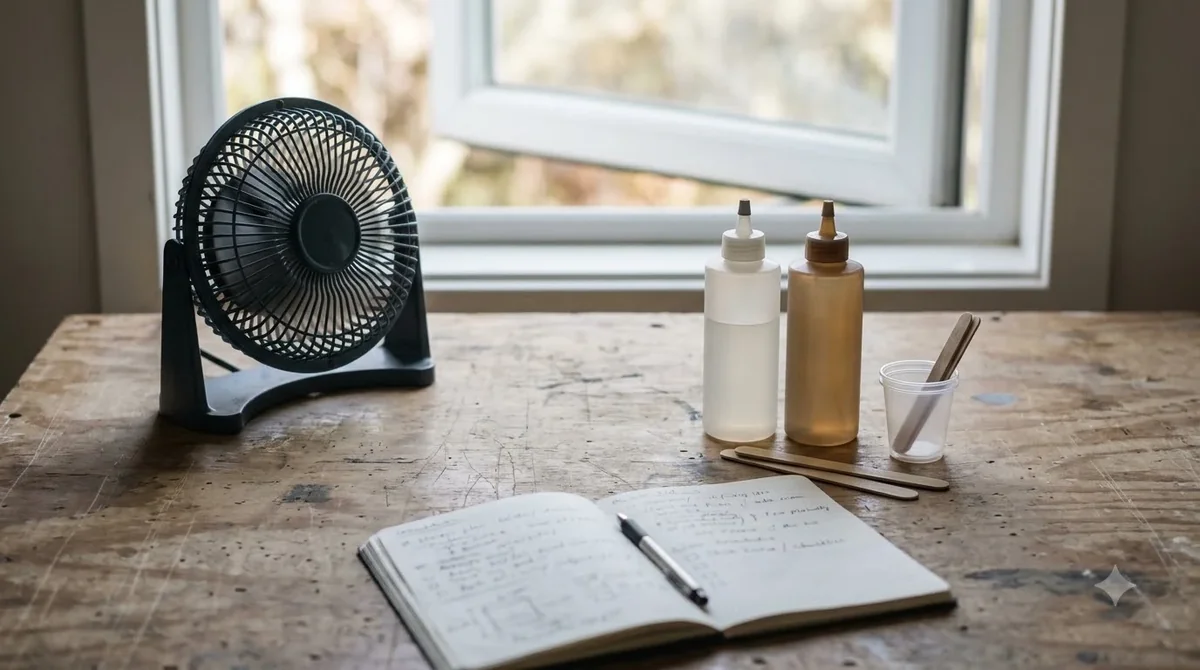
Ventilation lowers how much vapor reaches your breathing zone, and it works best when airflow moves fumes away from you. Resin Art Basics recommends cross-ventilation with windows open on opposite sides of the room, so fresh air enters on one side and exits on the other.
Fan placement matters just as much. Resin Art Basics advises placing the fan behind you and blowing out a window, rather than pointing it at the workspace, since blowing across your face can spread fumes through the room. For deep pours or pieces that cure for many hours, the same source describes a simple curing box with a small fan ducted to a window.
Ventilation does not replace gloves or eye protection. Epoxy King says nitrile gloves in 6-mil or 8-mil thickness give better protection than 4-mil, and that latex and vinyl are not suitable for epoxy. Even in a well-aired room, keep resin off your skin and wash it off promptly. For more on the basic safety habits, browse our Resin Safety articles.
Tip: Set up your fan and window airflow before you open the resin, so the room is already moving air when you start mixing.
Safety: Wear nitrile gloves and safety glasses, ventilate the room, and read the SDS for your resin and hardener. If you notice headaches, dizziness or throat irritation, move to fresh air and stop working.
Sanding Cured Resin Safely
Cured epoxy is generally considered inert, but sanding it produces dust that you should not breathe. Epoxy King’s epoxy safety and PPE guide says sanding cured epoxy creates dust that shouldn’t be inhaled, and lists an N95 or P100 respirator plus a dust collection system as preferred controls. A P100 filter is the standard answer for this step.
If you sand cured epoxy and also handle uncured resin on the same day, switch to a combination OV/P100 cartridge or change filters between tasks. WC Safety notes that the 3M 2091 is dust-only, so it will not help during mixing. Work outdoors or near a dust collector when possible, and wipe down the area afterward. If your piece is a countertop or serving item, see is epoxy food safe before you finish it.
Fit Testing, Storage and Replacing Cartridges
A respirator only protects you if it seals to your face. PK Safety says about 80% of its customers buy a medium mask size and that fit testing is the only sure way to confirm sizing. Air leaking around the edges defeats the purpose, so check the seal each time you put the mask on.
Replacement signs differ by cartridge type. PK Safety says organic vapor cartridges should be replaced when breakthrough occurs, meaning you smell or taste solvent, while particulate filters should be replaced when breathing becomes harder. Resin Art Basics says its author replaces organic vapor cartridges every 40 hours of use or when fumes are smelled through the mask. Treat that figure as one person’s habit, not a manufacturer rule, and follow the cartridge maker’s guidance.
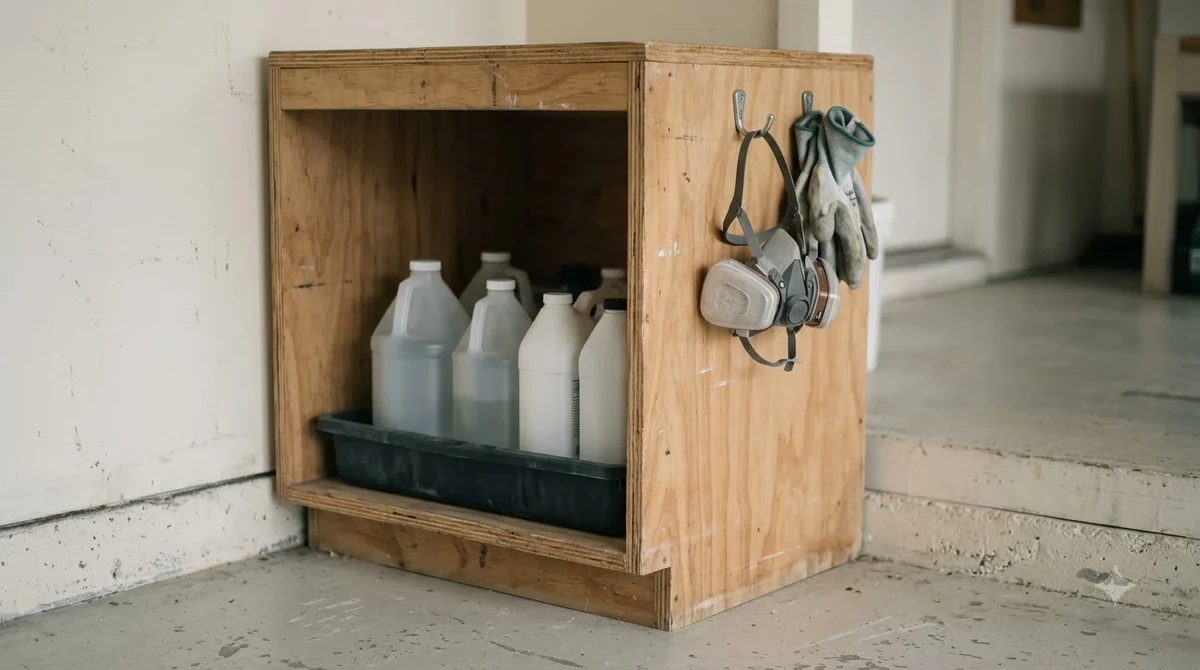
Store cartridges sealed between sessions. WC Safety suggests keeping them in an airtight bag, and recommends replacing them when you notice odor, harder breathing, or after the manufacturer’s interval. Never rely on smell alone, because the warning is weak and you can become desensitized to it.
Frequently Asked Questions
Do you need a respirator for resin art at home?
It depends on the product and the room. Some brands say no respirator is needed when used as directed in a well-ventilated area, while others are labeled as hazardous. Check the SDS, and consider a respirator if you heat the resin, pour in volume, or work in a closed space.
Is an N95 mask enough for epoxy resin fumes?
No. An N95 filters particles but does not stop organic vapors from epoxy. For fumes you need an organic vapor cartridge, and for dust a P100 filter. A combination OV/P100 cartridge covers both tasks.
Do you need a respirator for sanding cured epoxy?
A particulate respirator is the usual recommendation, such as an N95 or P100 for sanding cured epoxy. WC Safety lists the 3M 2091 as a P100 filter suited to cured epoxy dust. Add dust collection and good airflow to reduce what you breathe.
How often should you replace respirator cartridges when using epoxy?
There is no fixed time for every user. Replace organic vapor cartridges when you smell or taste solvent, and replace P100 filters when breathing gets harder. One resin artist says they change cartridges every 40 hours, but follow the cartridge manufacturer’s service-life data.
For most home makers, the practical plan is simple: ventilate, wear gloves and eye protection, and use an organic vapor or combination cartridge when vapors or heat are involved. Read the SDS for your exact product, and see our guide on is epoxy resin toxic for more background on the health questions behind these steps.
More in Resin Safety
 Is There a Food Safe Epoxy? Yes, but Only When Fully CuredUpdated Nov 26, 2026
 How to Get Rid of Epoxy Smell: Fixes That Actually Reduce OdorUpdated Nov 26, 2026
 Can You Put Food in Resin? Safer Choices and How to Prevent RotUpdated Nov 26, 2026
 Food Coloring in Resin: Results, Fading and Safer AlternativesUpdated Nov 26, 2026
 Is Epoxy Food Safe Once Fully Cured? What Makers Need to KnowUpdated Nov 26, 2026
 Is EcoPoxy Food Safe? What Makers Should Verify Before UseUpdated Nov 26, 2026