

We may earn a commission when you buy through links on this page, at no extra cost to you. Learn more.
Is resin UV resistant? Usually not on its own, so check the label for a UV stabilizer and a UV-stable topcoat before a piece goes outside. Most casting and epoxy resins yellow, haze and lose gloss under continuous sunlight. Some products add UV absorbers or stabilizers to slow that change, but none are fully sun proof. Makers commonly recommend a clear UV-stable finish coat even on products sold as UV resistant.
This guide explains what UV resistance means for resin, why yellowing happens, how to read a product’s spec sheet, and how to protect finished pieces. It is written for makers working on tabletops, jewelry, coasters and outdoor projects.
What Is UV Resistant Resin?
UV resistant resin is a product formulated to keep its clarity longer when ultraviolet light hits it. The term describes a slower rate of change, not immunity to sunlight.
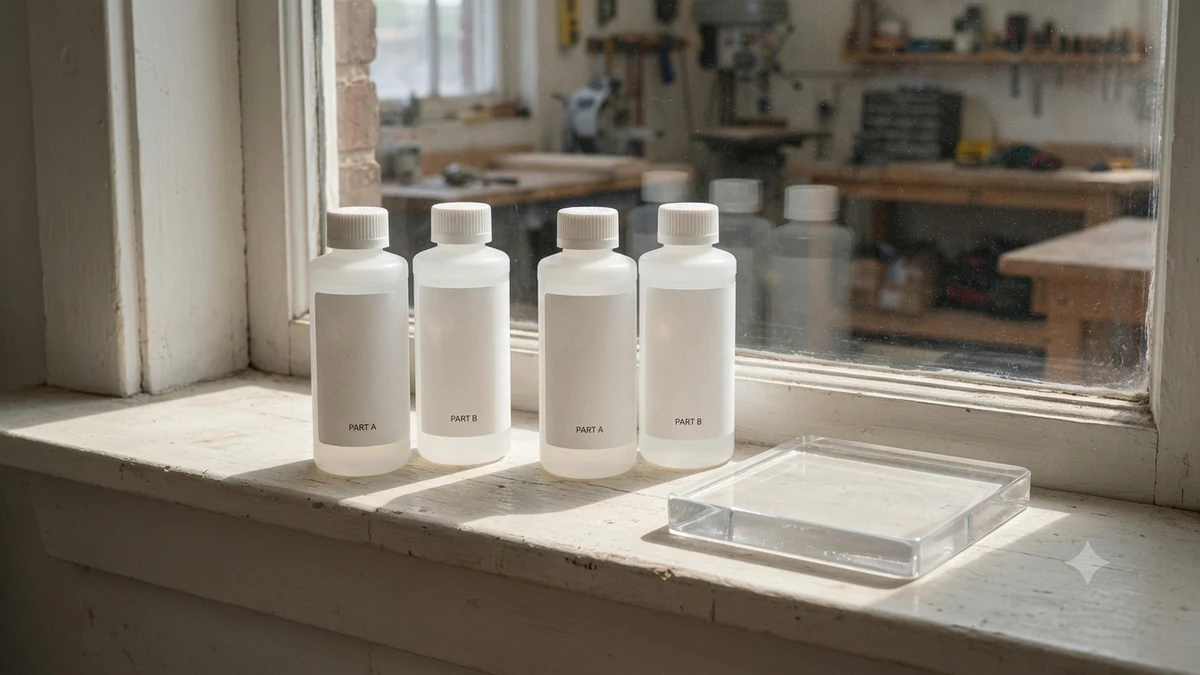
Manufacturers reach that goal in different ways. Alumilite describes its Outdoor Epoxy as having superior UV resistance that protects against fading and degradation, but it also says the epoxy will eventually yellow after extended outdoor exposure. Superclear sells a Super-UV Inhibitor Additive that is mixed into epoxy or urethane in small amounts to absorb UV rays and guard against ambering.
Be careful with marketing words. A resin sold as UV resistant is not UV proof. Jinhua, an epoxy manufacturer, notes that stabilized epoxy stays clear longer than basic epoxy but still changes under continuous direct sun.
Why Resin Yellows in Sunlight
Sunlight causes yellowing through a chemical process, not just heat. Ultraviolet energy breaks down parts of the resin and hardener, and the altered material absorbs light differently, which reads as yellow or amber.
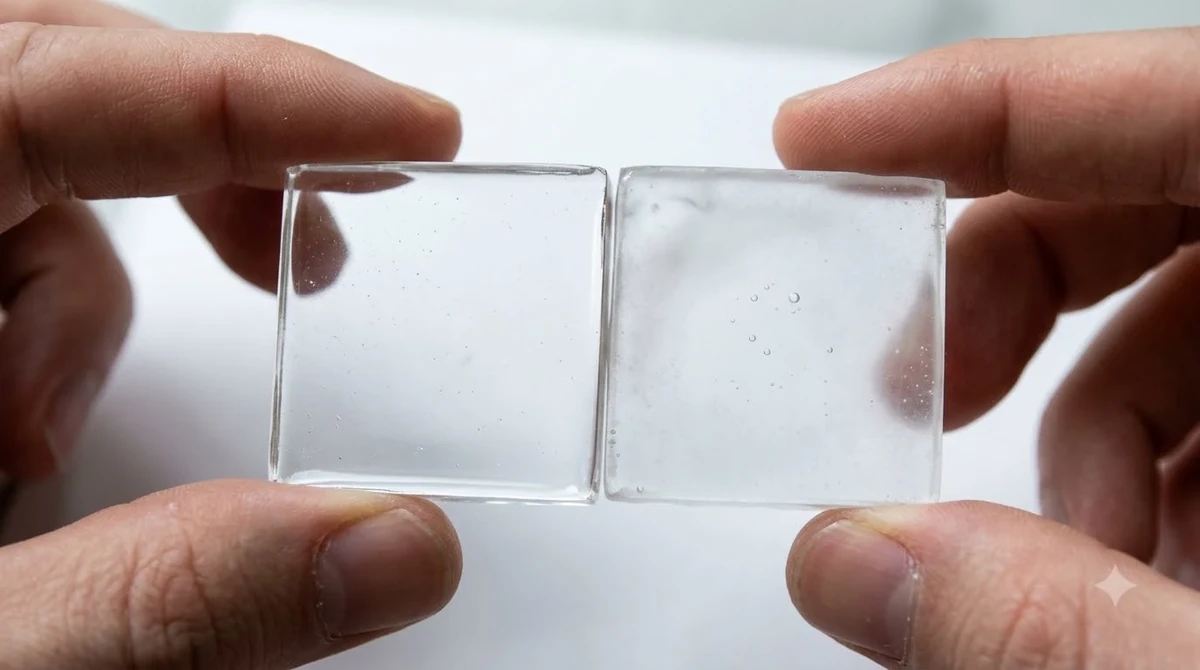
Jinhua describes the mechanism as photo-oxidation that attacks the aromatic structures common in standard epoxy chemistry. The visible results include yellowing, a cloudy look, lower gloss, a chalky texture and color drift. Clear pieces show the change first, while pigmented pieces can hide it without stopping it.
Several factors speed up the process. Heat, oxygen, hardener chemistry and film thickness all play a role, according to Jinhua. Alumilite adds that coating thickness affects how soon yellowing appears, so a thicker pour may show it sooner. Continuous exposure matters more than occasional sun.
How to Tell If a Resin Is UV Resistant
The fastest check is the technical data sheet, not the product title. Look for a stated UV performance claim, a recommended topcoat and a full cure time. If those details are missing, treat the UV claim as unproven.
Start with the label wording, then confirm it on the data sheet. The table below shows common phrases and what to verify before you rely on them.
| Label or spec wording | What it usually signals | What to verify |
|---|---|---|
| UV resistant or UV stable | The formula resists some yellowing | Whether the data sheet names a recommended UV-stable topcoat |
| Outdoor or weather resistant | Designed for exposure, but not sun proof | Full cure time before outdoor exposure and any temperature limits |
| UV absorber or UV inhibitor | An additive meant to absorb UV light | Whether the additive is named and the mix amount is listed |
| UV curing or UV resin | Hardens under a UV lamp, a different product | Whether the product needs a lamp to harden at all |
| Not for direct sun | An application restriction from the maker | Where and when the maker says to apply the product |
Also check the cure time and application temperature. Alumilite says its Outdoor Epoxy requires at least 72 hours of full cure before outdoor exposure and recommends applying it between 60°F and 80°F. Those numbers come from the maker, so match them to your own product.
Tip: Save the technical data sheet as a PDF with your project notes. You will need the topcoat and recoat details months later.
UV Resistant vs UV Curing Resin
These two products are often confused, and the difference matters for outdoor work. UV curing resin hardens when a UV lamp hits it, while UV resistant epoxy hardens by mixing two parts and waiting for the chemical reaction to finish.
Resiners states that standard epoxy does not cure with UV light and that only UV resin hardens under a lamp. Its UV resistant epoxy uses a simple 1:1 mixing ratio. A UV lamp is not a substitute for that mix, so read the label before you buy a lamp for an epoxy project.
| Feature | UV curing resin | UV resistant epoxy |
|---|---|---|
| How it hardens | Under a UV lamp | By mixing two parts and curing over time |
| Mixing | Check the label for the product type | Resiners lists a 1:1 ratio for its product |
| Outdoor behavior | Depends on the formulation and topcoat | Depends on the formulation, with a topcoat often recommended |
| Typical use | Small jewelry and detail work | Larger pours and coated surfaces |
Pieces near a window get sun too, so UV protection matters indoors. Superclear says its additive suits pieces near a window and in partial shade. For a fuller comparison, read uv resin vs epoxy resin, and for lamp choices see what kind of uv light for resin.
How to Protect Resin From Sunlight
Protection works best as a system: a suitable base resin, a full cure and a UV-stable topcoat. TotalBoat says a surface needs no UV protection only if it will never be exposed to direct or indirect ultraviolet light.
TotalBoat outlines a practical sequence for cured epoxy:
- Confirm full cure. Make sure the epoxy has finished curing before you coat it.
- Scuff-sand lightly. Use an abrasive pad to dull the cured surface so the finish can bond.
- Wipe clean. Use a clean, lint-free cotton rag dampened with a surface prep solvent, such as TotalBoat’s Dewaxer and Surface Prep.
- Let it dry. Allow the surface to dry completely before the next step.
- Apply a UV-stable finish. Follow the topcoat maker’s directions for coverage and recoat windows.
TotalBoat says its Halcyon clear gloss varnish provides maximum protection on cured epoxy surfaces. For timing, the company suggests reapplying a topcoat every one to three years, with full year-round sun calling for a refresh closer to one year. Read the full TotalBoat outdoor epoxy UV guide for the complete steps.
A topcoat is only as good as its own UV stability. A reader comment on the TotalBoat page reports that a spar varnish yellowed and dulled within a year or two on redwood, which is a reminder to check the finish itself, not just the resin under it.
Tip: Pick a finish whose data sheet names UV stability. A finish that yellows will not protect the resin beneath it.
Outdoor Projects, Limits and Common Mistakes
Outdoor use is possible with the right product and preparation, but real limits apply. Alumilite says its Outdoor Epoxy pours up to 3/8 inch per layer, should not be applied in direct sunlight, and is not intended for concrete or patio flooring. It also says the product is not recommended for extreme weather.
Heat is a separate risk. Jinhua gives an example where a dark epoxy surface in direct sun can pass 65°C (150°F) on a 35°C (95°F) day. Many ambient-cure epoxies have a glass transition temperature in the 45–65°C range, so the surface can soften as it nears that point. Check the data sheet for the service temperature before you commit to a design.
Moisture during cure is another concern. Jinhua notes that cured epoxy handles water well, but uncured epoxy can cloud, haze or blush if rain or heavy dew reaches it. One common field rule is to keep the substrate at least 3°C (5°F) above the dew point during application.
Common mistakes include:
- Setting a piece outside before the full cure time, which Alumilite lists at 72 hours.
- Skipping the topcoat on a piece that will see any sun at all.
- Applying a thin, uneven coat that protects less than you expect.
- Assuming a UV lamp will cure standard epoxy.
Safety: Wear nitrile gloves, work in a ventilated space and read the product SDS before mixing or sanding. Follow the maker’s instructions for any other protective equipment.
Frequently Asked Questions
Is epoxy resin UV resistant?
Standard epoxy is not UV stable on its own. Some formulas include UV absorbers or light stabilizers that slow yellowing, but they are not sun proof. Continuous direct sun still changes them, so plan a UV-stable topcoat.
Will epoxy turn yellow in the sun?
Unprotected epoxy in direct sun will gradually yellow, haze and lose gloss, according to TotalBoat. Alumilite says even its outdoor formula will eventually yellow after extended exposure, and a thicker coat may yellow sooner.
How long does epoxy need to cure before going outside?
Alumilite says its Outdoor Epoxy needs at least 72 hours of full cure before outdoor exposure, and the surface can stay tacky for up to 14 hours. Most ambient-cure epoxies need around seven days at 25°C (77°F) to reach full cure, so check your product’s data sheet.
How often should I reapply a UV topcoat on outdoor epoxy?
TotalBoat suggests reapplying a topcoat every one to three years, depending on how much direct sun the surface gets. Full year-round sun calls for a refresh closer to one year. Shaded pieces can often go closer to three years.
Check the spec sheet first, then match the product to the sun exposure your piece will get. For more background, browse our resin basics questions and answers.
More in Resin Basics & Q&A
 What Is Vacuum Degassing for Epoxy Resin and How It Removes Trapped BubblesUpdated Nov 26, 2026
 Epoxy Full Cure Time: How Long Before Your Project Is Ready to UseUpdated Nov 26, 2026
 Envirotex Lite Pour On Instructions for a Glossy, Bubble-Free FinishUpdated Nov 26, 2026
 Deep Pour vs Table Top Epoxy: Which Fits Your Project Depth and Cure TimeUpdated Nov 26, 2026
 High Temperature Epoxy for Metal: How to Pick One That Holds Up to HeatUpdated Nov 26, 2026
 Amazing Clear Cast Resin Instructions: Mix, Pour and Cure Without BubblesUpdated Nov 26, 2026