

We may earn a commission when you buy through links on this page, at no extra cost to you. Learn more.
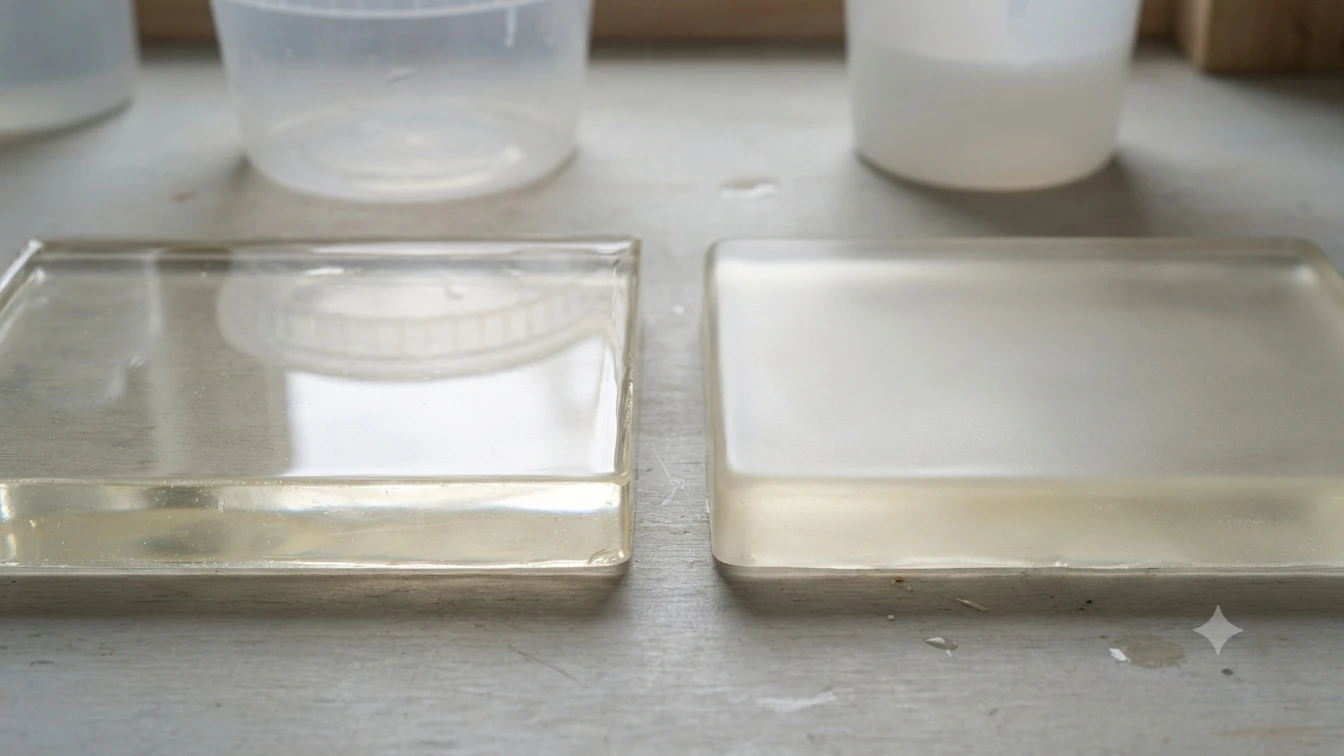
UV resin vs epoxy resin comes down to how each one hardens: UV resin cures in seconds under ultraviolet light, while epoxy cures through a chemical reaction after you mix its two parts. A 2025 study on STORM microscopy reported that UV curable resin sealed within seconds, while conventional 5-minute epoxy typically took about 30 minutes to dry or set. UV resin works best in thin layers and small pieces where the light can reach every part of the resin. Epoxy is usually the better match for thicker castings and general coatings, but you should always check the label and data sheet for the specific product.
Choosing between these two resins can feel confusing because both look similar in the bottle and both give a clear, glossy finish. The differences show up in how they cure, how thick a layer you can pour, how they age, and what safety gear you need. This guide walks through those differences so you can match the resin to your project.
How UV Resin and Epoxy Resin Cure
Both resins start as liquids and turn solid, but they get there in different ways. Understanding the cure method explains most of the other differences between them, including speed, thickness, and the kind of equipment you need.
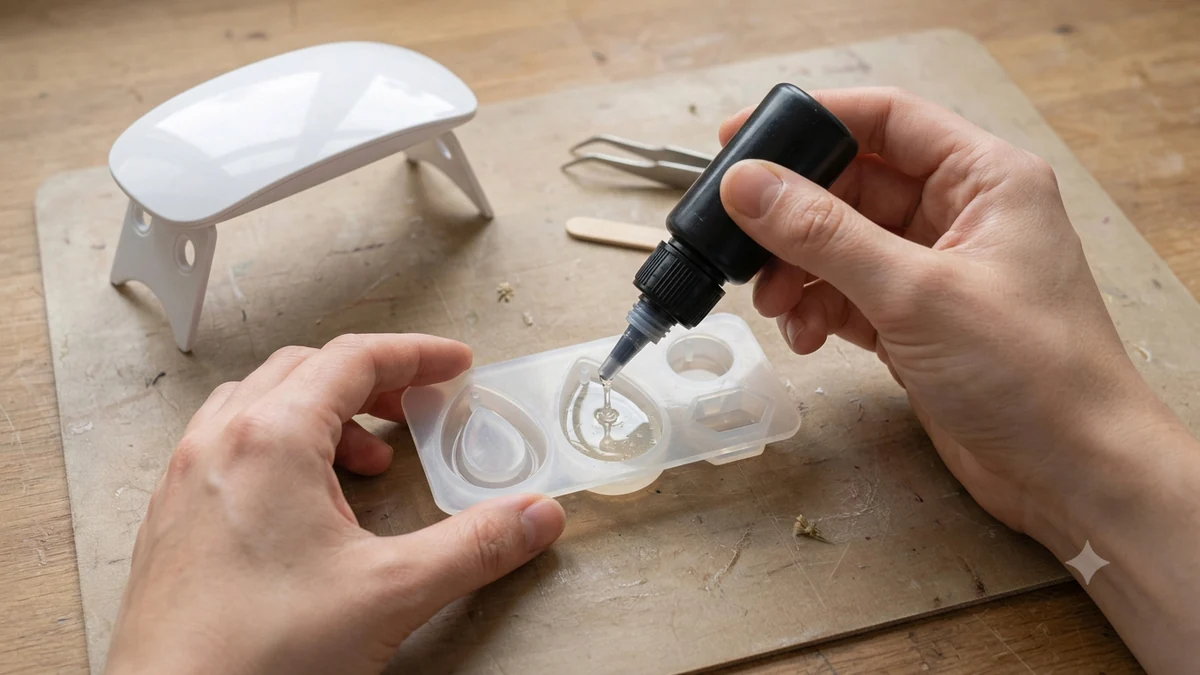
UV curable resin is built from oligomers, photopolymerizable monomers that act as crosslinkers and diluents, and photoinitiators. When ultraviolet light hits the photoinitiators, the liquid polymerizes, often within seconds. According to the manufacturer of one UV resin used in the STORM study, the product is mainly made of 1,6-hexanediol diacrylate, a polyurethane prepolymer, and a photoinitiator whose identity is not disclosed.
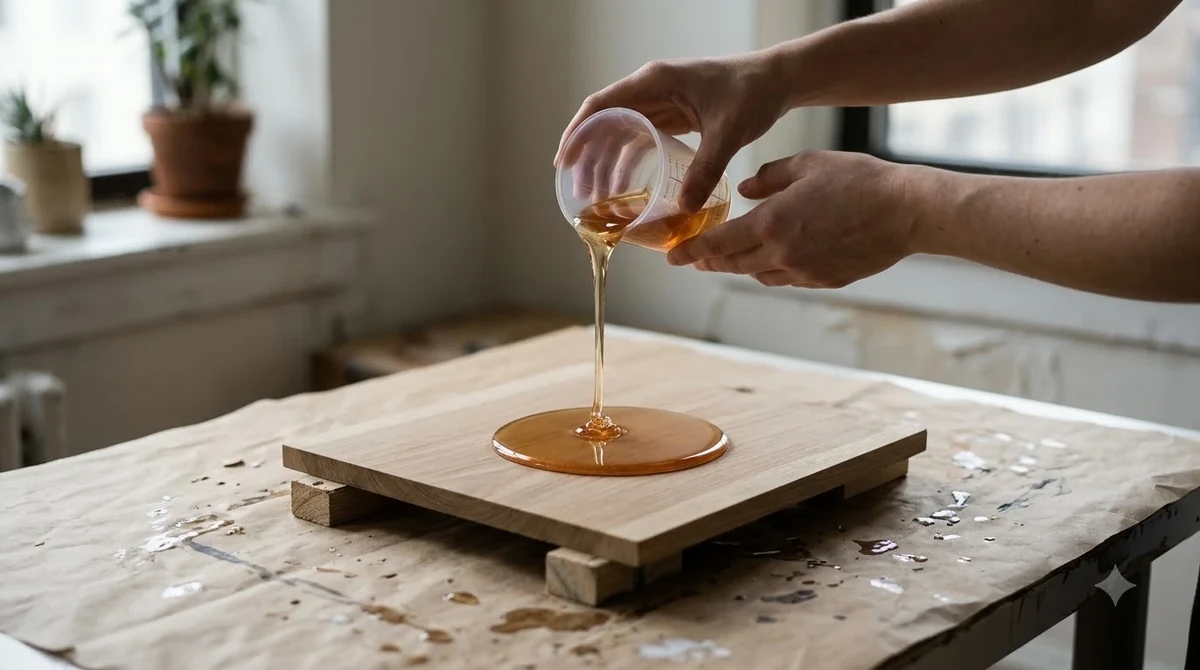
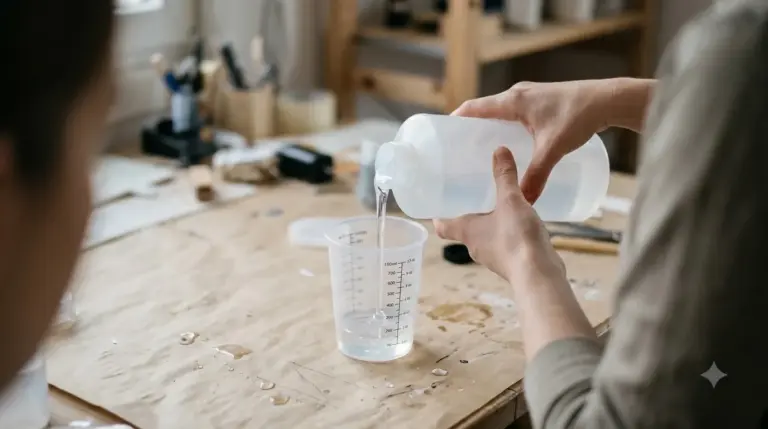
Epoxy resin is a two-part system. You mix the resin with a hardener, also called a curing agent, and the two react chemically over time. Nothing needs to be shone on the mixture for it to harden, which is why epoxy can cure in a closed mold or under a sealed cover. The exact mix ratio is set by the manufacturer, and it matters a lot. Some lab castings are described by weight, for example 100:100:30:6 for epoxy, curing agent, modifier, and defoamer in one aging study, but that formula belongs to that study and not to a store-bought product. Your product’s data sheet is the place to find its ratio, pot life, and cure schedule.
Epoxy vs UV Resin: Key Differences
The fastest way to compare these two is side by side. Use the table as a starting point, then confirm the details on the product you plan to buy, because formulas differ between brands and product lines.
| Factor | UV resin | Epoxy resin |
|---|---|---|
| Cure trigger | Ultraviolet light | Chemical reaction after mixing two parts |
| Typical set speed | Seconds under the right light | Varies by product; 5-minute epoxy typically takes about 30 minutes to set |
| Thickness | Best in thin layers that light can reach | Often suited to thicker castings, per the product label |
| Odor | Described as nearly odorless and solvent-free in the STORM study | Many epoxies have a noticeable odor, per the STORM paper |
| Equipment | UV lamp or sunlight matched to the product | Measuring cups, mixing tools, and time to cure |
| Color over time | Varies by formula; UV exposure can change color | Can yellow or fade with UV exposure, depending on the formula |
The cure trigger is the biggest difference, and it affects everything else. A UV resin sitting in a shaded corner may stay soft, while an epoxy mix cures even in a dark box, as long as the temperature and mix are right. You will also notice that UV resin usually needs a clear, shallow layer so light reaches the whole surface. Epoxy usually needs careful measuring, because a wrong ratio can leave a tacky or soft finish.
Epoxy is not the same as every acrylic-based coating either. If you are comparing it with another two-part system, the guide on epoxy vs polyurethane explains how those chemistries differ.
Is UV Resin Better Than Epoxy?
UV resin is not better than epoxy in every case. It is better for some jobs because it sets quickly and with little odor, but epoxy handles some tasks that UV resin struggles with. The right answer depends on the size of your piece, the surface you are coating, and how much time you want to spend waiting.
UV resin has clear advantages for small work. It can set in seconds once light reaches it, so you can build layers quickly. The STORM authors described it as solvent-free and rapidly curable, which is why it became attractive for sealing in a lab setting. For a jewelry maker working with thin layers of resin on pendants or charms, that speed can save hours of waiting between steps.
Epoxy has advantages in thickness and general durability. Because it cures through a chemical reaction rather than light alone, it does not depend on the light reaching deep into the resin. That is why many makers choose epoxy for tabletops and larger castings. Still, the aging data is mixed. In a 2022 UV-A aging study, an alicyclic epoxy resin showed significant color change with some fading, but its mechanical properties were largely maintained, according to the authors (UV-A aging study on epoxy). That means outdoor or sunlit epoxy can change color over time, and UV resin is not immune to yellowing either.
Strength is another common question. A 2025 aging study of an epoxy composite reported that after UV aging, bending strength dropped 6.0% and impact strength dropped 12.8% compared with the starting values. That study used a fiber-reinforced composite rather than a craft resin, so it does not prove how a tabletop pour will behave. It does show that UV exposure can reduce mechanical performance in epoxy systems over time.
Best Uses for Each Resin Type
Match the resin to the job, not the other way around. Each type has a range where it shines and a range where it tends to cause trouble. The list below covers the most common maker projects.
- Jewelry and small crafts: UV resin fits thin layers on pendants, earrings, and charms, since it sets quickly under a matched lamp.
- Coatings on flat surfaces: Epoxy is often the choice for tabletops and countertops, but check the label for the recommended coat thickness and cure time.
- Casting and deep pours: Epoxy and casting resins are generally better for thicker pieces, because the cure does not depend on light reaching deep into the mix.
- Outdoor or sunlit pieces: Either resin can change color with UV exposure, so look for a formula the manufacturer describes as UV stable and plan for some fading or yellowing over time.
If you are weighing a product labeled for casting, the comparison on casting resin vs epoxy covers how those two categories differ in practice. Many river table and deep pour projects use epoxy-based casting resins, while thin-layer jewelry work often uses UV resin.
Safety, Curing Gear, and Common Mistakes
Both resin types need basic safety habits, and the sensitization risks are not the same for every product. The SDS from the manufacturer is the best place to confirm hazards, ventilation needs, and the right gloves for the resin you are using. Read it before your first pour.
A 2026 case report described three patients who developed allergic contact dermatitis after using resins sold as “epoxy UV.” Patch tests were positive to acrylate compounds and not to epoxy compounds, and the authors concluded that mislabeled resins can be a hidden source of sensitization (recreational allergic contact dermatitis case report). One patient cured the resin under a 6-watt lamp supplied with the bottle and developed symptoms two days later after working without gloves.
- Wear nitrile gloves. Use them for mixing, pouring, and cleanup, and change them if they get contaminated.
- Ventilate the work area. Open a window or run a fan, especially with epoxy that has a strong odor.
- Match the lamp to the product. Use the wavelength and cure time listed on the label, and do not assume a generic lamp works.
- Read the SDS before you start. It lists the chemical hazards and the recommended protective gear for that exact product.
Safety: Skin contact with uncured resin can cause reactions in some people. Gloves, ventilation, and the product SDS are the simplest protection, and you should check with a clinician if a rash develops.
Common mistakes are easy to avoid once you know them. A sticky or uncured UV resin often means the light did not reach the resin evenly, the layer was too thick, or the lamp was too weak or too far away. A soft epoxy usually points to a wrong mix ratio, poor mixing, or a room that was too cold. Mixing too fast also traps air bubbles, so stir slowly and scrape the sides of the cup.
Which Resin Should You Choose?
Start with the size and thickness of your project. If you are sealing small, thin, or detailed pieces and you have a suitable UV lamp, UV resin can save time and reduce odor. If you are building a tabletop, casting a thick piece, or coating a larger surface, epoxy is usually the more practical option, as long as you can measure accurately and wait for the full cure.
Next, think about your workspace and tolerance for setup. UV resin asks for a matched lamp and a thin layer, while epoxy asks for careful measuring and patience. Both need gloves and ventilation. For a broader overview of how these products work, the Resin Basics & Q&A page covers the terms you will see on labels and data sheets.
Frequently Asked Questions
Is UV resin safe to use without gloves?
Gloves are strongly recommended for any resin, UV or epoxy. A 2026 case report described skin reactions in people who worked with mislabeled UV resins, and one patient had no gloves on. Check the product SDS for the exact protection it lists.
Why does my UV resin stay sticky or uncured?
The most common causes are light that does not reach every part of the layer, a layer that is too thick, or a lamp that is too weak or not matched to the product. Try a thinner layer, move the lamp closer, and extend the cure time within the product label.
Does UV resin yellow over time compared to epoxy resin?
Both can change color with UV exposure, depending on the formula. In a 2022 UV-A aging study, an alicyclic epoxy resin showed significant color change with some fading. Keeping finished pieces out of direct sun slows color change in either resin.
Which is stronger, UV resin or epoxy resin?
There is no single answer, because strength depends on the exact formula and how it is cured. Epoxy is often used where thicker, load-bearing pieces are needed. Check the data sheet for tensile or flexural values before you choose.
Pick the resin that matches your cure method, layer thickness, and workspace, then follow the label closely. If you are unsure which product fits, compare the data sheets side by side and start with a small test piece before committing to a large project.
More in Resin Basics & Q&A
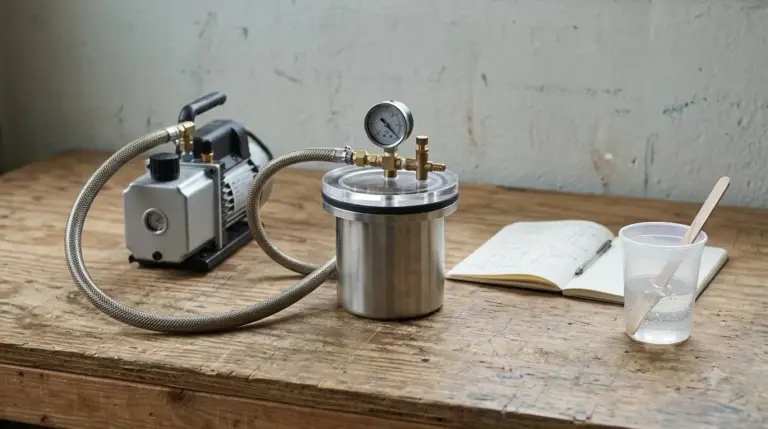 What Is Vacuum Degassing for Epoxy Resin and How It Removes Trapped BubblesUpdated Nov 26, 2026
 Epoxy Full Cure Time: How Long Before Your Project Is Ready to UseUpdated Nov 26, 2026
 Envirotex Lite Pour On Instructions for a Glossy, Bubble-Free FinishUpdated Nov 26, 2026
 Deep Pour vs Table Top Epoxy: Which Fits Your Project Depth and Cure TimeUpdated Nov 26, 2026
 High Temperature Epoxy for Metal: How to Pick One That Holds Up to HeatUpdated Nov 26, 2026
 Amazing Clear Cast Resin Instructions: Mix, Pour and Cure Without BubblesUpdated Nov 26, 2026